Showing posts with label Abuse. Show all posts

Tuesday, September 04, 2012

Maids’ mother told to drop complaint: NGO [-Lawlessness rules in Nom Benh]

Cambodian worker return from Malaysia. Photograph: Pha Lina/Phnom Penh Post

Tuesday, 04 September 2012
Sen David
The Phnom Penh Post

The recruitment firm HRD Company had allegedly threatened the mother of two sisters working as maids in Malaysia, pressuring her to withdraw her NGO complaint seeking help in repatriating her daughters or risk having all communication with them cut, a rights group said yesterday.

Pov Chhan, 50, from Kampong Cham’s Kampong Siem district, filed a complaint with the Community Legal Education Center on Saturday after the second anniversary of the expiration of her daughters’ contracts, saying she had not heard from them, nor had they returned home.

“[On Sunday], the company called me by phone. They said: ‘You are so poor, if you file a complaint, you will not get any money from us’,” Chhan said yesterday.

“But I really do not want money; I just want my two daughters back home safely. I did not get their salary ever, not even 100 riel.”

Thursday, August 30, 2012

18 months and still no court resolution in the T&P labor export company


ជាង១ឆ្នាំហើយ ករណីក្រុមហ៊ុន នាំពលករចេញ T&P បង្ខាំងមនុស្ស ខុសច្បាប់ តុលាការនៅតែគ្មាន ដំណោះស្រាយ


Thursday, 30 August 2012
ដោយៈ ដើមអម្ពិល (DAP)


ភ្នំពេញៈ ១ឆ្នាំ៦ខែគត់ ដែលតុលាការ និងអាជ្ញាធរព្រមទាំងក្រសួង ពាក់ព័ន្ធនានា មិនអើពើរអ្វីជាដុំកំភួនចំពោះ ករណីពលករខ្មែរម្នាក់ ដែលលោតពីលើអគារកំពស់បីជាន់ ហើយបណ្តាលឲ្យនាងពិការជើងរហួតដល់សព្វថ្ងៃ ដោយសារ តែក្រុមហ៊ុន នាំពលករចេញទៅប្រទេសម៉ាឡេស៊ី មួយឈ្មោះ T&P បានបង្ខាំងនាងទុកអស់ជាច្រើន ខែកន្លងទៅនេះ

អ្នកស្រីហេង ហាក់ មានអាយុ ៣១ឆ្នាំ កាលពីថ្ងៃទី៦ ខៃមិនា ឆ្នាំ២០១១កន្លងទៅនេះបានសម្រេចចិត្តចុងក្រោយ របស់អ្នក ស្រីលោតពីលើអគារកម្ពស់បីជាន់ ដោយស៊ូទ្រាំពុំបាននឹងការធ្វើទុកបុកម្នេញ និងបង្ខាំងអ្នកស្រីឲ្យនៅ ក្នុងបន្ទប់ ដោយមិនឲ្យមានការទាក់ទងជាមួយនិងសាច់ញាតិផងនោះពីសំណាក់ក្រុមហ៊ុន T&P រហូតដល់ពេល នេះពុំទាន់ទទូល បានសំណង និងយុត្តិធម៌ឡើយ បន្ទាប់ពីអ្នកស្រីបានដាក់ពាក្យបណ្តឹងទៅកាន់តុលាការ និង អាជ្ញាធរព្រមទាំងក្រសួងពាក់ ព័ន្ធផ្សេងៗ ទៀតនោះ។

ថ្លែងប្រាប់ដល់អ្នកសារព័ត៌មាន នាព្រឹកថ្ងៃទី៣០ ខែសីហា ឆ្នាំ២០១២នាការិយាល័យ របស់មន្រ្តីបក្សប្រឆាំងក្នុង វិមានរដ្ឋសភា អ្នកស្រីហេង ហាក់បានឲ្យដឹងថា ពេលនេះស្ថានភាពរបស់អ្នកស្រីបានកំពុងតែវេទនាយ៉ាងខ្លាំង ដោយមិនអាចប្រកបមុខរបរ អ្វីសម្រាប់យកមកផ្គត់ផ្គង់ជីវិតកូន និងអ្នកស្រីបានដោយសារតែភាពពិការយ៉ាងធ្ងន់ ធ្ងររបស់អ្នកស្រី។

Trio missing in Malaysia

Thursday, 30 August 2012
Kim Sarom
The Phnom Penh Post

A mother fears her son has died in Malaysia after not having heard from him for months, she said yesterday.

Som Oun is among one of three families from Stung Treng province to have raised concerns with human-rights group Adhoc this week after not being able to contact a family member working in Malaysia.

“I heard that he has died,” Oun said of her son, Kiev Meas, 20, who has been working in Malaysia for two and a half years.

Tuesday, August 07, 2012

Malaysian Activist Speaks Out for Migrant Workers [-Abuse of Cambodian maids in Malaysia]

August 6, 2012
By LIZ GOOCH
The New York Times

KUALA LUMPUR — Irene Fernandez has no shortage of shocking tales of the abuse and exploitation of foreign domestic workers in Malaysian homes.

One Cambodian woman, who said she was forced to cook, clean and care for children from 5 a.m. until past midnight, told Ms. Fernandez that her employer once tied her hands behind her back and ordered her to leap down a flight of stairs, leaving her with a permanent limp.

Another domestic helper, also from Cambodia, reported that she used to suck the fish bones left on her employer’s dinner plate, because she was only given leftovers to eat.

It’s so dehumanizing,” Ms. Fernandez said. “To me, it’s just slavery days coming back — and that’s just frightening.”

Friday, July 06, 2012

Migrant abuse claims skyrocket five fold

Domestic migrant maids being held against their will at an SKMM Investment Group training centre in Phnom Penh cry while speaking to reporters from the Post in October last year. The women were freed the following day during a police raid. Photograph: Pha Lina/Phnom Penh Post

Friday, 06 July 2012
Bridget Di Certo and David Boyle
The Phnom Penh Post

Complaints of rights violations of migrant workers had increased more than 500 per cent in the first four months of 2012 compared with the same period last year, rights group Adhoc said yesterday.

The number of individual victims of rights violations, mainly migrant workers in Malaysia and Thailand, had increased by nearly 650 per cent, the group said in its report on the situation of migrant workers, obtained by the Post yesterday.

Forced overwork, little or no rest time, untreated illnesses, torture, severe physical assault, underpayment, threats [of] being jailed, being forced to continue to work illegally and the cut-off of relationships with family members” were the main violations migrant workers suffered, Adhoc said.

Thursday, July 05, 2012

Licensed abuses, rapes and murders of Cambodian maids in Malaysia

More Cambodian maid abuse revelations

Thursday, 05 July 2012
David Boyle and Phak Seangly
The Phnom Penh Post

A Cambodian maid in Malaysia has committed suicide, another was allegedly raped by her employer and a third tortured, according to rights groups and the Ministry of Foreign Affairs, which is investigating the cases.

An 18-year-girl is being sheltered at the Cambodian embassy after she was rescued from an employer who allegedly raped her in April and was arrested on Monday, Moeun Tola, head of the labour program and the Community Legal Education Centre said yesterday.

She was only 16 when she was sent to Malaysia,” he said, adding that she had been sent by the recruitment firm T&P, which has since been shut down following a raft of exploitation and abuse scandals and was “famous for falsifying documents”.

Tuesday, July 03, 2012

Abused maid wins case

Cambodian maids rescued from Malaysia (Photo: The Phnom Penh Post)
Tuesday, 03 July 2012
Sen David and Bridget Di Certo
The Phnom Penh Post

An abused Cambodian maid working in Malaysia has had her day in court – and won.

Men Chan Veasna is the first Cambodian maid to successfully sue her employers in the Malaysian courts, rights groups said yesterday, calling the win a landmark victory for maids struggling for justice at the hands of abusive employers abroad.

The 30-year-old from Kampong Cham province has been stuck in limbo for the past six months since fleeing the home of her Malaysian employer, whom she accused of overworking her and withholding her salary for the duration of her two-year contract.

Last Thursday, the Malaysian Supreme Court ruled in Veasna’s favour in the ongoing court battle between her and her former employer, who had appealed against a negative ruling in the court of first instance.

Malaysian man jailed for alleged maid rape

Maids in Malaysia
Tuesday, 03 July 2012
Khouth Sophak Chakrya
The Phnom Penh Post

Malaysian authorities arrested a man on Sunday after the family of his 18-year-old Cambodian maid reported him to local and Cambodian NGOs for allegedly raping her, the Community Legal Education Center said yesterday.

Moeun Tola, program manager at CLEC, told the Post he had received a complaint on Friday from the girl’s parents asking the NGO to intervene on their daughter’s behalf.

“She called her parents after she was raped by the husband of her landlady [and employer], and her parents called us to help her,” Tola said. “Then we contacted our NGO partner in Malaysia [rights group Tenaganita] to intervene.”

The 18-year-old victim told the Post yesterday her Malaysian employer’s husband, Liew Fos Ching, had attempted to rape her once before, but gave up when her struggles attracted the attention of another family member.

She wasn’t so lucky the second time.

Tuesday, June 26, 2012

[Cambodian] Maid’s Death Believed Linked to Abuse [in Malaysia]

Kuy Lyda's relatives attend her funeral in Phnom Penh, June 25, 2012. (RFA)

A Cambodian woman who fell ill and died upon returning home may have been mistreated by her Malaysian employer.

2012-06-25
Radio Free Asia

A Cambodian maid who recently returned home from work in Malaysia fell ill and died over the weekend, highlighting ongoing concerns over the treatment of impoverished Southeast Asian women who seek work abroad but are often abused by their employers.

Kuy Lyda, 17, died at a hospital in Phnom Penh on Sunday from complications associated with a stomach ulcer, gastritis, a kidney infection, and an intestinal infection, doctors said.

She had been admitted in May, shortly after returning from Malaysia where she worked as a maid for one year in a bid to provide extra income for her destitute family.

But a labor rights group and Kuy Lyda’s family members suspect the young woman’s health problems were linked to abuse by her employer.

Monday, June 25, 2012

How many more Cambodian maids have to die under horrific abuse in Malaysia?

Chheang Nath, 47, cries yesterday as she stands next to the coffin of her 16-year-old daughter, Toch Srey Neth. Photograph: Pha Lina/Phnom Penh Post

Beaten, unfed’ teen maid dies

Monday, 25 June 2012
Sen David
The Phnom Penh Post

A 16-year-old died at Calmette hospital in Phnom Penh yesterday morning after succumbing to an illness she contracted while working in virtual slavery as a maid in Malaysia, her family said.

Toch Srey Neth signed up to go to Malaysia as a maid through the now-defunct T&P Co when she was only 15 years old.

While there, she was reportedly beaten, under-fed and overworked without pay before being brought home, where she died a few weeks later of multi-organ failure”, caused by “irreversible septic shock, according to her death certificate.

“I am mourning my only daughter,” the victim’s mother, Chheang Nath, 47, tearfully told the Post over the sounds of a funeral ceremony. “When we saw that my lovely daughter died at the hospital, we panicked.”

Friday, June 15, 2012

Migrant abuse trending up

Bun Ly (centre), a 36-year-old trafficking victim who was forced to work on a Thai fishing vessel under slave-like conditions, with other trafficking victims at an Adhoc office yesterday. Photograph: Heng Chivoan/Phnom Penh Post

Friday, 15 June 2012
Sen David
The Phnom Penh Post

Human rights group Adhoc released a report on the state of Cambodian migrant workers yesterday, saying that tales of abuse from migrant workers and their families have increased five-fold compared to the same period last year.

Seventy per cent of this year’s 141 complaints concerned domestic workers abroad, Adhoc says, and the government’s moratorium on sending maids to Malaysia may be partially to blame for the spike in incidents.

According to Adhoc president Thun Saray, when recruitment companies closed after the government ban, their former clients were essentially set adrift.

“We noticed [incidents] were increasing, because rights violations against male and female migrant workers in Malaysia have deteriorated even more since the government banned companies from sending workers last year,” he said. "The company is no longer responsible for the workers, so the loss of contact is increasing almost every day.”

Monday, June 11, 2012

Returning maids, fishermen share familiar tales of abuse

A domestic migrant worker returns to Cambodia on Friday from Malaysia. A total of four maids and eight fishermen were repatriated after being forced to work in slave-like conditions. Photograph: Heng Chivoan/Phnom Penh Post

Monday, 11 June 2012
Sen David
The Phnom Penh Post

Eight Cambodian fishermen and four Cambodian maids were repatriated from Malaysia on Friday after finding themselves forced to work in slavery-like conditions, despite being promised high-paying jobs there by brokers and recruitment firms.

Koy Kuong, a spokesman for the Ministry of Foreign Affairs and International Co-operation, said in a press release on Friday the Cambodian government had co-operated with Malaysian authorities and the International Organization for Migration to return the trafficked victims to Cambodia.

Sin Sokhoun, 42, a fisherman from Kampong Speu province, said he paid 400,000 riels (US$100) to the brokers.

Once a farmer, he was lured abroad by the promise of high salaries, but after his ordeal, he said, he had told his son not to make the same mistake.

“I felt embarrassed when I came back to my homeland, because I was cheated into working,” he said. “We worked every day until night but we did not get a salary.”

Wednesday, June 06, 2012

Malaysian Couple Breaks Maid’s Jaw [-How much more abuse can Cambodian maids in Malaysia have to suffer?]

Chea Phalla, the Cambodian maid rescued from abuse in Malaysia
2012-06-05
Radio Free Asia

A Cambodian maid is hospitalized after allegedly suffering extensive abuse at the hands of her employers.

A Cambodian maid is recuperating at a hospital in Malaysia after being severely beaten by her employers, highlighting the plight of women from some of the poorest countries in Southeast Asia who seek work abroad, only to find themselves held captive and abused with little recourse.

Chea Phalla, 28, is being treated in a hospital in the capital Kuala Lumpur after having her jaw broken and being tortured by the couple that hired her to clean their home, according to an official with the Cambodian Embassy in Malaysia who met with the victim.

Third secretary at the Cambodian Embassy Chhay Kosal told RFA that Chea Phalla’s employer, hairdresser Tan Mong Huwai, had tried to send her back to Cambodia so that he and his wife, Eng Lay San, could get away with their crime.

“When she arrived at the embassy, her condition was already critical. At first she could barely speak. Her boss slapped her in the face until her jaw was broken,” Chhay Kosal said.

Thursday, May 31, 2012

Maid forced to drink urine, eat faeces: NGO [-Are the M'sian employers animals?]

Chea Phalla, 28, was tortured by her employers. Photograph: Photo Supplied

Thursday, 31 May 2012
Cassandra Yeap and Phak Seangly
The Phnom Penh Post
It is unspeakable. I pity her. I absolutely have pity on Khmer women when I see such cases
A Malaysian couple has been charged with causing grievous harm to a Cambodian maid, a rights worker said yesterday, in the latest of a recent string of such prosecutions.

Hairdresser Tan Mong Huwai and his wife Eng Lay Sang, both 36, were charged this week with abusing Chea Phalla, 28, between August 2011 to May in Kuala Lumpur, according to Liva Sreedharan, anti-trafficking program officer at Malaysian NGO Tenaganita.

Chea Phalla had testified in a written statement that her employers had used an iron rod to beat her and forced her to drink her own urine and eat her faeces, Sreedharan said.

“The agency was alerted about the abuse and they got the employer to bring the domestic worker to the embassy. The embassy then brought her to the hospital upon seeing her injuries,” she added.

If found guilty, the couple faces 20 years in prison and a fine or whipping.

Wednesday, May 30, 2012

Malaysia couple charged with hurting Cambodia maid

Wed, 30 May 2012
Agence France-Presse

A Malaysian couple have been charged with causing "grievous hurt" to their Cambodian maid, their lawyer said Wednesday, in the latest case of alleged abuse of domestic helpers.

A string of such cases has strained ties between Malaysia and some of its Southeast Asian neighbours, leading to Cambodia and Indonesia to temporarily stop sending workers until better protection was granted.

Hairdresser Tan Mong Huwai and his wife Eng Lay Sang, both 36, pleaded not guilty in a district court in the capital Kuala Lumpur Tuesday to causing "grievous hurt by dangerous weapons" to their maid, lawyer Hue Kok Chung said.

ក្មេង​ស្រី​ម្នាក់​ត្រូវ​ក្រុម​គ្រួសារ​ធ្វើ​ទារុណកម្ម​ធ្ងន់ធ្ងរ​នៅ​កោះកុង

កុមារី​អាយុ ១៣​ឆ្នាំ​ម្នាក់ ត្រូវ​បាន​គេ​កេង​ប្រវ័ញ្ច​កម្លាំង​ពលកម្ម និង​ធ្វើ​ទារុណកម្ម​ធ្ងន់ធ្ងរ ដូច​ជា​យក​ ចាន ឆ្នាំង អំបោស​វាយ​ក្បាល យក​ពូថៅ​ដំ​ក្រចក​ដៃ​ផ្ទាប់​លើ​ឥដ្ឋ​ជាដើម។ ករណី​នេះ​កើត​ឡើង​នៅ​ភូមិ​៤ សង្កាត់​ដងទង់ ក្រុង​ខេមរភូមិន្ទ ខេត្ត​កោះកុង។


2012-05-29
ដោយ ជិន ជេដ្ឋា
Radio Free Asia

ក្រុម​អង្គការ​សិទ្ធិ​មនុស្ស និង​មន្ទីរ​កិច្ចការ​នារី​ខេត្ត នៅ​ថ្ងៃ​ទី​២៩ ឧសភា ឆ្នាំ​២០១២ បាន​ធ្វើ​អន្តរាគមន៍ និង​បើក​ការ​អង្កេត​បន្ថែម​លើ​ករណី​នេះ។

មន្ទីរ​កិច្ចការ​នារី សមាគម​អាដហុក (Adhoc) និង​មជ្ឈមណ្ឌល​ថែទាំ​សុខភាព​កុមារ អេច.ស៊ី.ស៊ី (HCC) នៅ​ខេត្ត​កោះកុង កំពុង​តែ​រៀបចំ​ឯកសារ​ឲ្យ​កុមារី​រង​គ្រោះ​ឈ្មោះ ប៊ុន សុខអ៊ី ដើម្បី​បាន​ត្រឡប់​ទៅ​ស្រុក​កំណើត នៅ​ស្រុក​មោងឬស្សី ខេត្ត​បាត់ដំបង វិញ នា​ចុង​សប្ដាហ៍​នេះ។

បន្ទាប់​ពី​បាន​លួច​រត់​លើក​ទី​មួយ​មិន​បាន​សម្រេច កុមារី​រងគ្រោះ​បាន​សម្រេច​ចិត្ត​លួច​រត់​ជា​លើក​ទី​២ នៅ​ព្រឹក​ថ្ងៃ​ទី​២៨ ខែ​ឧសភា ដោយ​ទៅ​សុំ​ឡាន​គេ​ជិះ​នៅ​បេនឡាន​ក្រុង​ខេត្ត​កោះកុង ប៉ុន្តែ​ត្រូវ​បាន​ម្ចាស់​ឡាន​បដិសេធ។ នៅ​ពេល​នោះ​កុមារី​មាន​ទឹក​មុខ​ស្លេកស្លាំង និង​ភ័យ​ស្លន់ស្លោ ទើប​ម្ចាស់​ឡាន​នាំ​នាង​ឲ្យ​ទៅ​ជួប​សមត្ថកិច្ច​ដែល​កំពុង​ប្រចាំការ​នៅ​ទី​នោះ ដើម្បី​សួរ​នាំ បន្ទាប់​មក​សមត្ថកិច្ច​ក៏​បញ្ជូន​​ទៅ​កាន់​មន្ទីរ​កិច្ចការ​នារី​ខេត្ត​កោះកុង។

អ្នកស្រី ឡុង សុម៉ាម៉េត អនុ​ប្រធាន​មន្ទីរ​កិច្ចការ​នារី​ខេត្ត​កោះកុង។ អ្នក​ស្រី​មាន​ប្រសាសន៍​ថា មន្ទីរ​មិន​បាន​ចាត់​វិធានការ​ផ្លូវ​ច្បាប់​ណា​មួយ​ទៅ​លើ​ជន​ដែល​ធ្វើបាប​ក្មេង​នោះ​ទេ ដោយ​សារ​តែ​អត់​មាន​ភស្ដុ​តាង ឬ​ស្លាកស្នាម និង​សាក្សី​គ្រប់គ្រាន់​ក្នុង​ការ​ដាក់​បន្ទុក​ទៅ​លើ​ជន​សង្ស័យ៖ «ដោយ​សារ​ក្មេង​ស្រី​ហ្នឹង​ជា​ក្មេង​មួយ​ដែល​រស់​នៅ​ក្នុង​គ្រួសារ​ក្រីក្រ ហើយ​មក​រស់​នៅ​បង​ស្រី​ក្មេង​ហ្នឹង អ៊ីចឹង​មក​ហ្នឹង​ដូច​ថា មាន​ការ​ធ្វើ​ការ​ផ្លូវ​ចិត្ត ផ្លូវ​កាយ​មួយ​ចំនួន ដែល​ធ្វើ​ឲ្យ​ក្មេង​ហ្នឹង​មាន​ការ​លះបង់​សម្រេច​ចិត្ត​រត់​ចេញ​ពី​ពី​ផ្ទះ»។

Monday, May 21, 2012

Khmer Rouge soldiers redux in Prama village?

អ្នកភូមិប្រម៉ា​ត្រូវ​ទាហាន​ធ្វើ​ទារុណ​កម្ម​ ឲ្យស្រាត​ខោ​អាវ ឈ​ហាល​ថ្ងៃ និង​ដក​ហូត​លុយ​កាត់​


Monday, 21 May 2012
ម៉ៃ ទិត្យថារ៉ា
The Phnom Penh Post

ប្រជាពលរដ្ឋមកពី​ភូមិ​ប្រម៉ា ឃុំកំពង់​ដំរី ស្រុក​ឆ្លូង​ ខេត្ត​ក្រចេះ ​ដែល​បាន​រត់គេច​ខ្លួន​ពី​​តំបន់​ដែល​ឡោម​ព័ទ្ធ​ដោយ​កំលាំង​សម្ថកិច្ច​ចម្រុះ ចុះ​អនុវត្តន៍​វិធានការ​រដ្ឋ​បាលដោយ​បង្ខំ​អោយ​ពួក​គាត់​ចាក់​ចេញ​ពី​លំនៅ​ដ្ឋាន​​ដែល​បាន​ចោទ​ប្រកាន់​​រស់​នៅ​អនាធិបតេយ្យ​ ​និង​បង្កើត​តំបន់​អបគមន៍គ្រោង​នឹង​ដាក់​ពាក្យ​ប្តឹង​កម្លាំង​សម្ថកិច្ច​ដែល​បាន​ប្រើ​អំពើ​ហិង្សារ​មកលើ​ពួក​គាត់​ដែល​បាន​ព្រឹត្តិកាល​ពី​ថ្ងៃ​ទី​១៦ ខែ​ឧសភា។

សុធាវី​ អាយុ ១៩​ ឆ្នាំ ជា​ឈ្មោះ​ដែល​បាន​ផ្តល់​អោយ​អ្នក​សារព័ត៌មាន​ដើម្បី​ការ​ពារ​សុវត្ថិភាព​បាន​ថ្លែង​ទាំង​សម្លេង​​ភិត​ភ័យ​ថា​ មន្ត្រី​ទាហាន​បាន​ប្រើ​អំពើរ​ហិង្សារ​យ៉ាង​ឃោរឃៅ​មក​លើ​ស្ត្រី​ៗ​ ​និង​បុរស​ នៅ​ក្នុង​ភូមិកាល​ពីថ្ងៃទី​១៦ ខែ​ឧសភា​ ហើយពួក​​គេ​ ​រឹមអូស​​យកទូរស័ព្ទ​ និង​លុយ​ពី​ពលរដ្ឋ​យក​មក​ធ្វើ​ជា​របស់​ផ្ទាល់​ខ្លួន​របស់​ពួក​គេ​។ កញ្ញា​បាន​អោយ​ដឹងទៀត​​ថា​៖ «​ខ្ញុំ​ពិបាក​ និង​ភេ្លច​ព្រឹត្តិការណ៍​នេះ​ខ្លាំង​ណាស់​ គេ​ផ្ចង់​​កាំ​ភ្លើង​ឲ្យ​​ខ្ញុំ​ និង​ស្រី្តៗ​ជា​ច្រើន​ទៀត​ដោះ​អាវ​ចេញ​ដោយ​ទុក​តែ​ខ្លួន​ទទេដើម្បី​យក​លុយ​កាក់របស់​យើង​​ ហើយ​គេ​ចងដៃ​យើង​ដាក់​មកក្រោយ​ពួក​យើង​អោយ​ឈ​នៅ​កណ្តាល​ថ្ងៃក្តៅ​រយៈពេល​២​ទៅ​៣​ម៉ោង​»។​

សុធាវី​ បាន​អោយ​ដឹង​ទៀត​ថា​ កំលាំងចម្រុះ​​ដែល​ប្រើ​ហិង្សារ​យ៉ាង​ឃោឃៅ​មក​លើ​ពលរដ្ឋ​ទាំង​អស់​នោះ​គឺជា​កម្លាំង​ទាហាន​ ពួក​គេ​បាន​បង្ខំ​អោយ​ប្រុសៗ​នៅ​ក្នុង​ភូមិ​ស្រាត​ខោ​ អាវ​ចេញ​ទុក​តែ​ខោក្នុង​ ចំពោះ​បុរស​ណា​ដែល​មិន​មាន​ខោ​ក្នុង​គឺ​នៅ​តែ​ខ្លួន​ទទេ​។ កញ្ញា​បាន​អោយ​ដឹ​ង​ទៀត​ថា​៖ «​តាំង​ពី​ខ្ញុំ​ធំ​ដឹង​ក្តី​អាយុ​ប៉ុណ្ណឹង​ខ្ញុំ​មិន​ដែល​ឃើញ​ភា​ព​សា​ហាវ​យង់ឃ្នង​យ៉ាង​ដូច្នេះ​ទេ​»។

Desperate life at sea

Trawler. (GlobalPost)
The years grind away at young lives. Most slaves don't step on land for a full six years.

May 21, 2012
Patrick Winn
Global Post

SAMUT SAKHON, Thailand and PREY VENG, Cambodia — To hear Jord tell it, a deep-sea boatman’s life is one long knife fight. His nastiest scar starts above his eyes. It runs straight to his crown in a pink groove, the outcome of a man’s attempt to split his skull like a melon.

Other limbs of the 40-year-old Thai boat mechanic haven’t fared much better. A quarter-sized chunk of shin meat was sheared from his right leg. His back is pitted with hack marks. But a snarling boar, tattooed in jagged lines into his bicep, suggests that his enemies got the worst of it.

Jord tapped its inky snout and read aloud the lettering underneath. “I always win,” said the squat, sun-leathered fisherman in a high rasp.

Motherships in the abyss

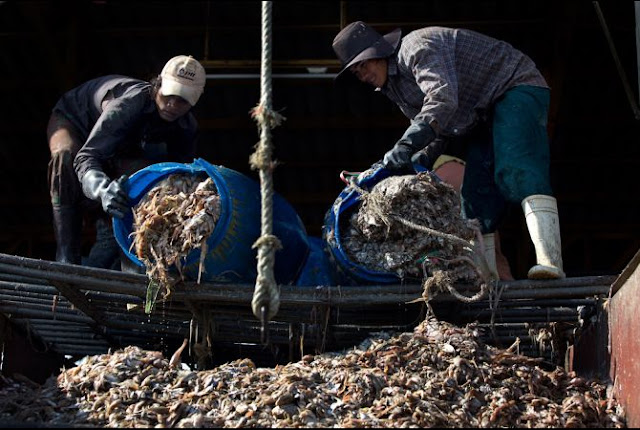
Migrants from Cambodia and Myanmar unload fish off a boat Feb. 25, 2010, in Mahachai, Thailand. (Paula Bronstein/Getty Images)

In the wild-caught seafood industry, forced labor persists because the first crucial supply-chain steps take place in a lawless, saltwater abyss.

May 21, 2012
Patrick Winn
Global Post

SAMUT SAKHON, Thailand, and PREY VENG, Cambodia — The laundering begins in a sub-zero chamber floating far from civilization. It is filled with heaps of fish, and men dressed like eskimos.

This is the fridge room on a vessel known as a “mothership.” These hulking vessels serve as deep-sea resupply stations for trawlers seeking fuel, meat, medicine, spare parts and even laborers to replace men lost at sea.

The ship’s most important function, however, is receiving wild catch into its icy bowels and ferrying it to onshore fishmongers. Some motherships and fishing boats operate under the same syndicate. Motherships that don't collect a fee for transporting catch to the buyer, typically a fishmonger stationed at a specific dock. Once a squid or sardine comes aboard the mothership, there is almost no way to know whether it was netted by paid fishermen or sea slaves.

“Motherships have freezing capacity to hold high-value fish for long periods of time,” said Lisa Rende Taylor, chief technical specialist with the United Nations Inter-Agency Project on Human Trafficking. “The fish is taken back to Thai ports for sale and, most likely, export if the fish is of high value.”

“The boat that caught it may or may not have used slave labor,” she said. “There’s just no way to know who actually caught these fish because of the way unregistered boats work with motherships many kilometers away from the shore.”

Most of the fisheries supply chain between the US and Thailand, America’s second-largest supplier of foreign seafood, can be traced. These are the links that can’t.

Slavery in Thailand’s deep-sea fishing trade is an open secret, acknowledged by the US, the UN and some within the Thai government. It is not all-pervasive. Thailand's biggest seafood export, shrimp, is sourced from coastal farms subject to spot checks. Most "Thai" tuna, the nation's second-largest seafood export, is actually imported from abroad and processed for re-export.

Did these ex-slaves catch your lunch?

For Americans, the calculation is worrisome. Thailand is the United States’ second-largest supplier of foreign seafood. Of America's total seafood imports, one out of every six pounds comes from the Southeast Asian nation. The accounts of ex-slaves, Thai fishing syndicates, officials, exporters and anti-trafficking case workers, gathered by GlobalPost in a three-month investigation, illuminate an opaque offshore supply chain enmeshed in slavery.

A migrant laborer at work on a Thai fishing boat in Sattahip, Thailand's Rayong province, Sept. 1, 2011. (Nicolas Asfouri/AFP/Getty Images)
Thailand, a major source of fish imported to the US, depends on slave labor.

May 21, 2012
Patrick Winn
Global Post

PREY VENG, Cambodia, and SAMUT SAKHON, Thailand — In the sun-baked flatlands of Cambodia, where dust stings the eyes and chokes the pores, there is a tiny clapboard house on cement stilts. It is home to three generations of runaway slaves.

The man of the house, Sokha, recently returned after nearly two years in captivity. His home is just as he left it: barren with a few dirty pillows passing for furniture. Slivers of daylight glow through cracks in the walls. The family’s most valuable possession, a sow, waddles and snorts beneath the elevated floorboards.

Before his December escape, Sokha (a pseudonym) was the property of a deep-sea trawler captain. The 39-year-old Cambodian, his teenage son and two young nephews were purchased for roughly $650, he said, each through brokers promising under-the-table jobs in a fish cannery.



