


Showing posts with label Freedom rights in Cambodia. Show all posts
Showing posts with label Freedom rights in Cambodia. Show all posts
Friday, March 16, 2012


Wednesday, January 25, 2012
Cambodia needs to see real change
 Jan. 25, 2012
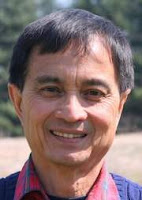
Written by A. Gaffar Peang-Meth
Pacific Daily News (Guam)
Many readers emailed me following my series of articles on replacing Cambodia's dictatorship with a democratic form of government. As many emails contained similar concerns, I have grouped those with similar themes and will use this column to deal with two.
I agree with readers who argued that what Cambodia needs -- "first and foremost," as a respected Khmer reader and author put it -- is for the people to have "a filled stomach and stability."
My "teachings" in this column mirror the substance of the "Introduction to Government and Politics" manual I wrote during my tenure at the University of Guam -- that most of the world's nation-states aspire to some common goals by giving government the task of providing for independence (free from outside control), stability (order and security) and economic and social well-being for all citizens. Cambodians should aspire to nothing less.
The fundamental philosophical conflicts between Western and Eastern civilizations -- the West believes in the individual and his/her basic rights and freedom first; the East believes in the community and its security-stability first -- have evolved.
Wednesday, September 15, 2010
"I've Been to the Mountaintop" - Martin Luther King Jr.
We, too, are living in an exciting era, on the cusp of change. The Reverend Dr. Martin Luther King, Jr. delineated sweepingly the long arc of freedom history, and with searing, soaring details, articulated Black American freedom struggle of the 1960s. Re-reading this through Cambodian lenses this September 2010, parallels and resonances abound for us - the echoes of excuses (private or public), of oppression, of violent tactics, of deceit but also the resounding triumphant parallels of determined spirits, enduring principles of freedom, justice, peace, unity and hope in the knowledge that the long arc of moral history bends toward justice.
I hope every Cambodian will read this, particularly the Cambodian officials, the arm-chair critics, the naysayers and the anti-change stalwarts. May all of us be transformed by the renewing of our minds.
(For those of you who are not so strong in English but more fluent in another language, you can read a translated version among 60 languages of this speech at www.thearyseng.com by clicking on the flag at the bottom right-hand corner.) -- Theary Seng, Phnom Penh, 15 Sept. 2010
Delivered 3 April 1968, Mason Temple (Church of God in Christ Headquarters), Memphis, Tennessee
Thank you very kindly, my friends. As I listened to Ralph Abernathy and his eloquent and generous introduction and then thought about myself, I wondered who he was talking about. It's always good to have your closest friend and associate to say something good about you. And Ralph Abernathy is the best friend that I have in the world. I'm delighted to see each of you here tonight in spite of a storm warning. You reveal that you are determined to go on anyhow.
Something is happening in Memphis; something is happening in our world. And you know, if I were standing at the beginning of time, with the possibility of taking a kind of general and panoramic view of the whole of human history up to now, and the Almighty said to me, "Martin Luther King, which age would you like to live in?" I would take my mental flight by Egypt and I would watch God's children in their magnificent trek from the dark dungeons of Egypt through, or rather across the Red Sea, through the wilderness on toward the promised land. And in spite of its magnificence, I wouldn't stop there.
I would move on by Greece and take my mind to Mount Olympus. And I would see Plato, Aristotle, Socrates, Euripides and Aristophanes assembled around the Parthenon. And I would watch them around the Parthenon as they discussed the great and eternal issues of reality. But I wouldn't stop there.
I would go on, even to the great heyday of the Roman Empire. And I would see developments around there, through various emperors and leaders. But I wouldn't stop there.
I would even come up to the day of the Renaissance, and get a quick picture of all that the Renaissance did for the cultural and aesthetic life of man. But I wouldn't stop there.
I would even go by the way that the man for whom I am named had his habitat. And I would watch Martin Luther as he tacked his ninety-five theses on the door at the church of Wittenberg. But I wouldn't stop there.
I would come on up even to 1863, and watch a vacillating President by the name of Abraham Lincoln finally come to the conclusion that he had to sign the Emancipation Proclamation. But I wouldn't stop there.
I would even come up to the early thirties, and see a man grappling with the problems of the bankruptcy of his nation. And come with an eloquent cry that we have nothing to fear but "fear itself." But I wouldn't stop there.
Strangely enough, I would turn to the Almighty, and say, "If you allow me to live just a few years in the second half of the 20th century, I will be happy."
Now that's a strange statement to make, because the world is all messed up. The nation is sick. Trouble is in the land; confusion all around. That's a strange statement. But I know, somehow, that only when it is dark enough can you see the stars. And I see God working in this period of the twentieth century in a way that men, in some strange way, are responding.
Something is happening in our world. The masses of people are rising up. And wherever they are assembled today, whether they are in Johannesburg, South Africa; Nairobi, Kenya; Accra, Ghana; New York City; Atlanta, Georgia; Jackson, Mississippi; or Memphis, Tennessee -- the cry is always the same: "We want to be free."
And another reason that I'm happy to live in this period is that we have been forced to a point where we are going to have to grapple with the problems that men have been trying to grapple with through history, but the demands didn't force them to do it. Survival demands that we grapple with them. Men, for years now, have been talking about war and peace. But now, no longer can they just talk about it. It is no longer a choice between violence and nonviolence in this world; it's nonviolence or nonexistence. That is where we are today.
And also in the human rights revolution, if something isn't done, and done in a hurry, to bring the colored peoples of the world out of their long years of poverty, their long years of hurt and neglect, the whole world is doomed. Now, I'm just happy that God has allowed me to live in this period to see what is unfolding. And I'm happy that He's allowed me to be in Memphis.
I can remember -- I can remember when Negroes were just going around as Ralph has said, so often, scratching where they didn't itch, and laughing when they were not tickled. But that day is all over. We mean business now, and we are determined to gain our rightful place in God's world.
And that's all this whole thing is about. We aren't engaged in any negative protest and in any negative arguments with anybody. We are saying that we are determined to be men. We are determined to be people. We are saying -- We are saying that we are God's children. And that we are God's children, we don't have to live like we are forced to live.
Now, what does all of this mean in this great period of history? It means that we've got to stay together. We've got to stay together and maintain unity. You know, whenever Pharaoh wanted to prolong the period of slavery in Egypt, he had a favorite, favorite formula for doing it. What was that? He kept the slaves fighting among themselves. But whenever the slaves get together, something happens in Pharaoh's court, and he cannot hold the slaves in slavery. When the slaves get together, that's the beginning of getting out of slavery. Now let us maintain unity.
Secondly, let us keep the issues where they are. The issue is injustice. The issue is the refusal of Memphis to be fair and honest in its dealings with its public servants, who happen to be sanitation workers. Now, we've got to keep attention on that. That's always the problem with a little violence. You know what happened the other day, and the press dealt only with the window-breaking. I read the articles. They very seldom got around to mentioning the fact that one thousand, three hundred sanitation workers are on strike, and that Memphis is not being fair to them, and that Mayor Loeb is in dire need of a doctor. They didn't get around to that.
Now we're going to march again, and we've got to march again, in order to put the issue where it is supposed to be -- and force everybody to see that there are thirteen hundred of God's children here suffering, sometimes going hungry, going through dark and dreary nights wondering how this thing is going to come out. That's the issue. And we've got to say to the nation: We know how it's coming out. For when people get caught up with that which is right and they are willing to sacrifice for it, there is no stopping point short of victory.
We aren't going to let any mace stop us. We are masters in our nonviolent movement in disarming police forces; they don't know what to do. I've seen them so often. I remember in Birmingham, Alabama, when we were in that majestic struggle there, we would move out of the 16th Street Baptist Church day after day; by the hundreds we would move out. And Bull Connor would tell them to send the dogs forth, and they did come; but we just went before the dogs singing, "Ain't gonna let nobody turn me around."
Bull Connor next would say, "Turn the fire hoses on." And as I said to you the other night, Bull Connor didn't know history. He knew a kind of physics that somehow didn't relate to the transphysics that we knew about. And that was the fact that there was a certain kind of fire that no water could put out. And we went before the fire hoses; we had known water. If we were Baptist or some other denominations, we had been immersed. If we were Methodist, and some others, we had been sprinkled, but we knew water. That couldn't stop us.
And we just went on before the dogs and we would look at them; and we'd go on before the water hoses and we would look at it, and we'd just go on singing "Over my head I see freedom in the air." And then we would be thrown in the paddy wagons, and sometimes we were stacked in there like sardines in a can. And they would throw us in, and old Bull would say, "Take 'em off," and they did; and we would just go in the paddy wagon singing, "We Shall Overcome." And every now and then we'd get in jail, and we'd see the jailers looking through the windows being moved by our prayers, and being moved by our words and our songs. And there was a power there which Bull Connor couldn't adjust to; and so we ended up transforming Bull into a steer, and we won our struggle in Birmingham. Now we've got to go on in Memphis just like that. I call upon you to be with us when we go out Monday.
Now about injunctions: We have an injunction and we're going into court tomorrow morning to fight this illegal, unconstitutional injunction. All we say to America is, "Be true to what you said on paper." If I lived in China or even Russia, or any totalitarian country, maybe I could understand some of these illegal injunctions. Maybe I could understand the denial of certain basic First Amendment privileges, because they hadn't committed themselves to that over there. But somewhere I read of the freedom of assembly. Somewhere I read of the freedom of speech. Somewhere I read of the freedom of press. Somewhere I read that the greatness of America is the right to protest for right. And so just as I say, we aren't going to let dogs or water hoses turn us around, we aren't going to let any injunction turn us around. We are going on.
We need all of you. And you know what's beautiful to me is to see all of these ministers of the Gospel. It's a marvelous picture. Who is it that is supposed to articulate the longings and aspirations of the people more than the preacher? Somehow the preacher must have a kind of fire shut up in his bones. And whenever injustice is around he tell it. Somehow the preacher must be an Amos, and saith, "When God speaks who can but prophesy?" Again with Amos, "Let justice roll down like waters and righteousness like a mighty stream." Somehow the preacher must say with Jesus, "The Spirit of the Lord is upon me, because he hath anointed me," and he's anointed me to deal with the problems of the poor."
And I want to commend the preachers, under the leadership of these noble men: James Lawson, one who has been in this struggle for many years; he's been to jail for struggling; he's been kicked out of Vanderbilt University for this struggle, but he's still going on, fighting for the rights of his people. Reverend Ralph Jackson, Billy Kiles; I could just go right on down the list, but time will not permit. But I want to thank all of them. And I want you to thank them, because so often, preachers aren't concerned about anything but themselves. And I'm always happy to see a relevant ministry.
It's all right to talk about "long white robes over yonder," in all of its symbolism. But ultimately people want some suits and dresses and shoes to wear down here! It's all right to talk about "streets flowing with milk and honey," but God has commanded us to be concerned about the slums down here, and his children who can't eat three square meals a day. It's all right to talk about the new Jerusalem, but one day, God's preacher must talk about the new New York, the new Atlanta, the new Philadelphia, the new Los Angeles, the new Memphis, Tennessee. This is what we have to do.
Now the other thing we'll have to do is this: Always anchor our external direct action with the power of economic withdrawal. Now, we are poor people. Individually, we are poor when you compare us with white society in America. We are poor. Never stop and forget that collectively -- that means all of us together -- collectively we are richer than all the nations in the world, with the exception of nine. Did you ever think about that? After you leave the United States, Soviet Russia, Great Britain, West Germany, France, and I could name the others, the American Negro collectively is richer than most nations of the world. We have an annual income of more than thirty billion dollars a year, which is more than all of the exports of the United States, and more than the national budget of Canada. Did you know that? That's power right there, if we know how to pool it.
We don't have to argue with anybody. We don't have to curse and go around acting bad with our words. We don't need any bricks and bottles. We don't need any Molotov cocktails. We just need to go around to these stores, and to these massive industries in our country, and say, "God sent us by here, to say to you that you're not treating his children right. And we've come by here to ask you to make the first item on your agenda fair treatment, where God's children are concerned. Now, if you are not prepared to do that, we do have an agenda that we must follow. And our agenda calls for withdrawing economic support from you."
And so, as a result of this, we are asking you tonight, to go out and tell your neighbors not to buy Coca-Cola in Memphis. Go by and tell them not to buy Sealtest milk. Tell them not to buy -- what is the other bread? -- Wonder Bread. And what is the other bread company, Jesse? Tell them not to buy Hart's bread. As Jesse Jackson has said, up to now, only the garbage men have been feeling pain; now we must kind of redistribute the pain. We are choosing these companies because they haven't been fair in their hiring policies; and we are choosing them because they can begin the process of saying they are going to support the needs and the rights of these men who are on strike. And then they can move on town -- downtown and tell Mayor Loeb to do what is right.
But not only that, we've got to strengthen black institutions. I call upon you to take your money out of the banks downtown and deposit your money in Tri-State Bank. We want a "bank-in" movement in Memphis. Go by the savings and loan association. I'm not asking you something that we don't do ourselves at SCLC. Judge Hooks and others will tell you that we have an account here in the savings and loan association from the Southern Christian Leadership Conference. We are telling you to follow what we are doing. Put your money there. You have six or seven black insurance companies here in the city of Memphis. Take out your insurance there. We want to have an "insurance-in."
Now these are some practical things that we can do. We begin the process of building a greater economic base. And at the same time, we are putting pressure where it really hurts. I ask you to follow through here.
Now, let me say as I move to my conclusion that we've got to give ourselves to this struggle until the end. Nothing would be more tragic than to stop at this point in Memphis. We've got to see it through. And when we have our march, you need to be there. If it means leaving work, if it means leaving school -- be there. Be concerned about your brother. You may not be on strike. But either we go up together, or we go down together.
Let us develop a kind of dangerous unselfishness. One day a man came to Jesus, and he wanted to raise some questions about some vital matters of life. At points he wanted to trick Jesus, and show him that he knew a little more than Jesus knew and throw him off base....
Now that question could have easily ended up in a philosophical and theological debate. But Jesus immediately pulled that question from mid-air, and placed it on a dangerous curve between Jerusalem and Jericho. And he talked about a certain man, who fell among thieves. You remember that a Levite and a priest passed by on the other side. They didn't stop to help him. And finally a man of another race came by. He got down from his beast, decided not to be compassionate by proxy. But he got down with him, administered first aid, and helped the man in need. Jesus ended up saying, this was the good man, this was the great man, because he had the capacity to project the "I" into the "thou," and to be concerned about his brother.
Now you know, we use our imagination a great deal to try to determine why the priest and the Levite didn't stop. At times we say they were busy going to a church meeting, an ecclesiastical gathering, and they had to get on down to Jerusalem so they wouldn't be late for their meeting. At other times we would speculate that there was a religious law that "One who was engaged in religious ceremonials was not to touch a human body twenty-four hours before the ceremony." And every now and then we begin to wonder whether maybe they were not going down to Jerusalem -- or down to Jericho, rather to organize a "Jericho Road Improvement Association." That's a possibility. Maybe they felt that it was better to deal with the problem from the causal root, rather than to get bogged down with an individual effect.
But I'm going to tell you what my imagination tells me. It's possible that those men were afraid. You see, the Jericho road is a dangerous road. I remember when Mrs. King and I were first in Jerusalem. We rented a car and drove from Jerusalem down to Jericho. And as soon as we got on that road, I said to my wife, "I can see why Jesus used this as the setting for his parable." It's a winding, meandering road. It's really conducive for ambushing. You start out in Jerusalem, which is about 1200 miles -- or rather 1200 feet above sea level. And by the time you get down to Jericho, fifteen or twenty minutes later, you're about 2200 feet below sea level. That's a dangerous road. In the days of Jesus it came to be known as the "Bloody Pass." And you know, it's possible that the priest and the Levite looked over that man on the ground and wondered if the robbers were still around. Or it's possible that they felt that the man on the ground was merely faking. And he was acting like he had been robbed and hurt, in order to seize them over there, lure them there for quick and easy seizure. And so the first question that the priest asked -- the first question that the Levite asked was, "If I stop to help this man, what will happen to me?" But then the Good Samaritan came by. And he reversed the question: "If I do not stop to help this man, what will happen to him?"
That's the question before you tonight. Not, "If I stop to help the sanitation workers, what will happen to my job. Not, "If I stop to help the sanitation workers what will happen to all of the hours that I usually spend in my office every day and every week as a pastor?" The question is not, "If I stop to help this man in need, what will happen to me?" The question is, "If I do not stop to help the sanitation workers, what will happen to them?" That's the question.
Let us rise up tonight with a greater readiness. Let us stand with a greater determination. And let us move on in these powerful days, these days of challenge to make America what it ought to be. We have an opportunity to make America a better nation. And I want to thank God, once more, for allowing me to be here with you.
You know, several years ago, I was in New York City autographing the first book that I had written. And while sitting there autographing books, a demented black woman came up. The only question I heard from her was, "Are you Martin Luther King?" And I was looking down writing, and I said, "Yes." And the next minute I felt something beating on my chest. Before I knew it I had been stabbed by this demented woman. I was rushed to Harlem Hospital. It was a dark Saturday afternoon. And that blade had gone through, and the X-rays revealed that the tip of the blade was on the edge of my aorta, the main artery. And once that's punctured, your drowned in your own blood -- that's the end of you.
It came out in the New York Times the next morning, that if I had merely sneezed, I would have died. Well, about four days later, they allowed me, after the operation, after my chest had been opened, and the blade had been taken out, to move around in the wheel chair in the hospital. They allowed me to read some of the mail that came in, and from all over the states and the world, kind letters came in. I read a few, but one of them I will never forget. I had received one from the President and the Vice-President. I've forgotten what those telegrams said. I'd received a visit and a letter from the Governor of New York, but I've forgotten what that letter said. But there was another letter that came from a little girl, a young girl who was a student at the White Plains High School. And I looked at that letter, and I'll never forget it. It said simply,
Dear Dr. King,And she said,
I am a ninth-grade student at the White Plains High School."
While it should not matter, I would like to mention that I'm a white girl. I read in the paper of your misfortune, and of your suffering. And I read that if you had sneezed, you would have died. And I'm simply writing you to say that I'm so happy that you didn't sneeze.And I want to say tonight -- I want to say tonight that I too am happy that I didn't sneeze. Because if I had sneezed, I wouldn't have been around here in 1960, when students all over the South started sitting-in at lunch counters. And I knew that as they were sitting in, they were really standing up for the best in the American dream, and taking the whole nation back to those great wells of democracy which were dug deep by the Founding Fathers in the Declaration of Independence and the Constitution.
If I had sneezed, I wouldn't have been around here in 1961, when we decided to take a ride for freedom and ended segregation in inter-state travel.
If I had sneezed, I wouldn't have been around here in 1962, when Negroes in Albany, Georgia, decided to straighten their backs up. And whenever men and women straighten their backs up, they are going somewhere, because a man can't ride your back unless it is bent.
If I had sneezed -- If I had sneezed I wouldn't have been here in 1963, when the black people of Birmingham, Alabama, aroused the conscience of this nation, and brought into being the Civil Rights Bill.
If I had sneezed, I wouldn't have had a chance later that year, in August, to try to tell America about a dream that I had had.
If I had sneezed, I wouldn't have been down in Selma, Alabama, to see the great Movement there.
If I had sneezed, I wouldn't have been in Memphis to see a community rally around those brothers and sisters who are suffering.
I'm so happy that I didn't sneeze.
And they were telling me --. Now, it doesn't matter, now. It really doesn't matter what happens now. I left Atlanta this morning, and as we got started on the plane, there were six of us. The pilot said over the public address system, "We are sorry for the delay, but we have Dr. Martin Luther King on the plane. And to be sure that all of the bags were checked, and to be sure that nothing would be wrong with on the plane, we had to check out everything carefully. And we've had the plane protected and guarded all night."
And then I got into Memphis. And some began to say the threats, or talk about the threats that were out. What would happen to me from some of our sick white brothers?
Well, I don't know what will happen now. We've got some difficult days ahead. But it really doesn't matter with me now, because I've been to the mountaintop.
And I don't mind.
Like anybody, I would like to live a long life. Longevity has its place. But I'm not concerned about that now. I just want to do God's will. And He's allowed me to go up to the mountain. And I've looked over. And I've seen the Promised Land. I may not get there with you. But I want you to know tonight, that we, as a people, will get to the promised land!
And so I'm happy, tonight.
I'm not worried about anything.
I'm not fearing any man!
Mine eyes have seen the glory of the coming of the Lord!!
Saturday, August 28, 2010
"I Have a Dream"
We, Cambodians, should not forget the patience, activism and courage of black America. President Barack Obama did not arise out of a vacuum but rode on the shoulders of giants who went before him. Let us Cambodians be "giants" for our children and children's children in the building of a better Cambodia. On the anniversary of this inspirational speech of Dr. Martin Luther King, Jr., I Have a Dream, let us be reminded that history is not made by born-heroes but by ordinary individuals like Dr. King who did not shy away from extraordinary times and circumstances. - www.thearyseng.com
"I Have a Dream"
Martin Luther King, Jr.
delivered 28 August 1963, at the Lincoln Memorial, Washington D.C.
delivered 28 August 1963, at the Lincoln Memorial, Washington D.C.

I am happy to join with you today in what will go down in history as the greatest demonstration for freedom in the history of our nation.
Five score years ago, a great American, in whose symbolic shadow we stand today, signed the Emancipation Proclamation. This momentous decree came as a great beacon light of hope to millions of Negro slaves who had been seared in the flames of withering injustice. It came as a joyous daybreak to end the long night of their captivity.
But one hundred years later, the Negro still is not free. One hundred years later, the life of the Negro is still sadly crippled by the manacles of segregation and the chains of discrimination. One hundred years later, the Negro lives on a lonely island of poverty in the midst of a vast ocean of material prosperity. One hundred years later, the Negro is still languished in the corners of American society and finds himself an exile in his own land. And so we've come here today to dramatize a shameful condition.
In a sense we've come to our nation's capital to cash a check. When the architects of our republic wrote the magnificent words of the Constitution and the Declaration of Independence, they were signing a promissory note to which every American was to fall heir. This note was a promise that all men, yes, black men as well as white men, would be guaranteed the "unalienable Rights" of "Life, Liberty and the pursuit of Happiness." It is obvious today that America has defaulted on this promissory note, insofar as her citizens of color are concerned. Instead of honoring this sacred obligation, America has given the Negro people a bad check, a check which has come back marked "insufficient funds."
But we refuse to believe that the bank of justice is bankrupt. We refuse to believe that there are insufficient funds in the great vaults of opportunity of this nation. And so, we've come to cash this check, a check that will give us upon demand the riches of freedom and the security of justice.
We have also come to this hallowed spot to remind America of the fierce urgency of Now. This is no time to engage in the luxury of cooling off or to take the tranquilizing drug of gradualism. Now is the time to make real the promises of democracy. Now is the time to rise from the dark and desolate valley of segregation to the sunlit path of racial justice. Now is the time to lift our nation from the quicksands of racial injustice to the solid rock of brotherhood. Now is the time to make justice a reality for all of God's children.
It would be fatal for the nation to overlook the urgency of the moment. This sweltering summer of the Negro's legitimate discontent will not pass until there is an invigorating autumn of freedom and equality. Nineteen sixty-three is not an end, but a beginning. And those who hope that the Negro needed to blow off steam and will now be content will have a rude awakening if the nation returns to business as usual. And there will be neither rest nor tranquility in America until the Negro is granted his citizenship rights. The whirlwinds of revolt will continue to shake the foundations of our nation until the bright day of justice emerges.
But there is something that I must say to my people, who stand on the warm threshold which leads into the palace of justice: In the process of gaining our rightful place, we must not be guilty of wrongful deeds. Let us not seek to satisfy our thirst for freedom by drinking from the cup of bitterness and hatred. We must forever conduct our struggle on the high plane of dignity and discipline. We must not allow our creative protest to degenerate into physical violence. Again and again, we must rise to the majestic heights of meeting physical force with soul force.
The marvelous new militancy which has engulfed the Negro community must not lead us to a distrust of all white people, for many of our white brothers, as evidenced by their presence here today, have come to realize that their destiny is tied up with our destiny. And they have come to realize that their freedom is inextricably bound to our freedom.
We cannot walk alone.
And as we walk, we must make the pledge that we shall always march ahead.
We cannot turn back.
There are those who are asking the devotees of civil rights, "When will you be satisfied?" We can never be satisfied as long as the Negro is the victim of the unspeakable horrors of police brutality. We can never be satisfied as long as our bodies, heavy with the fatigue of travel, cannot gain lodging in the motels of the highways and the hotels of the cities. We cannot be satisfied as long as the negro's basic mobility is from a smaller ghetto to a larger one. We can never be satisfied as long as our children are stripped of their self-hood and robbed of their dignity by signs stating: "For Whites Only." We cannot be satisfied as long as a Negro in Mississippi cannot vote and a Negro in New York believes he has nothing for which to vote. No, no, we are not satisfied, and we will not be satisfied until "justice rolls down like waters, and righteousness like a mighty stream."¹
I am not unmindful that some of you have come here out of great trials and tribulations. Some of you have come fresh from narrow jail cells. And some of you have come from areas where your quest -- quest for freedom left you battered by the storms of persecution and staggered by the winds of police brutality. You have been the veterans of creative suffering. Continue to work with the faith that unearned suffering is redemptive. Go back to Mississippi, go back to Alabama, go back to South Carolina, go back to Georgia, go back to Louisiana, go back to the slums and ghettos of our northern cities, knowing that somehow this situation can and will be changed.
Let us not wallow in the valley of despair, I say to you today, my friends.
And so even though we face the difficulties of today and tomorrow, I still have a dream. It is a dream deeply rooted in the American dream.
I have a dream that one day this nation will rise up and live out the true meaning of its creed: "We hold these truths to be self-evident, that all men are created equal."
I have a dream that one day on the red hills of Georgia, the sons of former slaves and the sons of former slave owners will be able to sit down together at the table of brotherhood.
I have a dream that one day even the state of Mississippi, a state sweltering with the heat of injustice, sweltering with the heat of oppression, will be transformed into an oasis of freedom and justice.
I have a dream that my four little children will one day live in a nation where they will not be judged by the color of their skin but by the content of their character.
I have a dream today!
I have a dream that one day, down in Alabama, with its vicious racists, with its governor having his lips dripping with the words of "interposition" and "nullification" -- one day right there in Alabama little black boys and black girls will be able to join hands with little white boys and white girls as sisters and brothers.
I have a dream today!
I have a dream that one day every valley shall be exalted, and every hill and mountain shall be made low, the rough places will be made plain, and the crooked places will be made straight; "and the glory of the Lord shall be revealed and all flesh shall see it together."2
This is our hope, and this is the faith that I go back to the South with.
With this faith, we will be able to hew out of the mountain of despair a stone of hope. With this faith, we will be able to transform the jangling discords of our nation into a beautiful symphony of brotherhood. With this faith, we will be able to work together, to pray together, to struggle together, to go to jail together, to stand up for freedom together, knowing that we will be free one day.
And this will be the day -- this will be the day when all of God's children will be able to sing with new meaning:
- My country 'tis of thee, sweet land of liberty, of thee I sing.
- Land where my fathers died, land of the Pilgrim's pride,
- From every mountainside, let freedom ring!
And so let freedom ring from the prodigious hilltops of New Hampshire.
- Let freedom ring from the mighty mountains of New York.
- Let freedom ring from the heightening Alleghenies of Pennsylvania.
- Let freedom ring from the snow-capped Rockies of Colorado.
- Let freedom ring from the curvaceous slopes of California.
- Let freedom ring from Stone Mountain of Georgia.
- Let freedom ring from Lookout Mountain of Tennessee.
- Let freedom ring from every hill and molehill of Mississippi.
- From every mountainside, let freedom ring.
Free at last! Free at last!
Thank God Almighty, we are free at last!
Wednesday, February 17, 2010
Civility lacking in political debate
February 17, 2010 By A. Gaffar Peang-Meth
PACIFIC DAILY NEWS (Guam)
Apologies are in order to some readers who may feel I repeated some points in my columns in the Pacific Daily News. As these columns online also are read by non-English speakers, some secretly in Cambodia, a rehash drives some points home.
Rote learning is not without its usefulness. Not everyone understands something encountered only once.
The pages of the PDN are not for my propaganda. An educator, I thank the editors and the publisher for the opportunity they provide me to share information and opinions and to provoke discussion. The newspaper is a wall-less classroom where I can describe, explain, analyze and suggest.
As those making up the loose organization calling itself Professional Cambodian Voices in the northwest United States examine the concept of freedom, they might include in their discussion the "four essential human freedoms" described by President Franklin Roosevelt: Freedom to speak and express, freedom to worship; and freedoms from want, and from fear.
The first two freedoms are positive. They give citizens the right to do something. The last two are negative. Citizens have the rights not to be hungry, and not to live in fear. It's the government's duty and responsibility to ensure that this be so.
The rights to hold opinions and to free expression are contained in the Universal Declaration of Human Rights and in the International Covenant on Civil and Political Rights. In the covenant, a state party "undertakes to respect and to ensure (those rights) to all individuals within its territory."
The exercise of the right to hold, and respectfully and responsibly express opinions on public policies, is healthy for democratic society. It allows a multitude of options for citizens to choose. As a market of ideas and thoughts, the U.S. lets them grow and bloom. China's Chairman Mao also encouraged "a hundred flowers (to) bloom," but he mowed them down as fast as they bloomed wildly.
Indeed, freedom is not absolute -- a point that's hard for some to swallow. Article 29.2 of the Universal Declaration cites "limitations" as determined by law "solely for ... due recognition and respect for the rights and freedoms of others" and for "meeting the just requirements of morality, public order and the general welfare in a democratic society." Article 19.3 of the International Covenant cites "special duties and responsibilities" for those rights, and "certain restrictions" as "provided by law."
Freedoms that lack moral and legal restraints breed licentiousness that borders on a state of nature, in which English philosopher Thomas Hobbes saw life as "nasty, brutish, and short."
I have written about how human beings across national boundaries and cultures have appeared to be entrenched on a destructive course of intolerance, characterized by a lack of civility. Individuals of strong political and ideological views have come into conflict; the level of insult and demonizing has increased.
Early this month, as the nation's capital faced its "snowmageddon," President Obama left the White House to speak at the National Prayer Breakfast about "erosion of civility" in America's political debate.
"At times, it seems like we're unable to listen to one another; to have at once a serious and civil debate," he said. "We can take different approaches to ending inequalities, but surely we can agree on the need to lift our children out of ignorance; to lift our neighbors from poverty."
According to a study, in a debate on hot political and ideological issues, one's rational brain shuts down and the non-thinking emotional part takes over and the debate deteriorates. Is one's belief so strong and one's ego so big that this "other guy" has to be demonized? Is respectful dialogue possible anymore?
A specialist in critical thinking says some people tend to lose track of the matter examined, disregard what's relevant, necessary and indispensable to the matter at hand. He coined the term "monkey brain" to describe those whose brains wander everywhere, like monkeys that jump from branch to branch. The specialist begged, "Stay within the question"!
In a recent Internet posting, an academic's deceased father's name and reputation were mauled by a blogger, upset with the academic's political comments. Just how relevant, necessary and indispensable the deceased father's name and reputation was to the academic's comments escaped me completely.
Last week, my column, "Disagree, don't be disagreeable," brought a reader's "open letter" on the Internet, saying nobody would disagree with what I wrote, but asked me since in "a decade from now" the Khmer land will be Vietnamese, "Can you help Khmer in any other way? Or is it that you don't know how?"
So I re-read and appreciated what The Washington Post wrote about Obama bemoaning America's political culture in which disagreement on approaches "quickly morphs into questioning one another's motives."
I was reminded of Indian philosopher Jiddu Krishnamurti: Humans' focus on the "me" in their relationships, actions and thoughts, leads to pettiness, narrowness and shallowness. He urged: end the "me," meditate, transform the mind, and instill compassion, love, and energy.
American psychologist Jonathan Haidt, who sees people in all cultures obsessed with a "natural self-righteousness" that includes their "excessive ... tendency to see the world in terms of good versus evil," or "moralism" that "blinds people to the truth." Haidt focuses his research on the "moral foundations of politics ... to transcend the 'culture wars'" to find ways to overcome moralism.
"When political opponents are demonized rather than debated, compromise and cooperation become moral failings and people begin to believe that their righteous ends justify the use of any means," he states on his Web site, CivilPolitics.org.
A. Gaffar Peang-Meth, Ph.D., is retired from the University of Guam, where he taught political science for 13 years. Write him at peangmeth@yahoo.com.
Rote learning is not without its usefulness. Not everyone understands something encountered only once.
The pages of the PDN are not for my propaganda. An educator, I thank the editors and the publisher for the opportunity they provide me to share information and opinions and to provoke discussion. The newspaper is a wall-less classroom where I can describe, explain, analyze and suggest.
As those making up the loose organization calling itself Professional Cambodian Voices in the northwest United States examine the concept of freedom, they might include in their discussion the "four essential human freedoms" described by President Franklin Roosevelt: Freedom to speak and express, freedom to worship; and freedoms from want, and from fear.
The first two freedoms are positive. They give citizens the right to do something. The last two are negative. Citizens have the rights not to be hungry, and not to live in fear. It's the government's duty and responsibility to ensure that this be so.
The rights to hold opinions and to free expression are contained in the Universal Declaration of Human Rights and in the International Covenant on Civil and Political Rights. In the covenant, a state party "undertakes to respect and to ensure (those rights) to all individuals within its territory."
The exercise of the right to hold, and respectfully and responsibly express opinions on public policies, is healthy for democratic society. It allows a multitude of options for citizens to choose. As a market of ideas and thoughts, the U.S. lets them grow and bloom. China's Chairman Mao also encouraged "a hundred flowers (to) bloom," but he mowed them down as fast as they bloomed wildly.
Indeed, freedom is not absolute -- a point that's hard for some to swallow. Article 29.2 of the Universal Declaration cites "limitations" as determined by law "solely for ... due recognition and respect for the rights and freedoms of others" and for "meeting the just requirements of morality, public order and the general welfare in a democratic society." Article 19.3 of the International Covenant cites "special duties and responsibilities" for those rights, and "certain restrictions" as "provided by law."
Freedoms that lack moral and legal restraints breed licentiousness that borders on a state of nature, in which English philosopher Thomas Hobbes saw life as "nasty, brutish, and short."
I have written about how human beings across national boundaries and cultures have appeared to be entrenched on a destructive course of intolerance, characterized by a lack of civility. Individuals of strong political and ideological views have come into conflict; the level of insult and demonizing has increased.
Early this month, as the nation's capital faced its "snowmageddon," President Obama left the White House to speak at the National Prayer Breakfast about "erosion of civility" in America's political debate.
"At times, it seems like we're unable to listen to one another; to have at once a serious and civil debate," he said. "We can take different approaches to ending inequalities, but surely we can agree on the need to lift our children out of ignorance; to lift our neighbors from poverty."
According to a study, in a debate on hot political and ideological issues, one's rational brain shuts down and the non-thinking emotional part takes over and the debate deteriorates. Is one's belief so strong and one's ego so big that this "other guy" has to be demonized? Is respectful dialogue possible anymore?
A specialist in critical thinking says some people tend to lose track of the matter examined, disregard what's relevant, necessary and indispensable to the matter at hand. He coined the term "monkey brain" to describe those whose brains wander everywhere, like monkeys that jump from branch to branch. The specialist begged, "Stay within the question"!
In a recent Internet posting, an academic's deceased father's name and reputation were mauled by a blogger, upset with the academic's political comments. Just how relevant, necessary and indispensable the deceased father's name and reputation was to the academic's comments escaped me completely.
Last week, my column, "Disagree, don't be disagreeable," brought a reader's "open letter" on the Internet, saying nobody would disagree with what I wrote, but asked me since in "a decade from now" the Khmer land will be Vietnamese, "Can you help Khmer in any other way? Or is it that you don't know how?"
So I re-read and appreciated what The Washington Post wrote about Obama bemoaning America's political culture in which disagreement on approaches "quickly morphs into questioning one another's motives."
I was reminded of Indian philosopher Jiddu Krishnamurti: Humans' focus on the "me" in their relationships, actions and thoughts, leads to pettiness, narrowness and shallowness. He urged: end the "me," meditate, transform the mind, and instill compassion, love, and energy.
American psychologist Jonathan Haidt, who sees people in all cultures obsessed with a "natural self-righteousness" that includes their "excessive ... tendency to see the world in terms of good versus evil," or "moralism" that "blinds people to the truth." Haidt focuses his research on the "moral foundations of politics ... to transcend the 'culture wars'" to find ways to overcome moralism.
"When political opponents are demonized rather than debated, compromise and cooperation become moral failings and people begin to believe that their righteous ends justify the use of any means," he states on his Web site, CivilPolitics.org.
A. Gaffar Peang-Meth, Ph.D., is retired from the University of Guam, where he taught political science for 13 years. Write him at peangmeth@yahoo.com.
Thursday, September 24, 2009
The 1993 Cambodian Constitution: glass half-empty or glass half-full?
 Prince Norodom Sihanouk (left) and Prime Minister Hun Sen celebrate the former monarch’s return to Cambodia in 1991. The Constitution adopted in September 1993 restored Sihanouk as the King of Cambodia, reigning over a constitutional monarchy. (Photo Supplied)
Thursday, 24 September 2009
Sebastian Strangio and Sam Rith
The Phnom Penh Post
KEY PROVISIONS IN THE 1993 CAMBODIAN CONSTITUTION:On the 16th anniversary of its adoption, observers reopen a debate on the founding document’s legacy
Article 7: The King shall reign, but shall not govern.
Article 31: The Kingdom of Cambodia shall recognise and respect human rights as stipulated in the United Nations charter, the Universal Declaration of Human Rights, the covenants and conventions related to human rights, women’s and children’s rights.
Article 41: Khmer citizens shall have freedom of expression, press, publication and assembly. No one shall exercise this right to infringe upon the rights of others, to affect the good traditions of the society, to violate public law and order and national security.
Article 44: The right to confiscate possessions from any person shall be exercised only in the public interest.
Article 51: The legislative, executive and judicial powers shall be separated.
Article 80: No [National] Assembly member shall be prosecuted, detained or arrested because of opinions expressed during the exercise of his or her duties.
Article 132: Revision or amendments shall be enacted by a constitutional law passed by the Assembly with a two-thirds majority vote.
AS the Kingdom marks the 16th birthday of its Constitution, adopted with much fanfare on this day in 1993, observers remain divided on the elusive document, opening a debate on whether it stands as a symbol of Cambodia’s emergence from years of war and conflict or a sign of squandered opportunities.
Cambodia’s founding fathers – a motley mix of lapsed Marxists, royalists, nationalist resistance fighters and foreign consultants – spent more than a year drafting a new Constitution together from the Kingdom’s 1947 Constitution and human rights stipulations contained in the October 1991 Paris Peace Agreements.
The Constitution that came into force on September 24, 1993, was a watershed in Cambodian history, containing a separation of powers (Article 51), adherence to international human rights treaties (Article 31) and a series of provisions respecting basic civil rights (Articles 32 to 50).
Coming at the tail end of the United Nations Transitional Authority in Cambodia (UNTAC) and just four months after Cambodia’s first multi-party elections in decades, the Constitution arrived at an important crossroads in the country’s history. But some say the story of the document since 1993 has largely been one of form over substance.
“We have a sophisticated set of documents, but documents are only papers. The facade is there, but there is no democratic substance,” opposition leader Sam Rainsy told the Post.
Sam Rainsy, who was part of the royalist Funcinpec party at the time the Constitution was drafted, said many provisions have simply been ignored by the government since 1993, and the spirit of the document has been “killed” by subsequent laws that restrict its scope and override its provisions.
The Constitutional Council, the body charged with dealing with issues of constitutionality, is dominated by political party loyalists and not independent of the ruling Cambodian People’s Party, he said.
Many of the more high-sounding provisions in the Constitution, including protections of basic individual rights, could only be exercised within the scope of subsequent laws, many of which proved restrictive, Sam Rainsy said.
“The Constitution was written in such a way as the government and the ruling party can interpret it and water it down,” he said.
Papering over the cracks
Son Soubert, who sits on the nine-member Constitutional Council, said a bigger obstacle is the fact that the signatures of either the King, Prime Minister Hun Sen, National Assembly President Heng Samrin or one-tenth of the National Assembly is required in order to assess the constitutionality of legislation.
He said that whole institutions contained in the Constitution – including the National Congress, a public forum based on a similar body that existed under Prince Norodom Sihanouk in the 1950s and 1960s, and a Supreme Council of Defence headed by the King – have yet to take shape under the CPP’s rule.
The lack of the defence body in particular, he said, is a significant curb on the King’s constitutional powers.
Son Soubert, whose father Son Sann headed the Constituent Assembly that drafted the document in 1992-93, said the system of communist party patronage that dominated the government in the 1980s was merely papered over by the post-1993 constitutional order.
“For me, there are a lot of unfulfilled expectations,” Son Soubert said.
“The political will and the spirit of the Constitution has been betrayed.”
Son Soubert said the Constitution had generated high hopes in the early 1990s, but the UNTAC mission failed to facilitate a successful transition to a solid constitutional regime.
“It’s a missed opportunity, and it will be very difficult to come back,” he said. “With new generations, there may be an evolution of mind and spirit, but I still have my doubts about that.”
Glass half-full
Government officials, however, said the 1993 Constitution has led to significant gains. Cheam Yeap, a senior CPP lawmaker, said Tuesday that he was proud of what the government has achieved since its passing.
He said the Constitution gives a firm basis to government efforts to introduce new democratic reforms, reduce poverty and improve the human rights situation in the Kingdom.
“We have taken the Constitution as the basic law that we implement in Cambodian society,” he said, adding that 354 laws have been passed since the first government mandate, with more to come.
Although the CPP now has the two-thirds majority required to amend the Constitution at will, Cheam Yeap said the action was avoided and has only been taken six times to break serious “deadlocks”.
Despite lapses in implementation, others said the presence of a good written Constitution contained the seeds of future democratic progress.
Ou Virak, president of the Cambodian Centre for Human Rights, said the document – drafted largely by foreigners – has never been fully understood by those in power, but the existence of sound principles is a benefit for human rights activists.
“It’s always good to start with the right principle … and then from there, you push for enforcement,” he said, adding that if civil society activists thought more strategically, the Constitution could be a powerful tool.
“I think Cambodia is sitting on a great potential. Why we are not moving forward very rapidly – that’s another question.”
Friday, December 07, 2007
Freedom House discusses about freedom in Cambodia
05 Dec 2007
By Sok Serey
Radio Free Asia
Translated from Khmer by Heng Soy
By Sok Serey
Radio Free Asia
Translated from Khmer by Heng Soy
On Wednesday, officials from the US-based Freedom House indicated that this organization considers political freedom in Cambodia to relatively good, however, the rule of law, the freedom of expression and protests are still weak.
These issues were raised during an open meeting between representatives of the Cambodian Human Rights Action Committee (CHRAC) and Mrs. Lisa Davis, deputy director of the human rights and democracy program for the Freedom House organization.
Lisa Davis said that her visit (to Cambodia) was also made to review the freedom of political parties for the election campaign and the participation in the upcoming July 2008 election.
She also indicated that Freedom House gave Cambodia a score of 6 in terms of political freedom rights, however, Cambodia scores the lowest when it comes to the rule of law. Nevertheless, Cambodia still has a lot of opportunities to improve these scores in the future. Freedom House visited Cambodia based on an invitation by the USAID agency.
Regarding the issue raised about, Thon Saray, CHRAC director who also participated in the open meeting, said: “The Freedom House organization seems to be well known in the world for ranking the freedom rights in each country.”
A source indicated that three Freedom House representatives led by Thomas Melia, arrived in Cambodia on Tuesday, and they will continue their visit until the end of this week.
Om Yen Tieng, Hun Sen’s senior advisor and chairman of the Cambodian government Human Rights commission, said that he has plan to meet and discuss with Freedom House representatives on Thursday of this week.
There is no immediate reaction from the government yet about the evaluation provided by Freedom House representatives.
Ou Virak, director of the Cambodian Center for Human Rights (CCHR), who just met with the Freedom House delegation, said: “There were numerous instance of prevention against opinion forums organized by CCHR in 2007.”
The visit of Freedom House representatives coincides with the visit of Prof. Yash Ghai, the UN Special Envoy on Human Rights in Cambodia, to Cambodia. Prof. Ghai will remain in Cambodia for 10 days, until 10 December 2007, in order to review the situation of human rights and land disputes in Cambodia.
Prof. Ghai met with civil society organizations, and he also requested to meet with prime minister Hun Sen and vice-prime minister Sok San, as well as a number of other government officials. However, a source indicated that Prof. Ghai’s request did not receive any reply yet from the government.
These issues were raised during an open meeting between representatives of the Cambodian Human Rights Action Committee (CHRAC) and Mrs. Lisa Davis, deputy director of the human rights and democracy program for the Freedom House organization.
Lisa Davis said that her visit (to Cambodia) was also made to review the freedom of political parties for the election campaign and the participation in the upcoming July 2008 election.
She also indicated that Freedom House gave Cambodia a score of 6 in terms of political freedom rights, however, Cambodia scores the lowest when it comes to the rule of law. Nevertheless, Cambodia still has a lot of opportunities to improve these scores in the future. Freedom House visited Cambodia based on an invitation by the USAID agency.
Regarding the issue raised about, Thon Saray, CHRAC director who also participated in the open meeting, said: “The Freedom House organization seems to be well known in the world for ranking the freedom rights in each country.”
A source indicated that three Freedom House representatives led by Thomas Melia, arrived in Cambodia on Tuesday, and they will continue their visit until the end of this week.
Om Yen Tieng, Hun Sen’s senior advisor and chairman of the Cambodian government Human Rights commission, said that he has plan to meet and discuss with Freedom House representatives on Thursday of this week.
There is no immediate reaction from the government yet about the evaluation provided by Freedom House representatives.
Ou Virak, director of the Cambodian Center for Human Rights (CCHR), who just met with the Freedom House delegation, said: “There were numerous instance of prevention against opinion forums organized by CCHR in 2007.”
The visit of Freedom House representatives coincides with the visit of Prof. Yash Ghai, the UN Special Envoy on Human Rights in Cambodia, to Cambodia. Prof. Ghai will remain in Cambodia for 10 days, until 10 December 2007, in order to review the situation of human rights and land disputes in Cambodia.
Prof. Ghai met with civil society organizations, and he also requested to meet with prime minister Hun Sen and vice-prime minister Sok San, as well as a number of other government officials. However, a source indicated that Prof. Ghai’s request did not receive any reply yet from the government.
Subscribe to:
Posts (Atom)








