


The Virginity Trade (short trailer)
27/06/2009
Kounila Keo
AFP/Expatica
As the government tries to crack down on prostitution, many are asking how much the new efforts are further worsening conditions for sex workers.
Chantha said there was nothing else she could do in Cambodia but become a sex worker.
"If you don't even have a dollar in your pocket to buy rice, how can you bear looking at your starving relatives?" she said. "You do whatever to survive, until you start to realize the consequence of your deeds."
Chanta, in her early twenties, was working in a small red-light district west of the capital Phnom Penh several months ago when she was arrested under Cambodia's new sex-trafficking law.
Police nabbed her in a raid and charged her with publicly soliciting sex, fining her nearly two dollars. Then, Chanta claims, the arresting officers gang-raped and beat her for six days in detention.
Bruises covered her body, but none of her assailants were brought to court, she said.
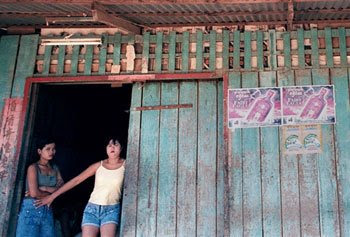 Cambodia, Phnom Penh: Two prostitutes wait for business outside a bottom-end brothel in the Cambodian capital Phnom Penh
Worsened exploitation
The Cambodian government began prosecuting a new "Law on Suppression of Human Trafficking and Sexual Exploitation" in February 2008, after years of pressure from the United States to clamp down on sex trafficking.
Since then, authorities have conducted brothel raids and street sweeps but rights groups complain the new law has in many ways worsened the exploitation of women.
[!break!]
"The law allows police of all levels to arrest and punish sex workers," said Naly Pilorge, director of local human rights group Licadho. "The sex workers are arrested, taken to police stations and rehabilitation centres and then they are abused."
More than 500 women were arrested for soliciting sex in the first nine months of 2008, according to anti-trafficking organisation Afesip, with many of them forced into rehabilitation centres.
Rights groups say the new law makes women easier prey for traffickers and could increase rates of sexually-transmitted infections, as sex workers stop carrying condoms out of fear they will be used as evidence against them.
They also allege that detainees are regularly abused at the two rehabilitation centres, Prey Speu and Koh Kor, which are controlled by Cambodia's ministry of social affairs.
Koh Kor has the added grim reputation of being on an island that was the site of a prison and execution camp under Cambodia's murderous 1975 to 1979 Khmer Rouge regime.
Differing stats
Despite Chanta and others testifying to instances of rape, beatings and extortion at the hands of police in the rehabilitation centres, authorities have repeatedly denied the abuses.
Major General Bith Kimhong, director of the interior ministry's anti-trafficking department, said he does not believe anyone has been abused under the new law because he has received no complaints from victims.
More than 100 people were arrested this year, as human trafficking prosecutions increased by 50 percent, Bith Kimhong said.
The raids on brothels and streetwalkers proved a commitment by the government to end sex trafficking, he said, vowing they would continue.
"We'll continue to cooperate with local authorities to enforce the law," Bith Kimhong said.
Fighting sexual exploitation
The new law is one of several moves taken by the Cambodian government recently to show that it is cracking down on sexual exploitation.
In March 2008, it imposed ban on foreign marriages amid concerns of an explosion in the number of brokered unions involving South Korean men and poor Cambodian women, many of whom were allegedly being set up for sex slavery.
There have also been a string of arrests of alleged foreign paedophiles, as Cambodia seeks to demonstrate sex tourists are not welcome.
Pich Socheata, deputy governor of one Phnom Penh district, leads "clean-ups" of prostitution on the streets but said she empathizes with sex workers.
"They are female and I am too, so I do understand no girls want to do that job,” she said. “But we are only practising law.”
But Keo Tha, a staff member at the sex workers' rights group the Women's Network for Unity, says many more Cambodian women are still being forced into prostitution as jobs dry up amid the global financial crisis.
A more sensible law, she said, would legalise sex work.
Said Tha: "We are sandwiched right now -- we are oppressed by the police, the law and rising living costs.”
Chantha said there was nothing else she could do in Cambodia but become a sex worker.
"If you don't even have a dollar in your pocket to buy rice, how can you bear looking at your starving relatives?" she said. "You do whatever to survive, until you start to realize the consequence of your deeds."
Chanta, in her early twenties, was working in a small red-light district west of the capital Phnom Penh several months ago when she was arrested under Cambodia's new sex-trafficking law.
Police nabbed her in a raid and charged her with publicly soliciting sex, fining her nearly two dollars. Then, Chanta claims, the arresting officers gang-raped and beat her for six days in detention.
Bruises covered her body, but none of her assailants were brought to court, she said.
 Cambodia, Phnom Penh: Two prostitutes wait for business outside a bottom-end brothel in the Cambodian capital Phnom Penh
Worsened exploitation
The Cambodian government began prosecuting a new "Law on Suppression of Human Trafficking and Sexual Exploitation" in February 2008, after years of pressure from the United States to clamp down on sex trafficking.
Since then, authorities have conducted brothel raids and street sweeps but rights groups complain the new law has in many ways worsened the exploitation of women.
[!break!]
"The law allows police of all levels to arrest and punish sex workers," said Naly Pilorge, director of local human rights group Licadho. "The sex workers are arrested, taken to police stations and rehabilitation centres and then they are abused."
More than 500 women were arrested for soliciting sex in the first nine months of 2008, according to anti-trafficking organisation Afesip, with many of them forced into rehabilitation centres.
Rights groups say the new law makes women easier prey for traffickers and could increase rates of sexually-transmitted infections, as sex workers stop carrying condoms out of fear they will be used as evidence against them.
They also allege that detainees are regularly abused at the two rehabilitation centres, Prey Speu and Koh Kor, which are controlled by Cambodia's ministry of social affairs.
Koh Kor has the added grim reputation of being on an island that was the site of a prison and execution camp under Cambodia's murderous 1975 to 1979 Khmer Rouge regime.
Differing stats
Despite Chanta and others testifying to instances of rape, beatings and extortion at the hands of police in the rehabilitation centres, authorities have repeatedly denied the abuses.
Major General Bith Kimhong, director of the interior ministry's anti-trafficking department, said he does not believe anyone has been abused under the new law because he has received no complaints from victims.
More than 100 people were arrested this year, as human trafficking prosecutions increased by 50 percent, Bith Kimhong said.
The raids on brothels and streetwalkers proved a commitment by the government to end sex trafficking, he said, vowing they would continue.
"We'll continue to cooperate with local authorities to enforce the law," Bith Kimhong said.
Fighting sexual exploitation
The new law is one of several moves taken by the Cambodian government recently to show that it is cracking down on sexual exploitation.
In March 2008, it imposed ban on foreign marriages amid concerns of an explosion in the number of brokered unions involving South Korean men and poor Cambodian women, many of whom were allegedly being set up for sex slavery.
There have also been a string of arrests of alleged foreign paedophiles, as Cambodia seeks to demonstrate sex tourists are not welcome.
Pich Socheata, deputy governor of one Phnom Penh district, leads "clean-ups" of prostitution on the streets but said she empathizes with sex workers.
"They are female and I am too, so I do understand no girls want to do that job,” she said. “But we are only practising law.”
But Keo Tha, a staff member at the sex workers' rights group the Women's Network for Unity, says many more Cambodian women are still being forced into prostitution as jobs dry up amid the global financial crisis.
A more sensible law, she said, would legalise sex work.
Said Tha: "We are sandwiched right now -- we are oppressed by the police, the law and rising living costs.”








