Showing posts with label Buddhist philosophy. Show all posts

Wednesday, December 28, 2011

Revolution​ists follow Buddha's teachings

Dec. 28, 2011
A. Gaffar Peang-Meth
PACIFIC DAILY NEWS
He taught us, "Pay no attention to the faults of others, things done or left undone by others," but "consider only what by oneself is done or left undone." In other words, never mind what others do; but mind what one has "done or left undone."
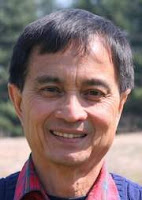
In three days, the New Year 2012 will be upon us. The next 366 days await. What we do or do not do will influence our future. As usual in the holiday season, we reflect on what we have or have not done as we contemplate our new year resolutions.

As I wish all readers, Christians and non-Christians, a merry Christmas and a happy New Year, I find in this occasion a good opportunity to write on Lord Gautama Buddha's teachings from 2,500 years ago, which continue to provide good lessons for mankind today.

Past, present, future

The past is a lesson for the present. The present is a guide for the future. Spanish philosopher George Santayana said, "Those who cannot learn from history are doomed to repeat it." Earlier, German revolutionary socialist Karl Marx asserted, "History does nothing; it does not possess immense riches, it does not fight battles. It is men, real, living, who do all this."

Yet, it was Lord Buddha who preached that, "Each morning we are born again. What we do today is what matters most." He taught mankind: "Do not dwell in the past, do not dream of the future; concentrate the mind on the present moment."

Wednesday, September 08, 2010

Large lack of quality thinking

Buddha at Bayon temple
"Do not believe in anything simply because you have heard it. Do not believe in anything simply because it is spoken and rumored by many. Do not believe in anything simply because it is found written in your religious books. Do not believe in anything merely on the authority of your teachers and elders. Do not believe in traditions because they have been handed down for many generations. But after observation and analysis, when you find that anything agrees with reason and is conducive to the good and benefit of one and all, then accept it and live up to it." - Gautama Buddha

September 8, 2010
By A. Gaffar Peang-Meth
Pacific Daily News (Guam)


In a column last month, I wrote about the inevitability that misunderstandings will occur; that to understand what's intended or expressed requires an ability to imagine, relate, compare, identify, interpret and analyze; and that whatever its cause, misunderstanding creates friction, ends friendships, and alienates.

Better thinking -- quality thinking -- about which I have written extensively in this space, helps one avoid misunderstanding, a benefit to any community.

Troubles with words

Words matter. Those I thought of as friends have denounced me for the meaning they took from words I wrote, interpretation based on misperception. It is said that words, once spoken, can never be recalled.

In a culture that gives importance to face and honor, to retract unjustified hurtful words is an acknowledgment of error: "No can do!"

Speedy electronic communication is not always a good thing. Strong words written during a storm of high emotion remain in perpetuity: They haunt, not heal.

Remember French playwright Victor Hugo: "Strong and bitter words indicate a weak cause."

Overcoming

I write often in this space about people who seem entrenched in a destructive course of intolerance, characterized by a lack of civility. Humility -- to be considerate and respectful of others, their ways and their views, their dignity and their worth -- is a virtue preached by the world's major religions and seems to be in short supply.

Last year, I introduced psychology professor Jonathan Haidt's "The Happiness Hypothesis: Finding Modern Truth in Ancient Wisdom." Haidt quoted anthropologist Clifford Geertz: "Man is an animal suspended in webs of significance that he himself has spun."

Haidt explained: We live in a world of "human creations" -- not one of rocks, trees, and physical objects -- but "a world of insults, opportunities, status symbols, betrayals, saints, and sinners," all created by humans who "believe in them."

Haidt cited the eighth-century Chinese Zen master Sen-ts'an's poem "The Perfect Way," that reads, "The perfect way is only difficult for those who pick and choose" -- between like and dislike, between "for" and "against." The poem brands "judgmentalism" as "the mind's worst disease," because, as Haidt explained, "it leads to anger, torment, and conflict."

Through the poem, Haidt posited that human beings in all cultures possess this "excessive and self-righteous tendency to see the world in terms of good versus evil," or "moralism," which "blinds people" and makes agreement and compromise difficult. Haidt sees as the "biggest obstacle to world peace and social harmony" the "naive realism" that gives us this world of good and evil: We're good, they are evil.

Haidt's website, CivilPolitics.org, noted that over the past 20 years, political leaders, political parties and mass media outlets have become "more polarized, strident and moralistic (i.e., excessively concerned with morality, and certain about their own virtue)." Haidt wrote: "We must respect and even learn from those whose morality differs from our own."

"When political opponents are demonized rather than debated, compromise and cooperation become moral failings and people begin to believe that their righteous ends justify the use of any means," CivilPolitics.org states.

Just as the Zen master preached nonjudgmentalism, Lord Gautama Buddha taught that meditation is one way to calm man, to tame him to be "less reactive to the ups and downs and petty provocations of life," Haidt affirmed.

Chapter 4 of Haidt's book, "The Faults of Others," begins with two quotes:

One from Jesus in Matthew 7:3-5: "Why do you see the speck in your neighbor's eye, but do not notice the log in your own eye? ... You hypocrite, first take the log out of your own eye."

The other is from Buddha: "It is easy to see the faults of others, but difficult to see one's own faults ... one conceals one's own faults as a cunning gambler conceals his dice."

This is human nature: Human eyes see the failings in others when looking outward; they see not the same when looking inward.

Buddha's teaching

Recall Chinese Taoist philosopher Lao Tzu, who said: "To realize that you do not understand is a virtue. Not to realize you do not understand is a defect."

"There is no shame in not knowing; the shame lies in not finding out," say the Russians.

Buddha taught: "There is nothing more dreadful than the habit of doubt. Doubt separates people. It is a poison that disintegrates friendships and breaks up pleasant relations. It is a thorn that irritates and hurts; it is a sword that kills."

And Buddha preached: "Do not believe in anything simply because you have heard it. Do not believe in anything simply because it is spoken and rumored by many. Do not believe in anything simply because it is found written in your religious books. Do not believe in anything merely on the authority of your teachers and elders. Do not believe in traditions because they have been handed down for many generations. But after observation and analysis, when you find that anything agrees with reason and is conducive to the good and benefit of one and all, then accept it and live up to it."

How do we observe and analyze, and "accept ... and live up" to what "agrees with reason and is conducive to the good and benefit of one and all," if better thinking -- quality thinking -- is lacking in our lives?

A. Gaffar Peang-Meth, Ph.D., is retired from the University of Guam, where he taught political science for 13 years. Write him at peangmeth@yahoo.com.

Wednesday, April 14, 2010

Moving Out of “Badlands”

Maha Ghosananda leading a dhammayietra in Cambodia
The Dharmayietra (“Pilgrimage of truth”) peace march, led by our late Samdech Prah Maha Ghosananda, is a very significant step toward our ultimate goal, but the laity community needs to be able to gather momentum to push for greater social mobilization onto other fronts such as empowerment of the dispossessed, building capacity in defending human and citizen rights, promoting democracy, gaining equitable sharing of resources, and lay the foundation for community organizing, and most importantly waging public campaign to galvanize citizen movements which in due time will be capable of simultaneously stand up and say “NO” to the overreaching power of the establishment.
Wednesday, April 14, 2010
Op-Ed by NEAY KRUD’TH

At a time when Cambodia’s socio-economic and political climate continue to decline and increasingly threatens our existing social order, the Khmer Buddhist laity and the Sangha communities are holding on to each other while bracing for impact. We are wandering what the future holds while desperately scanning the horizon for a small glimpse of hope.

Even the prediction might not even be completely accurate, as French mathematician Henri Pointcaré said, “It is far better to foresee even without certainty than not to foresee at all”. To mitigate our fear of uncertainty we need to free up our mental capacity to exercise clear reasoning and analysis.

First, one thing is certain ― the future is almost always different from the past. Going back to Buddha’s Three Characteristics of Existence ― anicca, dukka, anatta, the world is a vanity fair full of changes and transformations. There is birth, death, growth, and decay, combination and separation.

Second, change always comes from something. Some changes are earth-shattering, others might be subtle. Change could be positive or negative. However, its impact is nevertheless disruptive. Change is preceded by a sign of structural shift in social, economic, and politics of a country. One must be diligent and alert to be able to recognize and make sense out events occurring around one’s daily life. These structural shifts signal an end of the “old”, a transformation that is disconcerting to people because it is time filled with unknowns and discontinuities as the “old” goes away and people have not made up the “new”. When that happens, a nation falls into what is metaphorically termed “Badlands”.

The author without a doubt believes that, by now, all of us Khmers have seen what “Badlands” are like ― our ancestors and present-day Khmers together we have endured life in the “Badlands” for the past 700 years or so, since the collapse of Angkor, and sadly enough we see no end in sight. In the “Badlands” the old certainty of the past are being scattered like leaves before a storm. There are confusing landscapes which can be more hostile than they are beautiful, more threats than opportunities. The impact of the latest change left us stunned and profoundly disoriented, and it remains to be seen whether, collectively we will emerge, from the “Badlands” with our values, identity, freedom, and security fully restored.

Clawing our way out of the abyss by steering the “Middle Path” has proven ineffective in the face of brutal internal and external assaults on our citizen’s liberty, our nation’s sovereignty and security. An urgent and appropriate level of response, by our centuries-old community of Buddhist laity and Sangha to the challenge of the future, should be delicately crafted, because an “extraordinary problem demands extraordinary solution”.

The author, in his diminutive status as a layperson has no intention of challenging the traditional Buddhist edicts that have prevented the Sangha community from actively promoting constructive social and political change in Cambodia for the preceding centuries. However, the gravity of our collective suffering at this moment in our history warrants the re-adaptation of the Khmer Theravada Buddhist worldview, in order to optimize the bounds in which the Sangha is allowed to participate in the duties of life, without being trapped in ambiguities and contradictions vis-ā-vis the duties of Dharma. The author firmly believes that there is a great possibility that the Sangha could do much more through direct and indirect non-violent actions to help advance our collective struggle toward restoring the dignity, equality, justice and security for all Khmers.

The Dharmayietra (“Pilgrimage of truth”) peace march, led by our late Samdech Prah Maha Ghosananda, is a very significant step toward our ultimate goal, but the laity community needs to be able to gather momentum to push for greater social mobilization onto other fronts such as empowerment of the dispossessed, building capacity in defending human and citizen rights, promoting democracy, gaining equitable sharing of resources, and lay the foundation for community organizing, and most importantly waging public campaign to galvanize citizen movements which in due time will be capable of simultaneously stand up and say “NO” to the overreaching power of the establishment.
“Necessity is the mother of taking chances”, Mark Twain.
Social change is a complex business. One must changes with it or risks the chance of being left out of the process. Being reasonable is not enough to make change. We all prefer to see the Sangha leads the way in promoting the social transformation rather than the other way around. This way the Sangha is seen as being “relevant” in the consciousness of the laity, and as a consequence fosters more mutual reliance and trust. There will be incentive for both communities ― the Sangha will enjoy bountiful young recruits into its rank, a broadened support base, and a renewed mutual bond; the laity will enjoy the de facto leadership of the Sangha, and the benefit of its ethical and moral guidance. Thus a new solidarity between the two communities is reaffirmed and strengthened in the face of the pernicious enemy of peace and freedom. Together we may be able to achieve what political strategists have been known to say “The first rule of power tactics” is that “power is not only what you have but what the opponent thinks you have”.

The best living example of such power tactics, currently being unfold on the world stage, is the nervous reaction displayed by the Chinese government brought to bear by the loving kindness campaign activities of the Dalai Lama, the spiritual leader of Tibet. The Dalai Lama is a mere “refugee” Buddhist monk, with no significant financial or military asset to speak of, or to be considered a threat to any person or any country, let alone China. Yet, he appears to cause the Chinese authority great pain and embarrassment and keep them on-edge every time he travels and makes speeches around the world to teach Dharma, and to raise global awareness of the plight of the Tibet people under the Chinese rule, and to solicit the world’s support for his country’s freedom.

The author would like to leave the foregoing discussion to the readers, and sincerely hope that a vigorous discussion and debate among communities of Khmer Buddhist will ensue until, together, we can see the light at the end of the tunnel.

Saturday, April 25, 2009

Buddhism in brief


Dear Readers,

Below is a link to an excerpt on Buddhist philosophy which was written by Professor Sar Sarun that you can download for your own reading.

We would like to thank Lok Chanda Chhay for sending it over.

Thank you!



