Showing posts with label Decreasing value of education in Cambodia. Show all posts

Friday, March 16, 2012

Ban Limits Research Potential for Future: Academic

Sok Touch, rector of Khemarak University, on “Hello VOA” Monday. (Photo: Heng Reaksmey, VOA Khmer)
Taboo thesis topics

Thursday, 15 March 2012
Say Mony, VOA Khmer | Phnom Penh
“It is because of such restrictions that our country is like this.”

Click here to listen to the audio program:

The Royal University of Law and Economics has issued a ban on more than a dozen research topics for students, but the head of a local institution says this will only hurt the country’s development.

The ban bars research on topics like drug abuse, land disputes, labor disputes and the stock market, as well as the Cambodian Red Cross, which is led by Bun Rany, the wife of Prime Minister Hun Sen.

It has provoked heated debate among Cambodian academics and students.

“It is because of such restrictions that our country is like this,” Sok Touch, rector of Khemarak University, told “Hello VOA” on Monday, referring to the lack of primary research documents in the Khmer language.

Wednesday, May 25, 2011

Reactions of readers affirm goal

May 25, 2011
A. Gaffar Peang-Meth
PACIFIC DAILY NEWS
I hear, from time to time, from some in the Hun Sen regime, and though I disagree with their association and their work for the dictatorial government, I don't doubt some folks in Hun Sen's civilian administration and military sincerely love Cambodia and want the country to be free, independent and democratic, with justice and rights for the people. Those who are close to politics and the action every day may not be as happy as they seem.
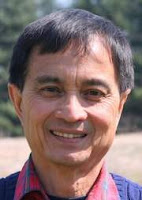
First, my apologies for not having answered all emails: It's physically impossible. Second, to my friends on Guam: Thank you for seeing that what I write about Cambodia can be universally applied (my former comparative politics students at UOG can smile). Third, I wish to announce that beginning in July I will decrease my writing in this space from weekly to biweekly to have time to meet other obligations.

Reactions from readers, Cambodians and non-Cambodians, to what I write (and do not write) have been educational for me. I write to share what I know and to provoke thoughtful debate. So, the positive and negative reactions I received affirm that my goal is attained: I am able to shake the resting mind to ask questions. Most would agree that one who does not question is intellectually dead and cannot know how to proceed.

From what readers write, I am confident that "how" one thinks determines the kind of world in which one finds oneself. "What we think, we become," Gautama Buddha said 2,500 years ago. The concepts have been reiterated in different ways by many, including Mahatma Gandhi and Barack Obama's "Yes, we can!"

How one thinks does not mean shooting off one's mouth under the guise of protected free expression. A well-reflected thought is a far cry from a fleeting opinion. Among many things, to think involves using the mind to imagine, inquire, interpret, relate, evaluate, compare and analyze. A school of thought urges that we not be satisfied and settle for an answer, even if it is so clear and so logical, but to keep asking questions until we reach a horizon with a panorama of answers from which the best one can be chosen.

Thursday, March 26, 2009

Teachers Group Sees ‘State of Emergency’

By Heng Reaksmey, VOA Khmer
Original report from Phnom Penh
25 March 2009


The Cambodian Teacher's Association has found the value of education in Cambodia decreasing, as students were leaving school and teachers were not always tending to their classes.

In interviews with 460 teachers in nine provinces, the association said Wednesday, 93 percent said students were abandoning their studies due to poverty, bribes charged by teachers, or school supply expenses; 54 percent of the teachers said they kept irregular teaching hours.

Teachers said that some students left school because they felt discouraged they would not find a job after graduation.

The association's president, Rong Chhung, said the education system had reached a "state of emergency."

"According to my survey, we show that the education system is falling, and the Cambodian government should take immediate action to prevent this," he said.

Ministry of Education officials could not be reached for comment.

Koeur Nay Leang, director-general of the Phnom Penh department of education, dismissed the findings of the survey, saying it had been conducted without the cooperation of the Ministry of Education.

Other countries faced the same difficulties in education as Cambodia, he said, and the government was in the process of reform.

Free Trade Union President Chea Mony told reporters Wednesday a weak education system had led to at least 15 percent of Cambodia's underage students to leave their studies for work in factories.



