Showing posts with label Gandhi. Show all posts

Wednesday, November 18, 2009

One person with a good idea can cause change

"It is from numberless diverse acts of courage and belief that human history is shaped" - Robert F. Kennedy
November 18, 2009
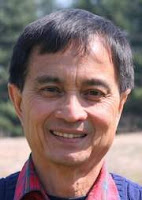
A. Gaffar Peang-Meth
Pacific Daily News (Guam)


An inspiring quote by Mahatma Gandhi, "You must be the change you wish to see in the world," makes many feel hopeful, even feel empowered.

If change is inevitable, do we allow the change to emerge without our input, which puts us at risk of being destroyed by it, or do we take action to affect the change we would like to see?

Today, I'd like to write about how to lead change. I'm drawing from bestselling author, entrepreneur and blogger Seth Godin's observations. He has interesting ideas about how to foment change. I think each of us can see things around us that we know are wrong or that could be better. Our instincts tell us we should do something, but we don't. We're busy, someone else will take care of it. This is where Seth Godin comes in: how change occurs. His theory of tribes dovetails nicely with the political socialization model I've written of over the years.

Starting with factories, Godin asserts that the industrial age offered a significant opportunity to create real change. The assembly line, instituted first by Henry Ford, was the catalyst for tremendous social change: Goods were produced faster and with greater efficiency; the wage scale for the skilled workers who manned the line changed their living standard.

As more and more goods were produced, there grew a need to market them. Cultural change began to be sparked by mass media, through which advertising was blasted to the masses. We might have thought we were immune to the cacophony of calls to buy one product over another, or a deluge of things we didn't need; the fact is we all are subject to the subliminal pull of repeated entreaties to buy, buy, buy. And so the marketplace changed our culture.

The nature of tribes

Godin says we now have moved to a larger stage, thanks in part to communications tools, when change -- for good or ill -- is more easily undertaken. We are at a time in history where one person truly can make a difference because of the nature of tribes, says Godin.

He defines a tribe as an association of people with a common interest. Each of us is potentially a member of many tribes. We're members of a church, pagoda, mosque group, we volunteer for Meals on Wheels, we're members of a golf club, a mountain biking group. We work in an office. We teach in a school. Each of these intentional or accidental associations becomes a tribal association of common interest.

Godin says great change, a movement, is created when these tribal circles intersect, overlap, and expand their connectivity to larger numbers of people. This is how momentous change occurs. Godin proposes that one person can galvanize a tribe. Change, he says, comes from leading and connecting people and ideas.

Examples

Godin offers examples of people unknown to most of us who have seen a wrong and worked to right it by gathering like-minded people together behind the same good idea: the San Francisco City ASPCA, which became the first ASPCA affiliate in the world to successfully implement a "no-kill" policy for the animals it sheltered. Led by a single determined individual, the people in the city who cared about animals rallied behind the concept in spite of official opposition, and won. Godin recalls the young man who started a movement that supplies shoes for children who have none; an architect who started a green building movement by communicating with those who have similar interests across the nation. A single person with a good idea who took the lead started movements.

Godin suggests that action can come from each of us asking ourselves three questions: Who are you upsetting? (If you're not upsetting someone, you're not changing the status quo.) Who are you connecting? Who are you leading?

Leaders, he says, challenge the status quo. They have curiosity. They ask questions. They build a culture with small common symbols that give the new tribe an identity. But most importantly, leaders commit. They commit to working to make the change. The tribe that spreads the message promotes the change exponentially, and a movement is created around one good idea. Leaders are charismatic, says Godin, but here's the secret: They are charismatic because they are leaders, because they commit, because they take a good idea and share it and share it and share it again and again and again until it catches fire and ignites a conflagration that changes what had seemed unchangeable.

No action, no result

Which brings us back to Gandhi. "You may never know what results come of your action, but if you do nothing, there will be no result." To hear Godin, an optimist, is to believe that the power to instigate a movement is within the grasp of most of us. Surely the communications tools at our fingertips offer us the opportunity to reach a wide audience -- potential tribe members -- relatively easily. Surely, these same tools can be used for ill as for good, but that's a discussion for another day.

For now, the point is, change is not an abstract. It is not something for someone else to do. It is something you can make happen with a good idea, energy, commitment, and connection to a tribe. Any one of us can become that leader who made a great and positive difference with determination to communicate and implement one good idea. Have the courage to go after your goals rather than feel overwhelmed by them.

As Robert F. Kennedy said, "It is from numberless diverse acts of courage and belief that human history is shaped."

A. Gaffar Peang-Meth, Ph.D., is retired from the University of Guam, where he taught political science for 13 years. Write him at peangmeth@yahoo.com

Monday, October 01, 2007

Buddhism and its values have inspired a tradition of non-violent protest more powerful than secularists understand

The Burmese monks' spiritual strength proves religion has a role in politics

Buddhism and its values have inspired a tradition of non-violent protest more powerful than secularists understand

Monday October 1, 2007
Pankaj Mishra
The Guardian (UK)

In recent months, militant atheists have tried to convince us religion ought to be expelled from public as well as private life. It is not hard to imagine how their salon wisdom would have fared last week in the streets of Rangoon, where ordinary Burmese protesting against a military dictatorship rallied behind Buddhist monks - the "highly revered moral core", as the New York Times put it, of Burmese society.

If the images of saffron-robed mendicants braving police brutality seem oddly familiar, it is because Buddhist monks left their monasteries and led protests against political repression frequently in the 20th century. So great and prolonged was the suffering of war in Indochina that the Buddhist attempt to alleviate it may seem a distant memory. But it was the self-immolation of a monk in Saigon in June 1963 - rather, pictures of him serenely meditating as flames devoured his body - that first troubled America's conscience about what was then an obscure war.

Thich Nhat Hanh, another Vietnamese monk, was a prominent figure in the anti-war movement in the US who eventually persuaded Martin Luther King to pit his voice against the destruction of Vietnam. In Cambodia, where the Khmer Rouge killed almost all the 60,000 monks, the Buddhist monk Maha Ghosananda became a major figure in the reconstruction of his country.

In September 1987 Buddhist monks and nuns began the first major political demonstration in Tibet in years by unfurling the Tibetan flag in central Lhasa. They were arrested and severely beaten, sparking off clashes between Tibetans and police that provoked Hu Jintao, now China's president and then the Chinese administrator in Tibet, to declare martial law.

How did a supposedly meditative tradition produce political protesters? If "religion is a poison", as Mao Zedong informed the Dalai Lama - a sentiment echoed by the secularists of our time - why then has Buddhism proved such an effective means of mass mobilisation against tyranny?

The Buddha himself was no political theorist or activist. He preferred to address the question of what constitutes the ruler's right to rule. Unlike the theorists of ancient India who claimed divine sanction for kingship, the Buddha did not find the ruler's legitimacy in some transcendent realm. As the many stories about ideal kings in the Jataka Tales - a compendium of Buddhist stories - attest, righteousness is the only proper basis for the ruler's authority.

The Buddha preferred small political communities in which all members shared the power of decision-making. In his lifetime, however, he witnessed the emergence of large states. Aware that these impersonal regimes exposed many people to a sense of powerlessness and insecurity, he hoped that the Buddhist sangha, or monastic order, would base itself near urban centres and help give newly uprooted people a sense of spiritual community and tradition.

Thus Buddhist monks, living not in forests but in retreats close to populated settlements, are traditionally bound to laymen by an ethic of social responsibility. Not surprisingly, in Tibet and Burma, where a modern, militarised state tyrannises a largely pre-modern and unorganised population, monasteries have been exalted as alternative centres of moral and political authority, and monks and nuns have come to spearhead resistance to unrighteous regimes.

Certainly, Buddhists are not immune to ideological delusions. In early 20th-century Japan, and in Sri Lanka in the 1980s and 90s, many Buddhist monks succumbed to the lure of nationalism and militarism. Nevertheless, with its absence of dogma and emphasis on intellectual and spiritual vigilance, Buddhism has proved to be less vulnerable to fanatical zeal than not only other major religions, but also such modern ideologies as nationalism and secularism. As Nhat Hanh exhorts, echoing a major theme of the Buddha: "Do not be idolatrous about, or bound to, any doctrine, theory, or ideology, even Buddhist ones. All systems of thought are guiding means; they are not absolute truth."

It helps, too, that Buddhist political methods aim, relatively modestly, at dialogue and moral conversion rather than total revolution. Writing to Martin Luther King in 1965, after another Buddhist self-immolation in Vietnam, Nhat Hanh explained that "the monks who burned themselves did not aim at the death of the oppressors, but only at a change in their policy. Their enemies are not man. They are intolerance, fanaticism, dictatorship, cupidity, hatred and discrimination which lie within the heart of man."

Maha Ghosananda, who lost his entire family in the Cambodian killing fields, insisted on including the Khmer Rouge at UN-sponsored talks on the future of Cambodia, claiming that he wanted an end to antagonism, not to antagonists. (Such practical wisdom traditionally preserved peace in Afghanistan's tribal society, and the country's current president, Hamid Karzai, appears to have embraced it by offering a seat in his cabinet to the Taliban.) Similarly, Samdhong Rinpoche, the monk prime minister of the Tibetan government in exile in India, claims he opposes the injustice and violence of Chinese rule rather than the Chinese people or state. Calling for a Gandhian-style campaign of satyagraha, or non-violent resistance, Samdhong Rinpoche asks Tibetans to actively reject Chinese rule through non-cooperation and disobedience, without hating or harming any Chinese. Both he and the Dalai Lama have reservations about even an economic boycott, which they believe hurts ordinary people more than it damages governments.

Living through a worldwide upsurge of violence, most of us may find it hard to conceive of Buddhist principles as politically efficacious. Nevertheless, the history of the modern world furnishes many examples of political victories achieved through moral persuasion and spiritual strength: national self-determination in colonised countries, the civil rights movement in the US, the velvet revolutions in Russia and eastern Europe, the end of apartheid in South Africa, and the gradual spread of parliamentary democracy around the world.

Today the Burmese generals confront the "authentic, enduring power" of people, before which, as Hannah Arendt presciently wrote in her analysis of the Prague Spring of 1968, a repressive regime eventually surrenders. The Buddhist monks chanting on the streets of Rangoon may look naive and defenceless when you consider the power of the political-military institutions of the modern, secular era that they are up against: heavily armed nation-states with hyper-competitive capitalist economies. Certainly, the Burmese generals know the way the world works. Apparently isolated, they play shrewdly the game of international realpolitik, buying the silence of their two rising and needy neighbours, democratic India as well as authoritarian China, with oil, gas and timber. However, to such a ruthlessly amoral politics, based on purely rational self-interest, the moral and spiritual values of religion can and often do pose a challenge.

No doubt devotees of science and rationality will continue to call for a religion-free politics. But what the Burmese demonstrators prove is that, as Gandhi said, "those who think religion has nothing to do with politics understand neither religion nor politics".

Pankaj Mishra is the author of Temptations of the West: How to be Modern in India, Pakistan and Beyond

kannauj@gmail.com



