


I have no apologies for backing the people who opposed Vietnamese occupation of Khmer soil; nor any for joining the Non-Communist Resistance (1980-1989) to act against Vietnamese troops that installed a puppet regime in Cambodia and that controlled the country from 1979-1989.
My ideas of democracy, republican values and rule of law have never wavered.
Yet I served without complaint when Prince Sihanouk was president of the coalition that fought Vietnamese occupiers, and I served with Prince Sihanouk's son, Prince Ranariddh, in the joint military command, fighting the Vietnamese occupiers. My homeland's sovereignty and territorial integrity are non-negotiable.
 August 18, 2010
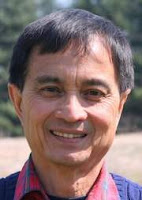
By A. Gaffar Peang-Meth
Pacific Daily News (Guam)
Chinese Taoist philosopher Lao Tzu said, "To realize that you do not understand is a virtue; Not to realize that you do not understand is a defect."
To understand is to comprehend, to grasp the significance or the meaning of something intended or expressed by another. It requires an ability to imagine, relate, compare, identify, interpret and analyze the thinking of another.
An amusing remark attributed to Robert McCloskey of the U.S. State Department is relevant: "I know that you believe you understand what you think I said, but I'm not sure you realize that what you heard is not what I meant."
Everyone of us has misunderstood the intended meaning expressed by another -- who may not have expressed themselves well. Whatever causes it, misunderstanding creates friction, ends friendships, alienates people.
Lord knows, I have experienced both ends of misunderstanding. Thankfully there's usually less trouble when it is I who misunderstood! In my Asian culture, I was taught the adage "Silence is golden." I smiled to read Abraham Lincoln's advice, "Better to remain silent and be thought a fool than to speak out and remove all doubt."
But it was my parents' upbringing of me that spared me much trouble when I misunderstood others. My mother, with an elementary school education, made sure I knew that humans argue and don't always accept each other's views; that I must learn to listen more than to speak, as maturity takes time. And my father, with a high school education, taught me only when different minds meet through humbly talking, listening and thinking does one's true vision emerge.
They both advised that I roll my tongue seven times before I speak; if I itched to argue, I should go eat a green sappy banana, which should spare me from fighting.
Both my parents died in 1975, when Pol Pot took over Cambodia. My mother passed away in my sister's arms . She could no longer endure the lack of food and demanding hard labor. My father was pulled away from the house and executed on the day Pol Pot's soldiers evacuated Phnom Penh city.
But their teachings have remained with me.
On the other hand, while I have learned enough how not to be unhappy and hurt as one who is sometimes misunderstood, I have found misunderstanding by others unnerving. Sometimes a failure to understand can be a symptom of ignorance or of a moral certainty of one's own view that is not supported by informed critical thinking. Such a tunnel view is not dissimilar to Pol Pot's uncompromising concept of what was "correct" thinking.
So, one misunderstands. Then one labels and brands. What follows is a categorization of the "we" and "they" groups and all that that entails.
Someone "anonymous" labeled me a Khmer "republican diehard" because of my criticism of Chief of State Norodom Sihanouk's foreign policy that resulted in 3,500 square kilometers of Khmer soil being occupied by Vietnamese Communist troops, who used the occupied land as a springboard for attacks against the Americans and their allies. As a result, the Vietnam War spilled into Cambodia, Pol Pot gained Sihanouk's support and succeeded in overturning the Khmer Republic, all of which was a prelude to Vietnam's invasion and occupation of Cambodia.
As a U.S.-trained political scientist, I studied U.S. history and learned from the U.S. forefathers' philosophies. It was from this foundation that I have embraced democracy, republican values and the rule of law. None of these are what Lon Nol's Khmer Republic experienced as it was thrown into the hell and fire of war.
I have no apologies for backing the people who opposed Vietnamese occupation of Khmer soil; nor any for joining the Non-Communist Resistance (1980-1989) to act against Vietnamese troops that installed a puppet regime in Cambodia and that controlled the country from 1979-1989.
My ideas of democracy, republican values and rule of law have never wavered.
Yet I served without complaint when Prince Sihanouk was president of the coalition that fought Vietnamese occupiers, and I served with Prince Sihanouk's son, Prince Ranariddh, in the joint military command, fighting the Vietnamese occupiers. My homeland's sovereignty and territorial integrity are non-negotiable.
When Khmer factions and their foreign backers spoke of "national reconciliation," I left the resistance for an academic career.
I continued my friendships with people I knew in the royalist movement, and people who worked with me in the resistance but who are now with the new regime, for one reason or another, and I debate only on public policies -- not on personalities.
I like what India's great political and spiritual leader, Mahatma Gandhi, said: "I look only to the good qualities of men. Not being faultless myself, I won't presume to probe into the faults of others."
I am not a Buddhist, but Buddha's words I cherish: "You should respect each other and refrain from disputes; you should not, like water and oil, repel each other, but should, like milk and water, mingle together."
And his other words: "Let us rise up and be thankful, for if we didn't learn a lot today, at least we learned a little, and if we didn't learn a little, at least we didn't get sick, and if we got sick, at least we didn't die; so let us all be thankful."
Humility keeps our arrogance in check, and our understanding and misunderstanding in perspective.
A. Gaffar Peang-Meth, Ph.D., is retired from the University of Guam, where he taught political science for 13 years. Write him at peangmeth@yahoo.com.
To understand is to comprehend, to grasp the significance or the meaning of something intended or expressed by another. It requires an ability to imagine, relate, compare, identify, interpret and analyze the thinking of another.
An amusing remark attributed to Robert McCloskey of the U.S. State Department is relevant: "I know that you believe you understand what you think I said, but I'm not sure you realize that what you heard is not what I meant."
Everyone of us has misunderstood the intended meaning expressed by another -- who may not have expressed themselves well. Whatever causes it, misunderstanding creates friction, ends friendships, alienates people.
Lord knows, I have experienced both ends of misunderstanding. Thankfully there's usually less trouble when it is I who misunderstood! In my Asian culture, I was taught the adage "Silence is golden." I smiled to read Abraham Lincoln's advice, "Better to remain silent and be thought a fool than to speak out and remove all doubt."
But it was my parents' upbringing of me that spared me much trouble when I misunderstood others. My mother, with an elementary school education, made sure I knew that humans argue and don't always accept each other's views; that I must learn to listen more than to speak, as maturity takes time. And my father, with a high school education, taught me only when different minds meet through humbly talking, listening and thinking does one's true vision emerge.
They both advised that I roll my tongue seven times before I speak; if I itched to argue, I should go eat a green sappy banana, which should spare me from fighting.
Both my parents died in 1975, when Pol Pot took over Cambodia. My mother passed away in my sister's arms . She could no longer endure the lack of food and demanding hard labor. My father was pulled away from the house and executed on the day Pol Pot's soldiers evacuated Phnom Penh city.
But their teachings have remained with me.
On the other hand, while I have learned enough how not to be unhappy and hurt as one who is sometimes misunderstood, I have found misunderstanding by others unnerving. Sometimes a failure to understand can be a symptom of ignorance or of a moral certainty of one's own view that is not supported by informed critical thinking. Such a tunnel view is not dissimilar to Pol Pot's uncompromising concept of what was "correct" thinking.
So, one misunderstands. Then one labels and brands. What follows is a categorization of the "we" and "they" groups and all that that entails.
Someone "anonymous" labeled me a Khmer "republican diehard" because of my criticism of Chief of State Norodom Sihanouk's foreign policy that resulted in 3,500 square kilometers of Khmer soil being occupied by Vietnamese Communist troops, who used the occupied land as a springboard for attacks against the Americans and their allies. As a result, the Vietnam War spilled into Cambodia, Pol Pot gained Sihanouk's support and succeeded in overturning the Khmer Republic, all of which was a prelude to Vietnam's invasion and occupation of Cambodia.
As a U.S.-trained political scientist, I studied U.S. history and learned from the U.S. forefathers' philosophies. It was from this foundation that I have embraced democracy, republican values and the rule of law. None of these are what Lon Nol's Khmer Republic experienced as it was thrown into the hell and fire of war.
I have no apologies for backing the people who opposed Vietnamese occupation of Khmer soil; nor any for joining the Non-Communist Resistance (1980-1989) to act against Vietnamese troops that installed a puppet regime in Cambodia and that controlled the country from 1979-1989.
My ideas of democracy, republican values and rule of law have never wavered.
Yet I served without complaint when Prince Sihanouk was president of the coalition that fought Vietnamese occupiers, and I served with Prince Sihanouk's son, Prince Ranariddh, in the joint military command, fighting the Vietnamese occupiers. My homeland's sovereignty and territorial integrity are non-negotiable.
When Khmer factions and their foreign backers spoke of "national reconciliation," I left the resistance for an academic career.
I continued my friendships with people I knew in the royalist movement, and people who worked with me in the resistance but who are now with the new regime, for one reason or another, and I debate only on public policies -- not on personalities.
I like what India's great political and spiritual leader, Mahatma Gandhi, said: "I look only to the good qualities of men. Not being faultless myself, I won't presume to probe into the faults of others."
I am not a Buddhist, but Buddha's words I cherish: "You should respect each other and refrain from disputes; you should not, like water and oil, repel each other, but should, like milk and water, mingle together."
And his other words: "Let us rise up and be thankful, for if we didn't learn a lot today, at least we learned a little, and if we didn't learn a little, at least we didn't get sick, and if we got sick, at least we didn't die; so let us all be thankful."
Humility keeps our arrogance in check, and our understanding and misunderstanding in perspective.
A. Gaffar Peang-Meth, Ph.D., is retired from the University of Guam, where he taught political science for 13 years. Write him at peangmeth@yahoo.com.








