Showing posts with label Illegal Supplemental Treaty with Vietnam. Show all posts

Saturday, September 15, 2012

Border Expert Says Old Vietnam Treaties Should Be Nulified

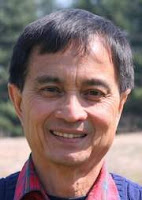
Sean Pengse
Meanwhile, Cambodia and Vietnam have yet to reach full agreements on border demarcation.

15.09.2012
By Sok Khemara, VOA Khmer

WASHINGTON DC - Despite assurances from Prime Minister Hun Sen that no Cambodian land has been ceded to Vietnam, a France-based border expert said the government has failed to nullify treaties with its eastern neighbor that would do just that.

Sean Pengse, former Cambodian minister of industry and president of the Paris-based Cambodia Border Committee, told “Hello VOA” that at least four border treaties were made during Vietnam’s occupation of Cambodia, from 1979 to 1989, causing the loss of territory.

A supplementary agreement was made in 2005, sparking protests from many Cambodians.

With the national election approaching next year, and border questions often at the forefront of heated political debate, Hun Sen recently gave a five-hour speech to the National Assembly, broadcast live on state television, defending his government’s border policies.

Wednesday, October 13, 2010

Viet's Quest for influence and its implication for the management of border disputes with Cambodia and Laos by Vu Le Thai Hoang

KI-Media Note: Dear Readers,

Near the eve of the signing of the Supplemental border treaty with Vietnam and the anniversary of the 1991 Paris Peace Agreements on Cambodia, we are posting following article written by a Vietnamese author which clearly emphasizes Hun Xen's involvement in SECURING the 1985 border treaty imposed by Vietnam during its occupation on Cambodia.

We would like to thank Mr. Bora Touch for pointing this document.

We urge all of you to read this document as it sheds important light on the border dispute with Vietnam, as well as the Master-Client relationship between Hanoi and the Hun Xen regime.

Knowledge is Power!
May Power be with You!
Abstract

Through providing a historical overview of border disputes between Vietnam and neighbouring Laos and Cambodia in Indochina, the article aims to evaluate the success gained by Vietnam in its efforts to secure the western and southwestern land border and thus maintain a peaceful external environment for the domestic reform. Since the Cambodian endgame, Vietnam has sought to improve political relations with all neighbours (including China) and, on that basis, consistently applied fundamental principles of international law while adopting the region’s common practice in order to resolve border issues. In return, the Communist leadership in Laos and the Hun Sen regime in Cambodia have been eager to sustain the Cold War border treaty system with Vietnam in order to stabilize the border, address cross-border non-traditional security issues, and ensure Vietnam’s assistance for economic development and regime security. In addition, Vietnam’s border disputes with Cambodia prove harder to deal with because the latter’s domestic power struggle has turned the issue into a political card played by opposition parties in their election campaigns.

(Manuscript received October 1, 2006; accepted for publication December 1, 2006)

Keywords: New Influence, Border Management, Border Disputes, Cambodia, Laos, Vietnam

The Author

Vu Le Thai Hoang was born in August 1975, awarded with the M.Sc. in Strategic Studies by the Institute of Defense and Strategic Studies (now the S.Rajaratnam School of International Studies), Nanyang Technological University, Singapore. He worked as a lecturer and research fellow at the Institute for International Relations, Hanoi, Vietnam. Presently, he is a Ph.D. candidate at the Department of East Asian Studies, University of Leeds, United Kingdom, with fields of interest in Vietnam’s foreign policy and Southeast Asia’s political and security affairs. E-Mail: easlthv@leeds.ac.uk or vulethaihoang@gmail.com.

Wednesday, March 03, 2010

Cambodians complicit in Vietnamization

March 3, 2010
By A. Gaffar Peang-Meth
Pacific Daily News (Guam)


I promised last week to discuss today the 25-year treaty of peace, friendship and cooperation concluded by Heng Samrin, a former Khmer Rouge commander who is now a leader in Cambodia's government, and Vietnam's prime minister Pham Van Dong on Feb. 18, 1979.

This treaty binds Cambodia and Vietnam in what the treaty terms, "militant solidarity and fraternal friendship." In a stroke of the pen, the signatories extol a symbiosis of interests between Cambodia and Vietnam, opening the door to an even more thorough Vietnamization of Khmer land and culture than might have taken place in a federation of the states of the former French Indochina.

Retired Johns Hopkins professor Naranhkiri Tith observes on his Web site that the 1979 treaty between Hanoi and its puppet in Phnom Penh "became official in 2005" when Cambodia's King Sihamoni, "with the support of his father Sihanouk," put his royal signature on "supplements" to the treaty, thereby making Cambodians complicit in the Vietnamization of Cambodia.

Some readers have requested a review of Vietnam's historical expansionism and its contemporary revolutionary activities that ended with the 1979 treaty. I will provide that review today and then deal with the treaty.

A saying goes, "Necessity is the mother of invention."

Vietnam, which broke off its thousand-year bondage to China in 939, began its southward movement a few decades later, to escape Mongol and Chinese military threats in the north. Migration to the west was hampered by natural and physical barriers. To the south, the territory was unoccupied and the land was fertile. The horizon seemed infinite.

The migration was ongoing, even as other kingdoms were encountered. In 1406, the ancient kingdom of Champa's capital, Vijaya, was seized and the kingdom was extinguished in 1471. Then, in 1630, Vietnamese princess Ngoc Van, married to Khmer King Chey Chetha II, promoted Vietnamese settlements in the low delta in Khmer Preah Suakea (Ba Ria) and Prey Nokor (Saigon).

The 1979 friendship-cooperation treaty brings Hanoi's influence as far west as the border with Thailand.

What started as a necessity dictated by the search for security and growth became a strategy for expansionism. The intention to expand its influence is illustrated even in the name of the political party founded by modern Vietnam's leader, Ho Chi Minh, in 1930 -- the "Communist Party of Indochina." Ho Chi Minh didn't just want to liberate Vietnam from the French; he defined the task of CPI "to make Indochina completely independent."

In 1941, Minh created the Viet Minh, an abbreviation of "Vietnam Doc Lap Dong Minh Hoi," or "League for the Independence of Vietnam," and spread its anti-French activities to Laos and Cambodia, where the Viet Minh later fragmentized the anti-French local Khmer Issarak front into a Khmer Viet Minh front.

In 1949, the Viet Minh instituted the "Ban Van Dong Thanh Lap Dang Nhan Cach Mang Cao Mien" -- "Canvassing Committee for the Creation of the Revolutionary Kampuchean People's Party" -- and created the Kampuchean People's Liberation Army in 1950.

Although the CPI was dissolved to demonstrate Vietnam did not harbor expansionist intentions toward its neighbors, it resurfaced in February 1951 as the Vietnam Workers' Party (Lao Dong), with the same agenda. In November of that year, the Revolutionary Kampuchean People's Party was created. It has been said the RKPP and the Cambodian local Communist Pracheachon Party were one and the same.

As Prince Sihanouk wrote in February 1960, the Pracheachon Party was "working indefatigably ... and specifically to bring Cambodia under the heel of North Vietnam."

Finally, in 1952, the Hanoi-created "Kampuchean Resistance Government" emerged to rival Sihanouk's royal government.

When the 1954 Geneva Accords ordered the Viet Minh to leave Cambodia, they took with them to Vietnam between 4,500 and 8,000 Cambodians, mostly young children.

According to Cambodian Khmer Rouge leader Pol Pot, the Marxist-Leninist Communist Party of Kampuchea was born on Sept. 30, 1960, after the first party congress of 21 people met for three days and three nights. According to Pol Pot, a Cambodian revolutionary movement that "truly belonged to our people," existed prior to the Geneva Convention, but its dissolution after the 1954 agreement was acknowledged because "people lacked a correct and enlightened guideline." Pol Pot described 1968 as the year when armed struggle -- civil war -- began.

Undoubtedly, Hanoi was aware that its publicly proclaimed "fraternal brothers and sisters," the Khmer Rouge, were not so "fraternal" privately, and it knew its relationships with the Khmer Rouge were unsatisfactory. But Hanoi let the Khmer Rouge be while it looked to building its own Kampuchean puppets. Hanoi was biding its time.

And as it was fighting a war against the Americans in Vietnam, Hanoi threw in its battle-tested troops to fight Lon Nol's republican army, enemies of Prince Sihanouk, who had allied himself with Hanoi. It was Hanoi's troops that routed Lon Nol's army and put Pol Pot in power in Phnom Penh.

Neither Hanoi nor the world governments intervened to stop the genocide that followed. However, when the Khmer Rouge's fierce independence of Hanoi was more than the latter would tolerate, Hanoi concluded it was time to teach its insolent comrades a lesson. The invasion of Cambodia followed, on Christmas Eve 1978.

Phnom Penh was captured and a subservient regime was installed, leading to the signing of the February 1979 treaty between the master and the puppet comrades.
A. Gaffar Peang-Meth, Ph.D., is retired from the University of Guam, where he taught political science for 13 years. Write him at peangmeth@yahoo.com.

Sunday, February 28, 2010

Thomico: A prince who is more royalist than the king himself

Thomico (Photo: Sovannara, RFI)

Thomico: I do not allow the fake Ruom Ritt to use the king’s name and the border problem to joke around

27 Feb 2010
By Jean François Tain
Radio France Internationale
Translated from Khmer by Heng Soy


Answering to questions asked by RFI’s Jean François Tain, Prince Thomico, the advisor to the office of the Beijing-bound king, provides clarification on the “fake Ruom Ritt” case. For the prince, the person posing as the childhood friend of King-Father Norodom Sihanouk wanted to attack King Sihamoni by accusing the latter of being lax when it comes to defending Cambodia’s territorial integrity.

Friday, November 27, 2009

CWCI's reation statement to Hun Xen's letter to King-Father Norodom Sihanouk

Today, Norway-based CWCI released a statement regarding the new letter sent by Mr. Hun Sen to King-Father Norodom Sihanouk regarding the Vietnamese encroachments.

Click on the statement in Khmer to zoom in

Friday, January 16, 2009

Heng Samrin discussing border demarcation with Vietnam?

Vietnam, Cambodia boost neighborliness

HANOI, Jan. 16 (Xinhua) -- Comprehensive cooperation and border demarcation were two of the topics in the spotlight during discussions between Vietnamese National Assembly Chairman Nguyen Phu Trong and Cambodian National Assembly President Samdech Heng Samrin, the Vietnam News Agency reported on Friday.

Samdech Heng Samrin paid an official friendship visit to Vietnam from Jan. 15 to Jan. 19, at the invitation of his Vietnamese counterpart Nguyen Phu Trong.

Trong praised Samdech Heng Samrin's outstanding contributions to strengthening and developing the friendship and cooperation between the two countries, after congratulating him on his re-election as Chairman of Cambodia National Assembly.

Vietnam always nurtures the traditional friendly ties and comprehensive cooperation with Cambodia under the motto of "good neighborliness, traditional friendship and comprehensive and long-lasting cooperation", said Trong.

Heng Samrin spoke highly of cooperation between the two legislatures, focusing on a range of activities, including the exchange of high-level National Assembly delegations and delegations of National Assembly agencies and friendship parliamentarians' groups, the arranging of visits for researchers to exchange experiences and the hosting of seminars and meetings for National Assembly agencies to exchange views.

Regarding border demarcation, the two sides expressed satisfaction on initial results of land border demarcation and marker planting conducted by joint efforts of the two countries in the past years.

Heng Samrin said that the successful settlement of the boundary issue is expected to reach by 2012.

The approval of the supplementary land border treaty by the two sides will help to realize Vietnam-Cambodia land border determination treaty and nurture the time-honored friendship, said Trong.

Heng Samrin expressed his thanks to Vietnam for its sincere assistance to the Cambodian people in their past struggles and during their current goal of national construction and development.

Trong concluded the discussions by expressing his thanks to Cambodia for its support to Vietnam's course of development in the past years, especially helping Vietnam gather and return home remains of Vietnam soldiers left in Cambodia.

Tuesday, October 16, 2007

The Second Year Anniversay of Illegal Supplemental Treaty 15 October 2005

Hun Sen and Nguyen Tan Dung (Photo: Reuters)

Dear Beloved Countrymen,

Today is the second year anniversary of the extension for legal control of Vietnam over Cambodia legalized by a group of traitor leaders installed by the Vietnam in the 1979, i.e. the Supplemental Treaty signed by Hun Sen on October 15, 2005 which in its spirit to validate the 1985 illegal treaty back to life.

It is the day that we must remember and witness as long as we live from generation to generation that our territorial integrity and sovereign are sold to another country by our leader.

However, I personally never recognize the present day leader, Hun Sen, as the leader of Cambodia . In my eyes, he is just an unconstitutional leader, a traitor and an untruthful person.

This is because he has come to power constitutionally wrong started in the 1980s by Vietnem's instalation-puppet, directly killed hundreds of thausand Cambodian by K5 policy, in 1991 by threatening war after the lost f the election, in 1997 by coup, in 1998 by fraud and unfair election with hundreds of our beloved students, monks, and peasant killed and disappeared, in 2003 by amending the national constitution for his greedy power by means of the packet vote after national election in 2003.

With his unconstitutional Prime Ministership, he irresponsibly and authoritatively signed the illegal Supplemental Treaty on 15 October 2005 with Vietnam in order to validate the 1985 illegal treaty which violates the spirit of our national constitution and the 1991 Paris Peace Accord and with this he does undermine our national independency.

In order to get the public trust, he always keeps saying that all the Treaties signed in the 1980s do not make Cambodia loses her land, yet Cambodia will gain land from Vietnam through them because Vietnam are pity on us. However, he never keeps his promise and dare to face the reality. He politically never accepts any offer of evidences from our nationalists, scholars, and our beloved people who live along the border who witness the daily invasion. And more importantly, he never keeps his word. I do remember that I asked him to bet life with me in the case of territorial integrity in October 2005 after he signed the illegal Supplemental Treaty 15 October 2005 with Vietnam. Taking this opportunity, I would like to tell him officially that the bet is still valid and I do urge him to accept it in order to bring about the truth and bring back national unity, full independency, and pride as a Nation, otherwise I will never recognize him as a Cambodian leader or my leader forever but just a traitor and an untruthful person.

Let’s mourn together and condemn this act of Hun Sen!

Pang Sokheoun
Former President of SMD

PS: Please view the attached file to read the letter that I sent to bet with hun sen in 2005. [not included here]


