


 November 17, 2010
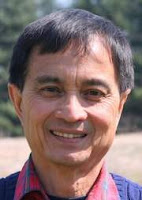
 By A. Gaffar Peang-Meth
PACIFIC DAILY NEWS (Guam)
Eighteen years ago, Elie Wiesel, a Jew from Romania and survivor of Auschwitz, told Boston University graduates in a commencement address that as he walked in the footsteps of those who lived before him, he is "the sum total of their experiences, their quests. And so are you."
Wiesel's assertion that the graduates, too, are the sum total of experiences and quests of the many great men and women before them is a humbling and inspirational reminder. "The knowledge that I have must not remain imprisoned in my brain," Wiesel declared, "I need to pay back what was given to me. Call it gratitude."
Learning that inspires
Call me "fresh from the boat."
When I enrolled as a college freshman in 1963 in an American college, with very little English and no knowledge of the history of the United States, I had 19 years of acculturation in a society, Cambodia, that valued listening, obeying, respecting, following our elders and those in authority. The idea that the goal of education is to develop in students a capacity to think critically was never in my head.
I came from a society that extolled the class-rank-role relationships and leader-follower, superior-inferior, master-servant, patron-client concepts. To me, the assigned reading in the required English literature course on American poet Ralph Waldo Emerson was text that was close to heresy.
I can't remember when, but the light bulb in my brain began to illuminate, then fade and then illuminate again. In my English class I began to discover Emerson, who wrote essays in which he developed ideas of individuality, freedom and humans' ability to achieve. At a time when America was greatly influenced by Europe, Emerson presented what was later called "a visionary philosophical framework" in America's history, for escaping "from under (Europe's) iron lids" to build a new and distinct American cultural identity. Emerson's "The American Scholar" speech at Harvard was hailed as America's "Intellectual Declaration of Independence."
To me, this was extraordinarily thought-provoking. Later, Emerson's "Our best thoughts come from others" quotation took me to Wiesel's "sum total." As a college undergraduate, I found myself learning to wonder, imagine, inquire, interpret, analyze and calculate.
Years later, even several times while at death's door during my involvement in the Khmer resistance, I reminded myself the Almighty had created me for a reason, He wasn't done with me. So I told death: "I'm not done."
It brought me to today. Yesterday, with its glory and mistakes, was gone. I know what I want for tomorrow, but what do I know about tomorrow? I have today.
Inspiring me are Mother Theresa's words, "Do the thing in front of you."
Fighting dictatorships

"Freedom is not free" -- words chiseled on beautiful marble were what I photographed at the Korean War memorial. And "Freedom is not free" was what I extracted from Dr. Gene Sharp's "From Dictatorship to Democracy: A Conceptual Framework for Liberation." You have "to learn how to take that freedom" yourself, Sharp asserted.
I don't pretend to know or have answers to everything. But I have learned from my own life experiences and from those I have met along the way. I have concluded that every Leviathan has feet of clay, and no freedom and rights fighter is condemned to remain feeble always. All dictators are cheaters with blood-stained hands, who beat the most essential source of power, the population, into obedience and submission.
High quality education remains the best weapon to fight dictatorships.
Drawing board
 |
| Cartoon by Sacrava (on the web at http://sacrava.blogspot.com) |
A citizenry united behind a foundational idea, no longer acquiescing in traditional unquestioning obedience to authority, is empowered. Empowered citizens deny the dictator a basis for his power.
 |
| Suong Sophorn (Photo: The Phnom Penh Post) |
Housing rights activist Suong Sophorn, with blood-stained clothes, beaten unconscious by Premier Hun Sen's security forces for leading 30 Beng Kak residents who faced eviction from their homes for development, to hand a protest letter to visiting United Nations chief Ban Ki-moon, was a model of resistance.
If enough people, determined to stop injustice, are willing to endure repression and brutality as Sophorn did, the authority and rule of the Leviathan would crumble. A defiant people will remain defiant: It's Newton's first law of motion.
A determined resistance willing to endure repression must come from within the country. It would draw the world's attention, stir its compassion and sympathy, and, eventually, its support. A liberation struggle from dictatorship requires self-reliance, said one engaged in such a struggle in the 19th century. Knowing history is useful, but the knowledge must be applied to be useful.
A. Gaffar Peang-Meth, Ph.D., is retired from the University of Guam. Write him at peangmeth@yahoo.com.








