


Showing posts with label KPNLF. Show all posts
Showing posts with label KPNLF. Show all posts
Sunday, September 16, 2012


Tuesday, July 24, 2012
Thursday, September 29, 2011
Slide shows on the KPNLF
Dear Readers and Friends,
On the occasion of the 32nd anniversary of the KPNLF, I invite you to review a slide show I created, The Face of the KPNLAF, at
Two earlier slide shows on the KPNLF may be viewed at:
Sincerely yours,
Gaffar Peang-Meth, Ph.D.
On the occasion of the 32nd anniversary of the KPNLF, I invite you to review a slide show I created, The Face of the KPNLAF, at
http://www.youtube.com/watch?v=Bsb0tyYLar8
Two earlier slide shows on the KPNLF may be viewed at:
KPNLF No Fire Like Passion
http://www.youtube.com/watch?v=FowU4vPYsCc
Never Doubt
http://www.youtube.com/watch?v=Rqs0bKxraYc
Sincerely yours,
Gaffar Peang-Meth, Ph.D.
Friday, August 12, 2011
Slide show on the Khmer People's National Liberation Front
Dear Countrymen and Friends,
Sincerely,
Gaffar Peang-Meth, Ph.D.
I am inviting you to enjoy a slide show on the Khmer People's National Liberation Front and the Khmer People's National Liberation Armed Forces (1980-1989) in honor of KPNLF/KPNLAF members, cadres, combatants, and officers.
Sincerely,
Gaffar Peang-Meth, Ph.D.
http://www.youtube.com/watch?v=FowU4vPYsCc
Tuesday, May 03, 2011
"Never Doubt" by Dr. Gaffar Peang-Meth
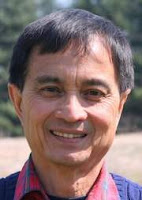 Dear Friends,
I invite you to take about two minutes to watch a slide show I've put together on Youtube titled "Never Doubt." The slides illustrate a chronology of military events in northwestern Cambodia between 1980 and 1989.
I was present as a member of the Khmer People's National Liberation Armed Forces opposing Vietnamese occupation of Cambodia and personally captured most events on camera. The background music is provided by Dr. Kang Kem.
I hope you find the presentation informative, the photos and the quotes inspirational, and will feel that the time spent watching the slides was worthwhile.
Sincerely,
Gaffar Peang-Meth, Ph.D.
http://www.youtube.com/watch?v=Rqs0bKxraYc&feature=mfu_in_order&list=UL
Sunday, March 20, 2011
Souvenir Photos of the Khmer People's National Liberation Armed Forced (1981-1989)
All photos courtesy: Dr. A. Gaffar Peang-Meth
Click on each photo to zoom in
 |
| My home |
 |
| Document confiscated from a Vietnamese soldier |
 |
| Document and insignia confiscated from an enemy soldier [KI-Media note: Hun Xen claimed he and his men liberated Cambodia, well it looks like his men were Vietnamese after all, isn't it?] |
 |
| Cambodian man carrying his relative while fleeing |
 |
| Organization of the KPNLAF |
Tuesday, March 15, 2011
CAMBODIA: Two inspirational historical events spark young Cambodians to work for change
FOR PUBLICATION
AHRC-ETC-008-2011
March 15, 2011
An article by Dr. Gaffar Peang-Meth published by the Asian Human Rights Commission
AHRC-ETC-008-2011
March 15, 2011
An article by Dr. Gaffar Peang-Meth published by the Asian Human Rights Commission
CAMBODIA: Two inspirational historical events spark young Cambodians to work for change
"It is from numberless diverse acts of courage and belief that human history is shaped." - Robert F. Kennedy
I do have my political preferences.
Like anyone else, my political socialization began in childhood. And like other Cambodians in general, I was taught to "korup, bamroer, kaowd k'lach, smoh trawng" -- "respect, serve, admire/fear, be faithful/loyal" -- by my parents and elders, behaviors reinforced by my teachers in school. As a boy, it never occurred to me to challenge these teachings.
Then I entered the classroom of a young "progressive" instructor at my leaky, thatched-roof primary school at Russey Keo. Regularly he reminded us that each of us has "one kilo of brain" that is as good as any other brain, and that we -- kids in the room with those brains -- are responsible for our own future and that of our society.
Now, as my dark hair is marked with a few strands of gray, I recently recounted how my "brain" reacted then: " 'Bah!' I remember the thought I had then, as I looked around at some of my classmates: clowns, bullies, pants-wetters … an assembly of the future?" I still wonder what happened to that great instigator of the mind, whose words I first pooh-poohed but will carry to my deathbed, and about that assembly of representatives of the future!
Friday, March 04, 2011
Message from former members of the KPNLF
Mes Cher(e)s Compatriotes et Ami(e)s,
A l'occasion de la date de création (5 Mars 1979) des Forces Armées de Libération du Peuple Khmer (FALPK), nous, membres actifs du Front National de Libération du Peuple Khmer (FNLPK), adressons notre profonde gratitude à la mémoire de tous nos combattants, morts pour la Patrie, la Liberté, l'Intégrité territoriale et la Souveraineté Nationale.
En même temps, nous lançons un appel pressant à l'UNION NATIONALE de tous les Khmers pour défendre notre pays sous la menace des Yuon (Vietnamiens) et Siamois (Thaïlandais) et sauvegarder notre identité nationale et enfin pour aider nos frères et soeurs de trouver la PAIX, la LIBERTÉ et le BONHEUR.
--------------
My Dear Fellow Countrymen and Friends,
On the occasion the anniversary ( March 5, 1979) of the formation of the Khmer People Liberation's Armed Forced (KPLAF), we, the active members of the Khmer People National Liberation Front ( KPNLF), send our profound gratitude to the memory of all our fighters who died for our Homeland, our Freedom, our territorial Integrity and our National Sovereignty.
At the same time, we also issue a pressing appeal for the NATIONAL UNION of all Khmers to defend our country which is threatened by the Yuons (Vietnamese) and Siamese (Thai), and to protect our national identity, as well as to help our brothers and sisters find PEACE, FREEDOM and HAPPINESS.

Monday, June 21, 2010
KPNLF calls for action on ‘lost’ land
Monday, 21 June 2010
Vong Sokheng
The Phnom Penh Post
Vong Sokheng
The Phnom Penh Post
A KHMER nationalist group has called for the joint administration of former Cambodian territories in South Vietnam in advance of King Father Norodom Sihanouk’s unofficial visit to Hanoi this week.
In a statement issued Monday, Son Soubert, vice president of the Khmer People’s National Liberation Front (KPNLF), said Sihanouk’s visit could usher in “a new era of frank cooperation” between the two countries.
He also added that “co-management” of Kampuchea Krom – the former Cambodian territories in South Vietnam – would be a “unique” opportunity to improve bilateral relations.
“A formula of co-management of Kampuchea Krom, ex-French Cochinchina, known also as the Mekong Delta, by the Kingdom of Cambodia and Vietnam will inaugurate a new era of peace and prosperity in the framework of the construction of ASEAN,” the statement reads.
It notes that such co-management exists in the Pyrenees region of France, where the principality of Andorra has been under joint French-Spanish sovereignty since the 17th century.
The KPNLF was one of three antigovernment resistance groups to join in the decade-long civil war against the Phnom Penh government during the 1980s.
Cheam Yeap, a senior lawmaker for the Cambodian People’s Party, dismissed concerns about Vietnamese border demarcation, saying it is being carried out smoothly.
Sihanouk said in a statement last week that his visit to Hanoi, set to begin Tuesday and to last for two or three days, is of a strictly personal and “non-diplomatic” nature.
In a statement issued Monday, Son Soubert, vice president of the Khmer People’s National Liberation Front (KPNLF), said Sihanouk’s visit could usher in “a new era of frank cooperation” between the two countries.
He also added that “co-management” of Kampuchea Krom – the former Cambodian territories in South Vietnam – would be a “unique” opportunity to improve bilateral relations.
“A formula of co-management of Kampuchea Krom, ex-French Cochinchina, known also as the Mekong Delta, by the Kingdom of Cambodia and Vietnam will inaugurate a new era of peace and prosperity in the framework of the construction of ASEAN,” the statement reads.
It notes that such co-management exists in the Pyrenees region of France, where the principality of Andorra has been under joint French-Spanish sovereignty since the 17th century.
The KPNLF was one of three antigovernment resistance groups to join in the decade-long civil war against the Phnom Penh government during the 1980s.
Cheam Yeap, a senior lawmaker for the Cambodian People’s Party, dismissed concerns about Vietnamese border demarcation, saying it is being carried out smoothly.
Sihanouk said in a statement last week that his visit to Hanoi, set to begin Tuesday and to last for two or three days, is of a strictly personal and “non-diplomatic” nature.
Tuesday, June 30, 2009
A view from the outside
 Abdul Gaffar Peang-Meth, once a resistance fighter during the 1980s, now teaches at the University of Guam.
Monday, 29 June 2009
Written by SEBASTIAN STRANGIO
The Phnom Penh Post
A CHIEF EXECUTIVE WHO HOLDS EXECUTIVE, LEGISLATIVE AND JUDICIAL POWERS IS A TYRANT AND AN OPPRESSOR.Former resistance fighter Abdul Gaffar Peang-Meth talks about his past and Cambodia's state of affairs in the post-Khmer Rouge era.
Educated in the United States in the 1960s and 1970s, Abdul Gaffar Peang-Meth returned to Cambodia in 1980 to join the Khmer People's National Liberation Front (KPNLF) - one of the three factions resisting the Vietnamese occupation during the 1980s. After unsuccessfully running for election with the Liberal Democratic Party in 1993, he returned to academic life and now teaches political science at the University of Guam. In an interview with the Post, he reflects on his time in the resistance and the current state of Cambodian politics.
Many of your old colleagues from the Khmer People's National Liberation Front (KPNLF) are still living in Cambodia today. What made you decide to leave the country permanently?
"Permanently" is an eternity, contrary to what Lord Buddha teaches: There's no such thing. Cambodians should live in Cambodia, and I respect the different reasons my ex-KPNLF colleagues have made to do so. My heart goes out to those who have no choice but to endure oppression. Whether under the Khmer monarchy, the Khmer Republic or the KPNLF, I believe unless a person is permitted and encouraged to think freely and critically, to innovate, to develop to his or her full potential, no endeavor s/he is involved in, whether commercial or political, is going to succeed. I don't see Phnom Penh's sky as hospitable to my way of thinking. Anyone can help the nation from anywhere.
From your vantage point overseas, how do you see the current trajectory of Cambodia's development?
There's no question that Cambodia today, with more roads, bridges, modern buildings, is more appealing than under the Khmer Rouge. But the rich get richer while nearly half of the population lives below the poverty level, and many live off the city's dumping grounds. The current regime's disdainful lack of good governance hurts the people most, and points to one direction: an authoritarian one-party rule legitimised by elections, which the international community had dubbed below international standard, but foreign donors let pass. How many fewer threats, how much less intimidation make the elections "more free and fair"? Does a government that sells natural resources for private gain, evicts the weak and underprivileged from their homes and land for development by the wealthy, employs lawsuits against its citizens and lifts the immunity of lawmakers whose words and opinions aren't in agreement with it, represent progress toward a more democratic future? A chief executive who holds executive, legislative, and judicial powers is a tyrant and an oppressor.
How do you perceive the role of the international community in Cambodia?
The role of the international community and the donor countries should be to ensure the implementation of the 1991 Paris Accords on Cambodia - in which the world invested $2 billion. It's their failure to implement the stipulations in the accords that has led to Cambodia's current situation. They cannot hope to build a sustainable economy and a democratic system in Cambodia by turning a blind eye to abuses of power and rampant corruption, when by so doing the current one-party rule is allowed to become further entrenched.
Do you think the Khmer Rouge tribunal - in light of corruption allegations - can bring justice to Cambodian survivors of the KR regime?
There cannot be justice, nor national reconciliation and healing, when responsibility for the brutality visited upon an estimated 1.7 million victims is assigned to only five officials while several thousand other perpetrators are walking free today. Unless the victims are satisfied that the accused have been accorded their due, the KRT is just a sham and talk of judicial corruption is a distraction. Some Cambodians have challenged the world community to establish a witness protection program to allow living witnesses to appear and talk freely and without fear.
You come from a Cham family that was closely involved in Democrat Party politics in pre-revolutionary Cambodia. How did this experience inform your political views?
My father socialised me politically beginning in my elementary school days to democratic principles and concepts. He introduced me to some figures in the Democratic Party such as Pach Chhoeun and Svay So. I read the Pracheatheptei (Democrat) newspaper, attended political campaign rallies. Personal and national experiences also shaped my political views. When my parents' financial fortunes crumbled, our house was sold to then Siem Reap governor Dap Chhuon, who allowed us to stay in the lower level of the house.
But Dap Chhuon, who was implicated in a plot with South Vietnamese officers against the royal government, was shot and killed and Lon Nol's soldiers surrounded the house, placing us under house arrest. The morning after, our residence was searched. Old copies of the Pracheatheptei and a copy of the Pracheachon (The People) newspaper in the house were confiscated, and we were instructed to read only the ruling party's Sangkum newspaper. That experience has affected me throughout my life.
What led you to support Lon Nol's Khmer Republican Regime during the early 1970s?
Being Cambodian-born of Cham descent has caused me to be particularly sensitive to the regional Vietnamisation and annexation of territories by Vietnam. When the Communist Vietnamese forces occupied some 3,500 square kilometres of Khmer soil from the northeast down to the sea in the south as sanctuary from the war with the free South Vietnamese and their American allies, Cambodia's neutrality was violated and my support for those who rose up against the Vietnamese forces on Khmer soil was natural. It may have been foolish for a Khmer David to confront the Vietnamese Goliath at a time when the Americans were looking for a way to disengage, but opting to trade national territorial sovereignty and territorial integrity because the political wind appeared to favour the Communists was not in the nation's interest. Khmers who stood opposed to the Vietnamese occupying forces espoused republican ideals. In March 1970 many who took on the republican cause, many who gave their lives in that struggle, did so not because of personal allegiance to [coup leaders] Lon Nol or [Prince] Sirik Matak, but because they believed in democratic principles.
Whatever happened to the "republican era"? Life evolves, political pendulums swing. There is no history, someone said, only interpreters of historical events. For different reasons, old supporters of republicanism have been silent. But there are young Khmers today who believe in the republican ideals, appreciate and recognise the work of those who have died for human integrity and republicanism. Some young Khmers have picked up the flag of republicanism and are moving forward. I supported the republican ideals and still do.
Why did you join the KPNLF after the fall of the Khmer Rouge?
I seek a meaningful life through serving a cause in which I believe. The KPNLF was created in 1979 to oppose the Maoist Khmer Rouge's return to power and to oblige the Vietnamese to withdraw from Khmer land. After the collapse of the Khmer Republic in 1975 and news of death and destruction by the Khmer Rouge emerged, I and a group of Khmer nationalists in America's East Coast formed an anti-Khmer Rouge committee. I wrote articles, translated articles into Khmer and English and mimeographed the bulletins for distribution. The bulletin, called Conscience, became Cambodian Appeal and after the KPNLF was proclaimed, I joined the group in the field, followed by some colleagues.
INTERVIEW BY SEBASTIAN STRANGIO
Subscribe to:
Posts (Atom)








