Showing posts with label Successful life in the US. Show all posts

Friday, August 31, 2012

Bowling Green's GADS mentioned at RNC

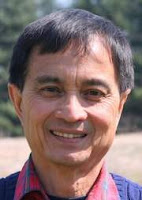
Eak Taing, 56, originally from Phnom Penh, Cambodia, moved to Bowling Green in 1981. Taing works at the Great American Donut Shop, or GADS as it is frequently called, which is owned by the Taing family. The shop has been a Bowling Green staple for 23 years. (AUSTIN ANTHONY/Herald)

Thursday, August 30, 2012
Allison I. Goodan
College Height Heralds (Western Kentucky U., USA)

A Bowling Green business and favorite snack spot among WKU students received national attention Wednesday night.

Sen. Rand Paul, R-Ky., mentioned Bowling Green’s Great American Donut Shop in a televised speech at the Republican National Convention in Tampa, Fla.

Paul, an ophthalmologist based in Bowling Green before his election to the Senate in 2010, said he and his family have frequented GADS.

"The Taings work long hours. Mrs. Taing told us that the family works through the night to make donuts," Paul said. "The Taing children have become valedictorians and National Merit Scholars.

"The Taings from Cambodia are an American success story, so Mr. President don’t you go telling the Taings: 'You didn’t build that.'"

Sunday, December 18, 2011

Ponloeu Le: Trying something different

After dropping out of Prince George's Community College, Ponloue Le ran into high school friend Jeffrey Norris who encouraged Le to become a police officer. Le says he is happy with the career he found, though he wishes he had completed college.

Ponloeu Le questions a man taken into custody. (Bonnie Jo Mount/The Washington Post)

Ponloeu Le, whose family was from Cambodia, wanted to be a lawyer when he was a fifth-grader.

Saturday, December 17, 2011
By Paul Schwartzman
The Washington Post

Again and again, Ponloeu Le’s father reminded him that he would amount to nothing without an education. His father had been a teacher and a journalist in Cambodia before the Khmer Rouge pushed him and his family into a refugee camp. Now, just by being a fifth-grader at Seat Pleasant Elementary, Ponloeu had been given the opportunity to make something of himself in America.

But Ponloeu had difficulty keeping up with his classes because he spent so much time caring for his six younger brothers and sisters. His mother worked full time as a cashier at a convenience store. His father weighed 85 pounds and was constantly sick, leaving Ponloeu to cook, clean and do the laundry. How was he supposed to do his homework?

When he began attending Prince George’s Community College, Ponloeu still lived at home with his parents and took care of his brothers and sisters. He worked as a security guard to help pay the bills, then as a deliveryman. During those solitary hours on the road, Ponloeu thought about his life. He was getting older and had no plan for a career. All that money that he had been offered to go to college — what did he have to show for it?

Monday, October 24, 2011

An American success story

Hanh Soy, community liason for Creekside School, holds up his certificate of naturalization after being sworn-in as a citizen by District Director of Citizenship and Immigration Service of the Department of Homeland Security Susan Curda at a ceremony at the school in Stockton. (CLIFFORD OTO/The Record)

S.J. man, who decades before escaped Khmer Rouge, becomes U.S. citizen

October 22, 2011
By Keith Reid
Record Staff Writer (Stockton, California, USA)

STOCKTON - Hann Soy was 17 years old when he arrived at the snow-filled streets of Boston on Dec. 26, 1985, the end of a horrific four years struggling to survive in the scorching humidity of the Cambodian jungle and eventually a Thailand refugee camp.

He'd never seen snow before. It may as well have been gold.

"We said it was heaven," said Soy, 41, on Friday, moments before he took the oath to become an American citizen.

"We were in Cambodia at a bad time. I was 8 years old and taken away from my family to work hard labor in the rice fields 24 hours a day. I called it 'the killing fields' because not everybody could survive."

Friday, June 17, 2011

Restaurateur shares how he survived Killing Fields in memoir

Sam Ung and wife, Kim, in Khao-I-Dang refugee camp in Thailand. (Photo from Sam Ung)
From left to right, top to bottom: Sam Ung, Kim (wife), and daughters Dawn, Diane, and Darlene
Phnom Penh Noodle House owner and chef Sam Ung (Photo courtesy of Thomas McElroy)

16 June 2011
By Irfan Shariff
Northwest Asian Weekly

Sam (Seng) Ung and Thomas McElroy have known each other for 15 years. They were neighbors in the same South Seattle neighborhood. Ung introduced himself to McElroy’s dog in Chinese. McElroy knew then, as his dog listened patiently to Ung, that this would be a long-lasting friendship.

Over the years, Ung, his wife, and three daughters became like family to McElroy and his wife. Although no longer neighbors, their bond has only strengthened.

In 2009, Ung and McElroy embarked on a journey to write Ung’s memoir, “I Survived the Killing Fields: The True Life Story of a Cambodia Refugee,” which was published earlier this year.

“It was my first dream,” said Ung. Since 1980, when he arrived in Seattle, he had wanted to write about his history so that future generations would know what happened to him and other Cambodians.

[Until] the book came out, even the kids (Ung’s daughters) had no idea what their dad had been through,” said McElroy. “You don’t talk about those things.” McElroy noticed the same thing about other Cambodian refugees.

Friday, May 06, 2011

Phnom Penh Noodle House Owner Releases Memoir

Thu., May 5 2011
By Hanna Raskin
Seattle Weekly (Washington, USA)

​Every restaurant owner has a tale of the obstacles he overcame to become a small business owner. But Seng "Sam" Ung's story is far more harrowing than most.

Ung, owner of the tremendously popular Phnom Penh Noodle House in the International District, a few weeks ago released his memoir, I Survived the Killing Fields: The True Life Story of a Cambodian Refugee. With the help of writer Thomas McElroy, Ung shares his account of his Cambodian childhood and its upending by the relentlessly brutal Khmer Rouge regime.

Ung, an average motorcycle-riding, Westerns-loving teenager, grew up working in his parents' restaurant. He was 20 years old when his hometown fell to the Khmer Rouge, igniting a horrific era of suffering and death that enveloped Ung's family. Ung fills chapters with unspeakable memories of watching his relatives starve.

"Hunger compels a person to do anything to stop the pain of it," writes Ung, who remembers trying to trap field rats and coax snakes out of their holes.

Wednesday, February 02, 2011

With a Chance at an Oscar, ‘Inside Job’ Seeks Wide Reach

Kalyanee Mam


Men Kimseng, VOA Khmer

Washington, DC Tuesday, 01 February 2011
“This economic crisis affected us all, not just those in the US, France or Germany.”
With the documentary “Inside Job” now nominated for Oscar contention, its US-Cambodian collaborator says she hopes more people will watch the film.

“Inside Job” is an investigation into the 2008 global financial crisis and of the people in power responsible. Already well received, the film will now compete against four other finalists for an Academy Award on Feb. 27.

“Once people see this film, they can be informed about the issue,” associate producer and photography director Kalyanee Mam told VOA Khmer recently. “It will help shape our thinking about the issue and try to find a way to avoid the recurrence of the crisis.”

Saturday, October 16, 2010

CAMBODIA: "A Khmer's 'one kilo of brain' that is as good as any other brain"

2010-10-15
Dr. Gaffar Peang-Meth
Asian Human Rights Commission

My Sep. 22 column, "Effect of teachers is long lasting," brought an anonymous blogger's comments, signed "kaun khmer" (Khmer child), who thanked all educators for helping shape lives, and thanked me for sharing my life story in that article. The blogger wrote about having had no schooling under Pol Pot or in refugee camps, until resettlement in Minnesota in 1982. All the blogger knew was to "carry young rice on my head and care for water buffaloes." I was intrigued with the blogger's good English -- but one could learn good English in 28 years, from 1982 to today, I thought.

A week later I referenced "kaun khmer" in another column. Within days, an e-mail was in my box: The anonymous blogger, Ms. Sovathana Sokhom, was a 'girl' who picked up her life in Minnesota at age 14, and is currently a candidate for a Ph.D. degree in politics and economics in California, having earned a Master's degree in Business Administration in International Trade (MBA-IT) in 1993 from Texas A&M International University. Besides, she has been a lecturer at Loyola Marymount University in principles of macroeconomics and has a substantial record of publications.

My communications with "kaun khmer" brought forth an incredible life history.

Ms. Sokhom describes herself as just "one girl" who has been making her way from among the fifth of the world’s population who live below the poverty level, fighting "to find her way in the world." After I asked her to share her personal history to inspire and incentivize other Khmers, she agreed: "If I can give, I give; if I can share, I share; if I can help, I help."


Life pre-Pol Pot

Sovathana was born in Kompong Cham, a third child in a family of four children, to a father who was a painter and a builder, and a mother who taught elementary school and became a housewife after marriage.

She couldn't go to school then because she could not put her hand over her head to touch her ear at the other side -- a determination of school age at the time.

Events turned her young life asunder: United States B-52 bombings were regular occurrences, and the Khmer Rouge were moving on Kompong Cham. At age 6, her uncle threw her down from the window into her father's arms, and off they scrambled into a foxhole. Then the family evacuated to Phnom Penh, and on to Battambang and Poipet.

In April 1975, she was 7, living in Battambang. Khmer Rouge Angkar extended the Khmer New Year another three days. A friend of her father's told him "something wasn't right" in Cambodia, and failed to convince him to take the family to Thailand.

Her mother was happy then: the price of pork had dropped from 1,000 riels per kilo before the New Year to 300 after the New Year. Her father was also happy: King Sihanouk was returning to Phnom Penh "to take care of the country again!"

Yet, Angkar ordered citizens to move 10 kilometers outside of the city for "three days" because American planes were coming to drop bombs. Angkar pushed the people deeper into the forests.

Then one day, Angkar’s train took her family to Nikum, in Battambang.

Under the Khmer Rouge

First, Angkar took away her older sister to build the infamous dam at Phnom Komping Puoy. Then it took away her brother. She was the third. Her younger sister was able to stay with her parents. Her father told his children: "Conditions will change, you'll return to Nikum where your mother and I will be waiting!"

She was taken to a labor camp. The mean group leader told her to stop crying: her parents could no longer care for her, only Angkar could. She was given black clothes to wear; no shoes. Her group was tasked to carry young rice on their heads for planting at a larger rice field. Wake-up time was 5 a.m. Three lines of 10 children each walked to the rice field, swearing: "I promise to grow three tons of rice per hectare of land, three times a year," and shouted, "chay yo, chay yo, chay yo!" (victory, victory, victory!), with right fists raised high in the air.

There never was breakfast, and lunch consisted of porridge with watercress, sometimes baby shrimps fetched in the rice field. No one returned to camp before sunset, not without bringing two armloads of watercress for the communal kitchen. Before dinner, kids watered sugar cane plants.

They slept in two rows in a hut with feet pointed toward one another. She was too tired to care whether there was a mosquito net. Angkar gave the group a square soap that was cut into 30 pieces, each the size smaller than a finger. She kept hers to smell at night as a remembrance of her mother.

She was one of the children tasked to carry food for the whole group. Very small, she tripped in the rice field spilling porridge from the two baskets on her shoulders, destined for the group to eat. Angry, the Khmer Rouge group leader punished her by ordering each child to hit her hard with their porridge baskets. She bled and was taken to the commune clinic.

Conditions changed

In the clinic, she heard on the nurse's radio that the Vietnamese were moving in on Phnom Penh -- she was 10. She recalled her father's words: Conditions would change and her parents would be waiting at Nikum. She asked and obtained a three-day permission from the clinic to "return to camp."

Instead of returning to the camp, she went looking for direction to Nikum. Two truckers pitied her and let her ride in the back, where she shivered to see so many guns. They dropped her off at a crossroad and told her to walk straight to Nikum. There, villagers directed her to her parents' hut; she also found her older sister. Missing was her brother, whom she and her sister located in another clinic in another village in bad shape: He couldn't talk but could hear.

Since it was believed that "Cambodia was going to be broken" as the Vietnamese were taking over, the two sisters were allowed to take their brother to be reunited with the family at Nikum.

From refugee camps to Minnesota

The story about the family's flight to Thailand after the Vietnamese takeover in January 1979 is long. They first fled to Siemreap. Later, they found two guides, paid them gold to take them across the border. The journey took them through Kauk Khyoung, Camp 007, and Khao I Dang, among other camps. They were also at a refugee camp in Indonesia.

Finally, on Nov. 14, 1981, under the sponsorship of the Khmer Community in Minnesota via World Lutheran Services, the family was resettled in the cold and freezing Minnesota.

A Khmer's brain is as good as another

In early 1982, Sovathana, the unschooled kid who carried rice on her head and cared for water buffaloes, first attended school in Saint Paul. Classes and cultural clashes made her life extremely hard. In high school, she simply followed her brother's footsteps, taking any courses he was taking, and she thought she would never finish high school.

In 1986 she graduated from high school and was accepted to Saint Olaf College, where her brother had attended since 1984. She studied economics and maths like her brother. In her sophomore year, she met a classmate who majored in political science, so she took her first international relations course. That class changed her interest from maths to economics and political science.

She gave herself 15 minutes each day to cry, and then she did her homework. She studied until the library closed at midnight, and never spent more than 20 minutes for lunch or dinner. "For a while I couldn't even afford to self-pity," she wrote, "Just do what needs to be done."

She got a D in her first economics exam and cried. A faculty member suggested she change her major, but she stuck to economics, "determined to prove that I can do it." She slept four hours per night, and sought help from her teaching assistant, classmates, and professor.

In 1990, she graduated from Olaf with a double major in economics and political science. Watching her brother going to Thunderbird Graduate School in Arizona, gave her the idea she could, too, go to graduate school. She applied and was accepted to Texas A&M International University in the Master's degree program in Business Administration in International Trade (MBA-IT). In 1993, she received her MBA-IT degree.

Her father encouraged his children to see the world. So, while at Olaf, she enrolled in a six-week "Latin American Social/Political Problems" program in Mexico in 1987; and a six-week "Economic and Political Transition of Brazil in the 1980s" program in Brazil in 1989. And while she studied at Texas A&M she studied five weeks of "European Integration: the French Perspective," at the French Ecole Superieure de Commerce at Chambery, and five weeks in the "German Business and Cultural Exchange" program at Fachhochschule Nurtingen, Germany.

Experiences in Cambodia

She said she felt burnt out after her MBA-IT in 1993, and the thought of her native Cambodia was never far from her mind. She had visited developing areas, including Egypt, and what she saw in the poor everywhere was a mirror of her own experience. "I was one of them" -- everyone wants food, everyone wants clothes, everyone wants a roof over their heads.

So, in 1994 Ms. Sokhom joined the CANDO program (Cambodian American National Development Organization), volunteered to go to Cambodia, and left for the land of her birth in May of that year. There, she taught business, marketing, and management at Cambodia's Faculty of Business -- now National Institute for Management. In 1996, she returned to Cambodia again, and experienced the July 5-6 coup d'etat of 1997 and had to be evacuated.

In 2000, she returned to the United States and decided to stay in California, where she worked for the Catholic Charities of Los Angeles, learning how U.S. federal programs help the poor to become self-sufficient. She taught non-English speaking immigrants and high school drop-outs self-esteem and self-motivation, which she also taught herself.

In 2004 she was enrolled at the Claremont Graduate University, a private, graduate-only institution. She had her eyes set on a Ph.D. degree. In 2008, she received a Master's degree in International Economy (IPE) and was admitted to candidacy to the Ph.D. degree in the Interfield of Politics and Economics.

And that's where Ms. Sokhom is today -- a long journey for an unschooled girl who endured Pol Pot's child labor camp at ages 7-10, and endured the cultural changes and clashes in the U.S., and is competing in a world that doesn't stand still.
……………
The views shared in this article do not necessarily reflect those of the AHRC, and the AHRC takes no responsibility for them.

About the Author:

Dr. Gaffar Peang-Meth is retired from the University of Guam, where he taught political science for 13 years. He currently lives in the United States. He can be contacted at peangmeth@gmail.com.

# # #
About AHRC: The Asian Human Rights Commission is a regional non-governmental organisation monitoring and lobbying human rights issues in Asia. The Hong Kong-based group was founded in 1984.

Thursday, September 16, 2010

Surviving the Killing Fields

The “original” refugees who came to Blount County are, back, from left, Chhay Uy, Ngy Uy, Phek Uy, Eang Tang and Heang Uy; and front, from left, Kim Sal and Bottra. (All Photos by Jolanda Jansma)
Wearing their reunion T-shirts -- From the Mekong River to the Tennessee River, 1979-2010 -- the Uy and Tang extended families enjoy catching up with their Maryville families who sponsored them to come to the U.S. more than 30 years ago.
Lloyd and Patricia Smith sponsored the original family from Cambodia, giving them a home in Maryville and opening the door for other family to get a fresh start in the United States.
Jazmine Garcia, left, and Randon Garcia smile for a photograph at a reunion of their families with the Maryville families that helped their kin escape from Cambodia.

Cambodian families remember kinships that brought them out of danger

September 15, 2010
By Sarah Herron
Blount Today (Maryville, Tennessee, USA)

From a distance, it looked like just another family reunion.

There were tables of homemade food and matching T-shirts. People were catching up and remembering the past. This reunion, however, was anything but typical.

On Aug. 28, in the pavilion next to Betty Nell and Charlie Headricks’ house at Royal Oaks, the food was a mix of Asian and Southern staples.

The guests’ T-shirts read: “From the Mekong River to the Tennessee River, 1979-2010.” Their memories were of a journey from one river to another, and the almost 30 years of kinship that followed.

In 1979, the Headricks’ good friends, Lloyd and Patricia Smith, contacted World Vision about hosting a refugee family from the Cambodian war.

“My wife and I were watching (war coverage) on TV, and we came up with this idea. We had a house, an empty house, there on the farm. If we could fix that house up, we could maybe take care of one of the families. So she made the call to the agencies. In about six weeks, a family arrived.”

Eang Tang along with her parents and three brothers were assigned to the Smiths. According to Tang, they had been living at refugee camps throughout Thailand after fleeing Cambodia.

“Before we get to the United States, we had been shipped to different refugee camps. They try to put you back to your county. We stayed together because we’re not going back.”

Tang’s sister, Thek Uy, said they fled Cambodia because, “They killed a lot of people. We ran away from that.”

Betty Nell and Charlie’s son, Larry Headrick, who is currently assistant principal at Maryville Intermediate School, said the family was running from the Communist regime under dictator Pol Pot, who is often described as the ‘Hitler of Cambodia.”

Headrick said the 1984 film “The Killing Fields” describes what the family was escaping in the mid-1970s. “They basically tried to take over the country,” he said of the Khmer Rouge. “and they killed everybody that was educated or did anything that represented the Western World.”

Uy said the family ran on foot to Thailand. “We were in the jungle and had to go at night. The soldiers, they would be watching for you. We came to Thailand by night, and I carried my children there. In the jungle, my daughter was a baby. I had to keep her quiet.”

During the journey, Uy lost three children. She came to the United States in 1981 with her husband and two surviving sons; three years after her parents and siblings came to the U.S.

Uy had to stay behind at the refugee camp because she had a husband and children so they had to find their own sponsor.

The Smiths were determined to get the other family members to Tennessee and asked the Headricks to help. They knew each other from attending church together at Fairview United Methodist.

The Headricks sponsored the family after Smith told her, “They’ve got a sister over there, and we need to get them here.” She said. “So I talked to Butch, my sister, and our brother Bobby, and we said ‘yeah, let’s go for it.”

Larry said it took a while for his parents and the Smiths to get the family to Tennessee. He was 17 years old when they finally arrived. “They lived in a little house next to ours. It was where we kept fertilizer for the golf course. We spent about a month fixing it up, remodeling it for them to live there.”

Uy’s daughter, Kim Roth was born in Maryville two months after the family arrived. Kim Roth was primarily responsible for organizing the reunion in August.

Roth said she hopes to eventually record her family’s history in a book.

“There were members of our family who didn’t make it. It’s a testament to their strength. I keep thinking, we need to get this down on paper. I’ve been reading about the history and learning about how that applied to my family. It’s interesting and heartbreaking at the same time.”

She said her mother is just now sharing some of the stories. “It’s all still very painful for them. It will be a lifelong process. The reunion was a good step for them.”

The reunion officially began with Lloyd Smith tearfully addressing the crowd of about 75 people. “Over the years they’ve told us how much they appreciated us. What hasn’t been told is how much we appreciate them. You’ve prospered well. The Lord has blessed you and has blessed us by knowing you. It’s just more than what can be put into words,” Smith said.

Smith said he remembered getting an urgent phone call almost 30 years ago from World Vision that a family had arrived for them to host.

“We got ready real quick to go to Nashville to get them,” Smith said. “My oldest son was living in Kentucky about 40 miles north (of Nashville), so he was with them until we got there.”

Smith said when he greeted them at the airport; the family was tired and malnourished. Tang’s husband had to stay behind because of tuberculosis but joined the family six months later.

Tang said in 1979, she was not sure what to expect from a host family. While at the refugee camp, her family participated in interviews with several agencies in search of a host family. Tang said they listed several countries. “We just want to get out.”

Then she added, “We got lucky.”

Once they arrived to the U.S., she said the language barrier was difficult but the Smith’s were patient and generous. “We didn’t speak any English. They gave us a Cambodia to English dictionary. Mr. and Mrs. Smith bring clothes and food. They come help us out. They teach us everything from turn on hot water, cold water, turn on the stove.”

Smith said the children learned the language at a fast pace after getting settled in Tennessee. The older children completed high school in two years and most of the children from both families have college degrees.

Betty Nell said, “Seeing how they’ve turned out is just amazing.”

When Uy arrived to stay with the Headricks in 1981, Betty Nell said the family had many needs. “The little girl, Kim Sol, was really sick. It was about as bad as you can get without dying. You could see scars all over her body. Her stomach was swollen. I just don’t know how she made it. She’s a little miracle baby.”

Betty Nell’s daughter, Jan Herzbrun, worked at a pediatrician’s office and helped coordinate care. Betty Nell said, “They were so scared. That was a rough time.”

Not only did they have great physical needs but struggled emotionally. “They were scared that first night. They had come out of a horrible situation.”

Betty Nell credits her sister and brother as well as her church family at Fairview UMC for helping rally around the family.

After recovering, the family thrived in the tenant house at the Wallace Farm. Betty Nell said she bonded with Kim Son and sang to her often. She said one of her fondest memories was hearing the little girl learn English.

“Larry was playing football for Maryville High School. The boys would come in Fridays before the game, and we always fed them. Little Kim would always be around. Her first word was ‘football.’ Then from there, she just picked it up.”

The families moved to North and South Carolina in 1983 but they remained close to their host families. They have visited each other about two to three times a year since they left 17 years ago.

Kim Roth said some of her fondest childhood memories are of visiting the host families. “We visited mostly during the summers. I remember once we went and stayed for two weeks. I thought it was like camp.”

Her father passed away five years ago, and she said, “I would love for Papa Charlie (Headrick) to walk me down the aisle when I get married.” She said, “I always joke to my friends and my family back home that they are my second parents.”

Kim Roth graduated from the University of South Carolina in Aiken and is a marketing manager for Richard Petty Motor Sports.

She said her success is in large part because of the Headricks and the Smiths. “I think its really rare that you find a family like that. They genuinely wanted us to do well and because of them, we did. I’m not sure they grasp their importance in shaping our lives. We could never make them understand the significance they play in our lives.”

Betty Nell said the feelings are mutual. “I wish we could convey the feelings we have for each other. I can’t remember ever regretting any of this. It’s been a blessing.”

Wednesday, September 08, 2010

[Tim Hoy,] New leader [of the Upland Christian Academy] is a survivor

Upland Christian Academy Superintendent Tim Hoy eats lunch with kindergarten students Aug. 31 at the school in Rancho Cucamonga. This year will be Hoy's first at the school, which was founded last year. (Jennifer Cappuccio Maher/Staff Photographer)

Lost father, brother to the Khmer Rouge

09/07/2010
Wendy Leung, Staff Writer
Inland Valley Daily News (California)
Upland Christian Academy


RANCHO CUCAMONGA - It's not an impossible task. But if Tim Hoy, the new superintendent of Upland Christian Academy, wants to learn all 381 names of the kindergarten through 12th-grade students by the end of the school year, he'll need to start now.
Last week, the newcomer did just that.

"I'm looking forward to learning all of your names," Hoy told a group of pint-sized students last week.

The kindergartners wasted no time in helping Hoy.

"I'm Nicole," shouted one.

"I'm Sierra," said another.

That's two down and 379 to go.

So started the school year for Upland Christian Academy, which is in its second year at the Rancho Cucamonga campus.

"I love the personal touch offered here," Hoy said. "You are never just a number."

Hoy, 39, who moved from Tacoma, Wash., to Rancho Cucamonga this summer, has never experienced the excitement and anticipation of entering kindergarten. In fact, the Cambodia-born administrator's first encounter with school was at age 10.

Born in 1971 just four years before Pol Pot would come into power, Hoy lived through one of the most horrific chapters of Cambodian history. But his father and his brother did not.

Speaking from his office at Abundant Living Family Church, Hoy described how Pol Pot's Communist movement, the Khmer Rouge, wiped out towns and cities to create an agrarian society. Many of those not executed died of sickness and malnutrition.

In work camps devoid of medical services, Hoy's father died after a bout of dysentery. His brother choked on a fish bone and never recovered.

Experts estimate that nearly 2 million Cambodians, roughly one-fifth of the population, perished under Pol Pot's deadly regime.

"As a kid, I had no idea what was happening," said Hoy, who was among seven children in the family. "That was all I had ever known."

In 1979, the family escaped to Thailand and eventually immigrated to the United States and settled in Washington state, where most of Hoy's relatives still reside.

Hoy enrolled in school for the first time as a fifth-grader. The only English words he knew were "yes," "no" and "I don't speak English." Hoy, along with his siblings and cousins, kick-started the school's English as a Second Language program.

The culture shock was immediate. Accustomed to the tropical heat of Southeast Asia, Hoy wore his winter coat during the mild summers of the Pacific Northwest. He was mesmerized by electricity and fascinated by people of different races all calling themselves Americans.

On his path to assimilation, he met a Christian woman who worked with Hoy's aunt. When asked if he wanted to tag along to church, Hoy didn't have a doubt in his mind.

"I just wanted to do everything American," Hoy said. "I wanted to speak English and go to America's churches."

Hoy became a Christian and devoted his higher education to theology. After receiving his master's in school administration from Dallas Theological Seminary, Hoy became a teacher, principal and superintendent. Most recently he was a principal and campus administrator at Lighthouse Christian School near Tacoma.

A father of two, Hoy and his family fell in love with Southern California after a recent vacation here.

He said he was always fond of the Washington state but his heart started to change in recent years.

"I thought maybe there was more out there," he said.

The sunshine lured Hoy, his wife, Lorraine, and their two children, now students at Upland Christian Academy, to Rancho Cucamonga.

Lorraine, who had severe allergies in the Pacific Northwest, recovered here. The family has already bought season tickets to Disneyland.

"It already feels like home," he said.

Hoy replaces Sue Chiappone as Upland Christian Academy's highest administrator, overseeing a school as it carves out its early history at Abundant Living Family Church. The Upland school was formed last September and moved to Rancho Cucamonga after Upland Christian Schools was sold.

This week, the school year opened with 16 more students than last year. The school has brought in a new kindergarten teacher's aide, middle school teacher, high school guidance counselor and added a new second-grade class. It is also in the process of building a new science lab.

"We believe God is doing incredible things here," Hoy said.

Tuesday, August 31, 2010

Congratulations to Prof. Chhany Sak-Humphry, the 2010 recipient of the Regent's Medal of Excellence in Teaching at the U. of Hawai'i, Manoa

Source: http://www.hawaii.edu/about/awards/teaching.php?award=sakhumphry

The Regents’ Medal for Excellence in Teaching is awarded by the Board of Regents as tribute to faculty members who exhibit an extraordinary level of subject mastery and scholarship, teaching effectiveness and creativity and personal values that benefit students. The board also awards the Regents’ Medal for Excellence in Research.

Teaching Medal Award Winner

Chhany Sak-Humphry

Manoa Chhany Sak-Humphry is an associate professor in the Department of Indo-Pacific Languages and Literatures at UH Manoa. Sak-Humphry believes that the benefit of learning any foreign language is immeasurable.

She began teaching Khmer at UH in 1983 and has single-handedly developed the Khmer language program into the excellent and internationally recognized program that it is today. She also developed and directed the Advanced Study of Khmer Abroad Program which serves students in the United States and abroad.

Sak-Humphry’s approach to teaching has been to integrate outstanding instruction with innovative research on Khmer language, linguistics and literature.

Thursday, August 05, 2010

[Native of Cambodia] Professor Becomes Advocate, Inspiration to Students

Helps Aspiring Entrepreneurs Obtain Degree through Venture Connects Program

August 5, 2010
By Franci Valenzano
Madison County Courier (New York, USA)


(Morrisville, NY) Dr. Emad Rahim brings more to the classroom than rich knowledge about his subject matter.

The Morrisville State College professor adds elements students can relate to along with anecdotes from his personal life to teach them they can accomplish anything.

That inspiration has been a motivating factor in the classroom and in his life—now it’s branching out even farther.

Rahim, assistant professor of entrepreneurship and small business management, is a motivating force behind a new Morrisville State College program, Venture Connects, which is helping adult students find creative ways to return to the classroom to further their education.

Through Morrisville Venture Connects, students who have already earned an associate degree in multiple disciplines can go back to school to earn a bachelor of business administration degree in entrepreneurship and small business management from Morrisville State College, taking courses that fit into their daily schedules.

The successful equation behind the program is a hybrid format of online and flexible weekend classes that will be taught at two locations— the Syracuse Technology Garden, in downtown Syracuse, and at Cayuga Community College. Students also engage in workshops, internships and externships through the program. Future plans are to expand Morrisville Venture Connects to other locations too.

Rahim, a teacher in the Venture Connects program, knows firsthand it isn’t easy adding college to life’s juggles. His journey to the classroom was circuitous—much like his life.

A native of Cambodia, Rahim is a survivor of the Killing Fields, sites in Cambodia where large numbers of people were killed and buried by the Khmer Rouge regime during its rule of the country from 1975 to 1979.

An estimated two million people were killed, starved or worked to death, among them; his father and brother and aunts and uncles, leaving him the only lineage on his father’s side.

Born in a concentration camp, Rahim escaped to Thailand with his mother when he was four, eventually making his way to Brooklyn then Syracuse through a sponsorship by Catholic Charities.

Since he arrived in America, life has been about turning trials into opportunities. A poor student who struggled through high school, Rahim took college classes while working two jobs and supporting a family, eventually earning his doctorate degree.

Philanthropic acts and people who encouraged him along the way empowered him to help others. Teaching is just one of the many ways he has reached out.

“I wanted to bring my passion into the classroom, to inspire my students and create an environment that engages them,” he said.

That spirit is evident outside of the classroom too.

Rahim is also principal consultant with Global i365, formerly Innovative Development Inc., a consulting group that provides business services specializing in the areas of diversity management, project management, technology, programming, nonprofit development and marketing.

He’s also been an advocate for local human service agencies and has worked with at-risk families and children and adults with disabilities.

A firm believer in utilizing outside resources, Rahim has relied on many to get to where he is today.

“I could not have accomplished all I have in my life without the resources and support that surrounded me,” he said. “When you hit a roadblock, look for an alternate route to get to your destination.”

He hopes for some, that path is Venture Connects, which offers services and support, and coaching and mentoring that will open doors for students too.

Through classroom and hands-on experience, students gain technical and business expertise and learn to apply entrepreneurial skills to start their own business ventures.

Students who take the program through the Syracuse Technology Garden will learn from seasoned entrepreneurs and interact with start-up companies in a real business environment.

“Because of this centralized location and through our partnerships and networks, students will have an enormous pool of resources and experts to help bring their business idea to fruition,” Rahim said.

Students who complete the Venture Connects program will leave with more than a bachelor degree in entrepreneurship and small business management under their belts.

“They’ll also have a completed business plan and the opportunity to apply for seed money to start or expand their business,” Rahim said.

In addition to teaching, Rahim speaks openly at high schools, universities, community organizations, conferences, workshops and public forums about his life, diversity, immigration and cultural awareness.

Part of Rahim’s life was made into a play, “Tales From the Salt City,” written and directed by Tony Award Nominee and USA Playwrights Award Recipient, Ping Chong. The Syracuse Stage Theatre production shares the dramatic migration stories of Rahim and six other local residents from Syracuse, N.Y.

Venture Connects is made possible through a grant from the Kauffman Foundation.

For more information about Venture Connects, call 315-684-6225, e-mail Rahime@morrisville.edu or visit www.morrisville.edu/ventureconnects/.

Franci Valenzano is public relations associate at Morrisville State College
.

Thursday, May 13, 2010

Congratulations Sothary for your accomplishment!

Sothary Van and Dr. Franklin D. Gaylis review a patient file this month. Van is a Cambodian refugee who escaped from her abusive father and lived on her own for two years. She recently completed her SDSU master’s thesis on blood clot prevention, based on research at Sharp Grossmont Hospital with Gaylis. (Nelvin C. Cepeda / UNION-TRIBUNE)
Sothary Van speaks with Dr. Franklin D. Gaylis at Sharp Grossmont Hospital this month. Van attended Miramar College for two years then transferred to UCLA, where she earned her bachelor’s. She plans to return to SDSU to get a nursing degree, which she says is a necessary step in order to do the clinical research she wants to. (Photo by Nelvin C. Cepeda - UNION-TRIBUNE)

‘Fantastic’ accomplishment by refugee camp survivor

Road to medical research success has been long and challenging

Thursday, May 13, 2010
By Anne Krueger
San Diego UNION-TRIBUNE STAFF WRITER (San Diego, California, USA)


Sothary Van’s life could be a movie, with a screenplay covering three continents about a young woman who survived a Cambodian refugee camp, poverty, an abusive father, and life on her own at 16.

Van’s story appears to have a happy ending, with a bachelor’s degree from the University of California Los Angeles and a master’s degree from San Diego State University. She’s hoping for a career in medical research.

Her work on a research paper as part of her master’s program in health administration drew praise from Franklin Gaylis, a Sharp Grossmont Hospital physician who collaborated with her.

“What she’s accomplished is fantastic,” Gaylis said. The paper, developing protocols to help prevent blood clots in patients, is set to be published in the American Journal of Medical Quality next month. The work was funded by a $93,000 grant to the Grossmont Hospital Foundation from the Sanofi-Aventis pharmaceutical company.

“I never thought when I was 18 years old I would have learned so much and be where I am now,” said Van, a 26-year-old Mission Valley resident.

Van, a petite woman with long, dark hair, tells her life story with no visible signs of the emotional upheaval she has gone through.

She was born in a refugee camp on the border of Cambodia and Thailand. When she was 2, her father sneaked her through the jungle to take her to another camp where her grandmother and aunt lived. They had an opportunity to come to the United States, and they brought Van with them.

They moved to Jacksonville, Fla., where they struggled to make do on her aunt’s salary working at a factory. They later moved to Connecticut, and when Van was 10, her dying grandmother asked Van’s father to join them in the United States.

Van, who had no memory of her father, moved in with him and his wife, a woman from Australia whom he had met in the refugee camp after separating from Van’s mother. She said her father was cold and unaffectionate, often yelling and criticizing her.

“He’s very strict, very old-fashioned,” she said. “He was mean. I hated him because he was so mean.”

Her father’s wife wanted to return to Australia, so they moved to Sydney, along with a half brother. Van said the emotional and physical abuse continued, so she ran away from home when she was 16.

She received a small allowance from the Australian government, but struggled to survive while she finished high school. She avoided the drug dealers in her rundown neighborhood, and remembers constantly being hungry.

“Then one day, it just clicked in my head,” Van said. “I’ve got to do something different with my life. I’m not going anywhere.”

A relative put her in touch with her father’s cousin, who lives in San Diego, and Van moved here when she was 18. Mary Mom Keo, a social worker and a devout Buddhist, was the savior Van needed.

“She’s become the mother I never had,” Van said. “Her advice has gotten me far. (She said) ‘Go to school. You’ll always have it. It will take you far.’ ”

After two years at San Diego Miramar College, Van transferred to UCLA, then got her master’s degree last year. She’s now planning to return to SDSU to get a nursing degree, which she says is a necessary step for the clinical research she wants to do.

She said she has reconciled with her father and plans to visit him in Australia in August.

“I felt at peace with him,” she said. “I don’t hate him anymore.”

Van said the obstacles she has faced have made her a stronger person.

“It’s made me very focused and goal-oriented and motivated to do things with my life,” she said.

Anne Krueger: (619) 542-4575; anne.krueger@uniontrib.com

Sunday, December 06, 2009

Cambodian-American Dr. Sam Keo Recognized at Cultural Competence and Mental Health Summit XVI


KEO RECOGNIZED AT CULTURAL COMPETENCE AND MENTAL HEALTH SUMMIT XVI

Source: LA County, Dept. of Mental Health


Sam Keo was recognized with the Statewide Cultural Competency Award for his leadership, professional contributions and service, promoting equity and cultural competence at the at the Mental Health Summit: Embracing Social Justice and Equity to Build Healthier Communities on November 17, 2009. The award was presented to Sam by Louise Rogers, MPA, Director of San Mateo County Behavioral Health and Recovery Services and Rachel Guerrero, LCSW, Chief, Office of Multicultural Services, California Department of Mental Health.

Dr. Keo arrived in this country in 1981 as a refugee from war torn Cambodia. Not only he had to learn English, but he also had to learn to survive especially after a caseworker told him that "he would not amount to anything but a slave to the Americans." He struggled to educate himself first earning a GED and ultimately a doctorate in Psychology. His own experience with post-traumatic stress and his journey to recovery deepened Dr. Keo's compassion for the struggles of others and enduring commitment to helping his community. Dr. Keo does not forget his past; nor is he ashamed of it. This is what gives him strength and resolve.

For more than 18 years, Sam has been a professional in mental health and alcohol and other drug services--and for his tireless advocacy and years of volunteer service to Asian Pacific Islander communities. He currently serves as a Training Coordinator and Continuing Education Director with Los Angeles County Mental Health Department.

Previously, Dr. Keo worked in Long Beach as a clinician and provided interpretation for Cambodian clients. He began his mental health career with Orange County Behavioral Health where he provided direct services to his clients--most of whom were refugees, like himself. He acted as a cultural broker to his fellow clinicians, consulting not only with agency but also to schools, and communities agencies used by the Cambodian community.

As a Training Coordinator, Dr. Keo has been involved in the planning and implementation of annual events such as the Multicultural Conference, Latino Behavioral Health Institute's Conference, the Mental Health and Spirituality Conference, and the Older Adult "Hoarding " Conference.

During the prop 63 campaign, he organized stakeholder meetings in English and Khmer to inform and engage the Cambodian Community. He has volunteered to review written translations to assure accuracy and the cultural relevance of mental health concepts for Cambodian clients and their families. Dr. Keo advocates that the services to the underserved must be culturally sensitive and holistic. Last year, he was honored with the "LBHI Community Award 2008" for his work with diverse populations.
-----
Cultural Competence Professional Award
Acceptance Speech by Dr. Samuel N. Keo
November 17, 2009

I am honored to be selected as a recipient for the Cultural Competence Professional Award for the Summit XVI 2009. I am also honored to be selected from among well deserved nominees.

I was told that America is the land of opportunity. If you work hard, you will get what you want. But, when I first arrived here as a refugee, my Cambodian case worker told me, “You will not amount to anything but a slave to an American.” I shed my tears and I refused to believe him. I know I came to this country with multiple problems. My father and sister were killed by the Communists. My 4 younger brothers, who were under the age of 10, died of starvation and diseases, and I had multiple near death experiences from torture, diseases, and starvation. Half of the Cambodian population perished during the 3 and ½ years of communist regime.

As a result, all Cambodians suffered this sudden loss of family members. In turn, many of them who were in the middle of the holocaust experience PTSD, a disease, multiple problems that I also carry. So when you meet a refugee, whether he or she is Cambodian, Vietnamese, Laos, or Hmong. Please remember that he or she may carry many scars that are invisible, Or wounds that have not yet healed. When you see children of these refugees, perhaps, already born in this country. Please think that they, too have some of these invisible scars. They hear the pains, the torturous stories and the fears from their parents. They witness their parents' reactions and they internalize these as if they are their own. The horrors of war do not end with the refugees but they continue to be lived by their children and their children's children.

As a refugee, I told myself that I would work hard to help my community. Education is the only vehicle that would help me achieve my commitment. I struggled through school and finally got where I wanted to be. My own unique experiences, from trauma to success, have made it easier for me to empathize with the consumers and my fellow Cambodians. There are uncalculated challenges for transformation, outreach and engagement in the underserved Asian population, especially the former refugees from Southeast Asia, such as, Cambodian, Hmong, Laos, and Vietnamese. Let’s assure them that they will get the service that is appropriate to their needs culturally and let them know that “America is still the land of opportunity”.

Before I close, I would like to express my deepest gratitude to my family, my friends, and my colleagues who believed in me and who have supported me through my difficult time. This award is as much for my family and my community as it is for me.

Thank You!

Sunday, November 30, 2008

[Cambodian-American] Restaurant opens after 10 years of saving

Nov 29, 2008
By MONTANETTE MURPHY
Utica Observer-Dispatch (Utica, New York)

The family operators of Sunny Restaurant Asian Cuisine say they owe their success to family and friends who encouraged them to save money and one day realize their hopes of owning a restaurant.

“It was a long process,” said Sojattra Soeung, daughter of restaurant owner Sanh Soeung. “It’s been going on ever since we could dream about it.”

The family had been saving money for 10 years, and even friends contributed financially, Sojattra said.

Sunny’s, located at 530 Albany St., has been open for six months.

Sanh owns the restaurant, and Sojattra does the cooking, which includes Thai, Vietnamese, Cambodian, Chinese and Japanese dishes.

Business is good, Sojattra said, and has flourished just by word of mouth.

“People are spreading it,” Sojattra said. “They take made-to-go menus and give them to their friends.”

Sanh, who was born in Cambodia, loves to cook and was encouraged by friends and family to open a restaurant after they raved about her cooking.

One of the more popular items served at the restaurant is Pap Thai, a stir-fry noodle dish prepared with bean sprouts, cabbage and scallions and topped with ground peanuts. It’s accompanied by a peanut sauce.

Sunny Restaurant Asian Cuisine is the first restaurant for Sanh.

Wondering how Sanh ended up in Utica?

“A lot of her friends moved up here, and she thought it was a great place to start a new thing,” Sojattra said. “It’s very diverse here, and people are very adventurous here.”

The restaurant is open from 10 a.m. to 8 p.m. Tuesday through Saturday and from 10 a.m. to 7 p.m Sunday. It is closed on Monday. Sojattra is waitress and manager at the restaurant.

Sunday, June 15, 2008

Starting with $300 at his arrival in the US, Rany Kchao now owns Whispering Pines Bed and Breakfast, he's also starting a winery

‘Best kept secret’

Sun, Jun 15 2008
By Julianna Parker
Norman Transcript Staff Writer (Oklahoma, USA)


Whispering Pines Bed and Breakfast has built a small but faithful clientele since it opened in 1999. The restaurant and lounge followed in 2002.

Now owner Rany Kchao is expanding to wine. He’s planted a five-acre vineyard and hopes to begin making wine with next year’s harvest.

But Kchao doesn’t come from a wine-making tradition.

“Cambodia don’t have no grapes, but … the landscape of the grape always take(s) my soul,” he said.

Kchao was born and raised in Cambodia, but fled the country during communist rule and eventually immigrated to the U.S. in 1982. He calls Jan. 7, 1982, his birthday, because that’s when he started his new life.

Kchao came to the U.S. with only $300 and worked in food service washing dishes and sweeping floors, but he said he never regretted his choice to come to America.

“Just to be born in the place called the United States is just a blessing; Don’t ask for anything more,” Kchao said.

He’s grateful for the opportunities he’s had in the U.S., marveling at the place he’s at now, owning his own business.

“If you can’t make it in the U.S., you can’t make it nowheres,” he said.

Kchao has kept that gratitude his whole life, along his tough work ethic. He and his wife, Terry, bought Whispering Pines Bed and Breakfast, 7820 E. Highway 9, after its previous owner had given it up, Kchao said. The couple, along with their son David and daughter Molida, cleared the land, added a pond and gazebo for weddings and added a fine dining restaurant. The chef at the restaurant is Rany’s sister-in-law, Chinda Kchao.

Kchao said he wants Whispering Pines to be a retreat for city-dwellers.

“You can’t find a place like this — Norman’s going to be filled with concrete,” he said.

Seven rooms are available at the bed and breakfast. Although it’s only a few minutes from the city, it feels like the country — but a well-manicured version.

The word has spread about Whispering Pines.

Norman resident Leonard Lang found out about the Whispering Pines restaurant by word of mouth, and now goes with his wife several times a year for special occasions.

“In the metro area of Norman, I guess you could say it’s the finest cuisine you can find — and the atmosphere.” he said.

The restaurant is made up of smaller, more intimate rooms with a fireplace. The waiter, David Kchao, is always attentive, Lang said.

“He is a remarkable gentleman, he is professional to no end,” Lang said.

Lori O’Brien, who lives near Whispering Pines off SH 9, also said she enjoys the quality of service at the restaurant.

She celebrated her birthday at the restaurant last week, and the Kchaos kept the restaurant open even though O’Brien and her husband were the only customers.

O’Brien said she loves the food and the elegant presentation, adding that she’s traveled a lot and this restaurant is world-class.

“I have yet to have anything there that I did not like,” she said.

O’Brien recommends the restaurant to everyone. She also said she knows people who have stayed in the bed and breakfast and had equally wonderful experiences.

“I really honestly believe that Whispering Pines Bed and Breakfast and restaurant there is Norman’s best kept secret.”

Julianna Parker
366-3541
jparker@normantranscript.com