Showing posts with label Biased judicial system. Show all posts

Thursday, September 13, 2012

Why the Cambodian judicial system is not independent - Audio Commentary by Heng Virak

Dear Readers,

The following audio commentary was sent to us by Mr. Heng Virak from New York.

Thank you,

KI-Media team


Thursday, August 23, 2012

Cambodian People's Party must not fear reform

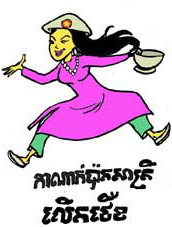
Cambodian People’s Party aka the leg lifting woman party (according to Hoon Xhen)

Thursday, 23 August 2012
Ou Virak
The Phnom Penh Post
the National Election Committee (NEC), widely derided as politically biased towards the CPP, needs to be overhauled
The governing Cambodian People’s Party (CPP) appears unmoved by the recent merger of the Kingdom’s two main opposition parties, now going by the name of the Cambodia National Rescue Party (CNRP).

Prime Minister Hun Sen recently dismissed the merger as “a storm in a teacup”.

Teacups, however, have a tendency to spill, and it is clear from the Prime Minister’s comments about the merger that he is watching developments very closely. Neither impressed by, nor worried about, the unification, but certainly paying attention.

And he has every right to be doing so: with the CPP winning fewer than half the number of eligible voters in 2008, and boasting a rogues’ gallery of human-rights abuses on its watch, there will be a fair number of votes up for grabs next July.

The merger comes at a time of growing disaffection and desperation on the part of many marginalised and disadvantaged groups who have been denied justice through the court system and who have instead taken to the streets in protest.

Wednesday, January 11, 2012

Opposition Officials Push US for More Support in Elections

Daniel Baer, US State Dept. Deputy Assistant Secretary
Bureau of Democracy, Human Rights, and Labor
Tuesday, 10 January 2012
Chun Sakada, VOA Khmer | Phnom Penh
“We raised so many issues, including judiciary reform, land disputes, corruption and elections.”
A senior US official met with members of Cambodia’s opposition parties and other government officials on Tuesday to discuss ways forward toward free and fair elections later this year and next.

Daniel Baer, who is the US State Department’s deputy assistant secretary for democracy, human rights and labor, met with officials from government, the opposition Sam Rainsy and Human Rights parties and others, to discuss upcoming commune elections, which will be held in June 2012, and national elections, to be held next year.

Free and fair elections will require more funding of pro-democracy groups like the US-based International Republican Institute and the National Democratic Institute, Kem Sokha, president of the minority opposition Human Rights Party, told reporters after his meeting with Baer.

Other issues he raised included bias with the National Election Committee and local authorities for the ruling party, unequal media access, and fraud in voter identification, he said.

Tuesday, December 20, 2011

Incitement claim: Monk called to court over land protest

Ven. Sieng Sovannara
Tuesday, 20 December 2011
Tep Nimol
The Phnom Penh Post

A Kampuchea Krom monk was issued a summons yesterday to appear in a Phnom Penh court tomorrow to face accusations of incitement.

In a letter obtained by the Post yesterday, the investigating municipal judge, Duch Kimson, ordered Sieng Sovannra, a monk at the Samaki Raingsey pagoda, to attend an inquiry into his role in a protest led by Stung Meachey villagers and his fellow monks over a land dispute with a wealthy trader.

Duch Kimson said the summons marked the opening of an inquiry into the case.

He was not able to comment on the identity of the plaintiff, but said the case was filed “according to procedure.”

Battambang villagers force the cops to release two of villagers [-Strength in Unity!!!]

http://www.youtube.com/watch?v=fz4sVYmzaW4

19 December, 2011
Report by Mu Sochua

Battambang Court ordered detention of 2 villagers charging them for farming on a rich man's land. Villagers' witnesses were not allowed to testify.

50 villagers forced police to free the detained villagers. Police used violence.

Villagers are camping outside the court house.


Monday, October 17, 2011

Opposition Leader Sam Rainsy's press conference


17 October 2011
Source: SRP

Opposition leader Sam Rainsy held a press conference this morning to address the voter's registration issue, as well as the request by SRP MPs to Prime Minister Hun Sen on border issues and judiciary bias in Cambodia.

Thursday, June 09, 2011

Test Seen for Judicial Reform as Council Meets

Sok Khemara, VOA Khmer
Washington, DC Wednesday, 08 June 2011
"... people’s faith in the courts remain shaken, especially since court reform has taken many years."
Lawyers and other justice officials are pushing for more transparency in the judiciary, as a major meeting of the Supreme Council of Magistracy is under way.

The Council is a government body constitutionally established to supervise judges and is expected to announce a four-year rotation of judges and prosecutors, including retirees, on Wednesday.

But some critics of the system say it has allowed many jurists to exceed the age of retirement, 60, or that jurists in well-placed positions have not been rotated out.

Sok Sam Oeun, director of the Cambodian Defenders Project, said some jurists are rotated out of a posting only to be put back at a later date. The transfers are designed so that judges or prosecutors do not amass too much power in one court.

Saturday, October 02, 2010

Hun Sen Finds Win-Win-Win in Labor Dispute: Analysts

Hun Xen
Chun Sakada, VOA Khmer
Phnom Penh Friday, 01 October 2010
“I believe the courts will really give up the factories' complaints, and the factories will withdraw their complaints from the courts.”
On Wednesday, Prime Minister Hun Sen asked the courts to drop cases against labor leaders brought by factories in the wake of September's general strike. At the time, he called this a “win-win” strategy. Analysts say his response was a winning strategy for the prime minster as well.

His foray into the strikes likely curried favor with workers ahead of elections in 2012 and 2013, said Am Sam Ath, lead investigator for the rights group Licadho.

The prime minister changed his political attitude from supporting factory owners to supporting workers as an opportunity to attract the support of the workers and unions for his political affairs in the upcoming election,” he said.


Seventeen factories have cases against labor leaders, claiming the September strike was illegal. They have barred some 150 representatives from working, pending a court resolution. But that created strife in the industry, even as workers and managers have sought a compromise.

Ny Chakrya, head investigator for the rights group Adhoc, said Hun Sen's statements would appeal to both workers and nervous garment buyers alike.

“I believe the courts will really give up the factories' complaints, and the factories will withdraw their complaints from the courts,” he said.

Meanwhile, unions and managers are looking for ways to simplify their negotiations, to prevent strikes in the future. The four-day strike cost factories up to $15 million and caused major buyers in the US to call for a resolution.

Workers say they need better incomes as the cost of living rises, but factories say they have raised salaries as far as they can in the current marketplace.

But even the unions have had a hard time agreeing. Cambodia's garment industry—its main economic earner—is full of unions. Some lean politically one way or another; while others remain politically neutral. Not all of them get along.

Ath Thun, president of the Cambodian Labor Confederation and a leader of September's strike, said labor disputes are hard to effectively solve because of these competing interests.

Hun Sen's warnings, he said, prevented the dispute from widening. “He prevented the dispute from spreading to destruction.”

But Chea Mony, president of the Free Trade Union of the Kingdom of Cambodia, said both sides have a duty to avoid labor disputes that can discourage potential buyers. (The Free Trade Union did not enter last month's strike, he said, because it ran counter to his union's approach to strikes.)

“The buyers can stop orders from Cambodia and go order from neighboring countries,” he said. “Then Cambodia will meet with a big problem.”

Yim Serey Vathanak, project coordinator for worker education at the International Labor Organization, said the industry still lacks a quick response mechanism for solving disputes. In the absences of that mechanism, he said, Hun Sen was able “to reduce the tension in the garment industry.”

Ken Loo, secretary-general of the Garment Manufacturers Association in Cambodia, said Hun Sen had not come down “on either side.”

“He wants both parties to negotiate and compromise for peace,” he said.

Whether the factories will now decide to drop their charges against labor leaders was now up to them individually, he said.

The important thing was that work continues, he said. If not, “no one benefits” he said. “The workers don't get paid a salary. The factories can't get production. So both sides lose.”

Wednesday, September 22, 2010

CCHR Welcomes Report by Special Rapporteur and Calls on Govt to Lead Judicial Reform

Click on the press release in Khmer to zoom in

PRESS RELEASE
Phnom Penh, 22 September 2010
For immediate release

CCHR WELCOMES REPORT BY SPECIAL RAPPORTEUR AND CALLS FOR GOVERNMENT TO LEAD JUDICIAL REFORM

The Cambodian Center for Human Rights (“CCHR”) welcomes the latest report from the United Nations Special Rapporteur on the situation of human rights in Cambodia, Surya Subedi (the “Special Rapporteur”). The Report, dated 16 September 2010, examines the effectiveness of the Cambodian judiciary in promoting and protecting human rights and will be presented to the Human Rights Council in Geneva on 28 September. CCHR calls on the Royal Government of Cambodia (“RGC”) to review the content and recommendations of the Report closely and avail itself of opportunities to work with the many willing partners who are available to help the RGC strengthen the judiciary and its capacity to protect the rights of the citizens of Cambodia.

CCHR notes with concern the dismissive comments of numerous government officials reported by media in response to the release of the Report of the Special Rapporteur. It is no secret that Cambodia’s judiciary faces challenges, many of which are complex and difficult to address. The RGC is clearly aware of this fact, having created the Council for Legal and Judicial Reform, which produced a Legal and Judicial Reform Strategy in 2003 setting out the RGC’s reform priorities. It should come as no surprise that Cambodian and international NGOs, opposition parties, donors, and United Nations treaty bodies and special mandates have repeatedly expressed similar recommendations in regard to strengthening the judiciary. CCHR encourages the RGC to view these groups as genuine partners in the challenging goal of legal and judicial reform and capacity building rather than dismissing their findings and recommendations as biased, uninformed and irrelevant.

Christophe Peschoux, country representative for the Office of the High Commissioner for Human Rights (“OHCHR”), has reportedly offered the assistance of his office to the RGC to help implement the recommendations in the report of the Special Rapporteur. Cambodian NGOs such as CCHR operate trial monitoring projects that collect data to support the RGC’s legal and judicial reform efforts. Donors have offered their support and technical expertise to a model court project, and, as CCHR has repeatedly stressed, there are ongoing opportunities for the RGC to take advantage of the expertise and experience of judicial officers employed at the Khmer Rouge Tribunal. These examples provide evidence that, if the RGC is willing to genuinely engage with those who offer constructive criticism and present good faith recommendations for reform, there is no shortage of available support.

However, when considering legal and judicial reform, a distinction must be drawn between areas in which partners can provide support – such as collecting data through trial monitoring, providing technical expertise, and providing funding – and those in which the RGC must take the lead. The creation of key laws by the RGC such as the Law on the Status of Judges and Prosecutors and the Law on the Organization and Functioning of the Courts, as well as the reform of the Supreme Council of Magistracy, would necessarily result in greater independence for judges and prosecutors.

Similarly, by removing the crimes of defamation and disinformation and ending politically motivated criminal cases against members of opposition parties and those in the media, the RGC would clearly indicate that it has no interest in using the courts as a political tool to silence critics. There are multiple partners willing to support legal and judicial capacity building in Cambodia and the RGC has made some progress in this area. However, fundamental and transformative legal and judicial reform that allows the Cambodian judiciary to protect Cambodia’s liberal democracy and the rights of all citizens requires a willingness from the RGC to limit its own power.

For more information, please contact:

Ou Virak
President
Cambodian Center for Human Rights
Tel: +855 12 404 051
Email: ouvirak@cchrcambodia.org

Should Sam Rainsy come back to be sent to jail by Hun Xen or not?

(Photo: AFP)

22 September 2010
By Pech Bandol
Free Press Magazine Online
Translated from Khmer by Soch
Click here to read the article in Khmer


A myriad of lawsuits against the opposition party are currently being brought up and this raises the question on the future of democracy in Cambodia: will Cambodia limp toward democracy as it is doing now, i.e. a democracy that only serves as a shield to protect a dictatorship or will it return back to an 80s style communist regime?

Kul Panha, the executive director of the Comfrel NGO, indicated that the number of accusation cases against opposition officials are on the rise and this is intentional from the part of the ruling CPP party in order to smash democracy and to prevent free and fair elections.

Kul Panha commented: “We look at other countries in Europe, Japan, in America, nobody brings up lawsuits because of diverging political opinions such as we have here.”

It should be noted that since 2009 until now, opposition officials have faced an array of lawsuits against them brought up by government officials and by the powerful CPP party. Mrs. Mu Sochua, an opposition MP from Kampot province, was sued for defamation by Hun Xen and the Supreme Court decided on 02 June 2010 that she lost this case and it forced her to pay a compensation to Hun Xen, as well as a fine, both totaling 16.5 million riels. Opposition leader Sam Rainsy was sentenced in absentia by the Svay Rieng provincial court on 27 January 2010 to 2-year of jail term in regards to his uprooting of border stakes, he is also facing another lawsuit where he is accused of falsification of public documents and disinformation. The latter case was heard on 08 September, but the sentencing will not be known until 23 September.

Furthermore, what is laughable is the lawsuit brought up by Hor 5 Hong against Sam Rainsy two years ago. The case is also coming up now. Chea Poch, another opposition MP, also saw his defamation lawsuit case, which was brought up by Prince Ranariddh 6 years ago, being dug up. In summary, with this array of theatrical shows, one can see clearly that the ruling party has a clear aim in mind: using the judicial system as a tool to break up the opposition, and in particular, to exclude from the Cambodian political scene the cumbersome opposition leader who is skilled at attracting supporters.

The poisonous strategy used by the CPP can be clearly seen during Hun Xen’s inauguration of the Prek Phnov bridge on 20 September 2010 in which he issued the following warning: “If the opposition leader does not come back to face jail on his own, then the jail will be brought over to him.” Regarding this problem, the public is wondering whether Mr. Sam Rainsy will return to be sent to jail by Hun Xen or will he continue to live in exile?

On this issue, Ou Virak, President of the Cambodian Center for Human Rights (CCHR), is of the opinion that Sam Rainsy should return back to Cambodia and let Hun Xen send him to jail. At that time, the national and international community will clearly see the dictatorship regime in Cambodia, and they will then help Sam Rainsy.

Nevertheless, Sam Rainsy knows clearly whether he should allow himself to become a pawn in Hun Xen’s hand or not. To Sam Rainsy, the current Cambodian courts are merely puppets, they are courts that serve only the interest of the CPP, i.e. a KR-style tribunal, therefore why should Sam Rainsy allow himself to become the pawn of such of judicial system?

This means that Sam Rainsy will not show up to face the sentencing handed down by the Cambodian court controlled by Hun Xen. Therefore, Cambodia’s fledgling democracy will face a major problem: a democracy without the presence of an opposition leader.

Nevertheless, regarding this issue, numerous analysts are of the opinion that the international community will do its utmost to pull Cambodia back to the right path to democracy, and it will not allow Hun Xen to pursue his misdeeds anyway he pleases.

UN diplomat denounces court system

U.N. special rapporteur Surya Subedi at the U.N. headquarter in Phnom Penh, Cambodia. (Photo: The Phnom Penh Post)

Tuesday, 21 September 2010

Sebastian Strangio
The Phnom Penh Post


CAMBODIA’S court system continues to be hobbled by political interference, corruption and a lack of resources, according to the United Nation’s human rights envoy to Cambodia.

In a report released publicly last Thursday, Surya Subedi, the UN’s special rapporteur for human rights, recommended sweeping changes to a court system that he said fails to provide justice to the poor and vulnerable.

“Although the Constitution of Cambodia provides for the separation of powers between the three main organs of the State, in practice the distinction between these organs is blurred and the executive branch dominates the judiciary,” he wrote.

In his candid survey of the country’s courts, Subedi recognised the progress that had been made in passing key legal reforms, but said judicial proceedings continued to be “used by the rich and powerful in many cases to dispossess, harass and intimidate the poor” and those representing them.

The problem has been compounded by a lack of legislation to strictly define the roles and responsibilities of judges and allow them to operate impartially. He noted that corruption seemed to be “widespread at all levels in the judiciary”.

The report, which is based on Subedi’s mission to the Kingdom in June, highlighted the recent cases against Sam Rainsy Party lawmaker Mu Sochua and Khmer Machas Srok newspaper publisher Hang Chakra as examples of political interference in the courts. He also cited the difficulty of the poor in settling land disputes through the courts, with many villagers bypassing the process altogether by making personal appeals to powerful officials.

Subedi closed the report with a series of recommendations, including new laws banning political party members from being appointed as judges and the decriminalisation of defamation.

Sok Sam Oeun, executive director of the Cambodian Defenders Project, said he agreed with the report’s general conclusions, and that steps needed to be taken to secure the courts’ independence.

“In the future, if we do nothing maybe it will get worse, and the space will be very narrow,” he said. But he added that reforms would require more commitment from foreign donors, who he said have recently scaled back support for legal reforms.

Government officials dismissed the report’s conclusions, saying it did not place enough weight on the country’s achievements.

“Now we are taking care to strengthen the system and strengthen the law,” said Phay Siphan, spokesman for the Council of Ministers. “[Subedi] doesn’t know what’s going on in Cambodia.”

He pointed to reforms enacted since the civil war ended in 1998, including the successes of the Khmer Rouge tribunal and the passage this year of the Law on Anticorruption, which he said would be used to quash corruption in the courts.

Om Yentieng, chairman of the government-run Committee of Human Rights, could not be reached yesterday. Subedi is to present his report to the UN Human Rights Council next week.

Friday, July 23, 2010

Mu Sochua Faces Docked Wages After Court Loss


Men Kimseng, VOA Khmer
Washington, DC Thursday, 22 July 2010

It is not her salary that Mu Sochua stands to defend, but to show the national public and international community that the court only acts in favor of the Cambodian People's Party.
Mu Sochua, the opposition lawmaker who lost a defamation court battle with Prime Minister Hun Sen, will have her National Assembly salary docked to pay nearly $2,000 in compensation.

Phnom Penh Municipal Court ordered the National Assembly to take approximately 4.2 million riel, or $1,000, from her paycheck for two months.

“Mu Sochua must not obstruct or arrange for the prevention of officials in charge of preparing salaries at the [National Assembly] finance department from clearing the would-be confiscated debt,” the court said in a July 20 decision obtained by VOA Khmer.

The money will go to Hun Sen, who countersued Mu Sochua last year following her own claims he had defamed her with derogatory remarks in public speeches.

The case brought international attention to the Cambodian judicial system, which local and international rights groups say is typically politically biased toward the ruling party or subject to bribery and corruption. International donors routinely call for increased judicial reform.

Mu Sochua called the court decision “a kind of coercion” and “a political tool.”

“The judges cannot use their consciences to deliver justice to me as a parliamentarian,” she said.

Mu Sochua, a Sam Rainsy Party parliamentarian representing Kampot province, had repeatedly said she would not pay the fine, but the order comes after she lost her final appeal to the Supreme Court in June.

Yim Sovann, a spokesman for the Sam Rainsy Party, said members would stand by the lawmaker.

“This is an act of injustice,” he said. “It is not her salary that Mu Sochua stands to defend, but to show the national public and international community that the court only acts in favor of the Cambodian People's Party.”

The court order does not specify when the deductions will take place, and National Assembly officials were not immediately available for comment.

Thursday, June 24, 2010

Where is the news on Chhun Yasith?

An Anonymous Reader wrote:

Hey KI, Do you know now American Justis judge Chhun Yasith to whole life jail. Why not you post this news on you web. Why you not said any more??? do you think American Jurical System are fair or not???? if Cambodia Justis judge like this you will say more.... Haaaaaaa

----------
Dear Sir/Madam,

In case you missed, the news on Chhun Yasith was first posted on KI-Media here, and later here.

Is the US judicial system fair? Not according to our personal opinion.

Should we say more? KI-Media Readers have commented plenty on this sentence, if you care to read them after the post on Mr. Chhun Yasith's news.

Personally, we believe that injustice should be denounced wherever they take place, in Cambodia or in the US. Don't you agree?

Thank you!

KI-Media team

Friday, June 11, 2010

Sam Rainsy Meets State Department Official

Sam Rainsy, leader of SRP, talks to VOA Khmer on 'Hello VOA', while visiting Washington DC, on Thursday. (Photo: by Pin Sisovann)


Sok Khemara, VOA Khmer
Washington, DC Thursday, 10 June 2010

The current ruling party in Cambodia uses the court system as a tool to prevent opposition or minorities from having a legitimate right to protect the people’s interest against corruption."
Exiled opposition leader Sam Rainsy met with a senior US State Department official in Washington on Wednesday, claiming Cambodian courts were working to marginalize his party.

“The current ruling party in Cambodia uses the court system as a tool to prevent opposition or minorities from having a legitimate right to protect the people’s interest against corruption,” Sam Rainsy said, following a meeting with Scot Marciel, the Assistant Secretary of State in charge of Asean affairs.

Sam Rainsy is currently on a visit to the US to build political support for his party, which holds 26 seats in the National Assembly, compared to 90 held by the Cambodian People’s Party.

Sam Rainsy is facing criminal charges for publishing a map on his party’s website to support claims that a border arrangement between Vietnam and Cambodia has eroded national land, and he is facing a jail sentence on charges related to uprooting border markers in Svay Rieng province.

Sam Rainsy told VOA Khmer that he had raised issues of forced evictions, restricted freedom of assembly, the prosecution of journalists and a biased judiciary with Marciel.

“So there should not be one group that tries to eliminate another group, like in Cambodia,” Sam Rainsy said. “In the US, democracy is lively because they know how to respect each other, especially the majority that respects the minority.”

Cambodian government officials said Wednesday they were not concerned with Sam Rainsy’s visit to the US.

Sam Rainsy is scheduled to meet with other officials from Congress and rights groups before giving a speech to a group of Cambodian-Americans in Virginia.

Tuesday, February 02, 2010

OHCHR regrets outcome of case against members of Sam Rainsy Party

UNITED NATIONS
OFFICE OF THE HIGH COMMISSIONER
FOR HUMAN RIGHTS IN CAMBODIA

Statement of the United Nations Office of the High Commissioner for Human Rights in Cambodia

Phnom Penh, 29 January 2010


OHCHR regrets once again that the courts have been used to respond to a public interest issue that could have been resolved in a more open, constructive manner, through public debate within Cambodia’s democratic institutions. Mr. Sam Rainsy was sentenced to two years imprisonment for damage to property and incitement to racial discrimination (Article 52 and 61 of the UNTAC penal law, respectively). Ms. Meas Srey and Mr. Prum Chea were sentenced to 1 year imprisonment for damage to property. All three were further sentenced to heavy fines and compensation ranging from 5 to 50 millions riels.

Mr. Sam Rainsy allegedly took it upon himself to remove several border demarcation poles on 25 October 2009 in a border village in Svay Rieng province, adjacent to Viet Nam. As a Member of Parliament and a leader of the opposition, he could have raised his concerns about the current process of border demarcation and sought clarification from the relevant authorities or the border demarcation committee, or discussed them at the National Assembly or otherwise publicly.

The trial took place on 27 January in Svay Rieng provincial court. The court building was cordoned off by heavy security forces. A selected number of members of the public including local village and commune authorities and several Members of Parliament from Sam Rainsy Party were allowed in the gallery, although there remained available space. The media were not allowed in. Two human rights observers, including OHCHR, were authorized to observe the proceedings. Whilst it is not the role of OHCHR to determine the merits of the case, it observed that on several occasions the President of the court did not interrupt the civil party lawyer who attacked verbally the accused and their lawyers in an aggressive manner. Due process and international standards provide that trials should be public and respect the principle of equality of arms, whereby all parties must be treated with equal respect.

Border demarcation is an important matter of state sovereignty. It is always a complex and politicallydelicate process, involving neighbouring countries, sensitive negotiations and potentially volatile popular feelings. This is an issue which has led in the past to serious conflicts between Cambodia and its neighbours. It is all the more important that the matter is handled carefully by the Government but also by political parties, with patience, tact, reason and responsibility.

In a democratic society, it is preferable that Government policies or decisions are addressed through public debate. From a human rights point of view, the best response to any allegation is to respond to it with the truth, facts and evidence, and to ensure, wherever possible, a transparent process. In doing so, political leaders should refrain from using border issues in an attempt to gain political dividends by stirring popular sentiments against neighbouring countries and peoples. This is a slippery road that may lead to further conflicts, violence and infringements of human rights.

Thursday, January 28, 2010

Cambodian Judiciary's Double Standard


January 28, 2010
CAMBODIAN JUDICIARY'S DOUBLE STANDARD

After the first set of documents (15 sheets) presented at http://tinyurl.com/y9d7qho the following is a second set of maps and data (6 sheets) http://tinyurl.com/ycmw48z giving additional evidence of land grabbing associated with border encroachment in Svay Rieng province.

Whichever map is used (French 1952 1/100,000 map, US Army 1966 1/50,000 map or most recent Google Earth satellite picture) the conclusion is the same : The so-called border post (#185) opposition leader Sam Rainsy pulled out last October was well inside Cambodia and was not a real and legal border demarcation marker. All the so-called border posts in the area (from #184 to #187) are located in fact between 300 meters and 500 meters from the international border as defined on the maps.

The only legally binding map is the French 1952 1/100,000 map which was deposited at the United Nations by the Royal Cambodian Government under then-Prince Norodom Sihanouk in 1964. But this map says the same thing as the other maps.

Therefore, Sam Rainsy did not commit any crime last October because he did not pull out any “border post” or destroy any “public property” as the Hun Sen government claims. He just pulled out a few commercially worthless wooden poles on a private land at the request of the local land's owner fearing land grab associated with border encroachment.

Those who have actually destroyed public property are Hun Sen government officials who are involved in the destruction, through illegal but lucrative logging, of hundreds of thousands of hectares of Cambodia 's invaluable forest. But those powerful and wealthy people walk free while powerless and poor farmers protesting land grabbing are put in jail.

The above story is another illustration of the Cambodian judiciary's double standard.

SRP Members of Parliament

Thursday, January 14, 2010

U.S. help Cambodian judicial officials on IT data base

KI-Media note: It would have been more useful if the US can help turn Cambodia's judicial system into an independent system rather than one working under the order of the Hun Xen's regime!
PHNOM PENH, Jan. 13 (Xinhua) -- Ninety-seven members of Cambodia's Ministry of Justice received diplomas on Wednesday after they had successfully completing an intensive information technology (IT) training program funded by the United States.

The statement released by the United States Embassy in Phnom Penh said the five-month course -- the first of its kind offered at the ministry -- provided basic technology skills to the graduates and trained them on the use of an electronic information system that is being installed at the ministry by the United States.

As more and more Cambodians come to trust the country's courts to resolve their disputes, the volume and complexity of the ministry's work will increase, an issue the new system will help address, said Flynn Fuller, the mission director.

The system consists of an office intranet for file sharing, a webpage to publicize court information such as caseloads and clearance rates, and a series of databases.

Many court officials still use hand writing for their reports and keep their information on shelves instead of using computer database.

According the statement, the United States is providing nearly two million U.S. dollars this year to strengthen Cambodia's legal system by training judges and lawyers and by providing the public with greater access to information about the courts.

Monday, November 16, 2009

People in glass houses should not be throwing stones

16/11/2009
Veera Prateepchaikul
Bangkok Post

So the next time Hun Sen or any of his men want to badmouth the Thai justice system, they should better clean house first. Otherwise they will be seen as just a clown.
When Cambodian Prime Minister Hun Sen said he had no respect for the Thai justice system during his lengthy interview with local and foreign media at Phnom Penh's Pochentong airport on Nov 9, I was not surprised and thought he had said so because he might have felt very strongly for his "eternal friend", ousted former prime minister Thaksin Shinawatra, whom he believed was a victim of political persecution in Thailand.

But Hun Sen should have been fully aware, as the Abhisit government had already clarified, that the charges against Thaksin, which eventually resulted in his conviction and sentencing of two years' imprisonment, are not politically related, but concern corruption in connection with his wife, Khunying Potjaman's, acquisition of a huge land plot in Bangkok.

Yet the Cambodian government leader chose to ignore the government's explanation and used his emotions rather than conscience to judge the Thai justice system.

Like other bureaucratic organisations, the Thai judiciary is not perfect. Every year, a handful of judges are penalised or dismissed after being found guilty of wrongdoing.

Yet the system as a whole is widely respected and perceived as the people's "last resort" compared to the executive branch and the legislature which are often held in low esteem.

Obviously Hun Sen might be biased against the Thai justice system just as he has held in contempt the system in his home country.

The system is a sham and can hardly be trusted, and the blame is largely attributable to the Cambodian leader who sees the system as a tool to serve his political ends rather than as an arbiter for justice.

The testimony of Dr Chhiv Kek Pung, president and founder of the Cambodian League for the Promotion and Defence of Human Rights, to the Tom Lantos Human Rights Commission in September will provide those who are not familiar with Cambodian affairs an insight into the justice system in Cambodia. Aside from this testimony, Human Rights Watch has also recorded human rights abuses in Cambodia.

Here are some excerpts from the testimony:

- Cambodia's justice system fails to uphold the rule of law and on a daily basis it deprives justice to countless victims of crimes and rights abuses. Corruption is endemic in the police and judiciary, as well as political interference. Impunity is rampant, and the gravest of crimes, including murder, torture, rape and trafficking of women and children frequently go unpunished if the perpetrators have money or influential connections.

- The government uses the courts to attack its critics and political opponents. Rather than honour its repeated promises to strenghen the independence of the judiciary, the government continues its long history of interference in the courts for political purpose.

How the justice system can be twisted or distorted in cases involving influential people is clearly evident in the case between Hun Sen and Mu Sochua, an opposition MP, which was described as "a mockery of justice" by the Sam Rainsy Party.

In April Mu Sochua sued Hun Sen for defamation claiming that the premier had uttered a derogatory statement against her during a press conference. A few days later, Hun Sen filed a counter-suit against her and her lawyer, Kong Sam Onn. Her parliamentary immunity was eventually suspended by the parliament.

Threatened with the defamation suit and disbarment, the lawyer withdrew from defending the opposition MP, forcing her to go on trial without legal counsel.

In August the municipal court found Mu Sochua guilty of defamation and fined her 6.5 million riels, or about 140,000 baht. The verdict was upheld by the Appeals Court on Oct 28. She filed an appeal to the Supreme Court on Nov 10.

Meanwhile, her lawsuit against Hun Sen was dismissed.

So the next time Hun Sen or any of his men want to badmouth the Thai justice system, they should better clean house first. Otherwise they will be seen as just a clown.

Veera Prateepchaikul is a former editor, Post Publishing Co Ltd.