


 Click on the article in Khmer to zoom in
Showing posts with label Border disputes with Thailand and Vietnam. Show all posts
Showing posts with label Border disputes with Thailand and Vietnam. Show all posts
Thursday, August 12, 2010
Cambodians are more concerned about loss of territories to Vietnam than they are with Thailand - Op-Ed by Ven. Hok Savann
Click on the article in Khmer to zoom in

Wednesday, November 04, 2009
Men come and go, institutions are forever
"And, sadly, too, naïve nationalist Cambodians fall right into autocratic Sen's political trap as he beats the "nationalism" drum in his dispute with Thailand over the Preah Vihear temple, exploiting Cambodians' emotional nationalist outburst. Sen benefits from setting up this controversy and ostentatiously vows to "shoot" any Thai transgressor who dares to venture into the disputed area. By so doing, he diverts attention from his internal political rule, condemned by rights groups worldwide, and distracts the public's attention from Vietnam's successful expansionism into Cambodia."
"[Hun] Sen is a "destroyer" of Cambodia's national interests"
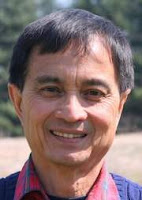 November 4, 2009
A. Gaffar Peang-Meth
Pacific Daily News
Nation-states' international relationships have as primary purpose to serve the state's national interest -- which actually means, what benefits the nation -- as defined by the state's national political leaders. These leaders devise and undertake courses of action to achieve short-term objectives and long-term goals and maximize what they believe is of benefit to the citizens.
During this process, leaders have at their disposition national institutions, endowed, constitutionally, with specific roles and functions. Institutions are tools and the state is the agent of the nation -- which means the people. How well these institutions and the state serve the people's interests are measures of the effectiveness of the institutions and the state.
In general, the world's nation-states aspire to common ultimate goals by giving government the task of maintaining independence (free from foreign invasion and outside control), order and stability (domestic peace and tranquility, and justice to the people, conforming to the constitution), and of promoting economic and social well-being of all citizens.
One school of thought teaches that nothing is possible without man, and nothing is lasting without institutions.
Man lives, man builds, man destroys, man dies. In general, men and women in the world aspire to a state of peace and justice in which they can, at a minimum, attain a level of contentment in life, good health, and a capacity to meet life's basic requirements of food, shelter, clothing. Government is to help them fulfill these aspirations.
In the United States 1776 Declaration of Independence, it is asserted that a government which does not serve the people's interests is not worth keeping; it's the people's right to institute a new one.
Another school of thought teaches that since men are not angels and are capable of abusing other men's rights, in order to avoid tyranny "auxiliary precautions" are necessary through the institution of a separation of governing powers (so that each governing department's power does not overlap with the others', allowing tyrants to extend their power) and a system of checks and balances (so that each governing power can check the others' powers from abuses).
As tools to serve national interests, national institutions -- composed of individuals working together toward common goals with agreed-upon rules -- assure that a change in political leadership does not interrupt the march of the state to fulfill its duty, and to help the people attain their aspirations.
This neat arrangement can be perverted by authoritarian leaders. Those concerned with amassing personal power and wealth undertake strategies and methods that not only do not serve the people's aspirations but impede their rights and the development of democratic structures by thwarting accountability processes and encouraging corrupt governance and practices.
In this age of globalization everything is interrelated, and the old concept of an absolute, comprehensive, permanent, and inviolable sovereignty is supposedly obsolete. But national leaders in the world's state systems see benefits in the continued practice of sovereignty and non-interference in the affairs of states in international relationships.
So, rights and freedom advocates continue to face proponents of sovereignty, order and security.
The June 2009 study, "Undermining Democracy: 21st Century Authoritarians," about which I wrote earlier in this space, warned against "world's democracies ... (that) fall into the authoritarians' trap," through failure to "safeguard and promote the very qualities (rules-based, accountable, open systems) that set them apart from the authoritarians."
Thus, authoritarian regimes of Burma's Gen. Than Shwe and Cambodia's Hun Sen, use the institutions of the army, the police, and the judicial system to continue their authoritarianism and to ignore the tepid admonishments from democratic states, which appear unable and unwilling to confront them. As a respected Western reader, a former diplomat of long experience, e-mailed me, human rights do not trump other "vital" interests defined by the state's leaders.
And, sadly, too, naïve nationalist Cambodians fall right into autocratic Sen's political trap as he beats the "nationalism" drum in his dispute with Thailand over the Preah Vihear temple, exploiting Cambodians' emotional nationalist outburst. Sen benefits from setting up this controversy and ostentatiously vows to "shoot" any Thai transgressor who dares to venture into the disputed area. By so doing, he diverts attention from his internal political rule, condemned by rights groups worldwide, and distracts the public's attention from Vietnam's successful expansionism into Cambodia.
Sen has stirred the political pot on his western border by deliberately injecting himself in Thailand's internal turmoil. Arriving at the Association of Southeast Asian Nations meeting in Cha-am recently, rather than talking about the mutually agreeable ways to resolve the temple dispute based on a memorandum of understanding of 2000, Sen declared his support for Thailand's fallen premier, Thaksin Shinawatra, who has been sentenced to a two-year prison term for helping his former wife buy land on Bangkok's Ratchadaphisek Road, and his offer to Shinawatra as Sen's economic adviser.
The Bangkok Post's editorial called Sen's comments, "a slap in the (Thai) government's face on its own soil," and The Nation editorialized, Sen was "rubbing more salt on open wounds" as his provocative statements 'really ripped at the heart of so many Thais at a time when the country is bogged down with internal strife."
In an e-mail to The Nation, former Cambodian professor at the Johns Hopkins School for Advanced International Studies, Naranhkiri Tith, an economist, reminds that Sen creates "all these problems with Thailand" to show that Thailand, not Vietnam, is "the real enemy of Cambodia."
As Tith says elsewhere, Sen is a "destroyer" of Cambodia's national interests.
A. Gaffar Peang-Meth, Ph.D., is retired from the University of Guam, where he taught political science for 13 years. Write him at peangmeth@yahoo.com.
During this process, leaders have at their disposition national institutions, endowed, constitutionally, with specific roles and functions. Institutions are tools and the state is the agent of the nation -- which means the people. How well these institutions and the state serve the people's interests are measures of the effectiveness of the institutions and the state.
In general, the world's nation-states aspire to common ultimate goals by giving government the task of maintaining independence (free from foreign invasion and outside control), order and stability (domestic peace and tranquility, and justice to the people, conforming to the constitution), and of promoting economic and social well-being of all citizens.
One school of thought teaches that nothing is possible without man, and nothing is lasting without institutions.
Man lives, man builds, man destroys, man dies. In general, men and women in the world aspire to a state of peace and justice in which they can, at a minimum, attain a level of contentment in life, good health, and a capacity to meet life's basic requirements of food, shelter, clothing. Government is to help them fulfill these aspirations.
In the United States 1776 Declaration of Independence, it is asserted that a government which does not serve the people's interests is not worth keeping; it's the people's right to institute a new one.
Another school of thought teaches that since men are not angels and are capable of abusing other men's rights, in order to avoid tyranny "auxiliary precautions" are necessary through the institution of a separation of governing powers (so that each governing department's power does not overlap with the others', allowing tyrants to extend their power) and a system of checks and balances (so that each governing power can check the others' powers from abuses).
As tools to serve national interests, national institutions -- composed of individuals working together toward common goals with agreed-upon rules -- assure that a change in political leadership does not interrupt the march of the state to fulfill its duty, and to help the people attain their aspirations.
This neat arrangement can be perverted by authoritarian leaders. Those concerned with amassing personal power and wealth undertake strategies and methods that not only do not serve the people's aspirations but impede their rights and the development of democratic structures by thwarting accountability processes and encouraging corrupt governance and practices.
In this age of globalization everything is interrelated, and the old concept of an absolute, comprehensive, permanent, and inviolable sovereignty is supposedly obsolete. But national leaders in the world's state systems see benefits in the continued practice of sovereignty and non-interference in the affairs of states in international relationships.
So, rights and freedom advocates continue to face proponents of sovereignty, order and security.
The June 2009 study, "Undermining Democracy: 21st Century Authoritarians," about which I wrote earlier in this space, warned against "world's democracies ... (that) fall into the authoritarians' trap," through failure to "safeguard and promote the very qualities (rules-based, accountable, open systems) that set them apart from the authoritarians."
Thus, authoritarian regimes of Burma's Gen. Than Shwe and Cambodia's Hun Sen, use the institutions of the army, the police, and the judicial system to continue their authoritarianism and to ignore the tepid admonishments from democratic states, which appear unable and unwilling to confront them. As a respected Western reader, a former diplomat of long experience, e-mailed me, human rights do not trump other "vital" interests defined by the state's leaders.
And, sadly, too, naïve nationalist Cambodians fall right into autocratic Sen's political trap as he beats the "nationalism" drum in his dispute with Thailand over the Preah Vihear temple, exploiting Cambodians' emotional nationalist outburst. Sen benefits from setting up this controversy and ostentatiously vows to "shoot" any Thai transgressor who dares to venture into the disputed area. By so doing, he diverts attention from his internal political rule, condemned by rights groups worldwide, and distracts the public's attention from Vietnam's successful expansionism into Cambodia.
Sen has stirred the political pot on his western border by deliberately injecting himself in Thailand's internal turmoil. Arriving at the Association of Southeast Asian Nations meeting in Cha-am recently, rather than talking about the mutually agreeable ways to resolve the temple dispute based on a memorandum of understanding of 2000, Sen declared his support for Thailand's fallen premier, Thaksin Shinawatra, who has been sentenced to a two-year prison term for helping his former wife buy land on Bangkok's Ratchadaphisek Road, and his offer to Shinawatra as Sen's economic adviser.
The Bangkok Post's editorial called Sen's comments, "a slap in the (Thai) government's face on its own soil," and The Nation editorialized, Sen was "rubbing more salt on open wounds" as his provocative statements 'really ripped at the heart of so many Thais at a time when the country is bogged down with internal strife."
In an e-mail to The Nation, former Cambodian professor at the Johns Hopkins School for Advanced International Studies, Naranhkiri Tith, an economist, reminds that Sen creates "all these problems with Thailand" to show that Thailand, not Vietnam, is "the real enemy of Cambodia."
As Tith says elsewhere, Sen is a "destroyer" of Cambodia's national interests.
A. Gaffar Peang-Meth, Ph.D., is retired from the University of Guam, where he taught political science for 13 years. Write him at peangmeth@yahoo.com.
Friday, February 20, 2009
Nona thom cheang Sen? - "Who looms larger than Sen?"
 Click on the text in Khmer to zoom in
Op-Ed in Khmer by Srey Sra'em
Saturday, January 17, 2009
Interview with Sam Rainsy, Cambodian MP
 Opposition leader Sam Rainsy
Wednesday 14 January 2009
By Emmanuel Deslouis
Eurasie
Translated from French by Luc Sâr
Click here to read the original article in French
“The rule of law must be brought to Cambodia”
"Yes, there are border problems between Vietnam and Cambodia. Farmers from the eastern provinces are telling me that Vietnam nibbles Cambodian territories when I meet them as an MP. Hun Sen does not want to see this issue discussed, he threatens people who talk about this issue (with sending them) “coffins.” Of course, Hun Sen remains under the Vietnamese influence, a discreet one but a solid one nevertheless. He still maintains Vietnamese advisors. Even the ones from the 80s still stay in Hun Sen’s entourage. Furthermore, for any important decision to be made, he would jump on his helicopter to go to Vietnam which is located only a few tens of kilometers from his residence." - Sam RainsyLast year, MP Sam Rainsy, Cambodia’s opposition leader, published his autobiography “Rooted in the stone,” a direct account that shed light into Cambodia’s political events during the last 50 years. Sam Rainsy accepted to talk to us in detail about these issues, and to present – without any restraints – all the problems faced by this magnificent country.
Eurasie (Eur): How are your detractors depicting you in Cambodia?
Sam Rainsy (SR): The CPP, Prime minister Hun Sen’s party, says that I will bring in upheaval. They want to scare people with the following threat: “If Sam Rainsy comes to power, everything will be upside down.” It is true that I am against the current regime and the status-quo which equates to injustice. When I advocate a land reform, they say that Sam Rainsy will take away from the rich and give to the poor, leveling everybody downward, just like “under Pol Pot,” whereas, all that I want, is to give land to those who cultivate and live on it. Between hungry farmers on one side, and the new feudal lords and land speculators on the other side, I support the former. But the CPP accuses me of being an “instigator” who is behind the “troublemakers.”
Eur: Who are your main supporters among the voters?
SR: Farmers without land and factory workers. They are being badly mistreated and exploited. Poor people generally support my party. But, some of them also support Hun Sen’s party: most of the time, it is not because they adhere to the CPP per se, but it is because of their stomach. They are so poor that they have to live on a day-to-day basis. They listen to Hun Sen saying: “Sam Rainsy is not giving you anything to eat, we offer you bags of rice that allow you to live for several days.” I would answer to that by saying that my party does not offer bags of rice, but we offer a vision, we offer hope. This does not prevent some of the poor from being entrapped by Hun Sen, rather than accepting my arguments.
Eur: Which voters are you attracting best?
SR: The youths and those who are educated. Studies have shown that when the living condition improves, people vote more for us than for the ruling party. Then, they would not vote based on their stomach, but rather based on their head … or their heart.
Eur: What do people appreciate in you in Cambodia?
SR: Maybe the courage to oppose the ruling forces, and the faithfulness to principles. Some people told us: “Why knock yourself against a piece of rock?” The CPP-State system has everything (money, armed forces, power). Why persevere against them? It’s because we must maintain our beliefs and our principles, this in spite of the (political) murders, jailing, the exile imposed on activists. And it works: the number of our votes continues to increase from one election to another in spite of the intimidations, cheating and vote buying, and this has happened in the last decade.
Eur: The fight against corruption in Cambodia, when one is the minister of Finance, isn’t it like trying to empty an ocean with a teaspoon?
SR: It is very hard, it can take a lot of time, but I am not giving up. That said, the confrontation against the brutal force and against this wall of money, it is very difficult, but I hope to succeed during my lifetime.
Eur: Murder attempt is another way of conducting politics in Cambodia in the past few years. You and your supporters have suffered from them. How do you explain this impunity?
SR: This is rooted in the consecutive trauma from the genocide perpetrated by the Khmer Rouge. When they killed people by the thousands, people saw these large scale killings. They were traumatized, terrorize, they shut up. All these horrors were perpetrated with impunity. And the current regime is made up of former Khmer Rouge people.
Eur: Do you believe that the KR Tribunal will reach something constructive?
SR: If it can reach to a conclusion quickly, then maybe. Otherwise … you know, in 10 years, the main suspects, who are already very old, will be dead, by then the government will allow the trial of these dead people. It will no longer be a judicial work, but a historical one. If the trial comes in quickly, this can affect some people, some of the leaders all the way to district chiefs under Pol Pot and who now occupy much higher positions. These people are afraid of a true tribunal that moves fast. Thus, the government let the situation drags on to delay the judicial process. I think that the International community is starting to understand that!
Eur: There was indeed a Nuremberg (trial) in Germany.
SR: Yes, but the situation was not the same. Imagine Germany right after the war with all its former leaders, except for Hitler, still in power, would there be a Nuremberg? No, it would be a show trial, just like in Cambodia now.
Eur: Do you think, like Father Ponchaud, that this trial is incomplete because the Superpowers supporting the regime cannot be brought to justice?
SR: In my opinion, we must set a limit, set markers to the accusation, otherwise we cannot do anything. We must identify the leaders and those directly under them, like the regional commanders. To bring to trial the US, the West, ASEAN which supported (the KR) later, it is not the same thing. We must focus on the 1975-1979 period.
Eur: In your autobiography, one can follow your changing feelings toward Norodom Sihanouk. First, appalled, when he (Sihanouk) pushed away your father without mercy, and when he sent your mother to jail, then admiring (Sihanouk) in the 80s when he was a rallying figure. In retrospect, now, what do you think of his (Sihanouk) attitude?
SR: He is a complex person who knows how to maneuver in rough seas and in difficult time. He was right on certain things, but he was wrong in a lot of other. He recognizes this himself. He said: “The one who can cheat Sihanouk is not born yet.” He was wrong because he could have conquered back power and preserved Cambodia from the CPP which is under foreign and mobster influence. But, now, he is a powerless King-Father who is facing Hun Sen who can do whatever he wants. On the whole, he did not know how to maneuver, just as he could have brought in democracy to Cambodia like what the Paris Peace Accords stipulated. The non-communists were cheated by the communists or neo-communist mobsters. When Sihanouk wanted to return to power, Hun Sen refused, and the same goes for Ranariddh, his own son. The latter is the main culprit, he lost this opportunity because of incompetence and corruption.
Eur: What quality do you find in Sihanouk?
SR: His uncompromising nationalism and his integrity. That’s why I respect him.
Eur: By making compromises, first by siding with the Khmer rouge, then by handling Hun Sen with kid gloves, didn’t he (Sihanouk) push the country toward chaos?
SR: Sihanouk maintains his old habit whereby he was everybody’s father, and he can unite everybody. When he was king, it was the case. He was the great rallying point. But, when he thought he could do the same thing with Hun Sen and the CPP by granting royal titles to former communists, thinking that he could integrate them under his wings, it did not work. From this point of view, he was wrong. The world has changed, he is not in step with the time.
Eur: Just like Vietnam and Laos, Cambodia is still under the mercy of communist leaders from the 80s. This occurs in spite of the flagrant failure of their policy. What can you attribute this to?
SR: There is a tight correlation between dictatorship and economic failure. If you consider countries that have the same decade-long ruling leader, they are generally the poorest countries. There is no possibility of change. Abuses and corruption, that’s what keeps these countries backward. This is opposite to good governance and the rule of law. This is not really an issue of ideology. It’s about people clinging on to power. It’s a vicious circle: since they committed misdeeds during the past few years, they must hold on to power, otherwise they lose everything. This goes on until the day when everything explodes.
Eur: A few years ago, actress Piseth Pilika was assassinated in Phnom Penh in broad daylight. We have learnt about the bottom of this affair, not through the Cambodian media, but by the French one: high-ranking leaders were implicated (in this case). Fear was too strong to publicly denounce them for fear of reprisals. Is the media still clamped down or was there any change?
SR: We must distinguish two types of media: the printed media and the audiovisual one. In the printed media, there is no censorship, but there are assassinations (that occur) from time to time! You notice that there is a relatively free media, even though it is operated under its own risk. This is a democratic façade because the printed media barely reaches 1% of the population. The largest publication does not even exceed 20,000 copies. The main newspaper: Rasmei Kampuchea, “Light of Cambodia,” a CPP newspaper. Otherwise, there are about 200 titles (on sale), and most of them print about 100 copies. Even if they reach 1% of the population, it’s practically nothing.
Eur: How about the audiovisual media?
SR: All these media is controlled by the ruling party. There are 7 TV channels, all of which are directly or indirectly controlled by the CPP. Out of about 20 of them, about 3 radio stations are relatively independent. But, they do not cover the entire country. Thus when people talk about the media, it’s very misleading.
Eur: Currently, there is a conflict brewing between Cambodia and Thailand about Preah Vihear, a temple located along the border between the two countries. Each side claims it. Without going into the details of it, nor going into the arguments advanced by each party, don’t you think that this conflict is politicized by both Thailand and Hun Sen for election purpose? By inciting nationalism, Hun Sen was able to hide all his problems just in time for the general election.
SR: Yes, there are several things that were not spelled out. Each side defends the interest of their respective countries, in the name of a noble cause. The Thais know how to adapt. During the colonial era, in order to counteract against the French, they benefitted from the British support. During World War II, they allied themselves with Japan. They know how to adapt themselves for national unity, the current tension can help the Thais bring themselves together and rebuild their unity.
Eur: How about Cambodia?
SR: It very clear, we are seeking to create tension with a neighboring country. You will recall that in January 2003, just before the July general election of that same year, there was a riot against the Thais. After that, Thaksin and Hun Sen concluded a deal. The former wanted to launch a project in Koh Kong province (which neighbors Thailand).
Eur: What for?
SR: Most likely to establish a political basis before retaking power in Thailand. He (Thaksin) gave false assurances to Hun Sen, in particular about the Preah Vihear temple. To Hun Sen, this is convenient, this situation allows him to divert (border) problems in the east (with Vietnam) to the west (with Thailand).
Eur: Really?
SR: Yes, there are border problems between Vietnam and Cambodia. Farmers from the eastern provinces are telling me that Vietnam nibbles Cambodian territories when I meet them as an MP. Hun Sen does not want to see this issue discussed, he threatens people who talk about this issue (with sending them) “coffins.” Of course, Hun Sen remains under the Vietnamese influence, a discreet one but a solid one nevertheless. He still maintains Vietnamese advisors. Even the ones from the 80s still stay in Hun Sen’s entourage. Furthermore, for any important decision to be made, he would jump on his helicopter to go to Vietnam which is located only a few tens of kilometers from his residence.
Eur: So Cambodia is nibbled by both Vietnam and Thailand?
SR: Over the centuries, our two neighbors from the east and the west wanted to swallow Cambodia. We would have disappeared if not for the French intervention in 1863. It was King Ang Duong who made an appeal to Napoleon III. Vietnam and Thailand (then Siam) were fighting each other through their Cambodians puppets.
Eur: What is the outcome of your years spent in the government?
SR: All the essential reforms remain unheeded.
Eur: How would you describe Hun Sen?
SR: A political animal who succeeds very well in one thing: survival at the helm of the Cambodian state. His ability: survival by clinging on to power through political intrigues that he resolved with an iron fist, and this lasted for almost 30 years now. He is even better than his Vietnamese masters. On the other hand, when you only have this ambition, clinging to power for the impunity it provides, it is catastrophic for the country, the “little” big chief has no vision for Cambodia. (It’s a case where) personal interest is blended with the interest of the country.
Eur: What is your plan of action in the Parliament?
SR: Take action through all legal, democratic, peaceful, legislative means … it will be difficult because they did not give us any right. But I think that this regime will implode, an implosion rushed in by the International crisis. It is more severe than people think. Nobody is protected from the world storm, especially when one is a small country, like Cambodia, that is very dependent on the rest of the world, especially, when the country is managed the way it is done now also. The real estate crisis is getting worst each month. The wind is turning, price of farm produce and farmers’ income are crumbling, constructions are stopped, factories are closed. For the establishment side, unity is only a façade, they will devour each other when the economic crisis will turn into a social and political crisis. Sometimes, there are historical telltale signs, this crisis is surely one of them.
Eur: In your book, one can feel how important yours and your wife’s engagement in politics are (for both of you). How do your children see your political engagement?
SR: It depends on each of my three children. The eldest one follows up on our steps since the very beginning, he understands. The middle one was traumatized, she remains in France, away from us. The youngest one went with us to Cambodia, and she drew a strong experience in life from it. She is the one who is most attached to Cambodia, she lived there between 5 and 15-year-old.
Eur: Aren’t you tempted to return back to France considering the size of your task?
SR: I have a mission to accomplish in Cambodia. But, I recognize that when I am in France, I feel good because the rule of law is present. When you live (in such environment) all the time, you don’t feel it. My goal: bring the rule of law to Cambodia. Not being fearful, no longer bend down, equality in justice, same rights for everybody. In France, we can feel secure, we have confidence, we have hope. This is not the case in Cambodia.
Interview conducted by Emmanuel Deslouis
Tuesday, January 13, 2009
US-based CACJE criticizes the arrest of bomb plot suspects in Phnom Penh
 Suon Serey Ratha, CACJE leader
By San Suwith
Radio Free Asia
Translated from Khmer by Heng Soy
Click here to read the article in Khmer
On Sunday 11 January, the Cambodian Action Committee for Justice & Equity (CACJE) issued a statement indicating that the arrest of Som Ek aka Ty To aka Chau Sakada and the charge of bomb plot in Phnom Penh on 02 January, are new invention and subterfuge by the Phnom Penh regime which is known to set up movements or various events in order to bring charge against democrat and nationalist activists, by accusing the latter of terrorism.
The Cranston, Rhode Island, US-based CACJE led by Suon Serey Ratha cited as examples a number of past setup events to claim that this is another trick perpetrated by Hun Sen and the CPP in order to discourage nationalist Cambodians who dare to oppose the celebration of the 07 January, a date that the CPP always commemorates to express its gratefulness to Hanoi.
In conclusion, CACJE condemned the political setup and charges invented by the Phnom Penh regime to hide its ineptitude and the lengthening of the resolution on the border dispute between Cambodia and Thailand, and its attempt to divert the public attention from the anarchic invasions of Cambodian sovereignty by Thailand, Vietnam and Laos.
The Cranston, Rhode Island, US-based CACJE led by Suon Serey Ratha cited as examples a number of past setup events to claim that this is another trick perpetrated by Hun Sen and the CPP in order to discourage nationalist Cambodians who dare to oppose the celebration of the 07 January, a date that the CPP always commemorates to express its gratefulness to Hanoi.
In conclusion, CACJE condemned the political setup and charges invented by the Phnom Penh regime to hide its ineptitude and the lengthening of the resolution on the border dispute between Cambodia and Thailand, and its attempt to divert the public attention from the anarchic invasions of Cambodian sovereignty by Thailand, Vietnam and Laos.
Wednesday, November 05, 2008
Sen increases Cambodia's military budget
 November 5, 2008
 A. Gaffar Peang-Meth
Pacific Daily News (Guam)
It takes two to make a quarrel and two to find a solution. As we see and do things differently, conflict cannot be avoided, but "we are able to manage and solve it by using necessary skills," asserts Cambodia's Youth Resource Development Program, a non-governmental organization. Maybe one of its cost-free courses, Conflict Resolution, should be mandatory in Cambodia's educational system!
It has been said that heaven ordained Cambodians, Thais and Vietnamese to live side by side until the end of time. They cannot move their respective countries elsewhere, but they have a choice: live harmoniously as neighbors or hurt one another as enemies.
Sadly, they have fought over land ownership throughout history. Nationalists from the three lands have displayed incredible eagerness to make "supreme sacrifices" to fight the transgressors -- the "bad" guys on the other side of the border. It's the "we, us, ours" versus "they, them, theirs" problem in human nature. Nationalist leaders have seized opportunities to incite the ready, able and willing in the name of the flag against their neighbors, and it has taken little provocation for the sentiment to be returned.
But beware, today's heroism may be tomorrow's foolishness, as memories fade, human thinking evolves, events are rewritten and brave heroes' names lost in a pile.
Some readers in Cambodia enlightened me after my column, "Soldiers' deaths could've been prevented." Oh, no, war deaths could not have been prevented. Premier Hun Sen, who threatened a "life-and-death battle" and a "death zone," was "right" to play hard ball with the Thais. Would the loved ones of the three Cambodian soldiers, and one Thai, who were killed on Oct. 15 agree?
If, from the cradle to the grave, man lives in the midst of politics, and if war remains an instrument political leaders will use for a political end, there are worries for the future of the three peoples condemned by destiny to be neighbors.
Who would find disagreement with the July 7 decision by the United Nations Educational, Scientific and Cultural Organization to inscribe the 9th century Preah Vihear ruins as a World Heritage site?
The Temple, built by Khmer kings, is viewed by both Thais and Cambodians to hold "outstanding universal value." It was awarded in 1962 to Cambodia by a 9 to 3 verdict of the International Court of Justice, which also voted 7 to 5 for Thailand to return to Cambodia antiquities it had removed.
UNESCO's decision brought military tensions that broke out in armed fighting. On the one hand, there is Thailand's five-month-old street protest by the People's Alliance for Democracy that seeks to bring down the Somchai Wongsawat government, elected by the rural and urban poor but opposed by Bangkok's powerful elites. PAD accused Wongsawat of surrendering Thai sovereignty to Cambodia. To show it wasn't so, Wongsawat beefed up Thai forces at the border.
On the other hand, the Thai troop buildup was opportune for Cambodian Premier Sen, who wanted votes in the July 27 national elections. His "death zone" talk showed an uncompromising strongman fighting to protect the Khmer heritage. Cambodians rushed to the colors and gave Sen their votes to rule as well.
The Khmer Empire once encompassed current Thailand to the west, the whole of Laos to the north, the former South Vietnam to the east, and a portion of Malaysia to the south. Today, the 181,035 square kilometers called Cambodia is all that's left of the Empire.
So, up to 1,000 armed men dug in and eyeballed one another. The first armed clash of Oct. 3 resulted in injured soldiers. On Oct. 15, the fighting broke out in different locations. Yet, both Sen and Wongsawat are aware that a war between their forces is a no-win for them. Except Sen knows and executes his game plan better than Wongsawat.
Sen's twist-and-turn maneuver saw Sen first wanting the Association of Southeast Asian Nations in Singapore involved. Then he made noises about taking the matter to the United Nations Security Council. On Oct. 17, Sen changed tactics, dubbed the fighting "a minor armed clash," and assured, "People should understand that there won't be any large-scale war."
On Oct. 24, Sen met with Wongsawat in Beijing. They agreed to avoid future conflict and maintain peace. At the border, their generals met for the 11th time and vowed "utmost restraint" to avoid future fighting. Continued bilateral talks are planned for Nov. 10.
Meanwhile, Sen's military recruitment process has added some 3,000 "volunteers" to troops at the border. And, despite foreign donors' concerns over Cambodia's increasing military expenditure, the Sen administration seeks legislative approval for a 2009 budget of $2 billion, an increase of 28 percent from last year, with an increase of almost 70 percent in a military budget that totals $500 million.
Yet the areas of health care, education, rural development, agriculture, women's affairs and social affairs are budgeted for an increase of about 5 percent.
What's wrong with this picture of Hun Sen's Cambodia?
A. Gaffar Peang-Meth, Ph.D., is retired from the University of Guam, where he taught political science for 13 years.
It has been said that heaven ordained Cambodians, Thais and Vietnamese to live side by side until the end of time. They cannot move their respective countries elsewhere, but they have a choice: live harmoniously as neighbors or hurt one another as enemies.
Sadly, they have fought over land ownership throughout history. Nationalists from the three lands have displayed incredible eagerness to make "supreme sacrifices" to fight the transgressors -- the "bad" guys on the other side of the border. It's the "we, us, ours" versus "they, them, theirs" problem in human nature. Nationalist leaders have seized opportunities to incite the ready, able and willing in the name of the flag against their neighbors, and it has taken little provocation for the sentiment to be returned.
But beware, today's heroism may be tomorrow's foolishness, as memories fade, human thinking evolves, events are rewritten and brave heroes' names lost in a pile.
Some readers in Cambodia enlightened me after my column, "Soldiers' deaths could've been prevented." Oh, no, war deaths could not have been prevented. Premier Hun Sen, who threatened a "life-and-death battle" and a "death zone," was "right" to play hard ball with the Thais. Would the loved ones of the three Cambodian soldiers, and one Thai, who were killed on Oct. 15 agree?
If, from the cradle to the grave, man lives in the midst of politics, and if war remains an instrument political leaders will use for a political end, there are worries for the future of the three peoples condemned by destiny to be neighbors.
Who would find disagreement with the July 7 decision by the United Nations Educational, Scientific and Cultural Organization to inscribe the 9th century Preah Vihear ruins as a World Heritage site?
The Temple, built by Khmer kings, is viewed by both Thais and Cambodians to hold "outstanding universal value." It was awarded in 1962 to Cambodia by a 9 to 3 verdict of the International Court of Justice, which also voted 7 to 5 for Thailand to return to Cambodia antiquities it had removed.
UNESCO's decision brought military tensions that broke out in armed fighting. On the one hand, there is Thailand's five-month-old street protest by the People's Alliance for Democracy that seeks to bring down the Somchai Wongsawat government, elected by the rural and urban poor but opposed by Bangkok's powerful elites. PAD accused Wongsawat of surrendering Thai sovereignty to Cambodia. To show it wasn't so, Wongsawat beefed up Thai forces at the border.
On the other hand, the Thai troop buildup was opportune for Cambodian Premier Sen, who wanted votes in the July 27 national elections. His "death zone" talk showed an uncompromising strongman fighting to protect the Khmer heritage. Cambodians rushed to the colors and gave Sen their votes to rule as well.
The Khmer Empire once encompassed current Thailand to the west, the whole of Laos to the north, the former South Vietnam to the east, and a portion of Malaysia to the south. Today, the 181,035 square kilometers called Cambodia is all that's left of the Empire.
So, up to 1,000 armed men dug in and eyeballed one another. The first armed clash of Oct. 3 resulted in injured soldiers. On Oct. 15, the fighting broke out in different locations. Yet, both Sen and Wongsawat are aware that a war between their forces is a no-win for them. Except Sen knows and executes his game plan better than Wongsawat.
Sen's twist-and-turn maneuver saw Sen first wanting the Association of Southeast Asian Nations in Singapore involved. Then he made noises about taking the matter to the United Nations Security Council. On Oct. 17, Sen changed tactics, dubbed the fighting "a minor armed clash," and assured, "People should understand that there won't be any large-scale war."
On Oct. 24, Sen met with Wongsawat in Beijing. They agreed to avoid future conflict and maintain peace. At the border, their generals met for the 11th time and vowed "utmost restraint" to avoid future fighting. Continued bilateral talks are planned for Nov. 10.
Meanwhile, Sen's military recruitment process has added some 3,000 "volunteers" to troops at the border. And, despite foreign donors' concerns over Cambodia's increasing military expenditure, the Sen administration seeks legislative approval for a 2009 budget of $2 billion, an increase of 28 percent from last year, with an increase of almost 70 percent in a military budget that totals $500 million.
Yet the areas of health care, education, rural development, agriculture, women's affairs and social affairs are budgeted for an increase of about 5 percent.
What's wrong with this picture of Hun Sen's Cambodia?
A. Gaffar Peang-Meth, Ph.D., is retired from the University of Guam, where he taught political science for 13 years.
Thursday, October 30, 2008
Sam Rainsy concerned about the territorial integrity of Cambodia
 30 October 2008
By Alain Ney
Cambodge Soir Hebdo
Translated from French by Tola Ek
Click here to read the article in French
The opposition leader is concerned by the appetite of neighboring countries that nibble a little more Cambodia’s borders during each year.
In a thank you note sent to one of his party activists in Canada, Sam Rainsy is again concerned by the “Motherland which is victim of aggression from everywhere.”
In this message, he discussed about the difficulties that Cambodia face to preserve her territorial integrity in front of neighbors filled with expansionist wills. “Border problems in the country's Western part have been in the limelight over the last few months. But our Eastern neighbor (Vietnam) has been infringing on our territory on a much larger scale and for a much longer period than our Western neighbor (Thailand),” Sam Rainsy wrote.
He called on everyone to “help those of our fellow compatriots who are on the most sensitive frontline to resist,” while recalling that, “on the Eastern side, [the border] has been continuously moved to the detriment of our country since 1979.”
In a thank you note sent to one of his party activists in Canada, Sam Rainsy is again concerned by the “Motherland which is victim of aggression from everywhere.”
In this message, he discussed about the difficulties that Cambodia face to preserve her territorial integrity in front of neighbors filled with expansionist wills. “Border problems in the country's Western part have been in the limelight over the last few months. But our Eastern neighbor (Vietnam) has been infringing on our territory on a much larger scale and for a much longer period than our Western neighbor (Thailand),” Sam Rainsy wrote.
He called on everyone to “help those of our fellow compatriots who are on the most sensitive frontline to resist,” while recalling that, “on the Eastern side, [the border] has been continuously moved to the detriment of our country since 1979.”
Subscribe to:
Posts (Atom)








