


Showing posts with label Khmer politics. Show all posts
Showing posts with label Khmer politics. Show all posts
Friday, March 09, 2012


Monday, December 19, 2011
Saturday, November 20, 2010
Information, Truth and its Enemies
Saturday, November 20, 2010
Opinion by MP
Opinion by MP
Thank you KI Media team for your heart and dedication. No need to apologize on your part for this minor ‘interruption’, nor cause for you and the readers to be concerned, unless your mighty institution is being sabotaged in some way!
Beside the fact that you have graciously provided us readers with a free news service out of your own time and passion, KI Media is by far the most efficient information outlet for those following Cambodian affairs, but most importantly, it is refreshing to have such a liberal and critical news messenger in the age of the internet, characterised by near instant relaying of news of world events as these occur, including those pertaining to Cambodia, via 'the information super highway'.
We have read of the Chinese government blocking their population's access to certain domains of the internet deemed subversive to or critical of the Chinese authority. This is understandable given the pervading influence of internet technology and human beings' innate curiosity as well as their instinctive desire to explore new, unchartered frontiers of knowledge.
The worst totalitarian rule in Cambodia's history - the DK regime - made sure ordinary people as well as its own party members and cadres were deprived of a window into the outside world first so that a window into their own world is subsequently denied them. No one was allowed to own a radio set bar selected hardcore supporters of the regime. Even Khiev Samphan took it upon himself to gift prince Sihanouk a radio set - the latter was then under house arrest - to keep the former monarch tuned with the outside world.
Khmer people today may not be so deprived, but their ability to communicate or connect with the outside world; to be informed of their due rights and obligations as citizens under the law and the constitution has not, sadly, vastly improved within the last three decades.
The batch of foreign owned 'mass' press circulation news outlets may wear the look of an independent liberal media, but the nature and extent of their influence is nevertheless more peripheral and superficial than decisive or substantial, even though their symbolic relevance is not in question. Beside members of the expatriate community, NGOs, the Ministry of Information and the press community itself, as well as the ever watchful Vietnamese embassy in Phnom Penh, the vast percentage of the Khmer population, including those residing in urban towns and cities, continue to digest news provided through informal, culturally accustomed sources, which range like anything from unverifiable gossips and superstitious portents to words of mouth, some of which have, no doubt, been deliberately inserted into this stream of popular parlance and consciousness with clear insidious propaganda motives.
With such limitations on the part of the written press and news agencies (part of which, including this comment, is presented in non-Khmer languages) to widen up their influence beyond a dedicated but selective readership and make inroads into the minds and consciousness of the citizenry; with the education institutions (like all state institutions) under the sway of partisan and unbridled exercise of political power and directives, and with the main plank of popular broadcasting mass media (in particular, television broadcasting) firmly under one-party state control, the task of impregnating and arming the electorate with factual information and knowledge conducive to their social development process, to their emancipation or empowerment through thus becoming informed and self-conscious decision-makers instead of being ones conditioned to be obedient and obsequious and, above all, content to be pulled by the nose, regardless, is the challenge that remains to be met.
It is said that truth is truth and that only propaganda distorts its meaning. Freedom of expression like all other forms of expressing one’s freedom attains or manifests its fullest essence and noblest fruit only where such an expression is driven or propelled by the force and sanctity of Truth itself, and with strict regard as to prevailing moral climates and values considered conducive to the welfare of both the individual and society as a whole, rather than to any specific, favoured segments of that society.
Why does one speak of ‘sanctity of Truth’, or how, indeed, is this ‘sanctity’ to be explained? For my own convenience, I am afraid I will have to leave this question to my esteemed readers to answer! Meanwhile it should be added that the manner in which public information is channelled and the institutions invested with the power to manage the flow of that information have real ability to do the public either great harm or decisive good in inverse proportion to the manner in which these institutions choose to define Truth as such, for its interpretation will determine outcomes in real life, separating truth from falsehood through deliberate misinformation and propaganda.
An understanding of Truth, not, and never will be, Truth itself, is a double-edged sword, and until the masses come to grasp this, they will never be free.
Thursday, November 18, 2010

Wednesday, November 17, 2010
People must take power against oppressors
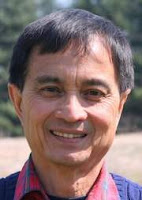 November 17, 2010
 By A. Gaffar Peang-Meth
PACIFIC DAILY NEWS (Guam)
Eighteen years ago, Elie Wiesel, a Jew from Romania and survivor of Auschwitz, told Boston University graduates in a commencement address that as he walked in the footsteps of those who lived before him, he is "the sum total of their experiences, their quests. And so are you."
Wiesel's assertion that the graduates, too, are the sum total of experiences and quests of the many great men and women before them is a humbling and inspirational reminder. "The knowledge that I have must not remain imprisoned in my brain," Wiesel declared, "I need to pay back what was given to me. Call it gratitude."
Learning that inspires
Call me "fresh from the boat."
When I enrolled as a college freshman in 1963 in an American college, with very little English and no knowledge of the history of the United States, I had 19 years of acculturation in a society, Cambodia, that valued listening, obeying, respecting, following our elders and those in authority. The idea that the goal of education is to develop in students a capacity to think critically was never in my head.
I came from a society that extolled the class-rank-role relationships and leader-follower, superior-inferior, master-servant, patron-client concepts. To me, the assigned reading in the required English literature course on American poet Ralph Waldo Emerson was text that was close to heresy.
I can't remember when, but the light bulb in my brain began to illuminate, then fade and then illuminate again. In my English class I began to discover Emerson, who wrote essays in which he developed ideas of individuality, freedom and humans' ability to achieve. At a time when America was greatly influenced by Europe, Emerson presented what was later called "a visionary philosophical framework" in America's history, for escaping "from under (Europe's) iron lids" to build a new and distinct American cultural identity. Emerson's "The American Scholar" speech at Harvard was hailed as America's "Intellectual Declaration of Independence."
To me, this was extraordinarily thought-provoking. Later, Emerson's "Our best thoughts come from others" quotation took me to Wiesel's "sum total." As a college undergraduate, I found myself learning to wonder, imagine, inquire, interpret, analyze and calculate.
Years later, even several times while at death's door during my involvement in the Khmer resistance, I reminded myself the Almighty had created me for a reason, He wasn't done with me. So I told death: "I'm not done."
It brought me to today. Yesterday, with its glory and mistakes, was gone. I know what I want for tomorrow, but what do I know about tomorrow? I have today.
Inspiring me are Mother Theresa's words, "Do the thing in front of you."
Fighting dictatorships

"Freedom is not free" -- words chiseled on beautiful marble were what I photographed at the Korean War memorial. And "Freedom is not free" was what I extracted from Dr. Gene Sharp's "From Dictatorship to Democracy: A Conceptual Framework for Liberation." You have "to learn how to take that freedom" yourself, Sharp asserted.
I don't pretend to know or have answers to everything. But I have learned from my own life experiences and from those I have met along the way. I have concluded that every Leviathan has feet of clay, and no freedom and rights fighter is condemned to remain feeble always. All dictators are cheaters with blood-stained hands, who beat the most essential source of power, the population, into obedience and submission.
High quality education remains the best weapon to fight dictatorships.
Drawing board
 |
| Cartoon by Sacrava (on the web at http://sacrava.blogspot.com) |
A citizenry united behind a foundational idea, no longer acquiescing in traditional unquestioning obedience to authority, is empowered. Empowered citizens deny the dictator a basis for his power.
 |
| Suong Sophorn (Photo: The Phnom Penh Post) |
Housing rights activist Suong Sophorn, with blood-stained clothes, beaten unconscious by Premier Hun Sen's security forces for leading 30 Beng Kak residents who faced eviction from their homes for development, to hand a protest letter to visiting United Nations chief Ban Ki-moon, was a model of resistance.
If enough people, determined to stop injustice, are willing to endure repression and brutality as Sophorn did, the authority and rule of the Leviathan would crumble. A defiant people will remain defiant: It's Newton's first law of motion.
A determined resistance willing to endure repression must come from within the country. It would draw the world's attention, stir its compassion and sympathy, and, eventually, its support. A liberation struggle from dictatorship requires self-reliance, said one engaged in such a struggle in the 19th century. Knowing history is useful, but the knowledge must be applied to be useful.
A. Gaffar Peang-Meth, Ph.D., is retired from the University of Guam. Write him at peangmeth@yahoo.com.
Tuesday, November 09, 2010
Thoammeuk and Khmer politics
Tuesday, November 09, 2010
Op-Ed by Koun Khmer
Dear KI Media Team,
Op-Ed by Koun Khmer
Dear KI Media Team,
The paradigm certainly has been shifted if we turn to “Puth Tumneay” to help relieving our hopelessness and our despairs. I am glad, however, that the team has selected this issue for discussion. The hope is that our discussion would result in raising the consciousness of our people.
Regardless of whether we legitimize the prophecy in puth tumneay or not it has its pervasive affect on our society. In a sense, it has become, if you will, our nation’s manifest destiny. The danger is many Khmers become complacent and waiting for the salvation from Preah Bat Thoammeuk. And when Thoammeuk does not appear, puth tumneay is still used as the default for comforts rather than confronting injustice or standing up against the incompetency of the leaders.
My view is the sooner we can come to a consensus to debunking the legitimacy of puth tumneay, the better for our nation. The mere fact that the name Preah Bat Thoammeuk is used in the prophecy implies a certain form of governance. Monarchy basically is fait accompli. In our current political climate even if Preah Bat Thoammeuk were to appear, he will be useless. Don’t wait for him.
Let us return to reality.
No one knows what the future will hold. It is up to all of us to creating a narrative that is positive for ourselves and for our nation. Each one of us can make a difference for each other and for our nation. If each one of us tries our very best to becoming critical, reflexive, and ethical practitioner, we can free ourselves from falling into believing a leader or a narrative so easily. May be, as the article has alluded to, each one of us could be a Thoammeuk- just Thoammeuk without Preah Bat.
Thank you KI Media Team,
Koun Khmer
Friday, November 05, 2010
Exclusive interview with Mr. SAM RAINSY
.jpg)
He have granted me an exclusive interview. He is currently in EXILE. I went one on one with
the man whom millions around the world say; he COULD and SHOULD be the next
PRIME MINISTER of CAMBODIA! - Here is ( part.1 )
of the exclusive interview with Mr. SAM RAINSY.
Originally posted at: http://www.mujestic.com
- How is your health and how is the family?
We are all right. Thank you.
- The municipal court in Phnom Penh sentenced you to 10- years in prison and a $16,000 fine in a dispute about the border with neighboring Vietnam and for “ disinformation and falsifying of public documents”. But your supporters claim that the case is politically motivated. How so?
Please read the reactions from the Inter-Parliamentary Union (IPU) at http://tinyurl.com/26vfuky and the European Parliament at http://tinyurl.com/34cq5pe
- In its 6 October 2010. Resolution on the case of Sam Rainsy Cambodia, the Geneva-based IPU wonders, particularly in the light of the independent expert analysis on the border issue in question, what kind of evidence the court adduced to prove the falsification of maps or divulgation of false information, all the more so as the Government reportedly itself conceded that the temporary border markers were not on the legal borderline and officially decided to dismantle them.
- In its 21 October 2010 Resolution on Cambodia, in particular the case of Sam Rainsy, the European Parliament unanimously condemns all politically motivated sentences against representatives of the opposition and NGOs. The Resolution specifies, The strategy of Cambodia's ruling party is to use a politically subservient judiciary to crack down on all government critics, and considers Sam Rainsy's gesture to be of a symbolic and clearly political nature and his conviction as based on an act of civil disobedience.
- Who did you think was mastermind behind the grenade attack back in 1997? A fail attempted to assassinate you but end up killing 16 and wounded more than 100 Innocent civilians?
Hun Sen and his bodyguards.
- Many critics said Mu Sochua did not run from her jail sentences, instead she march right on and was very vocal with her statements of not fearing confinement. Why do you choose the exile route?
The stakes are different. With Mu Sochua, the problem can be solved with two thousand dollars. But money cannot buy Cambodian territory I am defending.
- In the world of support whom do you want or need most on your side?
My conscience.
- Did you think the rally in NYC on Sept 24th, in front of the UN help? Did you think President Obama and administration heard the Khmer people voice seeking human right and social justice?
We must always try to make our voice heard.
- You file a complaint and petition requesting criminal investigation and prosecution of Prime Minister Hun Sen, You submitted to the Attorney General of the U.S. the criminal division of the U.S. Department of Justice. The U.S. Attorney for the Southern District of New York and the F.B.I.
Yes.
- Overview: On March 30, 1997, a vicious grenade attack was carried out against a peaceful political rally taking place across from the Parliament building in Phnom Penh, Cambodia. According to a U.S. Federal Bureau of Investigation inquiry on the attack, Prime Minister Hun Sen's Personal Bodyguard military unit may well have been responsible for planning and organizing the attack, and for obstructing the capture of the grenade throwers. A team of FBI investigators was sent by the U.S. Government to compile information and evidence concerning the attack because at least one U.S. citizen was injured by the explosion of the grenades, meaning that U.S. criminal law had been violated. The FBI investigations produced a great deal of information and evidence implicating Hun Sen and his personal military unit as likely perpetrators of these violations of U.S. criminal laws, much of which was presented in testimony and submissions made to the U.S. Congress.
Hun Sen release a resent statement saying; “US courts do not have the right to do anything to the Cambodian prime minister,” he said. “The key for opening up [Sam Rainsy’s] return to the country is Hun Sen.” and he also said; “
“ When the dog bites my leg, I don’t bite the dog’s leg – I use my leg to kick the dog,” he said. “I won’t implore you and there is no court that would dare to do anything with me.”. What are you thoughts toward his “untouchable” statements?
The truth will set you free because you are fighting for justice. But the truth will take all criminals, including Hun Sen, to jail and shame.
March 30, 1997 grenade attack event on an opposition rally for judicial system reform in Cambodia led by Mr. Sam Rainsy, President of the Khmer Nation Party in front of the National Assembly building.
- As generation passes we need fresh minds and new ideas to keep up with the world. Hun Sen, whom many say that he is not the best what Cambodia has to offer but yet he has been Prime Minister of Cambodia for about 3 decade now. What do you think about elected term limitations?
I am in favor of a one-term limit for any President or Prime Minister (The Philippines and South Korea are implementing this rule).
- Why the self-named, eponymous Sam Rainsy Party? Isn't it a bit egotistic?
It’s more related to political and administrative harassment by the CPP. Remember what happened to the Khmer Nation Party, the precursor of the SRP.
- CORRUPTION is like a plague in Cambodia. In honestly I think there is no possible way to end corruption. How would you reduce it? What are your plans?
Better education and the rule of law will reduce corruption as we can see in democratic countries with a relatively high level of education. In Cambodia, putting an end to impunity will be an essential step toward better governance.
- HUMAN TRAFFICKING. Child sex slave, prostitution is a multi-billion dollar business world. Cambodia and South East Asia seem to be the common ground for petifiles. What are your plans to tackle this global problem?
We have to fight against poverty, ignorance and government corruption. The rule of law and the end of impunity must be ensured in order to effectively tackle this issue and other crucial issues.
- CENSORSHIP. With media, TV, radio, etc,. It’s a fine line between freedom of speech, freedom of expression. Its seem that Cambodia has a gag order when it comes to speaking or expressing their opinion. What do you think should be done with this if you are to be elected as Prime Minister?
We have to ensure the respect for human rights and fundamental freedoms that are universal values.
- We are behind in term of entertainment because we can not express and voice our opinion enough. As a musician my music was banned because it was to ‘Controversial’ due to subject matter. Would you allow artist the freedom to express themselves in an artistic form? Without the profanity of course, but just speaking about truth, life and social issue.
Of course.
- BOOTLEGGING. As an independent artist and an independent business owner, bootleggers has become a major threat. Basically they are stealing from honest hard workers. My first CD has sold in the thousands in Cambodia but even till this day I have yet to make a single Riel, let a alone a penny. But now I re-strategize my marketing and distribution and they way it is sold. Its not just CDs but DVD, clothes, purses, games, movies, etc, you name it the bootleggers can get it. What can or would you to do to enforce and punish those who violate this copyright infringement?
Again, we must uphold the rule of law, including copyright and intellectual property laws and regulations worldwide.
- FORCE EVICTION and LAND GRABBING. Governments and Developers are selling and taking over land of the people and forcing them out of their homes. I was there in 2005 when they were just handing out eviction notice at the Bassac. An official whom I shall keep anonymous came and warn the local that if they don’t sign over the property they might end up with nothing. His advice was to take the money and go,. Later on that week a fire break out. My colleagues and I were there with buckets of water helping them put the fire out. Now how do you justified this type of ‘smoke them out’ tactics?
Unfortunately, this type of criminal and revolting act has been repeated in other places, targeting the poor and the powerless I have always tried to defend.
- PRESERVING ART AND CULTURE. Cambodia is known for many things but what stand out the most is the beauty of our arts. I love the sound of pin peat, but what broke my heart is seeing the ensemble on the street playing it as street peddlers asking for money. How can we preserve cultural dances, classical music, with dignity and pride? There are some organization that is doing a great job but how can we help those who are a stray?
It’s a matter of priority. The physical survival of a nation depends on the strength and the quality of its soul. In order to preserve the Khmer soul, we need to implement an adequate policy with regard to education, culture, and preservation of fine arts and good traditions. Encouragement and a decent living with dignity must be provided to artists who express and defend our Khmer soul.
An artist should say, “I don’t need a donation, I need the means to defend and to promote our national culture.”
Khmer artists can help convey this message to all Khmer citizens: Let’s stop asking for alms or donations, let’s start fighting for our rights. This is the fight for a progressive democracy against a regressive patronage system.
As an artist, you can help a youth say, “I don’t need a donation, I need a job”; a factory worker say, “I don’t need a donation, I need a pay increase”; a farmer say, “I don’t need a donation, I need to keep my land and to sell my crops at a better price”; a mother with a sick child say, “I don’t need a donation, I need free heath care for my child”.
What these ordinary citizens are asking is not donations from the government. They are asking for the respect of their rights by the government: right to have a job for the youth; right to a have decent salary for the factory worker; right to own and to keep his land for the farmer; right to free or affordable health care for the mother with a sick child.
No government has the right to stay in power if it doesn’t respect the rights of its citizens as defined in a political and social contract in a modern and democratic society. There is a big difference between beggars and citizens.
.jpg)
- THE ELECTION. The election is a major issue. How can it be fair if the voters are threaten with their jobs, lively hood and even with their life. Ballots and votes can be bought for $1.usd and all this goes on the radar and in front of the public eye. It seem like we already know who’s going to win before the vote is even cast, even with the help from the United Nations and many other orgs. How can we secure a fair and legitimate election?
With the UNDP, we are advocating a reform of the whole election system.
- THE UNION WOKERS. Garments are very profitable for companies and can generate millions into the economy. But sometime the worker / employee are mistreated and under paid. If a line is drawn between the worker and the factory owners which side will you stand and who do you think is behind the assassination of the great Che Vichea? WHO KILLED CHEA VICHEA?
In 1996, Chea Vichea and I helped create Cambodia’s first free trade union. And we helped organized the first strikes and demonstrations leading to the first negotiated pay increases. The fight, now led by workers themselves, is going on in the same spirit.
- You went into self-exile on February 3rd 2005, citing fear of arrest after a vote in the National Assembly removed parliamentary immunity. You faced multiple criminal defamation charges after accusing the Cambodian People's Party and Funcinpec of corruption. Then on February 5th 2006, you received a Royal Pardon by King Norodom Sihamoni at Prime Minister Hun Sen request. You then returned to Cambodia on February 10th 2006. How was it like for you going into exile and what’s your thought on Hun Sen request to Pardon you?
It was the result of international pressure and internal constraints. With the CPP it’s only a matter of balance of power, visible or invisible.
Two-minute trailer for the documentary WHO KILLED CHEA VICHEA? slated for release in 2010 by Loud Mouth Films. Vichea, the president of Cambodia's garment workers union, was assassinated in 2004. Two innocent men were then framed by police and convicted.
----------------
Here is a sneak peak of some of the questions to [ part.2 ] to M r . SAM RAINSY interview.
Here is a sneak peak of some of the questions to [ part.2 ] to M r . SAM RAINSY interview.
- Many students are graduating from schools and universities but there are little to no jobs for them to go to. We are rank as one of the poorest country in the world. What would you do to create jobs and stimulate Cambodia’s economy?
- DEPORTATION. Khmer from the United States whom are not U.S. citizen are being deported back to Cambodia. Separated from their families after they already serve their sentences. Some become drug addicts. Some form gangs some even end up committing suicide because they can’t adjust. But there are few who change their life around. What is your take on the Deportation Law? Do you think the punishment fit the crime? Can Cambodia do anything about it?
- If you were to be elected Prime Minister of Cambodia what would be your top 5 main focus on your agenda to improve Cambodia?
-What is your favorite Khmer food and why?
[ part two ] of this exclusive interview with Sam Rainsy will be publish on 11/ 11/10
you can only read it here at mujestic.com
Wednesday, September 01, 2010
A Political Con-Artist
KI-Media Note: To listen to The Khmer Post radio program mentioned in the article below, please click here, then select "KPR News August 22, 2010" to listen.Tue, Aug 31, 2010
Opinion by Ma Pretty
Dear Compatriots,
Here come a new great divider, a young and somewhat inexperienced political agitator who has managed to fool a few nationalists on the extreme end - thinking that he can change Cambodian politics just as smoothly as he talks. More than that, he managed to blame every political leaders, left and right, from Monarchy to anyone he disagreed with on saving Cambodia. He claimed to have all solutions to all Cambodian problems, and presented himself as the only person who is full of you-know-what to know how to get back Koh Tral and the rest of Cambodia. Sound good, isn't it? If you are not sophisticated enough, you can be fooled, and perhaps you will be kind enough to take out a few bucks to hand to this new Cambodia's saviour, so he can travel places, without having any need to hold on to any real jobs in USA. If you don't know who I am talking about, read on...
It did not come to me as a surprise to learn that Mr. Sourn Serei Ratha has finally revealed his ultimate personal ambition to form a political organization and proclaiming himself to be the leader. What concern me most in his particular case is his views on Cambodian political process from the legal standpoint. Beaware of many dangers ahead, especially of having any associations with him and/or this new group. You certainly do not want to end up like people who previously joined Chhun Yasith, a US citizen who has been convicted by the United States government for plotting to overthrow a legit government. It has got to be legal.
After listening to Mr. Ratha’s comment and declaration on Radio Post of Long Beach - program of August 22, 2010, I could not help but must take the liberty to inform every decent Cambodians to look out for danger in getting involved with this new organization. One needs to understand that a political organization has to be operated within the rule of laws, nationally and internationally. Mr. Sourn does not believe in political participation of our country's democratic process, and a few of his members shared the same view. Whatever you do or decide, you must understand who and what you are associating yourself with, and what would be the legal and political fall-out, if any.
Mr. Sourn is trying a play to a raw sentiment of ordinary people, including some frustrated and yet somewhat extreme nationalists who have limited understanding the complexity of our country's politics, from both national and global context. He is now embarking on a dangerous journey by leading a very radical and extreme organization which has yet to be accepted or legalized by our country's highest institutions. I wonder how he wishes to achieve his political aim when he’s never once believed in the legal political process of our country, Cambodia.
He has called all opposition groups as, if I quoted him correctly, either "Tourist and/or commercial politicians." To him, and his associates, oppositions offer no solutions, but more of a lingering complaints and problems to the overall Cambodia's mess. Mr. Sourn has a solution, and he is readied to lead, to bring all factions and groups, under his enormous talent and creativity which will lead us to not only save Cambodia's proper, Kampuchea Krom, but also get our Koh Tral back. It sounds like a real deal here, isn't it. But wait folks, if you are not thinking through, and if anyone are not well-informed on the pros and cons of this new group with this particular new leader, you could find yourself, personally, and your country in a whole lots deeper mess than you could possibly imagine. If there is a perfect name for a new politician or group like Mr. Sourn, given the way he conducted himself, beside tourist, commercial or the likes, here is one which I think would perfectly suit him well, A POLITICAL CON-ARTIST. Please do not go there, folks.
It did not come to me as a surprise to learn that Mr. Sourn Serei Ratha has finally revealed his ultimate personal ambition to form a political organization and proclaiming himself to be the leader. What concern me most in his particular case is his views on Cambodian political process from the legal standpoint. Beaware of many dangers ahead, especially of having any associations with him and/or this new group. You certainly do not want to end up like people who previously joined Chhun Yasith, a US citizen who has been convicted by the United States government for plotting to overthrow a legit government. It has got to be legal.
After listening to Mr. Ratha’s comment and declaration on Radio Post of Long Beach - program of August 22, 2010, I could not help but must take the liberty to inform every decent Cambodians to look out for danger in getting involved with this new organization. One needs to understand that a political organization has to be operated within the rule of laws, nationally and internationally. Mr. Sourn does not believe in political participation of our country's democratic process, and a few of his members shared the same view. Whatever you do or decide, you must understand who and what you are associating yourself with, and what would be the legal and political fall-out, if any.
Mr. Sourn is trying a play to a raw sentiment of ordinary people, including some frustrated and yet somewhat extreme nationalists who have limited understanding the complexity of our country's politics, from both national and global context. He is now embarking on a dangerous journey by leading a very radical and extreme organization which has yet to be accepted or legalized by our country's highest institutions. I wonder how he wishes to achieve his political aim when he’s never once believed in the legal political process of our country, Cambodia.
He has called all opposition groups as, if I quoted him correctly, either "Tourist and/or commercial politicians." To him, and his associates, oppositions offer no solutions, but more of a lingering complaints and problems to the overall Cambodia's mess. Mr. Sourn has a solution, and he is readied to lead, to bring all factions and groups, under his enormous talent and creativity which will lead us to not only save Cambodia's proper, Kampuchea Krom, but also get our Koh Tral back. It sounds like a real deal here, isn't it. But wait folks, if you are not thinking through, and if anyone are not well-informed on the pros and cons of this new group with this particular new leader, you could find yourself, personally, and your country in a whole lots deeper mess than you could possibly imagine. If there is a perfect name for a new politician or group like Mr. Sourn, given the way he conducted himself, beside tourist, commercial or the likes, here is one which I think would perfectly suit him well, A POLITICAL CON-ARTIST. Please do not go there, folks.
Wednesday, June 23, 2010

Tuesday, June 22, 2010
The traitor-thieves in Phnom Penh are doing all they can to destroy the nation - Op-Ed by Uon Sim
 Click on the article in Khmer to zoom in
Sunday, May 02, 2010
Khmer Mean Ter Am-nuot Atey-tak-kal - "Khmer can only boast about their past": Op-Ed by Uon Sim
 Click on the article in Khmer to zoom in
Wednesday, March 24, 2010
In Cambodia, unity is strength
March 24, 2010By Gaffar Peang-Meth
Guest Commentary
UPI Asia Online
Washington, DC, United States, — No stone has been left unturned by writers in Cambodia and abroad in exposing the Hun Sen regime’s violations of human rights and lack of good governance. Endless appeals for change have been made by reputable national and international nongovernmental organizations.
But this is merely water off a duck’s back to the regime. It’s futile. Besides, the duck may even enjoy the water.
A former comrade-in-arms, now in the ranks of Premier Hun Sen’s armed forces – neutralized, sidelined and mistrusted, like others who chose to remain in the country and join Sen to earn enough money to live – tells me of the ruling Cambodian elite’s philosophy: “Write all you want until the cows come home. Nothing will change until we are ready. Besides, we can sue you!”
But Sen and his elite continue to fatten themselves with amassed wealth as they ride above the law, while the poor scavenge city dumps for food and are evicted from their land so it can be developed for others’ profit. The country’s natural resources are looted for personal gain, and many in the international community continue business as usual with Sen because it’s profitable.
It is an evident truth that the 1991 Paris Peace Accords, intended to establish democracy in the country, were never implemented.
Many have been sued by the government; the main opposition leader, Sam Rainsy, faces jail should he return to Phnom Penh from Paris. Earlier, royalist opposition leader Prince Norodom Ranariddh, son of King Sihanouk, half-brother of current King Sihamoni, swore off politics to be allowed to return from self-imposed exile in Malaysia. Ranariddh is quiet; as all the royals are quiet. The king continues to be Sen’s rubber stamp – even signing a royal decree nominating a neighboring country’s fugitive leader as advisor to the government.
Not that Cambodians and non-Cambodians don’t see and don’t know these things. They do, but most don’t think these things affect them directly and personally. Worse, many brush off what is unpleasant as they scapegoat others, assign blame and absolve themselves from culpability.
“There's none so blind as those who will not see,” a saying goes.
Another former comrade-in-arms who has read my columns over the years and is now also with the Sen regime, asked me, “You still want to transform ducks into peacocks?” The Greek philosopher Plato said long ago: “Wise men speak because they have something to say; fools because they have to say something.”
Plato’s “fools” are dangerous because they are ignorant. Martin Luther King observed, “Nothing in the world is more dangerous than a sincere ignorance and conscientious stupidity.”
Last week, I emailed an acquaintance two quotes, one from prominent psychiatrist Thomas Szasz, “The system isn't stupid, but the people in it are”; and another from Russian writer, Leo Tolstoy, “Everyone thinks of changing the world, but no one thinks of changing himself.” Who and what people are, I wrote, determine their actions. Thus, we must begin change with ourselves.
Back to Hun Sen’s Cambodia. Although Sen and his ruling Cambodian People’s Party do have support inside and outside the country, Cambodian Action Committee for Justice and Equity president Serey Ratha Sourn’s pertinent question deserves consideration. “If Hun Sen and the ruling party have no fear of Cambodians at the grassroots level rising up at the right time in a People Power against them, why did he and the CPP rush a new criminal code limiting the number of demonstrators and block the rights of expression?”
Sourn doesn’t believe that an election in contemporary Cambodia would have any meaning. With power concentrated in the same hands that suppress dissent, trample laws and instill fear, Sen is certain to win and the election is only a tool to legitimize his oppression.
A grassroots activist, Sourn sees “People Power” as possible, and as the only route to bring change. He and his supporters are working to implement a strategy of “One Mission, One Message and One Multitude” – Sourn’s three M’s. So they devote their time to setting up networks of people, monks and youth.
While a Western reader wrote that “most people” in Cambodia “have accommodated to the prevailing political situation” and are moving on “to make ends meet rather than worry about how change could be brought about,” some Cambodians in the country have told me the people need to read my articles, but in the Khmer language – confirming Sourn’s and others’ contention that as Cambodians understand, they will rise up.
Talk of creating a government-in-exile has dissipated. Such an action would be futile. It would be easy to create and announce it. World governments might sympathize with Cambodians’ plight, but realpolitik dictates that they balance between the devil they know and the devil they don’t know.
Some history does seem to repeat. As it was in the 1970s and 1980s with the Cambodian Non-Communist Resistance and the associated coalition government, in the final analysis, foreigners called the shots.
Cambodians, like others in the world, are generally impatient with slow results in an era of push-buttons and of instant gratification. Many want change in Cambodia – and wish a government-in-exile or armed resistance would produce the change.
It is those impatient Cambodians who scoff at retired Johns Hopkins professor Rananhkiri Tith’s call for a “systematic overhaul” of Cambodian society as a way to slow down and perhaps “save” Cambodia from disintegration. Tith’s scheme would take a long time to be successful.
Lasting change has a chance as a population becomes more educated. But it could take 20 years before education bears fruit.
Sadly, while the Sen regime consolidates its power, his critics are in disarray. Cambodians have learned since their youth, “l’union fait la force,” or unity is strength. And many have learned U.S. founding father Benjamin Franklin’s words, “We must all hang together, or assuredly we shall all hang separately,” as he called on American rebels either to band together or find themselves hung individually at the British gallows. Thus, E Pluribus Unum – out of many, one: the 13 colonies banded together as the United States of America.
Thus 233 years later, in July 2009, the 44th U.S. president, Barack Obama, told Ghana’s Parliament, “We must start with a simple premise that Africa’s future is up to Africans,” and, “With strong institutions and a strong will, I know that Africans can live their dreams.”
Cambodians should hear Obama’s words.
--
(Dr. Gaffar Peang-Meth is retired from the University of Guam, where he taught political science for 13 years. He currently lives in the United States. He can be contacted at peangmeth@gmail.com. ©Copyright Gaffar Peang-Meth.)
But this is merely water off a duck’s back to the regime. It’s futile. Besides, the duck may even enjoy the water.
A former comrade-in-arms, now in the ranks of Premier Hun Sen’s armed forces – neutralized, sidelined and mistrusted, like others who chose to remain in the country and join Sen to earn enough money to live – tells me of the ruling Cambodian elite’s philosophy: “Write all you want until the cows come home. Nothing will change until we are ready. Besides, we can sue you!”
But Sen and his elite continue to fatten themselves with amassed wealth as they ride above the law, while the poor scavenge city dumps for food and are evicted from their land so it can be developed for others’ profit. The country’s natural resources are looted for personal gain, and many in the international community continue business as usual with Sen because it’s profitable.
It is an evident truth that the 1991 Paris Peace Accords, intended to establish democracy in the country, were never implemented.
Many have been sued by the government; the main opposition leader, Sam Rainsy, faces jail should he return to Phnom Penh from Paris. Earlier, royalist opposition leader Prince Norodom Ranariddh, son of King Sihanouk, half-brother of current King Sihamoni, swore off politics to be allowed to return from self-imposed exile in Malaysia. Ranariddh is quiet; as all the royals are quiet. The king continues to be Sen’s rubber stamp – even signing a royal decree nominating a neighboring country’s fugitive leader as advisor to the government.
Not that Cambodians and non-Cambodians don’t see and don’t know these things. They do, but most don’t think these things affect them directly and personally. Worse, many brush off what is unpleasant as they scapegoat others, assign blame and absolve themselves from culpability.
“There's none so blind as those who will not see,” a saying goes.
Another former comrade-in-arms who has read my columns over the years and is now also with the Sen regime, asked me, “You still want to transform ducks into peacocks?” The Greek philosopher Plato said long ago: “Wise men speak because they have something to say; fools because they have to say something.”
Plato’s “fools” are dangerous because they are ignorant. Martin Luther King observed, “Nothing in the world is more dangerous than a sincere ignorance and conscientious stupidity.”
Last week, I emailed an acquaintance two quotes, one from prominent psychiatrist Thomas Szasz, “The system isn't stupid, but the people in it are”; and another from Russian writer, Leo Tolstoy, “Everyone thinks of changing the world, but no one thinks of changing himself.” Who and what people are, I wrote, determine their actions. Thus, we must begin change with ourselves.
Back to Hun Sen’s Cambodia. Although Sen and his ruling Cambodian People’s Party do have support inside and outside the country, Cambodian Action Committee for Justice and Equity president Serey Ratha Sourn’s pertinent question deserves consideration. “If Hun Sen and the ruling party have no fear of Cambodians at the grassroots level rising up at the right time in a People Power against them, why did he and the CPP rush a new criminal code limiting the number of demonstrators and block the rights of expression?”
Sourn doesn’t believe that an election in contemporary Cambodia would have any meaning. With power concentrated in the same hands that suppress dissent, trample laws and instill fear, Sen is certain to win and the election is only a tool to legitimize his oppression.
A grassroots activist, Sourn sees “People Power” as possible, and as the only route to bring change. He and his supporters are working to implement a strategy of “One Mission, One Message and One Multitude” – Sourn’s three M’s. So they devote their time to setting up networks of people, monks and youth.
While a Western reader wrote that “most people” in Cambodia “have accommodated to the prevailing political situation” and are moving on “to make ends meet rather than worry about how change could be brought about,” some Cambodians in the country have told me the people need to read my articles, but in the Khmer language – confirming Sourn’s and others’ contention that as Cambodians understand, they will rise up.
Talk of creating a government-in-exile has dissipated. Such an action would be futile. It would be easy to create and announce it. World governments might sympathize with Cambodians’ plight, but realpolitik dictates that they balance between the devil they know and the devil they don’t know.
Some history does seem to repeat. As it was in the 1970s and 1980s with the Cambodian Non-Communist Resistance and the associated coalition government, in the final analysis, foreigners called the shots.
Cambodians, like others in the world, are generally impatient with slow results in an era of push-buttons and of instant gratification. Many want change in Cambodia – and wish a government-in-exile or armed resistance would produce the change.
It is those impatient Cambodians who scoff at retired Johns Hopkins professor Rananhkiri Tith’s call for a “systematic overhaul” of Cambodian society as a way to slow down and perhaps “save” Cambodia from disintegration. Tith’s scheme would take a long time to be successful.
Lasting change has a chance as a population becomes more educated. But it could take 20 years before education bears fruit.
Sadly, while the Sen regime consolidates its power, his critics are in disarray. Cambodians have learned since their youth, “l’union fait la force,” or unity is strength. And many have learned U.S. founding father Benjamin Franklin’s words, “We must all hang together, or assuredly we shall all hang separately,” as he called on American rebels either to band together or find themselves hung individually at the British gallows. Thus, E Pluribus Unum – out of many, one: the 13 colonies banded together as the United States of America.
Thus 233 years later, in July 2009, the 44th U.S. president, Barack Obama, told Ghana’s Parliament, “We must start with a simple premise that Africa’s future is up to Africans,” and, “With strong institutions and a strong will, I know that Africans can live their dreams.”
Cambodians should hear Obama’s words.
--
(Dr. Gaffar Peang-Meth is retired from the University of Guam, where he taught political science for 13 years. He currently lives in the United States. He can be contacted at peangmeth@gmail.com. ©Copyright Gaffar Peang-Meth.)
Wednesday, November 18, 2009
Our Voices
Our Voices
Nation Religion King
Nation Religion King
Tuesday, November 17, 2009
Op-Ed by Justin Sok
The political shenanigans that were recently gestured by Prime Minister Hun Sen, has once again proved to be another minefield, which would inevitably lead Cambodia and her people into the labyrinth, a nation that has already had remnants of bones and skulls piled up by the millions and has millions of survivors who have sustained emotional and psychological scars from an unforgettable landscape of tragedy. Perhaps the political chess game that PM Hun Sen has recently orchestrated might be too difficult for the people of Cambodia to comprehend. But in the eyes of the developed world, it is nothing more than a political bouillabaisse.
While Cambodia and her people are in the middle of a sea of social and political perturb, PM Hun Sen appeared with an air of superiority and taciturn self-assurance, made another fatal political strategic error by appointing Mr. Thaksin Shinawatra, a Thai national fugitive, as his economic advisor. PM Hun Sen, not only has he conspired to aid someone who had eluded justice, an act constitutes grounds for “accessory after the fact”, but he also had sincerely welcomed Mr. Thaksin with open arms into Cambodia as a sanctuary to nurse his mentally and spiritually wounded from his down fall due to his corruption and ouster by the Royal Kingdom of Thailand Militia police in 2006.
Before the general election of July 2008, I had written my opinion to share with the public about PM Hun Sen that he and his administration were using the dispute over the Preah Vihea Temple with Thailand for his national political campaign platform to deviate public attention from focusing on the general election. I had also taken the liberty to make comments speculating on PM Hun Sen and Mr. Thaksin possibly had cross-fertilizing business dealing and were exploiting the natural resources of Cambodia. At about the same time, there was a group of journalists who had posted questions and demanded for Mr. Thaksin to shed light on these allegations. Mr. Thaksin had shamelessly denied that he had anything to do with the allegations. It is now crystal clear that PM Hun Sen and Mr. Thaksin have come to terms, which they had clandestinely corporate decision-making and are calculating the lion’s share of these interests. It is a “quid pro quo” so to speak.
In his recent political maneuver, it is speculative that PM Hun Sen not only he used the appointment of Mr. Thaksin for his political purpose and to reap his own economic fortune, but to also use this appointment to divert public attention over the monumental issues - the relentless human rights violations, illegal evictions, and the Khmer Rouge Tribunal. These are the internal social and political issues, which have already been brought to the attention of the international community including Washington, and these are the issues that PM Hun Sen has sought to make them disappear forever so that they would not come back to haunt him. The request made by the investigative judges to submit additional former Khmer Rouge leaders to bring them to trial has been making PM Hun Sen dragging on his heels, for instance. Prime Minister Hun Sen has again and again threatened to derail the trial.
Other pressing political issues are the continuing border encroachment by Vietnam and the illegal immigration of Vietnamese citizens that are continuing to influx into Cambodia. These are the national security issues that have been of the utmost political concern for each and every Cambodian living there and abroad. If these political issues are, in fact, threatening our national security, and PM Hun Sen has not been on top of these critical issues, then the Cambodian people have their constitutional rights to hold PM Hun Sen accountable.
I would personally like to take this opportunity to acknowledge with great gratitude that Mr. Sam Rainsy, President of Sam Rainsy Party, and his administration, and our Khmer people who are Cambodians of the same mind, have vehemently taken their stand and have spoken out to defend and protect our sovereignty and territorial integrity. Also, it is with great honor and deep gratitude to former King Norodom Sihanouk, despite spending time nursing his illnesses, that he has sent a letter to the Royal of Cambodia Government to request further investigation of these matters. Thank you.
Justin C. Sok
11/17/09
*I would also like to take this opportunity to say to each and every Khmer around the globe, “Hello & Chum Reap Sur!”
While Cambodia and her people are in the middle of a sea of social and political perturb, PM Hun Sen appeared with an air of superiority and taciturn self-assurance, made another fatal political strategic error by appointing Mr. Thaksin Shinawatra, a Thai national fugitive, as his economic advisor. PM Hun Sen, not only has he conspired to aid someone who had eluded justice, an act constitutes grounds for “accessory after the fact”, but he also had sincerely welcomed Mr. Thaksin with open arms into Cambodia as a sanctuary to nurse his mentally and spiritually wounded from his down fall due to his corruption and ouster by the Royal Kingdom of Thailand Militia police in 2006.
Before the general election of July 2008, I had written my opinion to share with the public about PM Hun Sen that he and his administration were using the dispute over the Preah Vihea Temple with Thailand for his national political campaign platform to deviate public attention from focusing on the general election. I had also taken the liberty to make comments speculating on PM Hun Sen and Mr. Thaksin possibly had cross-fertilizing business dealing and were exploiting the natural resources of Cambodia. At about the same time, there was a group of journalists who had posted questions and demanded for Mr. Thaksin to shed light on these allegations. Mr. Thaksin had shamelessly denied that he had anything to do with the allegations. It is now crystal clear that PM Hun Sen and Mr. Thaksin have come to terms, which they had clandestinely corporate decision-making and are calculating the lion’s share of these interests. It is a “quid pro quo” so to speak.
In his recent political maneuver, it is speculative that PM Hun Sen not only he used the appointment of Mr. Thaksin for his political purpose and to reap his own economic fortune, but to also use this appointment to divert public attention over the monumental issues - the relentless human rights violations, illegal evictions, and the Khmer Rouge Tribunal. These are the internal social and political issues, which have already been brought to the attention of the international community including Washington, and these are the issues that PM Hun Sen has sought to make them disappear forever so that they would not come back to haunt him. The request made by the investigative judges to submit additional former Khmer Rouge leaders to bring them to trial has been making PM Hun Sen dragging on his heels, for instance. Prime Minister Hun Sen has again and again threatened to derail the trial.
Other pressing political issues are the continuing border encroachment by Vietnam and the illegal immigration of Vietnamese citizens that are continuing to influx into Cambodia. These are the national security issues that have been of the utmost political concern for each and every Cambodian living there and abroad. If these political issues are, in fact, threatening our national security, and PM Hun Sen has not been on top of these critical issues, then the Cambodian people have their constitutional rights to hold PM Hun Sen accountable.
I would personally like to take this opportunity to acknowledge with great gratitude that Mr. Sam Rainsy, President of Sam Rainsy Party, and his administration, and our Khmer people who are Cambodians of the same mind, have vehemently taken their stand and have spoken out to defend and protect our sovereignty and territorial integrity. Also, it is with great honor and deep gratitude to former King Norodom Sihanouk, despite spending time nursing his illnesses, that he has sent a letter to the Royal of Cambodia Government to request further investigation of these matters. Thank you.
Justin C. Sok
11/17/09
*I would also like to take this opportunity to say to each and every Khmer around the globe, “Hello & Chum Reap Sur!”
Wednesday, November 11, 2009
'To live is to learn, that's how we grow'
November 11, 2009 A. Gaffar Peang-Meth, Ph.D.
PACIFIC DAILY NEWS (Guam)
Civil rights leader Martin Luther King Jr. said, "The ultimate measure of a man is not where he stands in moments of comfort and convenience, but where he stands at times of challenge and controversy."
One day before he was shot and killed, King said in his "Mountaintop" speech: "We've got some difficult days ahead, ... Like anybody, I would like to live a long life, ... But I'm not concerned about that now, ... [God's] allowed me to go up to the mountain, ... And I've seen the promised land. I may not get there with you. But I want you to know tonight, that we, as a people, will get to the promised land. And I'm happy, tonight ... I'm not fearing any man. Mine eyes have seen the glory of the coming of the Lord."
Earlier, King said, "If a man hasn't discovered something that he will die for, he isn't fit to live." King "walked the talk": "Change does not roll in on the wheels of inevitability, but comes through continuous struggle. And so we must straighten our backs and work for our freedom. A man can't ride you unless your back is bent."
He also said, "Freedom is never voluntarily given by the oppressor, it must be demanded by the oppressed."
Nothing is permanent in life except change, so, we can choose to be victims of change, or agents of change and transform our world. To live is to learn, and to apply what we learn to improve our circumstances and the lot of those around us. That's how we grow. A specialist counsels, rush not to conclude, it blocks the road to knowledge; keep asking questions and learn. Learning is perpetual.
There is a Web site, "Reflections of An Expatriate on Cambodia's Past, Present, and Future," by a former international civil servant, and former professor at the Johns Hopkins University School of Advanced International Studies, Dr. Naranhkiri Tith.
Khmer-born and educated in Europe and the United States, Tith integrates the historical, economic, social, cultural, and political, with supporting documents, to explain Cambodia's current tragedy.
He built the Web site, he says, as a "personal tribute" to all victims of the Pol Pot Khmer Rouge, Hun Sen's "blind ambition and high treason," and Prince Sihanouk's "deceit, megalomania, and egomania." The Web site offers "A suggested roadmap to freedom for the Cambodian people."
Tith analyzes Cambodia's internal problems, and references the February 2008 report by Professor Yash Ghai, Special Representative of the United Nations Secretary-General, and Cambodia's external problems with her neighbors -- he sees the great danger posed by Vietnam to the east, that by Thailand to the west -- as factors contributing to Cambodia as "a failed state." He presents a roadmap, suggesting the use of non-violence to remove Hun Sen and his ruling Cambodian People's Party from power: "Intractable, yes; impossible, no!"
Tith urges "a progressive and systematic overhaul" of the Khmer society, to "gradually" improve Cambodia's economic, institutional, legal, political, and social problems, "thus allowing the Cambodian people to survive and to prosper."
Tith left Cambodia for the U.S. in 1960-1961: "I felt that I was not allowed to be myself ... ." He laments how non-royal Khmers could not hope to "reach their full potential, intellectually or otherwise," as a commoner's achievement was "an attempt to compete" in a world French King Louis XIV dubbed, "L'Etat c'est Moi" or "I am the State."
Tith sees the Khmer monarchy's "pervasive and crushing role, ... combined with the conservative nature" of Cambodia's society -- including a "belief in prophesies and rigidity in social organization and behavior" -- as contributing "to the inertia and the inability to allow new ideas and capable leadership, and entrepreneurial spirit, to emerge." These characteristics, he says, "keep Cambodia perpetually underdeveloped."
In his Web site's "Special articles and essays on Cambodian behavioral and social characteristics," Tith writes, "Most Cambodians do not even know who they are, ... their identity," which has been "absolutely crushed" by the monarchy. Common Khmers claim their ancestors were "the builders of Angkor Wat," Tith says, yet, they "hardly know their great grandparents" -- while Chinese and Vietnamese know their ancestors "12 generations" back.
He examines the Khmer society's "flaws" and highlights the resulting "character and behavior" that impede success. An excerpt from Marie A. Martin's "Khmer Tradition and Customs: Rigid Respect for Social Hierarchy Leads to the Absence of the Right to Criticize," in her (1994) book, "Cambodia: a Shattered Society," is a must read.
I met Tith some thirty-six years ago, before the Khmer Republic under which I served crumbled under the genocidal Khmer Rouge's guns in 1975. "There is a time for silence. A time to let go and allow people to hurl themselves into their own destiny," someone writes, "And a time to prepare to pick up the pieces when it's all over."
Fate can be mysterious and ironical. After my nine years (1980-1989) in the Khmer People's National Liberation movement, to oppose Hanoi's occupation of Cambodia, block Pol Pot's return to power, and rebuild a new Cambodia, I returned to the U.S., joined the Johns Hopkins University political science faculty in 1990, when Tith was a professor at SAIS a stone's throw away. Yet we never connected.
A few weeks ago I e-mailed him. We found ourselves on the same page in "this enormous task of defending the Cambodian people and society against all odds," as Tith puts it.
As the saying goes: "It is by chance that we met, by choice that we became friends," and to borrow King's words, in "times of challenge and controversy."
A. Gaffar Peang-Meth, Ph.D., is retired from the University of Guam, where he taught political science for 13 years. Write him at peangmeth@yahoo.com.
One day before he was shot and killed, King said in his "Mountaintop" speech: "We've got some difficult days ahead, ... Like anybody, I would like to live a long life, ... But I'm not concerned about that now, ... [God's] allowed me to go up to the mountain, ... And I've seen the promised land. I may not get there with you. But I want you to know tonight, that we, as a people, will get to the promised land. And I'm happy, tonight ... I'm not fearing any man. Mine eyes have seen the glory of the coming of the Lord."
Earlier, King said, "If a man hasn't discovered something that he will die for, he isn't fit to live." King "walked the talk": "Change does not roll in on the wheels of inevitability, but comes through continuous struggle. And so we must straighten our backs and work for our freedom. A man can't ride you unless your back is bent."
He also said, "Freedom is never voluntarily given by the oppressor, it must be demanded by the oppressed."
Nothing is permanent in life except change, so, we can choose to be victims of change, or agents of change and transform our world. To live is to learn, and to apply what we learn to improve our circumstances and the lot of those around us. That's how we grow. A specialist counsels, rush not to conclude, it blocks the road to knowledge; keep asking questions and learn. Learning is perpetual.
There is a Web site, "Reflections of An Expatriate on Cambodia's Past, Present, and Future," by a former international civil servant, and former professor at the Johns Hopkins University School of Advanced International Studies, Dr. Naranhkiri Tith.
Khmer-born and educated in Europe and the United States, Tith integrates the historical, economic, social, cultural, and political, with supporting documents, to explain Cambodia's current tragedy.
He built the Web site, he says, as a "personal tribute" to all victims of the Pol Pot Khmer Rouge, Hun Sen's "blind ambition and high treason," and Prince Sihanouk's "deceit, megalomania, and egomania." The Web site offers "A suggested roadmap to freedom for the Cambodian people."
Tith analyzes Cambodia's internal problems, and references the February 2008 report by Professor Yash Ghai, Special Representative of the United Nations Secretary-General, and Cambodia's external problems with her neighbors -- he sees the great danger posed by Vietnam to the east, that by Thailand to the west -- as factors contributing to Cambodia as "a failed state." He presents a roadmap, suggesting the use of non-violence to remove Hun Sen and his ruling Cambodian People's Party from power: "Intractable, yes; impossible, no!"
Tith urges "a progressive and systematic overhaul" of the Khmer society, to "gradually" improve Cambodia's economic, institutional, legal, political, and social problems, "thus allowing the Cambodian people to survive and to prosper."
Tith left Cambodia for the U.S. in 1960-1961: "I felt that I was not allowed to be myself ... ." He laments how non-royal Khmers could not hope to "reach their full potential, intellectually or otherwise," as a commoner's achievement was "an attempt to compete" in a world French King Louis XIV dubbed, "L'Etat c'est Moi" or "I am the State."
Tith sees the Khmer monarchy's "pervasive and crushing role, ... combined with the conservative nature" of Cambodia's society -- including a "belief in prophesies and rigidity in social organization and behavior" -- as contributing "to the inertia and the inability to allow new ideas and capable leadership, and entrepreneurial spirit, to emerge." These characteristics, he says, "keep Cambodia perpetually underdeveloped."
In his Web site's "Special articles and essays on Cambodian behavioral and social characteristics," Tith writes, "Most Cambodians do not even know who they are, ... their identity," which has been "absolutely crushed" by the monarchy. Common Khmers claim their ancestors were "the builders of Angkor Wat," Tith says, yet, they "hardly know their great grandparents" -- while Chinese and Vietnamese know their ancestors "12 generations" back.
He examines the Khmer society's "flaws" and highlights the resulting "character and behavior" that impede success. An excerpt from Marie A. Martin's "Khmer Tradition and Customs: Rigid Respect for Social Hierarchy Leads to the Absence of the Right to Criticize," in her (1994) book, "Cambodia: a Shattered Society," is a must read.
I met Tith some thirty-six years ago, before the Khmer Republic under which I served crumbled under the genocidal Khmer Rouge's guns in 1975. "There is a time for silence. A time to let go and allow people to hurl themselves into their own destiny," someone writes, "And a time to prepare to pick up the pieces when it's all over."
Fate can be mysterious and ironical. After my nine years (1980-1989) in the Khmer People's National Liberation movement, to oppose Hanoi's occupation of Cambodia, block Pol Pot's return to power, and rebuild a new Cambodia, I returned to the U.S., joined the Johns Hopkins University political science faculty in 1990, when Tith was a professor at SAIS a stone's throw away. Yet we never connected.
A few weeks ago I e-mailed him. We found ourselves on the same page in "this enormous task of defending the Cambodian people and society against all odds," as Tith puts it.
As the saying goes: "It is by chance that we met, by choice that we became friends," and to borrow King's words, in "times of challenge and controversy."
A. Gaffar Peang-Meth, Ph.D., is retired from the University of Guam, where he taught political science for 13 years. Write him at peangmeth@yahoo.com.
Friday, February 20, 2009
Nona thom cheang Sen? - "Who looms larger than Sen?"
 Click on the text in Khmer to zoom in
Op-Ed in Khmer by Srey Sra'em
Subscribe to:
Posts (Atom)








