


 |
| Cartoon by Sacrava (on the web at http://sacrava.blogspot.com) |
Showing posts with label Kangaroo court. Show all posts
Showing posts with label Kangaroo court. Show all posts
Wednesday, June 13, 2012
Sacrava's Political Cartoon: Kangaroo Court


Tuesday, June 12, 2012
Xmer kangaroo courts are so bad that it needs to burnish its reputition
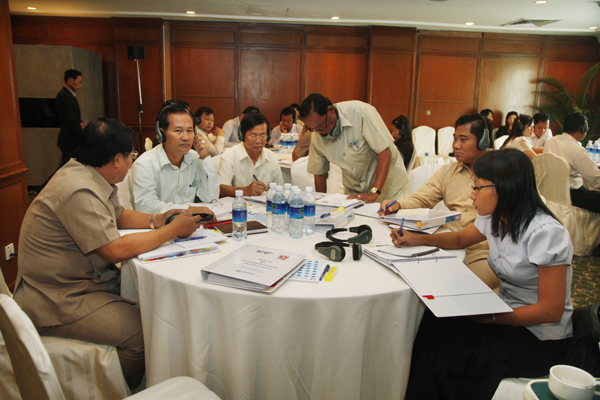 |
| Members of Cambodia’s judicial system participate in a workshop focusing on judicial ethics yesterday in Phnom Penh. Photograph: Heng Chivoan/Phnom Penh Post |
Cambodia courts a good reputation
Tuesday, 12 June 2012
Buth Reaksmey Kongkea
The Phnom Penh Post
Cambodian judges and prosecutors needed to work hard to shake a bad reputation for corruption, Justice Minister Ang Vongvathana told a delegation of senior judges and prosecutors yesterday.
His comments came at the start of a two-day workshop hosted by the ministry geared towards building judicial integrity and people’s belief and trust in the court system.
“In our judicial system, and the role of courts, national and international opinions have been focusing on corruption, because it was a strong mechanism affecting people’s belief in judicial systems in Cambodia,” Ang Vongvathana said.
The training, administered with the assistance of the UN Office on Drugs and Crime and representatives of the Asia Regional Trafficking in Persons Project, is aimed at strengthening, understanding and implementing a code of conduct for court officials.
Sunday, January 01, 2012
Sacrava's Political Cartoon: Kangaroo Court
 |
| Cartoon by Sacrava (on the web at http://sacrava.blogspot.com) |
Thursday, July 21, 2011
Cambodia's Kangaroo Court

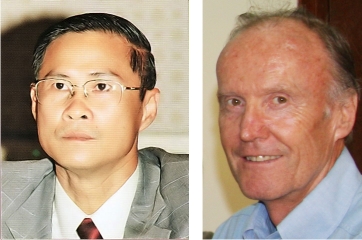 |
| The Sold-out Kangaroo Judges: You Bunleng and Siegfried Blunk |
Why isn't the U.N. tribunal to prosecute genocidal Khmer Rouge war criminals going after more bad guys?
JULY 20, 2011
BY MIKE ECKEL
Foreign Policy
PHNOM PENH, Cambodia — It was a damning indictment by any estimation: a 100-plus-page report published 10 years ago by a Khmer-speaking, British-based scholar of Cambodian history with the help of American University. The scholar, Stephen Heder, spent years compiling evidence of war crimes by seven top officials of the Khmer Rouge, the ultra-Marxist regime whose brutal efforts to create an agricultural utopia in Cambodia in the late 1970s wiped out up to a quarter of the population.
On June 27, Heder saw some of his efforts come to fruition: Three of the five officials still living went on trial in what has been called the most significant war crimes tribunal since the Nazi trials at Nuremberg.
What is more significant, however, is what Heder will likely never see: the prosecution of the two other remaining officials despite overwhelming evidence, years of official investigation, and hundreds of millions of dollars spent by the United Nations, the United States, and other donor countries.
The prosecution is mired in a dispute that has riven the U.N.-backed tribunal, with infighting between prosecutors and judges, dubious legal rulings, and inaction from its funders. The struggle is part of a larger tug of war pitting Cambodia's authoritarian prime minister against the international community. And from Heder's perspective, it's an outrage that in the end prompted his resignation from the tribunal, citing the "toxic atmosphere of mutual mistrust" at the "professionally dysfunctional office" of the investigating judges.
Monday, December 20, 2010

Rushed trial by the Kangaroo court: Hun Xen regime haunted by the puny KI-Media?
UN staffer jailed for ‘anti-government’ materials
Sunday, 19 December 2010
Thet Sambath and Sebastian Strangio
The Phnom Penh Post
Sunday, 19 December 2010
Thet Sambath and Sebastian Strangio
The Phnom Penh Post
Phnom Penh Municipal Court sentenced a Cambodian United Nations employee on Sunday to six months jail for disseminating material critical of the government, only two days after his arrest.
Seng Kunnaka, who is employed as a guard by the UN World Food Programme, was arrested in Russei Keo district on Friday in possession of printed material from the online news blog KI-Media.
Am Sam Ath, technical supervisor for local rights group Licadho, said Seng Kunnaka was convicted of criminal incitement under Article 495 of the new Penal Code. Judge Keo Vandy also ordered him to pay 1 million riels (US$250) in fines, he said.
Chet [Roi?] Khemara, a prosecutor at the court, was reluctant to discuss the contents of the printed material confiscated from Seng Kunnaka, saying he was too busy to talk.
Ung Borith, the police chief of Kilometre 6 commune in Russey Keo district said the arrest was made because Seng Kunnaka “spread information to other people to read”.
KI-Media, a popular blog run by Khmer exiles, aggregates news articles relating to Cambodia and often takes a strong anti-government line.
Seng Kunnaka’s speedy trial has come under attack from opposition figures and rights activists, who have described it as a clear attack on freedom of expression.
“This rushed trial and groundless conviction is further proof of the growing crackdown on freedom of expression by the Cambodian government,” Licadho Director Naly Pilorge said in a statement yesterday.
Naly Pilorge added that his conviction under the new Penal Code – which came into effect on December 10 – was a signal that free speech would suffer under the new legislation.
“The new criminal code in its current form is a threat to freedom of expression in the country. This conviction, exactly 10 days after the enactment of the new criminal code, is clear evidence of that,” she added.
Opposition Sam Rainsy Party spokesman Yim Sovann said the party “condemned” the nature of Seng Kunnaka’s conviction.
“Some leaders are not generous. Who can feed his children while he is in prison?” he said.
He also downplayed suggestions that KI-Media was aligned with the SRP, saying that in either case it was a legitimate source that he had used himself....read the full story in tomorrow’s Phnom Penh Post or see the updated story online from 3PM UTC/GMT +7 hours.
Friday, September 24, 2010
Sacrava's Political Cartoon: The Royal Kangaroo Court
 |
| Cartoon by Sacrava (on the web at http://sacrava.blogspot.com) |
Cambodian Kangaroo Court Decision: SRP Statement

September 24, 2010
To: Press Media and Cambodian Publics
From: Office of the Secretariat
Re: Cambodian Kangaroo Court Decision
As anticipated, PM Hun Sen’s court has ruled once again and as always, against the only credible political opposition party and its leader of the country, H.E. Sam Rainsy. It did and should not come as a surprise to anyone given the very poor track records of this purely one-sided political institution. The court has obviously become known as the CPP-court. It serves only one party’s interests, under a one man’s rule, for one political group while intentionally disregarding the rests.
The court, through its political rulings and interferences, has lowered itself to be used simply as the Cambodian government’s tool to suppress oppositions and human rights critics. It certifies legal seizure of people’s properties; prosecuting victims of land grabbing activities as in the case of Ms. Srey Meas given her land was being seized by Vietnam authority. It is the first time ever any nation’s history, that a government would actually jailed their own people in defending of foreign interests. This kind of political incorrectness would not be accepted by any of us in the West. The whole political party would be voted out next time around. Perhaps, this could be the reason why the CPP-led government wanted to eliminate Mr. Sam Rainsy from election 2013, for fear of loosing big next time around.
The UN Human Rights Envoy, H.E. Surya Subedi, in his latest report called for a complete overhaul to the judiciary system of the country. Below is what he said as printed in the Phnom Penh Post, September 21, 2010,
“Although the Constitution of Cambodia provides for the separation of powers between the three main organs of the State, in practice the distinction between these organs is blurred and the executive branch dominates the judiciary,”
We join H.E. Surya Subedi, in calling for the international community to pressure for a major reform to Cambodian judicial system which is deeply rooted in corruptions. Without serious judicial reform and independence of the court vis-à-vis the PM’s office, there is no democracy, but rather a slippery road to tyranny and political persecution.
Truly yours,
The Secretariat, SRP-NA
Thursday, September 23, 2010
Sam Rainsy sentenced by the kangaroo court to 10-year of jail time and 65 million riels in fine and compensation
 23 September 2010
By Sok Serey
Radio Free Asia
Translated from Khmer by Socheata
Click here to read the article in Khmer
On 23 September, the Phnom Penh municipal court announced its sentence in absentia on opposition leader Sam Rainsy: 10-year of jail time for disinformation and falsification of public maps at the beginning of 2010.
The court fined Sam Rainsy 5 million riels ($1,250) and ordered him to pay another 60 million riels ($15,000) in compensation to the government. The fine and compensation amounts will be paid to the government fund.
The court issued an arrest warrant against Sam Rainsy based on Article 363 of the Cambodian criminal code.
The sentence was announced by judge Ke Sakhorn, the vice-president of the Phnom Penh municipal court.
The court fined Sam Rainsy 5 million riels ($1,250) and ordered him to pay another 60 million riels ($15,000) in compensation to the government. The fine and compensation amounts will be paid to the government fund.
The court issued an arrest warrant against Sam Rainsy based on Article 363 of the Cambodian criminal code.
The sentence was announced by judge Ke Sakhorn, the vice-president of the Phnom Penh municipal court.
Thursday, August 12, 2010
National Courts Not Near Tribunal Standards: Experts

Men Kimseng, VOA Khmer
Washington, DC Wednesday, 11 August 2010
“Our national courts do not have enough money to arrange logistics and resources.”While the Khmer Rouge tribunal may serve as a model for Cambodia's national courts, experts say the country's judiciary has a long way to go before it reaches international standards.
The UN-backed tribunal recently wrapped up its first trial, sentencing prison chief Duch to a commuted 19 years in prison for his role in the torture and execution of more than 12,000 people.
The relatively short sentence left many victims disappointed, but Reach Sambath, a spokesman for the tribunal, said the completed trial, which 77 days of testimony and more than a year of deliberation, was valuable “to the whole world.”
The hybrid court puts responsibilities and decisions into the hands of an equal number of international and national judges, prosecutors and staff. It also includes the complaints and representation in court of those who feel they are directly victims of the defendant.
The tribunal is meant not only to try the senior-most responsible leaders of the regime, but to move the country toward national reconciliation. It was also meant to be a model for Cambodia's oft-maligned court system, which critics say is plagued by corruption and political bias.
“There are many good points we can take as examples,” Sok Sam Oeun, executive director of the Cambodian Defenders Project, said of the Duch case. “First, the way the verdict was written was different from the normal courts. It was done with transparency, with a clear legal basis.”
It also provided a venue for dissenting voices of judges in the minority.
“In the past we have never seen a different opinion in our court system,” Sok Sam Oeun said. “They tried to be unanimous and seem to be confidential.”
A week after the verdict was out, Prime Minister Hun Sen welcomed the court's work and dismissed allegations of political influence. In fact, a group of senior ruling party members have refused to comply with summonses from the international investigating judge. And Hun Sen has repeatedly warned the courts not to indict more leaders of the regime.
“The Royal Government of Cambodia respects the Khmer Rouge tribunal’s decision because the court is independent,” Hun Sen said in public remarks. “We respect the independence of the court. The court sentenced Duch to 35 years in jail. It is up to the court, which the Royal Government of Cambodia must respect.”
While the tribunal may be a model for the national courts, Chiv Songhak, president of the Cambodian Bar Assocation, said a lack of resources is still a problem.
“Our national courts do not have enough money to arrange logistics and resources,” he said.
Other court observers say the government lacks the political will to reform the judiciary or overcome Cambodia's culture of impunity.
“Everything must be based on law,” said Pung Chhiv Kek, president of the rights group Licadho. “No matter how rich or powerful you are.”
Thursday, December 17, 2009
"What Is the Kangaroo Court Waiting For?": Sam Rainsy

16 December 2009
WHAT IS THE KANGAROO COURT WAITING FOR?
Mr. Pao Pheap, 40, second deputy chief of Samraong commune (Chantrea district, Svay Rieng province) from the Sam Rainsy Party has been summoned by the Svay Rieng Provincial Court to appear before a judge on 22 December 2009. The summons is in connection with the “incitement” and “public property destruction” charges that the same Court has levied against me following the 25 October incident in Samraong commune’s Koh Kban Kandal village where I uprooted six wooden poles in the middle of a rice field at the request of its owner. Those poles purported to be tentative border posts but were actually false boundary markers illegally planted on a private property.
Why hadn’t the Court summoned me first? As the main “suspect” or “accused” of an obviously political crime I should be the first person to be summoned and interrogated. Why judicial proceedings to “punish” me have come to a standstill? Why the CPP-controlled authorities were in such a hurry to remove my parliamentary immunity on 16 November without first asking me any question? Why is it so quite now? How much time do they need to continue to test the waters? Is it so embarrassing for them?
I want their kangaroo court to prosecute me now.
Sam Rainsy
Member of Parliament
Why hadn’t the Court summoned me first? As the main “suspect” or “accused” of an obviously political crime I should be the first person to be summoned and interrogated. Why judicial proceedings to “punish” me have come to a standstill? Why the CPP-controlled authorities were in such a hurry to remove my parliamentary immunity on 16 November without first asking me any question? Why is it so quite now? How much time do they need to continue to test the waters? Is it so embarrassing for them?
I want their kangaroo court to prosecute me now.
Sam Rainsy
Member of Parliament
Saturday, June 13, 2009
[Circus HunSeninfamus Kangaroo] Court To Request Suspension of [SRP] Lawmaker’s Immunity
 By Chun Sakada, VOA Khmer
 Original report from Phnom Penh
12 June 2009
Phnom Penh Municipal Court is prepared to ask the National Assembly to suspend the immunity of an opposition parliamentarian embroiled in a defamation suit by the prime minister, a lawyer said Friday.
The Sam Rainsy Party lawmaker, Mu Sochua, filed suit against Hun Sen in April, alleging degrading remarks in the 2008 election campaign. Hun Sen countersued against the accusation. The court has dropped the suit against Hun Sen, but it is continuing its case against Mu Sochua. Civic groups have called for both to drop their cases.
“The prosecutor has requested the National Assembly to suspend Mu Sochua’s immunity, and the request was signed by deputy prosecutor Sok Roeun,” Ky Tech, Hun Sen’s lawyer, said Friday.
Sok Roeun declined comment Friday. Mu Sochua said she had not yet seen a court request to suspend her immunity.
Ny Chakrya, an investigator for the rights group Adhoc, said both suits were undertaken for “political interests.”
“We should not take political items to the court system, affecting the independence of the court system,” he said.
The Sam Rainsy Party lawmaker, Mu Sochua, filed suit against Hun Sen in April, alleging degrading remarks in the 2008 election campaign. Hun Sen countersued against the accusation. The court has dropped the suit against Hun Sen, but it is continuing its case against Mu Sochua. Civic groups have called for both to drop their cases.
“The prosecutor has requested the National Assembly to suspend Mu Sochua’s immunity, and the request was signed by deputy prosecutor Sok Roeun,” Ky Tech, Hun Sen’s lawyer, said Friday.
Sok Roeun declined comment Friday. Mu Sochua said she had not yet seen a court request to suspend her immunity.
Ny Chakrya, an investigator for the rights group Adhoc, said both suits were undertaken for “political interests.”
“We should not take political items to the court system, affecting the independence of the court system,” he said.
Tuesday, June 17, 2008

Friday, August 10, 2007
Kangaroo court convicted six over alleged Water Festival bomb plot
August 10, 2007
Six convicted over Cambodia's Water Festival bomb plot
Six convicted over Cambodia's Water Festival bomb plot
The Phnom Penh Municipal Court has handed down sentences of between six and 12 years in jail to six men over their alleged roles in a thwarted plot to bomb November's Water Festival celebrations, local media said on Friday.
Presiding judge Kim Ravy gave sentences of six years in prison to Neang Song, 38, Som Soth, 42, Pov Sam An, 46 and Saing Bunly, 45, reported English-language newspaper the Cambodian Daily.
Two men, Thach Hang and Prak Khan, were tried in absentia, each receiving sentences of 12 years. Two other men, Chan Rith, 47, and Luos Vanthan, 38, were acquitted.
"After deliberations in accordance with the law, there was one group having the intent to cause terrorism before and after the Water Festival. They really had the intent to do it," said Kim Ravy.
Three days before the 2006 Water Festival celebrations, authorities announced that in a sweep of arrests starting in late October, they had detained six suspects, mainly farmers from provinces like Kandal, Siem Reap, Battambang and Svay Rieng, and were seeking two others.
Details of the plot had remained scarce since the arrests.
Source: Xinhua
Presiding judge Kim Ravy gave sentences of six years in prison to Neang Song, 38, Som Soth, 42, Pov Sam An, 46 and Saing Bunly, 45, reported English-language newspaper the Cambodian Daily.
Two men, Thach Hang and Prak Khan, were tried in absentia, each receiving sentences of 12 years. Two other men, Chan Rith, 47, and Luos Vanthan, 38, were acquitted.
"After deliberations in accordance with the law, there was one group having the intent to cause terrorism before and after the Water Festival. They really had the intent to do it," said Kim Ravy.
Three days before the 2006 Water Festival celebrations, authorities announced that in a sweep of arrests starting in late October, they had detained six suspects, mainly farmers from provinces like Kandal, Siem Reap, Battambang and Svay Rieng, and were seeking two others.
Details of the plot had remained scarce since the arrests.
Source: Xinhua
Wednesday, July 04, 2007
Sihanoukville "kangaroo" court starts its "travesty of justice" show
Trial Begins for 13 Villagers in Sihanoukville in Clash Over Sihanoukville Land
Chun Sakada, VOA Khmer
Original report from Phnom Penh
03/07/2007
Sihanoukville Municipal Court began hearings against 13 villagers arrested in April after they clashed with baton-wielding security forces trying to drive them from their homes.
Human rights officials have decried the arrests, claiming the villagers have been unjustly held, and that the land dispute, which ousted more than 100 families from property in the coastal city, should be resolved.
About 150 police, military police and soldiers clashed with an entire neighborhood of families April 20, on orders to clear the land. The security forces used electric batons, wooden batons, shields, fire hoses and teargas to clear about 105 families from houses in six villages in Mittaphiep district, Sihanoukville.
Chan Chamroeun, an investigator for the rights group Adhoc, told VOA Khmer some of the suspects had confessed to the courts they had thrown objects at the detail, but others denied any aggression.
"Some people say that they threw things because the police beat them," Chan Chamroeun said. "They threw things, but those things did not hit [the detail] since it was from a distance.
They saw the security forces advancing and wanted to prevent them "from burning their houses," he said.
"Some people say that they only carried out their belongings, and police arrested them," he said. "Some other people say they threw things, only when the police threw things at them too, and they threw things back and forth. Other people did not say they did not throw things, and they were carrying out their belongings, and carrying their children, and the police arrived, saw what they were doing and grabbed their hands."
Kek Galabru, founder of the rights group Licadho, said the plaintiffs in the case—police and soldiers who were allegedly attacked—did not show the courts they remembered the faces of their attackers.
"I don't know what the court will decide," she said. "In my opinion, I say that if there was no witness who saw that the 13 people commit the offense, then the court would have released 13 people already."
Nine witnesses testified for the accused, she said.
"I saw them speak one by one, saying the people in charge beat [the villagers]," she said.
Chun Sakada, VOA Khmer
Original report from Phnom Penh
03/07/2007
Sihanoukville Municipal Court began hearings against 13 villagers arrested in April after they clashed with baton-wielding security forces trying to drive them from their homes.
Human rights officials have decried the arrests, claiming the villagers have been unjustly held, and that the land dispute, which ousted more than 100 families from property in the coastal city, should be resolved.
About 150 police, military police and soldiers clashed with an entire neighborhood of families April 20, on orders to clear the land. The security forces used electric batons, wooden batons, shields, fire hoses and teargas to clear about 105 families from houses in six villages in Mittaphiep district, Sihanoukville.
Chan Chamroeun, an investigator for the rights group Adhoc, told VOA Khmer some of the suspects had confessed to the courts they had thrown objects at the detail, but others denied any aggression.
"Some people say that they threw things because the police beat them," Chan Chamroeun said. "They threw things, but those things did not hit [the detail] since it was from a distance.
They saw the security forces advancing and wanted to prevent them "from burning their houses," he said.
"Some people say that they only carried out their belongings, and police arrested them," he said. "Some other people say they threw things, only when the police threw things at them too, and they threw things back and forth. Other people did not say they did not throw things, and they were carrying out their belongings, and carrying their children, and the police arrived, saw what they were doing and grabbed their hands."
Kek Galabru, founder of the rights group Licadho, said the plaintiffs in the case—police and soldiers who were allegedly attacked—did not show the courts they remembered the faces of their attackers.
"I don't know what the court will decide," she said. "In my opinion, I say that if there was no witness who saw that the 13 people commit the offense, then the court would have released 13 people already."
Nine witnesses testified for the accused, she said.
"I saw them speak one by one, saying the people in charge beat [the villagers]," she said.
Subscribe to:
Posts (Atom)








