Showing posts with label Call for Cambodian unity. Show all posts

Wednesday, December 15, 2010

Unity doesn't require uniformity

"To be free is not merely to cast off one's chains, but to live in a way that respects and enhances the freedom of others" - Nelson Mandela
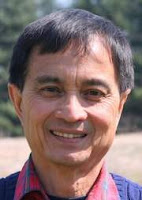
December 15, 2010
By A. Gaffar Peang-Meth
PACIFIC DAILY NEWS

Structure must sometimes give way to flexibility. My holiday season column for today is replaced by the current one. My column last week, "Oppressors must fall if people unite," brought comments that deserve a response.

Although I generally attach less credence to anonymous comments, some warrant a response, even if the comments draw me back to topics I think I have covered fully in past columns.

One blogger disagreed with my assertion that while complaints serve a purpose, "Actions make things happen." Writing in Khmer, the commentator said, in strong and offensive language, that "we have to talk again and again about the bad things of Kampuchea leaders, Vietnamese dogs and servants."

Although I may have indulged in impassioned comments about the strongarm tactics of the Hun Sen regime, I am reminded of the dangers of intemperate words by the book next to my computer, "Wingnuts: How the lunatic fringe is hijacking America," by the Daily Beast's senior political columnist, John Avlon. It's on the rising of "professional partisans ... unhinged activists ... hard-core haters ... paranoid conspiracy theorists" from the political far-right and far-left, who are submerged in a "hydra-headed hysteria" -- cut off one accusation, another emerges in its place -- on hyper-partisan talk radio and Wingnut websites.


Just as partisan and insulting rhetoric have not moved a political agenda forward in the United States, neither can a shouting match advance the prospects of an open civil society in Cambodia. Do Cambodians really think that shouting sends a message to foreign governments about Cambodia that they do not already have?

Think of this: In the 1980s, when the rear headquarters of the nationalist Khmer resistance was minutely monitored in every respect by the host country, one of the outcomes was the sense of paranoia that grew among resistance officials. They accused one another of betrayal and disloyalty when what we thought was secret was not. We would forget that the world had its own sources, lodged in the monitors all around us.

Better to hold one's counsel and let actions speak. Think, deliberate, decide, then act. It is action that may influence a foreign government's policy.

Another person who responded to last week's column asked me to expand on the issues focused on the Khmer/Vietnam border, in light of Premier Hun Sen's objection to citizens investigating and protecting that border.

More than 30 years ago, my world politics professor reminded us that when we look at a garden, some eyes concentrate only on certain plants and flowers while others look the whole garden -- specialists and generalists. My professor's preferred approach was to look at the whole garden to see how plants or flowers are arranged, where rocks and stones are placed, and why.

My subsequent training in political science at the University of Michigan made me a generalist. So as the issue of the border encroachment is discussed, I have written instead about Vietnam's grand design to integrate neighboring areas into a Greater Vietnam led by Hanoi. As such, the border-marker dispute is an element of a bigger picture that concerns me more. The Vietnamization of Cambodia is facilitated by Hun Sen, who is supported by Vietnam and legitimized by the king and the King Father.

A third commentator is piqued by my persistent call for Khmer democrats and rights activists to unite around a carefully designed grand strategy to destabilize the dictatorship and allow the installation of a more liberal regime, rather than to align with a single political figure.

In my thinking, because Cambodians tend to personalize, and Khmer culture still values class, status, rank, role relationships and a superior-inferior, master-servant, leader-follower, patron-client asymmetry, to rally around a leader is problematic. Such a leader would likely also assume the role of the sun in the universe: There's only one sun!

Burmese icon Aung San Suu Kyi is right to advocate for the goal of "value change." We need to change what we have always thought. None of us is condemned by karma. We are what we make ourselves to be.

Lord Buddha teaches us we don't have to wait until the next life to improve our lives; we can do so now. As the Buddhist proverb says, "When the student is ready, the master appears." Are we ready?

I have referenced from time to time Dr. Gene Sharp's "From Dictatorship to Democracy: A Conceptual Framework for Liberation." The Khmer blog, KI Media, has a link to the English text as well as the Khmer translation. Sharp wrote, "Unfortunately, often most people in democratic opposition groups do not understand the need for strategic planning or are not accustomed or trained to think strategically."

The idea of unity within diversity is not new. In the words of John F. Kennedy: "The unity of freedom has never relied on uniformity of opinion."

Let there be a market of ideas, and let carefully thought out ideas bloom. Let us dialogue, understand and appreciate one another, in spite of different opinions. Each of us must learn and embrace humility as a value. Unity is a behavior that can be learned. We know the old adage: "We must all hang together or assuredly we shall hang separately."

Nelson Mandela reminded us, "To be free is not merely to cast off one's chains, but to live in a way that respects and enhances the freedom of others."

A. Gaffar Peang-Meth, Ph.D., is retired from the University of Guam. Write him at peangmeth@yahoo.com.

Wednesday, December 08, 2010

Oppressors must fall if people unite

December 8, 2010
By A. Gaffar Peang-Meth
PACIFIC DAILY NEWS
No regime can stand without the people's support.
Some two million people converged in Phnom Penh for Cambodia's annual water festival, celebrated Nov. 20-22. On Nov. 22, an estimated 5,000 to 8,000 people jammed the seven-meter-wide, 101-meter-long Diamond Island bridge. As rumors of "electric shocks" were heard by those on the bridge, the structure "swayed," fear of the bridge's collapse heightened, the crowds pushed and a stampede resulted in the deaths of more than 350 people, with several hundred others suffering injury.

Would any responsible government allow such huge crowds on a narrow bridge without crowd control?

As Cambodians in the country and abroad asked why, and where the responsibility lies, they mourned the dead. Long-serving Premier Hun Sen told the nation -- with "crocodile tears," say Khmer analysts -- the stampede was a lesson learned; no official would lose his job. It was also announced the government would provide the equivalent of $12,000 in compensation to the families of each person who was killed -- to hide the guilt, some say.

Many called for those with some responsibility for the government's failure to resign, but such entreaties fell on deaf ears.


Complaints

My column, "Do complaints serve a purpose?" was dissected by some Khmer bloggers in the West Coast. "They do," some argued. But then what? I quoted a Chinese saying, "Talk doesn't cook rice."

And so, we are, again, complaining, denouncing, pointing fingers, calling for justice -- even more passionately than before.

Yet, what have these verbal demands produced? The straw leviathan with shaky wooden legs stays strong. The irony is, he stays strong and rules ruthlessly because the most powerful force that can run him out of town -- the people -- isn't yet convinced how those who might replace him would better serve the people's interests. Democrats have not convinced them they can succeed in fighting for their rights and freedom.

The leviathan is strong because democrats are weak and in disarray.

Only thing to fear

If one wakes up every morning, saying to oneself one cannot succeed, then of course one will fail. An anonymous Khmer blogger who commented on my column last week said positive thinking is beyond the capacity of the sick and the poor. He seemed to condemn the sick and the poor to a perpetual sickbed and eternal poverty -- an encouragement to the leviathan's oppression.

Failure is human and people fail; but it's not the end of the world. Success is not irreversible either. Recall Winston Churchill's words, "It's the courage to continue that counts."

So decide what you want, make a strong commitment to achieve it and act resolutely to reach that goal. Actions open doors to many options. Theodore Roosevelt advised, "Do what you can, with what you have, where you are."

Fear of the leviathan? The Germans say "Fear makes the wolf bigger than he is."

Edward Yashinsky, a Yiddish poet who survived the Holocaust, wrote: "Fear not your enemies, for they can only kill you; fear not your friends, for they can only betray you. Fear only the indifferent, who permit the killers and the betrayers to walk safely on the earth."

But leave the last words to Franklin D. Roosevelt, chiseled on stones in the Roosevelt memorial in the nation's capital: "The only thing we have to fear is fear itself."

Do something

My political activism dates back to my college years. When I did my doctorate in Ann Arbor, Mich., I supported the Khmer Republic because Vietnamese troops occupied Khmer territory, used as a springboard in the Vietnam War against the Americans and their allies, and because of my attachment to democracy, individual rights, freedom and the rule of law -- which I wanted to see flourish on my native soil. I have not wavered from these ideals.

In 1980-1989, I served in the nationalist Khmer resistance because of Hanoi's military occupation of Cambodia and what I wanted to see established in Cambodia.

The physical battles to improve life for the people of Cambodia must continue. With my brain and my pen, I contribute what I can.

I liked German-born American physicist Albert Einstein's words: "The world is a dangerous place. Not because of the people who are evil; but because of the people who don't do anything about it."

I did. Now, others need to do something. Complaints serve a purpose. Actions make things happen.

Freedom can be won

Khmers can win their rights and freedom.

One immediate task is for Khmers to unite around a carefully designed grand strategy to liberate Cambodia from dictatorship and install a regime of the people, for the people, and by the people. Recall Secretary of State Hillary Clinton's urging that Khmer democrats unite behind a comprehensive political program, rather than behind a political figure.

Khmers need to strengthen independent social groups and institutions -- families, schools, non-government groups. People are empowered when they find collective support to achieve a goal.

Khmers must build the people's self-confidence, resistance skills and determination to liberate themselves, and create a powerful, internal resistance determined and willing to endure oppression to deny the tyrants the people's obedience, submission and cooperation, which they need.

No regime can stand without the people's support.

A. Gaffar Peang-Meth, Ph.D., is retired from the University of Guam. Write him at peangmeth@yahoo.com.

Wednesday, March 24, 2010

In Cambodia, unity is strength

March 24, 2010
By Gaffar Peang-Meth
Guest Commentary

UPI Asia Online


Washington, DC, United States, — No stone has been left unturned by writers in Cambodia and abroad in exposing the Hun Sen regime’s violations of human rights and lack of good governance. Endless appeals for change have been made by reputable national and international nongovernmental organizations.

But this is merely water off a duck’s back to the regime. It’s futile. Besides, the duck may even enjoy the water.

A former comrade-in-arms, now in the ranks of Premier Hun Sen’s armed forces – neutralized, sidelined and mistrusted, like others who chose to remain in the country and join Sen to earn enough money to live – tells me of the ruling Cambodian elite’s philosophy: “Write all you want until the cows come home. Nothing will change until we are ready. Besides, we can sue you!”

But Sen and his elite continue to fatten themselves with amassed wealth as they ride above the law, while the poor scavenge city dumps for food and are evicted from their land so it can be developed for others’ profit. The country’s natural resources are looted for personal gain, and many in the international community continue business as usual with Sen because it’s profitable.

It is an evident truth that the 1991 Paris Peace Accords, intended to establish democracy in the country, were never implemented.

Many have been sued by the government; the main opposition leader, Sam Rainsy, faces jail should he return to Phnom Penh from Paris. Earlier, royalist opposition leader Prince Norodom Ranariddh, son of King Sihanouk, half-brother of current King Sihamoni, swore off politics to be allowed to return from self-imposed exile in Malaysia. Ranariddh is quiet; as all the royals are quiet. The king continues to be Sen’s rubber stamp – even signing a royal decree nominating a neighboring country’s fugitive leader as advisor to the government.

Not that Cambodians and non-Cambodians don’t see and don’t know these things. They do, but most don’t think these things affect them directly and personally. Worse, many brush off what is unpleasant as they scapegoat others, assign blame and absolve themselves from culpability.

“There's none so blind as those who will not see,” a saying goes.

Another former comrade-in-arms who has read my columns over the years and is now also with the Sen regime, asked me, “You still want to transform ducks into peacocks?” The Greek philosopher Plato said long ago: “Wise men speak because they have something to say; fools because they have to say something.”

Plato’s “fools” are dangerous because they are ignorant. Martin Luther King observed, “Nothing in the world is more dangerous than a sincere ignorance and conscientious stupidity.”

Last week, I emailed an acquaintance two quotes, one from prominent psychiatrist Thomas Szasz, “The system isn't stupid, but the people in it are”; and another from Russian writer, Leo Tolstoy, “Everyone thinks of changing the world, but no one thinks of changing himself.” Who and what people are, I wrote, determine their actions. Thus, we must begin change with ourselves.

Back to Hun Sen’s Cambodia. Although Sen and his ruling Cambodian People’s Party do have support inside and outside the country, Cambodian Action Committee for Justice and Equity president Serey Ratha Sourn’s pertinent question deserves consideration. “If Hun Sen and the ruling party have no fear of Cambodians at the grassroots level rising up at the right time in a People Power against them, why did he and the CPP rush a new criminal code limiting the number of demonstrators and block the rights of expression?”

Sourn doesn’t believe that an election in contemporary Cambodia would have any meaning. With power concentrated in the same hands that suppress dissent, trample laws and instill fear, Sen is certain to win and the election is only a tool to legitimize his oppression.

A grassroots activist, Sourn sees “People Power” as possible, and as the only route to bring change. He and his supporters are working to implement a strategy of “One Mission, One Message and One Multitude” – Sourn’s three M’s. So they devote their time to setting up networks of people, monks and youth.

While a Western reader wrote that “most people” in Cambodia “have accommodated to the prevailing political situation” and are moving on “to make ends meet rather than worry about how change could be brought about,” some Cambodians in the country have told me the people need to read my articles, but in the Khmer language – confirming Sourn’s and others’ contention that as Cambodians understand, they will rise up.

Talk of creating a government-in-exile has dissipated. Such an action would be futile. It would be easy to create and announce it. World governments might sympathize with Cambodians’ plight, but realpolitik dictates that they balance between the devil they know and the devil they don’t know.

Some history does seem to repeat. As it was in the 1970s and 1980s with the Cambodian Non-Communist Resistance and the associated coalition government, in the final analysis, foreigners called the shots.

Cambodians, like others in the world, are generally impatient with slow results in an era of push-buttons and of instant gratification. Many want change in Cambodia – and wish a government-in-exile or armed resistance would produce the change.

It is those impatient Cambodians who scoff at retired Johns Hopkins professor Rananhkiri Tith’s call for a “systematic overhaul” of Cambodian society as a way to slow down and perhaps “save” Cambodia from disintegration. Tith’s scheme would take a long time to be successful.

Lasting change has a chance as a population becomes more educated. But it could take 20 years before education bears fruit.

Sadly, while the Sen regime consolidates its power, his critics are in disarray. Cambodians have learned since their youth, “l’union fait la force,” or unity is strength. And many have learned U.S. founding father Benjamin Franklin’s words, “We must all hang together, or assuredly we shall all hang separately,” as he called on American rebels either to band together or find themselves hung individually at the British gallows. Thus, E Pluribus Unum – out of many, one: the 13 colonies banded together as the United States of America.

Thus 233 years later, in July 2009, the 44th U.S. president, Barack Obama, told Ghana’s Parliament, “We must start with a simple premise that Africa’s future is up to Africans,” and, “With strong institutions and a strong will, I know that Africans can live their dreams.”

Cambodians should hear Obama’s words.
--
(Dr. Gaffar Peang-Meth is retired from the University of Guam, where he taught political science for 13 years. He currently lives in the United States. He can be contacted at peangmeth@gmail.com. ©Copyright Gaffar Peang-Meth.)

Friday, October 16, 2009

Strength Through Unity


By Son Socheat
Prey Nokor News Vision
Vol. 2, No. 93

Translated from Khmer by Socheata
“When Khmer unite, Khmer survive, when Khmer are divided, Khmer die!”
For a country to be able to display its culture, civilization, developing economy, political stability, independence, freedom, and that its people is living in peace, depends on the unity between the people and the national leaders for such unity is the strength to protect the country’s national interest and to provide true nationalist ideal and conscience.

This factor leads to progress in the society and no foreign powers could lead any aggression against such country. Among the many populations in the world, the Khmer people are as well known as any other nationalities, we used to be a powerful nation and a superpower in Southeast Asia during the Angkor era. Our Khmer empire used to have a brilliant civilization, our lands were vast, we built magnificent temples throughout our lands, and Angkor Wat is one of such marvels. Furthermore, the Khmer people practice our own customs and traditions and we maintain them until now. Because of our plentiful cultural heritage, other countries acclaim the Khmer people and our renown spread far and wide throughout the world.

The reason such condition took place during that era was the fact that Khmer people were united with their leaders who have high nationalistic ideals. Furthermore, contributions from the Khmer people in the development of their country and their strong commitment to national defense made it such no country was able to undermine our society.

Therefore, the unity strength plays a major role in our accomplishments. Unity strength can take many forms in a human society, however, philosophers tend to distinguish two types of human unity strength: (1) the unity strength to build a country and (2) the unity strength to destroy a country.

It is quite regrettable that our Khmer kingdom has significantly changed from its original state through the invasions and aggressions from neighboring countries, as well as the occupations of Khmer lands and provinces by the Siamese and Yuons. With the lack of unity among the Khmer society and a leadership that is no longer in tune with our population, corruptions, briberies, personal interests led to disputes, struggles for power and genocide among our own people. Currently, our Khmer people are furthermore disunited, we do not trust our own people and we tend to trust foreigners instead. A group of Khmer leaders even went on to ask for help from the Yuons, while another group went to fetch help from the Siamese force to fight one another. In the end, only the Siamese and Yuons were the ones who benefited from our discord, meanwhile, our Khmer people only knew deaths and foreign occupations and rulings, and our lands were also divided among the Siamese and the Yuons.

A portion of our lands along the west is under the Siamese occupation, whereas our lands along the east, the current Kampuchea Krom, are under the colonial occupation of the Yuons. Gradually, our lands shrunk and our people soon lost our rights to administer a large portion of our lands. Just as the saying goes: No foreigner will love Khmer more the Khmer people.

Therefore, we, as the Khmer people, must reflect and wonder why a number of countries in the world are moving forward? Why these countries can maintain political stability, security, economic progress, independence, territorial integrity, freedom and true democracy? I believe that happiness in the society happens when the country’s leadership and the people are united in order to maintain a perpetual protection of the national interests. As indicated above, in the past, our Khmer society used to have a renown civilization and morality, and we used to be a superpower in Southeast Asia, but later on, due to our unsettling political status, a number of Khmer leaders, government officials and people, as well as Khmer Buddhist monks, sold their ideals to foreigners, i.e., while they are still Khmer in name, their national conscience was bought out to serve the foreign interests. Even as we speak, a number of Khmer people, including some Khmer Buddhist monks, have lost their conscience, they are drunk with power, titles, money, the ranks conferred to them by the foreigners, and they unashamedly bring suffering on their own Khmer people. Such is the case for example of the so-called 7 Makara monks led by Tep Vong, Non Nget, Sao Chanthol, Long Kim Leang, Am Lim Heng, Noy Chreuk and Chies Om. The 7 Makara monks have no qualms in defrocking Venerable Tim Sakhorn, the former abbot of the Phnom Den North Pagoda, located in Kirivong district, Takeo province, and they even handed the venerable to the Yuon authority to have him jailed in Vietnam on 30 June 2007.

It should be noted also that, among the 7 Makara monks who defrocked Venerable Tim Sakhorn, Long Kim Leang is currently staying at a Khmer pagoda located in San Jose, California, USA.

Our Khmer people have learned our lessons through the misdeeds we suffered in the hands of our neighbors. Which nation is always bringing suffering on our people? Which nation always wants to eliminate our people? Isn’t it Communist Vietnam???

The Yuons use psychology to attract our people, to buy our conscience, to make us spy on our society, they divide us, i.e. the Yuons have their own plan: they will do all they can not to let us live in peace, because if we, the Khmer people, live with full independence and true social security, then we must revisit our national history.

In spite of the fact that communist Vietnam is using its conniving strategy on our society, a large number of Khmer people still love their nation, they are not willing to betray their conscience, and they will never forget the tragic history imposed on us, both Khmer and Khmer Krom people, by the communist Yuons.

Furthermore, in these days and age of the 21st century, our Khmer and Khmer Krom people throughout the world must remain alert, we must unite with each other through our idealism, we must not be defeated, nor will we fall into the Yuon’s tricks, and more importantly, we will never believe the Yuon propaganda.

In these days and age, our Khmer people all over the world must love each other, we must understand each other, we must not discriminate against each other, we must seek to understand our goals in the construction of our society and religious centers. Moreover, as sons and daughters of the Khmer people, we must be good citizens serving our nation, we must learn to cooperate with one another to serve our national interest with the aim of protecting and perpetually preserving our culture, tradition, customs, our Buddhist religion and our national identity, as well as raising up our civilization.

I believe that colonialist Vietnam which is currently occupying Kampuchea Krom will face defeat in the near future for now is the era of international human rights, and our indigenous Khmer Krom people, both inside and outside our lands, are rising up to demand for our freedoms and our religious belief through non-violent protests in order to be able to decide our own destiny as the Khmer Kampuchea Krom community.

Khmer people understand Khmer feelings, Khmer people love each others, Khmer people cooperate with one another, Khmer people do not instigate disunity among ourselves, we truly serve the interest of the Khmer nation, just as the following saying goes: “When Khmer unite, Khmer survive, when Khmer are divided, Khmer die!”

Thursday, December 06, 2007

Self-mutilation


December 2007
Op-Ed by Justin C. Sok
Posted online


When the honorable Mr. Noun Khoeun wrote a book, “The Journey toward the West”, some of the so-called Khmer leaders and the high-ranking government officials had labeled him as having irrational thoughts, paranoia, and/or suffered from a delusional disorder. Instead of trying to bring their collective brains together and transforming their ideas into sound political, economic, and military planning to prepare for what would be coming, the government took it as piddling issues and fell short to further investigating these grave matters.

The honorable Mr. Noun Khoeun provided us with his then pellucid conscience and judgment on the up coming political situation in Cambodia. The politics in Cambodia was as a bouillabaisse. It was appeared as though as an enigmatic. But in fact, it was like an onionskin that the Ho Chi Minh and his secret agents orchestrated the political turmoil in Cambodia. This was a definite warning that the atrocities would sure to come. The theory also implies that the dark clouds would soon move in to overshadow the innocent Khmer people. When the sky became clear, the innocent Khmer people would be scattered, crippled, or disappeared. All the remains are the horrific scenes of death, which were teemed with heaps of skeletons of those innocent Khmer people and ubiquitous with bombshells and landmines on Cambodian soil.

The Cambodian government had too many of those so-called “obsequious individuals” that had clung onto the administration. They had either bribed their way to get there, had their daughters became one of their concubines, or had been legitimately chosen by the administration to serve as the sycophants and/or servile-flatterers. Those minions took the opportunity to manipulate and falsify information and propagated a rumor that Khmer nation had a “higher being” who was the “omnipotent-omniscient” and “quasi-God King” and had possessed all the spiritual and magical powers that could win over the enemy in every direction. They made the innocent Khmer people believed that this “quasi-God King” would bring happiness, good health, and prosperity to the people in the villages, towns, cities, and country. Those servile dependents were, in fact, the shipworms that caused all the cancer in our Khmer society.

Some Khmer intellectuals who had the courage and sacrificed their lives to offer constructive criticism on how they could contribute to help improve the standard of living, and as well as political, social,and economic conditions in the country, had a price put on their heads. They would be executed by a firing squad if caught alive. It is quite the opposite from being a progressive and democratic society, where individual citizens are being encouraged to take part in decision-making on how the government should run the country, which in turn, give them the sense of patriotism and ownerships.

President John F. Kennedy once addressed the nation, “Ask not what the country can do for you. Ask what you can do for your country.” It is the duty and responsibility of the government to have public policy in place and to provide adequate resources to ensure that all citizens are equally treated and just.

The Cambodian government had also begun to lose power in the administration. Some of the Ho Chi Minh’s secret agents were already infiltrated in the administration. They had the moles from inside the administration to run the secret operation of the Viet Cong. The moles from inside the administration shook up the economy in the country and caused the people to sell rice and other commodities to the Viet Cong. At the same time, the Viet Cong printed counterfeit money and some money were given to them by the moles from the inside administration to buy rice from the peasants at high price. In addition, the high ranking officials from the government administration secretly worked with the moles to provide logistical support, food as well as military supplies, to the Viet Cong, which they had claimed to temporary stay in Cambodian sanctuaries from American bombings.

Some Khmer intellectuals had prior knowledge about the Ho Chi Minh’s secret agents presented on Cambodian soil. But with their usual condescending attitudes, and gaudy life styles, their silence was usually easily bought off, and some were in fear for their lives if they were to dare bubble up. So, as always, they turned their other cheeks.

The situation at government administration levels became far worse when the bribery began flowing in from the foreign countries into the government. Like amphibians who had long survived encased in dirt holes in the dry season, and when the first rains had finally arrived, they burrowed out from their holes to celebrate their fortune. Likewise, the government officials, civil personnel, and the armies suffered from emotional and psychological abuse from their leaders. They were long abandoned, mistreated, under paid, neglected and lack of proper medical treatment, and lacked support from the general public. When the opportunity knocks, they took their revenge, “It’s my turn!” They abandoned their duty and responsibility, which they had sworn in and honored to do for their nation. They were gleeful conviviality. They were too occupied with their concubines. Some were strutting about their ill-gotten gain, which was in the eyes of the public that they were the ones in control. Some were quick to promote themselves into higher positions in the government. Some were getting themselves showered with spiritual and magical spells and were blessed with holy water from the indigenous shamans, which they believed to be able to ward off bullets during wartime. In addition, some were more so than others, behaved as if they could “see no evil, hear no evil” or lived in a happy-go-lucky” life style.

Historically, Khmer had learned about the rules on how to play the game of Russian roulette. Unfortunately, they had not only undermined Hanoi’s ability and strengths, but with their usual short-term memory, they had terribly missed calculated Hanoi’s military strengths and ambitious “expansionism policy”. The article, “Victims of communism today” written by Mike Benge in the Washington Times on 5/02/2004 literally described the Vietnamese expansionism policy:
“Amoeba-like, communist Vietnam is slowly neo-colonizing Laos and Cambodia by the traditional Vietnamese expansionism termed Don Dien, first by occupying territory with troops, then having their families come in to settle the new territory, then putting the troops into civilian clothes to become "ready reservists" and replacing them with new troops for further expansion.”
The Vietnamese invasion of Cambodia in late 1978 and the allegedly withdrawal of their troops from Cambodia in 1989, which apparently had left behind of millions “illegal Vietnamese immigrants” and “ready reservists” in Cambodia, are an excellent example of Vietnam’s “expansionism policy”. In a recent article posted by KI-Media (1) reported that there are currently 2.4 million illegal Vietnamese immigrants living in Cambodia, which recently, were given Khmer identification by the Cambodian Minister of Interior Department to register to vote for the upcoming election in 2008.

One important piece of political information that Mr. Benge did not mention about the “Vietnamese expansionism policy” is that Vietnam uses their secret agents to infiltrate the government and other important administration institutions in the host country. Those secret agents served as the catalyst for their political movements. Their duties and responsibilities were to map out and record any important political information and/or movement of the host country. Vietnam did it to Laos and they have done it to Cambodia.

It is always the case that Khmer leaders were easily lured into taking the first-turn at Russian roulette and they were not only as gullible but they were also grateful as for being chosen to be first. Tragically, the so-called Khmer leaders did not have a clue that the Yuons had already slipped bullets into every chamber of the gun.

For centuries, the Yuon and the Siam had been using Khmer as a pawn. To them, Khmer is a laughingstock. They had learned that the so-called Khmer leaders are the greatest numbskulls, like cock fighters, which can be easily leached, tamed, trained, and painted on colors to “match against one another” in the ring. Case in point, Sisowath vs. Norodom Sangkum Reastr Niyum Party vs. Khmer Viet Minh vs. Khmer Issarak vs. Khmer Serei vs. Khmer Buddhist Liberation Front of Democratic of Kampuchea vs. Khmer Lon Nol vs. Khmer Rouge vs. Khmer Heng Samrin vs. Khmer Chea Sim vs. Khmer Kampuchea Krom vs. Khmer Keov vs. Khmer Sar vs. Khmer CPP vs. Khmer Royal Funcinpec vs. Khmer HRP vs. Khmer Royal NRP vs. Khmer SRP vs. Khmer abroad, etc.

Ironically, these political parties were primarily created for the purpose of leading the Cambodian and the Cambodian nation to be great nation, but they turned against each other, instead. For example, they handed the sword to their enemies and kept the scabbard. They cut down trees and exported to foreign countries and imported a toothpick. They arrested innocent Khmer people and Buddhist monks but let the illegal Vietnamese immigrants go free.

That was then, and so much time was wasted away and countless innocent lives were destroyed because of the “ignorant and incompetent leadership”. What is at stake now is that we need to take care of what we have left. We need to desert of our old ways of thinking, seeing, and approaching things. We need to stop throwing mud or spitting fire at one another. For the interest of Khmer and Khmer nation, we should bundle up of our own ideas and kneading, polishing, and transforming those ideas into sound political, social, economic, and as well as military strategy. We should roll up our sleeves and work together to rebuild our country. We must work to restore law and order, the judicial system, social justice and safety net programs, provide adequate social security and health care programs to all Khmer children, elderly, and women. We need to not only build more educational institutions but we need to hire more teachers who have credentials from accredited institutions. There is a Khmer byword, “Khmeng Kheu Chea Tum Paing Snorng Roeusey”. There are thousands of Koun Khmer who are educated, experienced, and competent. Believe in them and give them the chance! We must stop being a poltroon, instead, step up to the plate and take responsibility as a leader to serve and to protect the interest of our own people and nation. We must work together not only to rebuild our country and protect our Khmer nation, but we must also work together to honor of our founding fathers and the “Khmer Empire”, which is long overdue the gratitude and respect it deserved.

Since the discovery of our precious natural resources, the hyenas are starting to sniff around on the ground, while the vultures are circling from above taking an intense interest in our belongings. They are pretending to play our songs to soothe up our hearts and hypnotize our minds. But at the same time, their hands are aggressively reaching deep into our pockets.

Peace

Reference:

(1) http://ki-media.blogspot.com/2007/11/half-of-24-million-vietnamese.html



