Showing posts with label Tith Naranhkiri. Show all posts

Saturday, March 17, 2012

Poor Leadership Threatens Cambodia’s Survival: Professor [-Should Cambodia wait for Preah Bat Thommeuk to find a so-called "good" leader?]

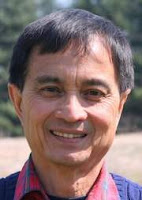
“These leaders, I am not saying they are worse than Hun Sen, but they are not that good,” Naranhkiri Tith said. Photo: by Poch Reasey, VOA Khmer

Friday, 16 March 2012
Sok Khemara, VOA Khmer | Washington, DC

“To cry wolf” or to appear racist against the Vietnamese is to lose international support."
Cambodia suffers from poor leadership, with poor prospects not just in the ruling party, but among opposition leaders, a former Cambodian professor in the US says.

South Africa had Nelson Mandela, Burma has Aung San Suu Kyi, but Cambodia has “Class Z” leaders like Prime Minister Hun Sen, said Naranhkiri Tith, a former professor at Johns Hopkins University.

“Where on Earth can a country like that survive?” he said.

The country also lacks strong leadership amongst its opposition, said Naranhkiri Tith, who fled the country in the 1960s and settled in the US.

Thursday, April 21, 2011

Cambodian: A race on the verge of extinction

Naranhkiri Tith
20 April 2011
By Hassan
Radio Free Asia
Translated from Khmer by Soch
Click here to read the original article in Khmer

A number of overseas Cambodian intellectuals researched and wrote that Cambodian is a race that is on the verge of extinction.

They based their claims on a number of facts, but nobody dare to speak directly due to a number of factors that could affect them personally.

What do these Cambodian-American intellectuals base their facts on? From Washington DC, Hassan is providing a short report on an article prepared by a former US university professor that will be presented at a meeting in France next month.

What former Economic professor Tith Naranhkiri writes for his seminar in France to be held in May 2011, some Cambodians may think that he wrote without knowing Cambodia too well, either that or he was writing in order to scorn his own race. In fact Dr. Tith’s writing reflects that he is a Cambodian who studied and now lives overseas, and it also shows his concerns for the future of the Cambodian people, a race that is inferior to their neighbors for a long period of time. Dr. Tith Naranhkiri used to teach at John Hopkins University and he used to work for the IMF in Washington DC, USA.

Wednesday, March 24, 2010

In Cambodia, unity is strength

March 24, 2010
By Gaffar Peang-Meth
Guest Commentary

UPI Asia Online


Washington, DC, United States, — No stone has been left unturned by writers in Cambodia and abroad in exposing the Hun Sen regime’s violations of human rights and lack of good governance. Endless appeals for change have been made by reputable national and international nongovernmental organizations.

But this is merely water off a duck’s back to the regime. It’s futile. Besides, the duck may even enjoy the water.

A former comrade-in-arms, now in the ranks of Premier Hun Sen’s armed forces – neutralized, sidelined and mistrusted, like others who chose to remain in the country and join Sen to earn enough money to live – tells me of the ruling Cambodian elite’s philosophy: “Write all you want until the cows come home. Nothing will change until we are ready. Besides, we can sue you!”

But Sen and his elite continue to fatten themselves with amassed wealth as they ride above the law, while the poor scavenge city dumps for food and are evicted from their land so it can be developed for others’ profit. The country’s natural resources are looted for personal gain, and many in the international community continue business as usual with Sen because it’s profitable.

It is an evident truth that the 1991 Paris Peace Accords, intended to establish democracy in the country, were never implemented.

Many have been sued by the government; the main opposition leader, Sam Rainsy, faces jail should he return to Phnom Penh from Paris. Earlier, royalist opposition leader Prince Norodom Ranariddh, son of King Sihanouk, half-brother of current King Sihamoni, swore off politics to be allowed to return from self-imposed exile in Malaysia. Ranariddh is quiet; as all the royals are quiet. The king continues to be Sen’s rubber stamp – even signing a royal decree nominating a neighboring country’s fugitive leader as advisor to the government.

Not that Cambodians and non-Cambodians don’t see and don’t know these things. They do, but most don’t think these things affect them directly and personally. Worse, many brush off what is unpleasant as they scapegoat others, assign blame and absolve themselves from culpability.

“There's none so blind as those who will not see,” a saying goes.

Another former comrade-in-arms who has read my columns over the years and is now also with the Sen regime, asked me, “You still want to transform ducks into peacocks?” The Greek philosopher Plato said long ago: “Wise men speak because they have something to say; fools because they have to say something.”

Plato’s “fools” are dangerous because they are ignorant. Martin Luther King observed, “Nothing in the world is more dangerous than a sincere ignorance and conscientious stupidity.”

Last week, I emailed an acquaintance two quotes, one from prominent psychiatrist Thomas Szasz, “The system isn't stupid, but the people in it are”; and another from Russian writer, Leo Tolstoy, “Everyone thinks of changing the world, but no one thinks of changing himself.” Who and what people are, I wrote, determine their actions. Thus, we must begin change with ourselves.

Back to Hun Sen’s Cambodia. Although Sen and his ruling Cambodian People’s Party do have support inside and outside the country, Cambodian Action Committee for Justice and Equity president Serey Ratha Sourn’s pertinent question deserves consideration. “If Hun Sen and the ruling party have no fear of Cambodians at the grassroots level rising up at the right time in a People Power against them, why did he and the CPP rush a new criminal code limiting the number of demonstrators and block the rights of expression?”

Sourn doesn’t believe that an election in contemporary Cambodia would have any meaning. With power concentrated in the same hands that suppress dissent, trample laws and instill fear, Sen is certain to win and the election is only a tool to legitimize his oppression.

A grassroots activist, Sourn sees “People Power” as possible, and as the only route to bring change. He and his supporters are working to implement a strategy of “One Mission, One Message and One Multitude” – Sourn’s three M’s. So they devote their time to setting up networks of people, monks and youth.

While a Western reader wrote that “most people” in Cambodia “have accommodated to the prevailing political situation” and are moving on “to make ends meet rather than worry about how change could be brought about,” some Cambodians in the country have told me the people need to read my articles, but in the Khmer language – confirming Sourn’s and others’ contention that as Cambodians understand, they will rise up.

Talk of creating a government-in-exile has dissipated. Such an action would be futile. It would be easy to create and announce it. World governments might sympathize with Cambodians’ plight, but realpolitik dictates that they balance between the devil they know and the devil they don’t know.

Some history does seem to repeat. As it was in the 1970s and 1980s with the Cambodian Non-Communist Resistance and the associated coalition government, in the final analysis, foreigners called the shots.

Cambodians, like others in the world, are generally impatient with slow results in an era of push-buttons and of instant gratification. Many want change in Cambodia – and wish a government-in-exile or armed resistance would produce the change.

It is those impatient Cambodians who scoff at retired Johns Hopkins professor Rananhkiri Tith’s call for a “systematic overhaul” of Cambodian society as a way to slow down and perhaps “save” Cambodia from disintegration. Tith’s scheme would take a long time to be successful.

Lasting change has a chance as a population becomes more educated. But it could take 20 years before education bears fruit.

Sadly, while the Sen regime consolidates its power, his critics are in disarray. Cambodians have learned since their youth, “l’union fait la force,” or unity is strength. And many have learned U.S. founding father Benjamin Franklin’s words, “We must all hang together, or assuredly we shall all hang separately,” as he called on American rebels either to band together or find themselves hung individually at the British gallows. Thus, E Pluribus Unum – out of many, one: the 13 colonies banded together as the United States of America.

Thus 233 years later, in July 2009, the 44th U.S. president, Barack Obama, told Ghana’s Parliament, “We must start with a simple premise that Africa’s future is up to Africans,” and, “With strong institutions and a strong will, I know that Africans can live their dreams.”

Cambodians should hear Obama’s words.
--
(Dr. Gaffar Peang-Meth is retired from the University of Guam, where he taught political science for 13 years. He currently lives in the United States. He can be contacted at peangmeth@gmail.com. ©Copyright Gaffar Peang-Meth.)

Author: Systematic overhaul needed

March 24, 2010
By A. Gaffar Peang-Meth
Pacific Daily News (Guam)


Lord Buddha teaches, "Everything changes." This eternal truth takes me to, among many thoughts, German playwright Johann Wolfgang von Goethe's "Life belongs to the living, and he who lives must be prepared for changes."

Martin Luther King Jr. said, "The soft-minded man always fears change. He feels security in the status quo, and he has an almost morbid fear of the new. For him, the greatest pain is the pain of a new idea."

My columns on Cambodia brought e-mails from Cambodians and non-Cambodians. Many supported the change in Cambodia in one form or another; some solicited ideas on how to bring change; some complained my columns left out this and that; and there were venomous comments from anonymous senders .

People who reject what doesn't conform to their thinking generally put up a roadblock against new knowledge.

I have mentioned a Web site by retired Johns Hopkins professor Naranhkiri Tith, a Cambodian who migrated to the United States in 1960 and later became a naturalized citizen. He is author of a forthcoming book, "Internal and External Factors Underlying Cambodia's Ongoing Tragedy Since Independence (1953-2010): Reflection of a Cambodian Expatriate." It purports to explain reasons for Cambodia's slow disintegration, based on "what I knew, observed, and understood about main events and personalities (practically all notable contemporary Cambodian leaders) and their role" in Cambodia's tragedy.

Tith says the book's "main purpose" is to "attempt to challenge (the) various aspects of Cambodian conventional wisdom, and its impact on the destiny of the Cambodian people and society."

Tith knows his blunt language and hard-hitting style compromise his popularity with the generally passive, accepting and non-confrontational Cambodians. And he knows many are interested in what he has to say.

Tith lists four purposes for his Web site: the search for "real and lasting justice" for Cambodia's people; the "rebuilding" of a shattered society on the basis of international legal/judicial standard; the debunking of the myth of Vietnamese "liberation" of Cambodia; and the publication of "open and constructive" articles on issues affecting Cambodia's destiny.

The site contains interesting sections: news and analysis; the Khmer Rouge trial; the role of King Father Sihanouk in the Cambodian tragedy; and an analysis of the "fundamentals" -- raison d'etre, ideology, organization, strategy and tactics -- of Vietnam's "Nam Tien" (southward movement), the understanding of which, Tith says, is "necessary but not sufficient for a successful roadmap to freedom."

I find Tith's "A Suggested Roadmap to Freedom for the Cambodian People" most significant.

Tith sees Cambodia as "a failed state," -- systematic and pervasive corruption; a concentration of wealth and land ownership; a gross abuse of rights; a politicization of the judiciary; uncontrolled illegal Vietnamese immigrants. On Cambodia's external problems, he sees a less problematic future with democratic Thailand than with autocratic and totalitarian Vietnam.

To break the stronghold on power by Vietnam-supported and Sihanouk-backed Premier Hun Sen and his ruling Cambodian People's Party, Tith calls for "isolating Sihanouk" and protection and implementation of Cambodia's constitution. He suggests Cambodians learn from the experiences of Thai and Vietnamese societal reforms, and start reforming Cambodia's own society from within.

Tith sees the "main causes" of Cambodia's economic, institutional, legal, political and social problems as resting mainly on "the legacy of the past, especially the institution of the monarchy," which has instilled in the people "blindness and irrational trust and belief" in the "god-king" concept.

Combining the monarchy's "pervasive and crushing role" with "the conservative nature of the Cambodian society, such as the belief in prophesies and the rigidity in social organization and behavior," Tith argues, has produced "inertia and the inability to allow new ideas and capable leadership, and entrepreneurial spirit to emerge."

What to do?

"Only by a progressive and systematic overhaul of the Cambodian society" can these problems be improved gradually to enable the people "to survive and prosper."

Tith sees as important issues: dealing with extreme income inequality between the "few politically powerful families and friends" and the peasants; making the rich and the powerful pay due wealth and income tax; using expected income from oil and gas resources to develop intellectual and physical infrastructures; dismantling the monopoly of Vietnamese-owned SOKIMEX company in industrial and financial sectors; adopting an anti-corruption law; setting up a program of economic structural diversification backed by reform in the quality and level of education to bring about an increased level of productivity and competitiveness; making the judiciary independent and non-political; and instituting "an honest, capable, and responsible government."

The United Nations and nongovernmental organizations can help here.

Tith says the Cambodian diaspora "can and must play a positive role" in the countries of their residence "to influence and bring about international support to Cambodia ... (but) the main effort remains in the hands of the Cambodian people themselves to rise up and defend their land and culture."

"Intractable, yes; impossible, no!" Tith says.

Tith's challenge to Cambodian conventional wisdom and call for a systematic overhaul of society touches the roots of Cambodia's ills.

A. Gaffar Peang-Meth, Ph.D., is retired from the University of Guam, where he taught political science for 13 years. Write him at peangmeth@yahoo.com.

Wednesday, March 10, 2010

Khmers complicit in Vietnamization

In 1962, Prince Sihanouk wrote: "Whether he is called Gia Long, Ho Chi Minh, or Ngo Dinh Diem, no (Vietnamese) will sleep soundly until he succeeds in pushing the Khmer toward annihilation, after having made them go through the stage of slavery."

Pol Pot and his French-trained Marxists handed Cambodia to Vietnam. Then Heng Samrin and company agreed to a Vietnamized Cambodia. Now the King has ratified it.

March 10, 2010
By A. Gaffar Peang-Meth
Pacific Daily News (Guam)


My apologies. It's impossible to answer all e-mails on or related to any week's topic. But be assured that I read every one and even retrieve some that my ISP sends to a spam folder. My answers will sooner or later find their way to my columns.

To some who urge that I translate my writing into Khmer, I respond that God never meant a day to exceed 24 hours. Can't someone translate them?

A few days ago, the Hun Sen military test-fired 100 miles from the disputed border with Thailand, some 200 Russian-made Katyusha rockets, a Stalin-era weapon known today as BM21. A bank of 40 launch tubes mounted on a truck can fire in 20 seconds, with a range of about 20 miles and more.

Sen's military spokesman said the test was to strengthen Cambodia's abilities for "national defense against invaders." The test firing helped keep people intimidated and Sen in power.

Did it sidetrack the issue of Vietnamization of Cambodia? It seems only retired Johns Hopkins professor Naranhkiri Tith keeps a focus on the issue on his Web site. http://cambodiana.org/default.aspx. His proposed "roadmap," is a path he describes as "necessary but not sufficient," to save the Cambodian people.

His schematic should have been translated into Khmer long ago, because, if I rephrase a common saying to relate to Tith: "I know that you believe you understand what you think Tith said, but I'm not sure you realize that what you heard is not what he meant."

A reader e-mailed me George Santayana's quote -- "Those who cannot learn from history are doomed to repeat it" -- but I am reminded of Karl Marx's, "History does nothing; it does not possess immense riches, it does not fight battles. It is men, real, living, who do all this." I like Thomas Jefferson's "I like dreams of the future better than the history of the past" and American poet and champion of individualism Ralph Waldo Emerson, who said, "Make the most of yourself for that is all there is of you."

Today, let me examine the 25-year "Treaty of Peace, Friendship, and Cooperation" that effectively integrated Cambodia into a greater Vietnam.

As people educated in the culture of Confucianism, Vietnamese leaders' actions are, generally, carefully thought-out and calculated to maximize Vietnam's interests. They know what they want, what their national interests are and they move methodically to attain them.

Unfortunately for Khmers and their country, King Sihamoni, son of King Father Sihanouk, signed the supplements to the treaty, giving Vietnamese full access to colonize and Vietnamize Cambodia. The treaty cites "the traditions of Vietnam-Kampuchea militant solidarity and fraternal friendship."

Recall the Vietnamese revolutionary activities in Cambodia, described in my earlier column: Among them, in 1949, Hanoi's Canvassing Committee created the Revolutionary Kampuchean People's Party and, in 1950, Hanoi created the Kampuchean People's Liberation Army. That was the near 30 years of "great revolutionary gains" for Cambodia?

In its preamble, the treaty cites the "closely interrelated" independence, freedom, peace and security of Vietnam and Cambodia -- what affects one affects the other -- and that both countries are "duty-bound to help each other wholeheartedly and with all their might" safeguard and consolidate the products of their "revolution." It cites both countries' "militant solidarity" and "long-term and all-round cooperation and friendship" as representing their "vital interests."

In the treaty's first three articles, the Cambodians hand Ho Chi Minh the goal he had dreamed about.

In Article 1, the two countries pledge to "do all they can" to maintain their "traditions of militant solidarity" and to develop "mutual trust and assistance in all fields." In Article 2, they pledge to "wholeheartedly support and assist each other in all domains and in all necessary forms," as well as to take "effective measures to implement this commitment whenever one of them requires."

Cambodian leader Hun Sen can "require" Vietnamese intervention and Sen will be assisted "in all domains and in all necessary forms," and vice versa.

In Article 3, both countries pledge "mutual fraternal exchanges and cooperation" and mutual assistance in the economic, cultural, educational, public health, scientific, and technological fields, as well as the training of cadres and the exchange of "specialists and experience in all fields of national construction."

Article 4 stipulates a border agreement based on the "present border line." In Article 5, both parties pledge a "long-standing tradition of militant solidarity and fraternal friendship" to which they "attach great importance." Article 6 requires that the parties "frequently exchange views" on all questions concerning both countries' relationships and on "international matters of mutual interest." Articles 7, 8, 9, speak of the right and obligation of each party to any bilateral and multilateral agreements.

The treaty opens the door for Vietnam to operate in Cambodia. For example, Vietnam always has been short of food, and Cambodia is historically rich in fertile land and fish and natural resources.

In 1962, Prince Sihanouk wrote: "Whether he is called Gia Long, Ho Chi Minh, or Ngo Dinh Diem, no (Vietnamese) will sleep soundly until he succeeds in pushing the Khmer toward annihilation, after having made them go through the stage of slavery."

Pol Pot and his French-trained Marxists handed Cambodia to Vietnam. Then Heng Samrin and company agreed to a Vietnamized Cambodia. Now the King has ratified it.

Why blame the Vietnamese for expansionism when Khmers have acquiesced to it?

A. Gaffar Peang-Meth, Ph.D., is retired from the University of Guam, where he taught political science for 13 years. Write him at peangmeth@yahoo.com.

Wednesday, January 06, 2010

Jan. 7 'liberation' was day of infamy

Logically, the Treaty of Peace, Friendship and Cooperation between Sen's Cambodia and Vietnam is an important instrument for Sen to invite Hanoi's troops -- the "liberators" against Pol Pot -- to help fight the Thais on Khmer soil, a repeat of history.
January 6, 2010
By A. Gaffar Peang-Meth
For Pacific Daily News


Tomorrow is the 31st anniversary of the Vietnamese army's takeover of neighboring Cambodia's capital of Phnom Penh. The event prompted controversy; debates and discussion about the ramifications of that takeover continue today.

In 14 days of 1978, Hanoi's army, backed by aircraft, moved swiftly across the Cambodian border, sending Pol Pot and his Khmer Rouge fleeing towns and cities. The Vietnamese captured Phnom Penh Jan. 7, 1979. Hanoi's troops remained in Cambodia for the next 10 years, until December 1989.

For the victims of Pol Pot's genocidal rule, which began April 17, 1975, and resulted in the deaths of upwards of two million people, destroying a culture and a society, Jan.7, 1979 was the day of deliverance by Vietnam. Surely, Vietnam was their "savior" and their "liberator" at a time when the world watched the horrors of the killing fields.

But others -- Cambodians and a host of foreign governments -- worried.

The world was still governed by the well-specified rule of law founded on the principle of absolute, comprehensive, permanent and inviolable sovereignty and independence. As Singapore argued before the international community at the United Nations, the world is no longer safe, and peace and security are no longer assured, if a more powerful state is allowed to invade a weaker one like Vietnam had done. The Association of South East Asian Nations spearheaded calls for Vietnam to withdraw its troops from Cambodia.

As a result, the United Nations and other international organizations became a political-diplomatic battleground for many years between proponents and opponents of Vietnam's invasion.

And it was so that the anti-Vietnamese Khmer Resistance was born, first as separate armed bands with similar goal and, later, as a loose coalition of Cambodians of the fallen Khmer Republic, Cambodians of the monarchy, and the leftovers of the Khmer Rouge, in spite of their differences, to pressure Vietnam to withdraw, and to seek Cambodians' self-determination.

Unfortunately, the Paris Peace Accords, concluded in 1991, weren't implemented according to the agreements' stipulations and spirit by participating parties, including Cambodians.

Cambodian nationalists asked, since 1979, if Vietnam's goal was to "save" and "liberate" the Cambodian people from Pol Pot, what prevented it from surrendering a freed Cambodia and her people to work with the world community to build a new government and social order? Wouldn't Vietnam have received gratitude so profound by ceding to the United Nations the role of assisting Cambodians' self-determination?

For many Cambodians, Jan. 7 was a day of infamy. Pol Pot was replaced by those referred to as Cambodians with Khmer bodies but Vietnamese heads, the Khmer Viet Minh. This cohort, created by the Vietnamese Communist Lao Dong, trained at the Son Tay Military Academy and at the Nguyen Ai Quoc political school, led by a disgruntled regional field commander, Hun Sen, who sought Hanoi's support to return to power. It was, they felt, like replacing cholera with the plague.

Cambodian opponents assert that Vietnam attacked Pol Pot in 1979 because he became too independent of Hanoi. The invasion was initiated to bring the insolent back into line.

As French critic Jean-Baptiste Alphonse Karr said, "Plus ça change, plus c'est la même chose," or, "The more things change, the more they remain the same."

Look at the history of relations between Cambodia and Vietnam for affirmation.

The Vietnamese southward expansion after Nam Viet freed itself in 939 from Chinese bondage was described by Vietnamese scholar Nguyen The Anh in "Le Nam Tien dans les textes Vietnamiens," as a centuries-long phenomenon called "Nam Tien" (progression southwards), "one of Vietnam's history's constants." Anh described the "sparsely populated and accessible land available for (Vietnamese) rice growers" to the south as "favorable for encroachment."

Vietnamese "Confucian persuasion" was abandoned in favor of "an action resolutely imperialistic" to grab land and impose Vietnamese "administrative and cultural practice ... to better integrate (the new area) into the Vietnamese space."

Very briefly, historical records reveal that until the French protectorate was established in 1863, Cambodia was a battlefield for Thai and Vietnamese armies that fought on Khmer soil. Khmer dynastic quarrels led each Khmer side to seek support from Bangkok and Hue. Cambodia was known as a "two-headed bird" -- a tributary state to both foreign capitals.

In 1833, after Annam defeated the Thais in Cambodia, the Annamization began: Annam installed teenager Ang Mey as queen, Cambodia's capital was renamed "Nam Viang," Cambodia's reorganization followed Vietnamese administrative lines, authorities adopted Vietnamese names, customs and dress. In 1840, the Cambodian government was seated in Saigon, and Cambodia's name was changed to "Tran Tay" -- or western commandery.

Opponents of Vietnam's 1978 invasion see Hun Sen and his ruling Cambodian People's Party as a force seeking integration of Cambodia into the late Ho Chin Minh's dream of a federation of former French Indochinese states of Vietnam, Cambodia and Laos.

The recently revealed "classified" contingency plan by Thailand for military action against Cambodia, should the Thai-Khmer dispute escalate, is seen by Professor Naranhkiri Tith as "exactly what Hun Sen wanted."

Logically, the Treaty of Peace, Friendship and Cooperation between Sen's Cambodia and Vietnam is an important instrument for Sen to invite Hanoi's troops -- the "liberators" against Pol Pot -- to help fight the Thais on Khmer soil, a repeat of history.

A. Gaffar Peang-Meth, Ph.D., is retired from the University of Guam, where he taught political science for 13 years. Write him at peangmeth@yahoo.com.

Wednesday, December 30, 2009

Time will bring wanted changes

December 30, 2009
A. Gaffar Peang-Meth
Pacific Daily News (Guam)


Tomorrow evening's sunset will end the old year, and the new year of 2010 will be upon us, with its 365 new days for us to do what we desire: Building a new future with our creative and productive thinking; or continuing the old past, repeating old thoughts and actions.

Welcome to the New Year's new opportunity!

As some busily perfect a new set of resolutions, some are more focused on figuring what went wrong in the year that's ending. Like most of you, I have spent some time reflecting on the highs and lows of 2009. Some memories are worth a replay; others I would just as soon forget.

University of Scranton psychology professor John C. Norcross reminds us that "Obsessive rumination about past events can trap patients in a self-defeating cycle from which they cannot extricate themselves. It can actually retard healing."

But I don't think most of us obsess. So I prefer a more energizing reminder from the Sanskrit: "Look to this day, for it is life, the very life of life ... today well lived makes every yesterday a dream of happiness, and every tomorrow a vision of hope. Look well, therefore, to this day. Such is the salutation to the dawn."

I recall telling my politics students at the University of Guam: "This moment is the only moment you have. Respect its possibilities. ... If today seems shrouded in hopelessness, pray. ... Regardless of what this day brings, thank God. An untouched day awaits you tomorrow."

I'd like to take credit for the expression of those sentiments, but truth be told, I scribbled this quote from a book at an airport bookstore as I awaited my next flight.

Thus, earlier this December I seized my moment and braved the cold and windy winter day in America's northeastern region, and took a trip to the nation's capital to visit someone I had met by chance some 36 years ago: a Khmer-born former international civil servant with the United Nations Conference on Trade and Development and retired professor at the Johns Hopkins School of Advanced International Studies, Naranhkiri Tith.

A specialist in country analysis, Tith manages a controversial Web site on which he calls for a "progressive and systematic overhaul" of Cambodian society as the only way to gradually resolve Cambodia's current economic, institutional, legal, political and social problems.

Former Czech dissident-turned-president Vaclav Havel termed a person like Tith "an irritant wherever he is," because as "the chief doubter of systems" he constantly disturbs, bears witness, provokes, rebels against pressures and manipulations because it's an intellectual's role. And Burmese human rights icon Aung San Suu Kyi termed such a person, one with "a questing mind" that always questions and always seek answers.

I found Tith, now "76-and-a-half," he told me, to fit what Havel and Suu Kyi described. Tith says what he thinks, and he thinks deeply. He knows Khmer society so well and Khmer personalities in particular. I was privileged to be shown his scholarly works and rare collection of documents about our shared homeland. It confirmed what he said to those who know him that they can be sure to find him making a stand wherever human rights and freedom of choice are at risk.

His PowerPoint presentation at SAIS earlier this year, "Khmer Empire: Implications from its Organizational and Operational System on Present Day Events in Cambodia," contains a comparative study of Sinicized Vietnamese and Indianized Khmer administrative and political organizations.

Briefly, Vietnam's "pyramid" model places the ruler at the apex of power, with clearly defined links flowing down to the lowest officials at the base, governed by written code and a system of meritocracy for every rank and role of officials.

Cambodia's model consists of "a series of concentric circles," with the ruler with absolute power at the center. The system is lacking in clearly defined authority as well as in "close linkage" between the center and outer circles, and yet, "petty centers of power" exist. Qualification for employment or promotion is based on "quasi-hereditary family, ability and opportunity to gain the ruler's notice."

While Vietnam embraces "clearly defined borders," Cambodia embraces the "porous concept of hinterland or buffer zone."

Tith said, "Not much has changed since the Angkor time for the majority of Cambodians."

Tith's presentation reveals his philosophy, backed by selected documented literature, which he summarized in two sentences: "Cambodia needs a total change in personal and social behavior, modus operandi, and institutions, especially the leadership. Nothing short of totally reinventing a new Cambodian society and individual."

I was conscious that for the few precious hours that Tith and I spent together -- this time out of choice -- the only "light" time was a brief opportunity to exchange greetings with the gracious Mrs. Tith.

As we parted, we acknowledged that time will certainly bring the change we want to see and it would be a miracle if either one of us will see the fruits of our efforts.

But miracles happen. God works in mysterious ways.

Though the Chinese proverb, "One generation plants trees, the next generation gets shade," flashed in my head, I reminded myself that I have this moment, with its possibilities, I have this day to live well to make yesterday a dream of happiness and tomorrow a vision of hope, and God's promise of strength, comfort and light.

Happy New Year!

A. Gaffar Peang-Meth, Ph.D., is retired from the University of Guam, where he taught political science for 13 years. Write him at peangmeth@yahoo.com.

Wednesday, November 25, 2009

Cambodia needs 'systematic overhaul' of society

November 25, 2009
By Gaffar Peang-Meth
Guest Commentary
UPI Asia.com


Washington, DC, United States, — A “progressive and systematic overhaul” of its society is what Cambodia needs, according to Dr. Naranhkiri Tith, a specialist in country risk analysis, former civil servant with the U.N. Conference on Trade and Development and a former professor at the Johns Hopkins School of Advanced International Studies.

Overhaul Khmer society? Tith says that only by freeing itself from its past can Cambodia gradually resolve its economic, institutional, legal, political and social problems.

Cambodia has been a monarchy since the first century A.D. – except briefly under the 1970-1975 Khmer Republic under Lon Nol, and the 1975-1979 Democratic Kampuchea under Pol Pot. That is the legacy Tith refers to, although he knows that criticizing something that has been the only way and the only thought of a people for 2,000 years will not make him popular.

Yet Cambodia is the land of his birth, he insists, and no one is going to prevent him from thinking and applying his best thoughts to help bring change, even if he has to step on toes.

Actually, that’s what leaders do, says bestselling author, entrepreneur and blogger Seth Bodin. Leaders have curiosity, they ask questions, they challenge what is, and they commit to working to bring about change.

From the standpoint of former Czech playwright and dissident Vaclav Havel, who became the first president of the Czech Republic in 1993-2003, that’s what an intellectual does: to “constantly disturb … bear witness to the misery of the world … be provocative by being independent, rebel against all hidden and open pressures and manipulations … be the chief doubter of systems.” An intellectual “stands out as an irritant wherever he is,” says Havel.

And to borrow Burmese human rights activist Aung San Suu Kyi’s words, it is important for a person to have a “questing mind” that is always questioning and always seeking for ways and means to get out of and solve problems. For Suu Kyi, a questing mind is necessary to help withstand violence and oppression, especially in a society in which people are generally conditioned to obey without questioning the situation.

Khmer-born and Western-educated in Europe and the United States, Tith migrated to the United States in 1960-1961 because “I felt that I was not allowed to be myself,” he says. In other words, he could not grow.

Tith sees the “pervasive and crushing role of the monarchy,” combined with the conservative nature of Khmer society – “such as the belief in prophesies and the rigidity in social organization and behavior” – as contributing to the “inertia and the inability to allow new ideas and capable leadership and entrepreneurial spirit to emerge.” In the final analysis, this keeps Cambodia “perpetually underdeveloped,” he says.

For nearly five decades now I have reflected on Cambodia, which is also the country of my birth and of my primary and secondary education. I have thought about Tith’s descriptions of inertia and the inability to allow new ideas, capable leadership and entrepreneurial spirit to grow in Cambodia.

I remember reading a Cambodian statesman’s political analysis of Khmer history while doing research for my doctoral dissertation in the early 1970s, about Khmer valor, the Khmer Empire and the builders of Angkor, the Khmer “warrior race,” when Hindu influences were paramount. Then Buddha’s doctrine of peace, kindness, compassion and acceptance came to replace the old ways.

I have asked myself if there is a dichotomy within a person with an inner tug-of-war between the combative warrior personality and the peaceful Buddha-like personality.

I have read the late Khmer professor Sar Sarun’s “Proloeng Khmer” (1973) – and re-read time and again the translation, “Khmer Mentality,” in Tith’s website. Sarun describes the Khmer mentality as insensitive to social and legal rules except where there is coercion; an artistic spirit in a soft, fanciful and romantic state with a tendency to be confused about commitments.

I have asked myself, who and what is this Khmer whom Sarun was describing?

Visna Sann, author of “Who is Khmer?” (2005) wrote in Tith’s website, “Some Cambodians adhere to a policy of exclusion in which only 100 precent ethnic Khmers may be considered Khmer.” He described prejudices recounted by a Cambodian of Chinese heritage.

"I am disturbed by these examples of exclusion,” he wrote, “We cannot afford to exclude our own people.” Sann charged that Cambodia’s “policy of exclusion … has contributed to our country’s decline in the same way as Khmer fighting against Khmer.”

Tith includes in his website Marie A. Martin’s “Cambodia: a Shattered Society” (1994). She writes that, “respect for elders and for hierarchy remains sacrosanct” in Cambodia, and reminds us that, “In the traditions of Khmer moral training, to protest against a parent’s decision, to criticize one’s boss or spiritual master, to rebel against a husband is inadmissible.”

"It is understandable how such a mentality can lead to an abuse of power but also how dangerous a lack of wisdom and scruples can be, for once the link of confidence is broken, the divorce is irreparable and the authority is forever rejected. Younger persons must keep quiet,” wrote Martin.

"And adolescents have no chance to express themselves, much less to argue. It is not surprising if later they allow themselves to be trampled by an ‘elder’ who is in the wrong or less competent than they are, if they remain defenseless in the face of a national tragedy or prefer to let a foreigner speak or act in their place,” said Martin.

Of course, all these are not really pleasant to hear. But Tith isn’t afraid to confront them.

As the saying goes: “The past is behind, learn from it. The future is ahead, prepare for it.

The present is here, live it.”
--
(Dr. Gaffar Peang-Meth is retired from the University of Guam, where he taught political science for 13 years. He currently lives in the United States. He can be contacted at peangmeth@gmail.com. Copyright Gaffar Peang-Meth.)

Wednesday, November 11, 2009

'To live is to learn, that's how we grow'

November 11, 2009
A. Gaffar Peang-Meth, Ph.D.
PACIFIC DAILY NEWS (Guam)


Civil rights leader Martin Luther King Jr. said, "The ultimate measure of a man is not where he stands in moments of comfort and convenience, but where he stands at times of challenge and controversy."

One day before he was shot and killed, King said in his "Mountaintop" speech: "We've got some difficult days ahead, ... Like anybody, I would like to live a long life, ... But I'm not concerned about that now, ... [God's] allowed me to go up to the mountain, ... And I've seen the promised land. I may not get there with you. But I want you to know tonight, that we, as a people, will get to the promised land. And I'm happy, tonight ... I'm not fearing any man. Mine eyes have seen the glory of the coming of the Lord."

Earlier, King said, "If a man hasn't discovered something that he will die for, he isn't fit to live." King "walked the talk": "Change does not roll in on the wheels of inevitability, but comes through continuous struggle. And so we must straighten our backs and work for our freedom. A man can't ride you unless your back is bent."

He also said, "Freedom is never voluntarily given by the oppressor, it must be demanded by the oppressed."

Nothing is permanent in life except change, so, we can choose to be victims of change, or agents of change and transform our world. To live is to learn, and to apply what we learn to improve our circumstances and the lot of those around us. That's how we grow. A specialist counsels, rush not to conclude, it blocks the road to knowledge; keep asking questions and learn. Learning is perpetual.

There is a Web site, "Reflections of An Expatriate on Cambodia's Past, Present, and Future," by a former international civil servant, and former professor at the Johns Hopkins University School of Advanced International Studies, Dr. Naranhkiri Tith.

Khmer-born and educated in Europe and the United States, Tith integrates the historical, economic, social, cultural, and political, with supporting documents, to explain Cambodia's current tragedy.

He built the Web site, he says, as a "personal tribute" to all victims of the Pol Pot Khmer Rouge, Hun Sen's "blind ambition and high treason," and Prince Sihanouk's "deceit, megalomania, and egomania." The Web site offers "A suggested roadmap to freedom for the Cambodian people."

Tith analyzes Cambodia's internal problems, and references the February 2008 report by Professor Yash Ghai, Special Representative of the United Nations Secretary-General, and Cambodia's external problems with her neighbors -- he sees the great danger posed by Vietnam to the east, that by Thailand to the west -- as factors contributing to Cambodia as "a failed state." He presents a roadmap, suggesting the use of non-violence to remove Hun Sen and his ruling Cambodian People's Party from power: "Intractable, yes; impossible, no!"

Tith urges "a progressive and systematic overhaul" of the Khmer society, to "gradually" improve Cambodia's economic, institutional, legal, political, and social problems, "thus allowing the Cambodian people to survive and to prosper."

Tith left Cambodia for the U.S. in 1960-1961: "I felt that I was not allowed to be myself ... ." He laments how non-royal Khmers could not hope to "reach their full potential, intellectually or otherwise," as a commoner's achievement was "an attempt to compete" in a world French King Louis XIV dubbed, "L'Etat c'est Moi" or "I am the State."

Tith sees the Khmer monarchy's "pervasive and crushing role, ... combined with the conservative nature" of Cambodia's society -- including a "belief in prophesies and rigidity in social organization and behavior" -- as contributing "to the inertia and the inability to allow new ideas and capable leadership, and entrepreneurial spirit, to emerge." These characteristics, he says, "keep Cambodia perpetually underdeveloped."

In his Web site's "Special articles and essays on Cambodian behavioral and social characteristics," Tith writes, "Most Cambodians do not even know who they are, ... their identity," which has been "absolutely crushed" by the monarchy. Common Khmers claim their ancestors were "the builders of Angkor Wat," Tith says, yet, they "hardly know their great grandparents" -- while Chinese and Vietnamese know their ancestors "12 generations" back.

He examines the Khmer society's "flaws" and highlights the resulting "character and behavior" that impede success. An excerpt from Marie A. Martin's "Khmer Tradition and Customs: Rigid Respect for Social Hierarchy Leads to the Absence of the Right to Criticize," in her (1994) book, "Cambodia: a Shattered Society," is a must read.

I met Tith some thirty-six years ago, before the Khmer Republic under which I served crumbled under the genocidal Khmer Rouge's guns in 1975. "There is a time for silence. A time to let go and allow people to hurl themselves into their own destiny," someone writes, "And a time to prepare to pick up the pieces when it's all over."

Fate can be mysterious and ironical. After my nine years (1980-1989) in the Khmer People's National Liberation movement, to oppose Hanoi's occupation of Cambodia, block Pol Pot's return to power, and rebuild a new Cambodia, I returned to the U.S., joined the Johns Hopkins University political science faculty in 1990, when Tith was a professor at SAIS a stone's throw away. Yet we never connected.

A few weeks ago I e-mailed him. We found ourselves on the same page in "this enormous task of defending the Cambodian people and society against all odds," as Tith puts it.

As the saying goes: "It is by chance that we met, by choice that we became friends," and to borrow King's words, in "times of challenge and controversy."

A. Gaffar Peang-Meth, Ph.D., is retired from the University of Guam, where he taught political science for 13 years. Write him at peangmeth@yahoo.com.

Monday, November 09, 2009

Cambodia rattles Thailand's chain

Nov 10, 2009
By Craig Guthrie
Asia Times Online

Sam Rainsy has called the argument between Thaksin and Abhisit a "political game" to turn the Cambodian public's attention to the west, in the direction of Thailand, while ignoring the east, towards Vietnam.
HUA HIN, Thailand - Cambodia's long-serving Prime Minister Hun Sen, with a thumping parliamentary majority and a war-traumatized electorate fearful of change, may well have one of the safest jobs in world politics. This certainly seems the case in comparison with neighboring Thailand, where the premiership has changed hands four times in the past two years.

Nonetheless, Hun Sen is likely grateful for the popularity boost Thailand's government may have handed him through its heated response to his recent praise of and job offer to former Thai premier Thaksin Shinawatra. Hun Sen appointed Thaksin, who has been criminally convicted on corruption charges, as an economic advisor. The latter, who was toppled in a 2006 military coup, now lives in exile. Last month, Hun Sen hailed Thaksin as a "great friend" and a victim of a politically compromised judicial system.

The Thai government has viewed the offer as interference in its internal affairs and downgraded diplomatic relations. Angry protests have erupted at the Cambodian Embassy in Bangkok, and both nations last week recalled their respective ambassadors.

Armed troops have also lined up to defend the Thai Embassy in Cambodia's capital, Phnom Penh, but few Cambodians expect a repeat of the 2003 anti-Thai riots, which saw the embassy burned to the ground and Thailand ready airplanes to evacuate its nationals in a dispute sparked by a Thai actress' alleged comments over national ownership of Cambodia's famed Angkor Wat temple.

Some Cambodians, accustomed to Hun Sen's well-known tactic of bolstering his political clout by offering loyalists plum advisor posts, see the latest spat in less emotive terms. In the leadup to 2008 elections, Hun Sen's ruling Cambodian People's Party (CPP) attracted many high-level defectors from the main opposition, the Sam Rainsy Party (SRP), to join his army of over 100 well-paid advisors.

Hun Sen has said he would refuse to honor a bilateral extradition treaty with Thailand that would require him to arrest and deport Thaksin, who faces a two-year jail sentence in Thailand on the corruption conviction. Although Thaksin remains a divisive figure with great sway in Thai politics, Bangkok's reaction may be over more than political insecurities.

Billionaire Thaksin was appointed by royal decree last Wednesday as an advisor to both Hun Sen and Cambodian King Norodom Sihamoni. He is scheduled to land in Phnom Penh on November 12 to deliver a lecture to Cambodian economic officials and there are rumors circulating that he might meet with a group of Thai "red-shirt" protest leaders near the Thai border.

In Cambodia, the monarchy is seen as fair game for criticism by both the media and public. After observing for years former king Sihanouk's extravagant lifestyle and constant shifts to ensure his political survival - as well as political forays by other royal princes and princesses - many Cambodians are skeptical of the monarchy. The situation is very different in Thailand, where the monarchy is widely revered and where any perceived criticism of the crown can result in harsh jail sentences. One motivation cited by military coup-makers for their 2006 putsch was that Thaksin was disloyal to the crown - charges he's denied.

The differences between the two nations' histories and economic situations seem personified by their leaders. Thailand, one of the region's wealthiest nations and a member of the influential Group of 20, is led by Oxford-educated Abhisit Vejjajiva.

Cambodia, still impoverished after a three-decade civil war and traumatized by the killings of the genocidal Khmer Rouge, is led by Hun Sen, a once barefoot temple boy who lived on handouts from Buddhist monks before becoming a teenage soldier. He first fought for the Khmer Rouge - a struggle that cost him his left eye - and then as part of the Vietnamese offensive that liberated the nation from the same radical Maoist regime in 1979.

Abhisit may have had a comparatively privileged upbringing, but Hun Sen enjoys political advantages. A seasoned leader, Hun Sen is in his 25th year in office - making his one of the longest-running premierships in the world. He led the CPP to 58% of the vote at general elections held in 2008, eclipsing widely the opposition SRP.

Abhisit, on the other hand, took charge last year as a result of Thailand's Constitutional Court disbanding the Thaksin-aligned ruling People's Power Party (PPP), which defeated his Democrat party at 2007 polls, on electoral fraud charges. His predecessor, Somchai Wongsawat, Thaksin's brother-in-law, was in the job for only 75 days. Somchai's PPP predecessor, Samak Sundaravej, lasted only nine months after he was ousted by a Thai court on corruption charges.

It is not the first time that Hun Sen has capitalized on political turmoil in Thailand, especially since bilateral tensions were re-ignited last year over the contested ownership of the land surrounding the ancient Preah Vihear temple, perched atop a steep cliff on the Thai-Cambodian border. When a United Nations body sided with Cambodia's claim, Thai nationalists ran across the border, prompting a military build-up by both sides.

Phnom Penh first appealed to the Association of Southeast Asian Nations (ASEAN) and then to the UN Security Council to take note of the issue, taking the diplomatic high road. It is unclear how the Preah Vihear dispute would have played out if Thaksin, also Hun Sen's golfing buddy, had still been in charge in Thailand.

Some critics say the current tension is in part due to false assurances given in the past by Thaksin to Hun Sen about border delineation near the temple and other overlapping claims by the two countries. Thaksin's critics claim that he was willing to offer territorial concessions to Hun Sen in exchange for personal business interests, claims the exiled former premier has denied.

Thaksin last year proposed a multi-million dollar deal with Hun Sen to develop Cambodia's southwestern maritime province of Koh Kong, telling Thai media that he wanted to turn it into a "second Hong Kong". Hun Sen hailed the proposal as an opportunity to reduce poverty in Cambodian-Thai border areas.

Hun Sen's main domestic opponent says the premier's overtures to Thaksin are not motivated by scoring political points or a desire to uphold Khmer nationalism, but instead are due to pressure being exerted on him by Vietnam, the invading nation which initially installed him as premier in 1985 and which the opposition still claims has influence over the CCP government.

Sam Rainsy has called the argument between Thaksin and Abhisit a "political game" to turn the Cambodian public's attention to the west, in the direction of Thailand, while ignoring the east, towards Vietnam. Antagonism among Cambodians - over inward migration and alleged land grabbing - is much higher towards Vietnam, which occupied Cambodia between 1979 and 1989, than towards Thailand, which has made less controversial service-sector inroads into the country.

"There is no doubt in my mind that Hun Sen is trying to show that he is the defender of the national interests of Cambodia and that Thailand is the real enemy of Cambodia and not Vietnam," said United States-based Cambodian economist Naranhkiri Tith.

When the Thai government last week recalled its ambassador, Thai Deputy Prime Minister Suthep Thaugsuban asked what the Hun Sen government would say if Rainsy were appointed as the Thai government's economic adviser. Rainsy replied, "It would never cross my mind to serve a foreign government that is at odds with my own country."

Rainsy, in referring to an unnamed "foreign government", could at the same time have been making an allusion to the Cambodian prime minister, having constantly charged that Hun Sen is a "puppet" of Vietnam who consistently undermines the national interest to maintain close ties to Hanoi.

Hun Sen's comments suggest his provocative moves towards Thaksin may be linked to his perennial mistrust of Rainsy in a domestic political spat that has spilled over into international relations. On his arrival in Thailand for the 15th ASEAN summit in late October, Hun Sen said, "If Sam Rainsy can come to Thailand as he did recently to make statements against the Cambodian government, why can my good friend Thaksin not come to Cambodia?"

Hun Sen was referring to Rainsy's critical comments on his government's human-rights record and economic management when he spoke at the Foreign Correspondents' Club of Thailand in Bangkok in September. There, Rainsy echoed claims made by civil society groups that since the CPP won the 2008 election, it has cracked down in authoritarian fashion on dissenting voices, including journalists, civil society and opposition politicians.

Rainsy also raised sharp questions about the underlying health of Cambodia's financial system in the wake of the global crisis, insinuating that Hun Sen had motivation to divert national attention from his government's troubles and towards an old adversary in Thailand.

Abhisit's popularity soared after downgrading relations with Cambodia, according to one poll. Yet some analysts feel he's misplayed his diplomatic cards. "Abhisit has also made mistakes," said Thitinan Pongsudhirak, a political science professor at Chulalongkorn University in Bangkok.

"Allowing Sam Rainsy to speak out in Bangkok against Hun Sen and not doing enough to rein in right-wing groups who demonstrated at Preah Vihear areas certainly irked Hun Sen and rubbed the Cambodians the wrong way. This is why Hun Sen is unlikely to face a domestic uproar at home for being seen as standing up to Thailand."

Craig Guthrie is an Asia Times Online correspondent based in Thailand.

Monday, June 01, 2009

Brazier's view contrary to majority of reports

Monday, 01 June 2009
Written by Dr Naranhkiri Tith
Letter to The Phnom Penh Post


Dear Editor,

I read with great disappointment and concern the article "A Future in Balance" by Rod Brazier, the outgoing country director for the Asia Foundation (Phnom Penh Post May 21). In the article, Brazier blames members of the international community in Phnom Penh for being "terribly ignorant about the political economy of Cambodia".

To make his case stronger, he unconvincingly includes himself among those members of the "ignorant" international community. What is more baffling, for a person who has falsely confessed to being ignorant, he goes on to describe in detail what is going in Cambodia, namely that Hun Sen's Cambodian People's Party (CPP) "enjoys widespread support today owing to the stability and economic growth that have occurred in recent years. Outside, it's not well understood that this government is truly very popular, despite some authoritarian tendencies".

Yet by accusing the international community in Phnom Penh of being ignorant of the political economy of Cambodia, Brazier runs contrary to many reports and articles from local and international NGOs. These include the recent report titled "Cambodia: Country for Sale" by [environmental watchdog] Global Witness, the many reports on human rights abuses by the United Nations special representative in Cambodia, and a recent article in the Post titled "Cambodia's curse" by Professor Joel Brinkley of Stanford University on how Hun Sen regime is corrupt and how the legal and judicial system [in Cambodia] is nonexistent. In that same article, Hun Sen was reported to have his own golf course and private army of bodyguards.

It is well-known that Cambodia still does not have an anti-corruption law. Also, a recent report on human rights by the US State Department highlighted the abuse of human rights in Cambodia under Hun Sen. Finally; there are still no answers to the many political assassinations of members of the political opposition parties, journalists and union leaders.

Is this the same Cambodia that Rod Brazier has found "all round, a very good picture for a country that was still at war with itself little more than a decade ago"?

In view of the above observations on the situation, I suggest that either Brazier is not a good observer or his standard of morality and good performance is different from a generally well-accepted standard that is used by most of those whose writings are mentioned by me earlier.

Dr Naranhkiri Tith
Washington, DC

Tuesday, May 12, 2009

Khmer overseas ask the American president to investigate Khmer Krom's issues


Source: Radio Free Asia
Reported by Khmerization

Overseas Khmers are gathering signatures in order to send a petition to U.S President Barack Obama (pictured) to ask him to order an investigation into the abuses and persecutions of Khmer Krom by the Vietnamese authority, reports Radio Free Asia.

Dr. Tith Naranhkiri, a professor from the John Hopkins University and a former senior official of the IMF, told RFA that his group wants Vietnam to respect the human rights of the Khmer Krom people. He said: "We want President Obama to investigate that issue. If the President wants the respect of human rights and if he wants justice, it must not for our country (America) only, but it must be for the whole world. This is what we want. We want the President to examine the human right abuses in Cambodia and of the Khmer Krom (in Vietnam). The President has defended the victims of Darfur. Why can't he defend the victims of Cambodia and the Khmer Krom people? This is what we want. We are not asking them (American leaders) to do what is impossible. We only ask what they have promised to do for us. And if we don't remind them, who will remind them?"

Dr. Tith Naranhkiri said that he is really worried about the situations in Cambodia and in Kampuchea Krom. He said: "First, what can we do about the Vietnamese persecutions of the Khmer Krom people? Secondly, what can we do about the illegal Vietnamese immigrants who had come to settled in Cambodia since 1979 under the Khmer-Vietnamese Friendship Treaty. Now, our country has no indepedence. If the Vietnamese tell Hun Sen to turn right, he will turn right. If the Vietnamese tell him to turn left, he will turn left. The illegal Vietnamese settlers poured into Cambodia everyday without any attempt to stop them. This is because our Khmer leaders are corrupt, so the Vietnamese they use money to bribe them. Also Hun Sen is very scared of Vietnam because he was propped up by Vietnam. This is why I do not talk about the two issues separately because now the Vietnamese abused and persecuted the Khmer Krom and also they send their settlers to live in Cambodia. So, at this present time, they have achieved both of their aims. That's why I am really worried that if the Vietnamese invade Cambodia again, we have nowhere to escape."

Friday, May 08, 2009

[Sihanouk] was not smart enough to know what would result from his movements

Exonerate King Sihanouk

Friday, 08 May 2009

Written by Va Makara
Letter to The Phnom Penh Post


Dear Editor,

I write regarding the letter [May 4] by Dr Naranhkiri Tith.

The King had his vision of protection, preservation and development of the nation. He led the movement because he needed his country out of wars.

However, he was not smart enough to know what would result from his movements.

Furthermore, many pressures also pressed on him. But we can understand about his real visions on leading the movement is to protect Cambodia.

Va Makara
Phnom Penh

Leaders are always right [-Was Pol Pot right also?]

Friday, 08 May 2009
Written by Sithen Sum
Letter to The Phnom Penh Post


Dear Editor,

I'm writing in response to Dr Naranhkiri Tith's May 4 letter. I'm not a doctor, nor a monarchist, nor a person smart enough to answer the doctor's provocative question. However, my reply is based on my experience as a motivational trainer.

If one accepts Sihanouk as a leader, it should be considered that he has a vision of his own. And I'd say virtually all leaders will claim they are right all the time. Why? Simply because of their vision. The vision is intact, yet their strategies to realise that may vary from time to time.

Let me take the example of Singapore's founding father, Lee Kuan Yew. Whatever he did was big picture and for the nation's sake.

The same holds true with Sihanouk. Although he was not right to change his position to support the KR, the change was necessary then to make Cambodian people independent from the US. What he expected of the KR was not the genocide but an independent Cambodia, as he testified to with our independence gained from France back in 1953. If he's been an ally to Hun Sen, it's probably because it's the only way to stabilise the country politically, and eventually, economically.

In a nutshell, it's not who is right, but what is right that matters.

Sithen Sum
Phnom Penh

Monday, May 04, 2009

King Father's tirade ignores historical record

Monday, 04 May 2009
Written by Dr Naranhkiri Tith
Letter to The Phnom Penh Post


Dear Editor,

I read with puzzlement the article in your newspaper titled "Sihanouk lashes out King Father's tirade ignores historical recordat journalist's war" (April 21,2009). However, I was not surprised at all to hear the former king's tirade against all those who dare criticising him. What is most incredible is the notion that Sihanouk thinks that he is right all the time.

Can he be right when he was an adversary to the Khmer Rouge during the 1960s, then turned to become their ally in the 1970s and 1980s?

Can he be right when he was against Hun Sen and the Vietnamese in the 1980s when he was leading the national resistance movement against the Vietnamese occupation of Cambodia, then now he turned to become a close ally of Hun Sen and thanked Vietnam for "liberating" Cambodia?

Can anybody smart enough give me an answer to these questions?

Dr Naranhkiri Tith
Phnom Penh

Tuesday, April 21, 2009

Vietnam threatens our national interests

Tuesday, 21 April 2009
Written by Naranhkiri Tith
Letter to The Phnom Penh Post


Dear Editor,

I read with alarm the article "Vietnam aims to lease land for rice crops" (February 26, 2009), in which it was stated that Vietnam is planning to lease land from the Cambodian government in the provinces contiguous with Vietnam in order to plant rice for the purpose of combating alleged rice smuggling from Cambodia. This is a dangerous project [that is] very detrimental to Cambodian national interests for a number of reasons.

First, Vietnam has been encroaching on Cambodia's land since the 17th century under a scheme known as nam tien, or "southward march", and annexing the land that they occupied and populating it with former soldiers and ex-convicts, as well as claiming land that used to belong to Cambodia, such as the region known as Kampuchea Krom.

Second, there are many Cambodians mired in abject poverty who rely on land for their survival.

Third, as pointed out in your article "The time of reckoning for Khmer Krom" (February 22), Vietnam has been committing atrocities against the Khmer Krom with help from the Hun Sen regime. This, in turn, shows that Vietnam has not been a defender of Cambodian national interests.

Monday, February 09, 2009

Without corruption law, no court can be called corrupt

Monday, 09 February 2009
By Naranhkiri Tith
Letter to The Phnom Penh Post


Dear Editor,

In a recent article in your newspaper, titled "Corruption probe to continue, but joint sessions inconclusive", in the February 4 edition of The Phnom Penh Post, the question of corruption in the ECCC was raised by the international community.

How can anybody be accused of corruption when there is no corruption law in Cambodia? Also, it is well known that the Cambodian judicial system is completely politicised and controlled by Hun Sen and his Cambodian People's Party.

So, how can the international community talk about corruption without looking into the Cambodian judicial and legal systems, which are totally politicised and controlled by Hun Sen. For this writer, this accusation of corruption in the ECCC is at least puzzling, if not totally illogical.

More precisely, how could anybody be accused of corruption when there is no anti-corruption law in Cambodia?

Naranhkiri Tith
Washington, DC

Tuesday, October 30, 2007

Stock Market a Worry for Some

Soth Virak, Kruy Virak
VOA Khmer
Original report from Phnom Penh
29 October 2007


Cambodia approved a securities law in September to prepare the country for a stock market in 2009. The stock market will be managed by the Finance Ministry in cooperation with the South Korean stock market and is expected to open its trading in 2009. But critics say Cambodia's laws are too weak to instill the kind of confidence a stock market requires.

Opposition party lawmaker Son Chhay told VOA Khmer recently he worried that the government is moving too fast.

"We need at least three to five years to make sure we have capable people or else we will have bogus companies that will take investors' money and run," he said.

Finance Minister Keat Chhon has said his ministry is evaluation about 400 companies, foreign and local. He said foreign and local companies have equal rights in participating in the stock market.

Cheam Yeap, a lawmaker from the ruling Cambodian People's Party. He said the securities law has strict rules and punishment for those who violate it.

"Article 9 makes it clear that anyone who sells stocks illegally will be punished from 1 million to 1 billion riel and a jail term from 1 to 20 years," he said.

Critics say Cambodia cannot yet rely on its laws to stabilize a securities market.

"For a stock market to succeed, there must be strict laws governing the market, and an independent court must be in place," Tith Naranhkiri, a former professor of economics and international finance at Johns Hopkins University in the US, told VOA Khmer. "In Cambodia, corruption is rampant, so a clean agency in charge of monitoring and investigating the companies registering in the stock markets is not feasible."

But supporters say a stock market will never work if they never try.

"Prime Minister Hun Sen has always advised us that a 1,000-mile journey cannot be completed unless the first step is taken. And that first step needs to be bold in order to finish the journey," said CPP lawmaker Chea Peng Chheang. "So, I do not worry that much. It is important that we have so-called on-the-job training to make the introduction of the stock market a success. If something happens along the way, we just need to fix it, and continue the journey."



