


Showing posts with label New Year. Show all posts
Showing posts with label New Year. Show all posts
Wednesday, December 28, 2011


Tuesday, December 27, 2011


Wednesday, December 29, 2010
New Year's a time for resolutions
 December 29, 2010
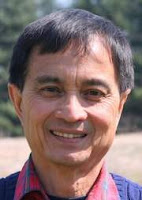
 By A. Gaffar Peang-Meth
PACIFIC DAILY NEWS
In two days, the old year will cede its reign to the new one. The old is over, with its ups and downs, its glory and its pains. Nobody can change that. We can remember and draw lessons from the past.
But the New Year that is arriving is full of opportunities and promise. We have our New Year's resolutions that are made for those next 365 days.
It seems it is human nature to attach hopes and expectations to somewhat arbitrary milestones. Jan. 1 is, after all, just another day.
Even knowing that, each year most of us affirm an intention to be kinder, eat less, exercise more, read more, spend less time online. ... It is our natural urge to improve, to restore, to progress that makes man different from other living beings.
Whether our roots are in Eastern or Western cultures, this characteristic is one we share.
I have a propensity to pepper my columns with the words of others. Some may find it "cheating" that I rely on third parties to fill this space, to some degree. I happily point out, however, that I believe in recycling even shop-worn truisms from time to time if I find them relevant and well-said.
And so I will indulge that habit here. The upcoming new year prompts my own retrospective and anticipation of a year ahead that offers much promise.
West meets East
A Sanskrit (a South Asian language that dates back to 1,500 B.C.) poem reads: "Look to this day, for it is life, the very life of life. For yesterday is but a dream, and tomorrow is only a vision."
It continues, "Today well lived makes every yesterday a dream of happiness, and every tomorrow a vision of hope. Look well, therefore, to this day. Such is the salutation to the dawn."
The West meets the East in thought.
Spiritual programs in the United States emphasize not yesterday, which is gone, nor tomorrow, which has not arrived, but today, which is here and now. "This moment is the only moment you have. Respect its possibilities. ... Regardless of what this day brings, thank God. An untouched day awaits you tomorrow."
American poet and educator Henry Wadsworth Longfellow wrote: "Look not mournfully into the past. It comes not back again. Wisely improve the present. It is thine."
"However good or bad a situation is, it will change," I referenced a powerpoint presentation in this space last week. And I often quote Lord Buddha's "Everything changes, nothing remains without change."
Buddha taught us, "No one saves us but ourselves. No one can and no one may. We ourselves must walk the path."
The serenity prayer, translated into many world languages, looks for "serenity to accept" the things that cannot be changed; "courage to change" the things that can; and "wisdom to know" the difference.
Here and now
A school of thought says the problem with the past is that people tend to ruminate and get stuck. This can render one dysfunctional. But by focusing on the future, we may miss an obvious choice point in the present. As Mother Theresa advised, do what is in front of you!
The Christians' Golden Rule, dubbed by Wikepedia as "the most essential basis for the modern concept of human rights," has a corresponding measure in each of the world's great religions.
The great Chinese philosopher, Confucius, preached, "Do not do to others that which we do not want them to do to us." This is a good place to start as we think of how to conduct ourselves in the new year.
It has been posited: There are only two kinds of bad situations, those that can be solved and those that cannot. Thus, people can either "get busy" fixing the problems that can be solved or "get busy" accepting the predicaments they must live with -- using positive and interpretive thinking.
Story for the New Year
Last year, a friend e-mailed me the "Law of the Garbage Truck." What? I was glad my quick fingers didn't press the delete key.
A passenger is riding in a taxicab to the airport when a car cuts in front of the cab, causing the cab driver to slam on the brakes. The taxi screeches to a halt only inches from the car ahead. Whipping his head out the window, the driver in the car ahead yells at the cabbie. The cab driver smiles and waves. The passenger asks the cab driver how he has managed to stay so calm.
"Many people are like the garbage trucks. They run around full of garbage, full of frustration, full of anger and disappointment. As their garbage piles up, they need a place to dump it and sometimes they dump it on you," he explains.
"Don't take it personally. ... Don't take their garbage and spread to other people at work, at home, or on the streets. Life is too short. Successful people don't let garbage trucks take over their day."
Happy New Year 2011 to all!
A. Gaffar Peang-Meth, Ph.D., is retired from the University of Guam. Write him at peangmeth@yahoo.com.
Wednesday, December 01, 2010
Apply skills to move forward in new year
 |
| A humorous view of new year resolution from Calvin and Hobbes |
December 1, 2010 By A. Gaffar Peang-Meth
PACIFIC DAILY NEWS
The new year will be upon us in 30 days. Some will reflect on the past. Sometimes such reflection helps us understand our present circumstances and may clarify next steps.
Still, those who understand human behavior warn against being endlessly mired in questions of why we are the way we are. It's easy to get stuck and be unable to move forward. Engaging your own creativity is a positive action that keeps you forward-focused.
In the new year, we can't repeat what we've always done and expect different outcomes. We need to strike a new path, look at old problems through a new lens. M.J. Ryan advises in her book, "This Year I Will ... " that we switch from "why" thinking to "what could be possible" thinking. Indeed, we're the change we want to see.
For most of us, life is hard in today's nasty financial and economic situation. Yet, food is not lacking, materials remain abundant, technology continues to thrive and bring change -- you can choose to ride, or not, in a vehicle that practically drives itself! There are people who live well; there are many who can't make ends meet.
On the world stage, national governments continue to compete for power, influence and prestige. The perennial clash between democracy activists and autocratic regimes that trample rights and freedom in the name of political stability and economic development raises many moral questions.
Constant struggle
Life is a constant struggle within ourselves and with pressures and temptations in the wider world.
Inwardly, the "I, me, mine" rule lives -- a source of greedy consumption that Lord Buddha saw as a source of "suffering." Outwardly, the same "I, me, mine" gives rise to a need to control, intensifying the just-unjust conflict.
Yet, humans everywhere basically want similar things: To be in good health; to enjoy a level of contentment in life; to be able to meet the basic necessities of life.
A democracy seeks to ensure that people live well. An autocracy seeks to remain in power by beating its people to obey and submit.
Focus on intelligence
Those who are schooled in the social sciences tell us it's not how much we know, but how we think, that determines our future. Some, however, mistake their opinions for analytical thought and knowledge. Opinions are based in our emotions.
Analytical thinking evolves from knowledge, from one's capacity to observe, wonder, imagine, inquire, interpret, evaluate, compare, relate, analyze, calculate and innovate. Our brains can be trained and taught to think better.
According to the Pew Research Center, nearly 85 percent of Americans say they are happy. Yet, those millions who are happy want to be happier still. People want more.
But look around. People live longer, eat better, have more things, but still many are stressed and depressed. The traffic is heavy, grocery lines are long, services are slow, people are rude, etc.
Lord Buddha saw man's insatiable consumption as a source of unhappiness and suffering that ends only through elimination of the need for more.
Positive thinking
A person with a "can do" attitude sees difficulties as opportunities; his or her questioning mind produces a panorama of alternatives to choose from. A person with a "can't do" attitude moves nowhere.
Whether in family life, at work, in the community, or in the world, positive thinking, backed by the power of one's imagination, energizes a person to engage in sustained assaults on problems and predicaments. Problems can be solved; predicaments addressed. It's about keeping things in perspective. Through sorrow we appreciate joy; through war we understand peace; through the negatives, we innovate and create new ways.
As we approach the new year, Khmer democrats should apply their capacity to imagine, relate and innovate to fight the dictatorship under which they live.
In earlier columns, I have connected several useful concepts. In traditional teaching, Khmer elders have urged us to waste nothing: curved wood can make a wheel, straight wood can make a spoke, and crooked wood can make firewood.
Psychologist-consultant Dr. Linda V. Berens identified four temperaments in humans: the theorist values competence, uses strategic analysis; the catalyst idealizes a vision, advocates, and brings people together toward self-actualization; the improviser seizes the moment and varies actions to get things done with what's available; and the stabilizer maintains order and stability through structures, and prevents institutional fragmentation.
An education leader of one of America's most successful public school systems, Jerry D. Weast, described as a leader's "toughest job, ... to move from strategy to execution." That requires the help of the "people who do the work" every day in their unsung roles in the office, the streets or field. They are the "heroes" moving the institution forward, he said.
A results-oriented human resources executive, Katharine Giacalone, says it's important to know who is on your team in order to maximize its effectiveness -- the peacemaker who wants every member to be included; the organizer, who wants everyone to line up and count off; the revolutionary who hates routine and prefers to adapt to the moment; or the smart and opinionated steamroller who handles opposite views and floats ideas at 30,000 feet.
Who is on your team and how can each member be most effective?
Be ready for the new year!
A. Gaffar Peang-Meth, Ph.D., is retired from the University of Guam. Write him at peangmeth@yahoo.com.
Monday, January 04, 2010
Cambodia, Thai soldiers enjoy New Year's dance near border
PHNOM PENH, Jan. 4 (Xinhua) -- Some 80 Cambodian and Thai soldiers enjoyed a New Year's dance last weekend, a festivity that helped the two sides of armed forces to know each other and exchange gifts, a senior military official said Monday.
Major Gen. Srey Doek, commander of Division 3 based at Preah Vihear Temple said some 30 Thai soldiers and 50 Cambodian soldiers who are all based along the two countries' borders had enjoyed a Jan. 1 gathering.
He said during the gathering, both sides had exchanged gifts, sharing fruits, drinks and danced to the music together for about two hours at Choam Te border point, about 18 kilometers from Preah Vihear Temple.
He said during the gathering, both sides had pledged that regular meetings shall be held in order to avoid any armed clash.
Since the border conflict between the two nations began last year, two times of armed clashes had occurred, during which several soldiers from both sides were killed and injured.
Cambodia and Thailand believe in Buddhism and they enjoy similar culture, tradition and round dance (Roam Vong Dance).
Major Gen. Srey Doek, commander of Division 3 based at Preah Vihear Temple said some 30 Thai soldiers and 50 Cambodian soldiers who are all based along the two countries' borders had enjoyed a Jan. 1 gathering.
He said during the gathering, both sides had exchanged gifts, sharing fruits, drinks and danced to the music together for about two hours at Choam Te border point, about 18 kilometers from Preah Vihear Temple.
He said during the gathering, both sides had pledged that regular meetings shall be held in order to avoid any armed clash.
Since the border conflict between the two nations began last year, two times of armed clashes had occurred, during which several soldiers from both sides were killed and injured.
Cambodia and Thailand believe in Buddhism and they enjoy similar culture, tradition and round dance (Roam Vong Dance).
Sunday, January 03, 2010
Kem Sokha calls for unity during the 2010 New Year celebration
 01 Jan 2010
By Ly Meng Huor
Radio France Internationale
Translated from Khmer by Komping Puoy
On 01 January, Kem Sokha, President of the Human Rights Party, called for all democratic and nationalist parties and politicians to unite in the form of a federation or a new political party in preparation for the upcoming 2012 commune election and the 2013 general election.
In his open message for the New Year, Kem Sokha indicated that the HRP considers the union of democrats and nationalists based on democracy as a necessary goal that cannot be delayed any longer.
In his open message for the New Year, Kem Sokha indicated that the HRP considers the union of democrats and nationalists based on democracy as a necessary goal that cannot be delayed any longer.
Saturday, January 02, 2010
Colorful band from Philadelphia - A report by R. Visal
 All photos by myphl17, Philadelphia - January 01, 2010


Sources: myphl17, Philadelphia - January 01, 2010
The Mummers Parade
Philadelphia's New Year's Day Tradition
Philadelphia's New Year's Day Tradition
New Year’s Day is about celebrating. At the Philadelphia’s Mummers Parade, a 109-year-old tradition in which 10,000 men and women dressed in colorfully lavish costumes twirl, sashay, pirouette and strut up one of the city’s main streets. An unforgettably wild ritual, the parade and subsequent performances are all family-friendly, yet exciting enough to entertain everybody.
Mummers are men and women of all ages who belong to one of 44 social clubs that make up the organization. The clubs, split into four divisions — Comics, Fancies, String Bands and Fancy Brigades — function mainly to stage their playful performances on New Year’s Day. But Mummers do perform at other events throughout the year, and for many Philadelphia-area families, Mummery is a tradition that spans generations.
The day’s highlight is the parade itself, which begins in South Philadelphia in the morning and winds its way up Broad Street to City Hall approximately eight hours later. Each division knows its role: the Comics, often dressed as wenches, satirize issues, institutions and people; the Fancies impress with their glamorous outfits that rival those of royalty; the String Bands gleefully play banjoes, saxophones and percussion instruments; and the Fancy Brigades produce tightly choreographed theatrical extravaganzas.
R. Visal
SRP-Pennsylvania
Mummers are men and women of all ages who belong to one of 44 social clubs that make up the organization. The clubs, split into four divisions — Comics, Fancies, String Bands and Fancy Brigades — function mainly to stage their playful performances on New Year’s Day. But Mummers do perform at other events throughout the year, and for many Philadelphia-area families, Mummery is a tradition that spans generations.
The day’s highlight is the parade itself, which begins in South Philadelphia in the morning and winds its way up Broad Street to City Hall approximately eight hours later. Each division knows its role: the Comics, often dressed as wenches, satirize issues, institutions and people; the Fancies impress with their glamorous outfits that rival those of royalty; the String Bands gleefully play banjoes, saxophones and percussion instruments; and the Fancy Brigades produce tightly choreographed theatrical extravaganzas.
R. Visal
SRP-Pennsylvania
Friday, January 01, 2010


Happy New Year!

Happy New Year!
Respected Readers and Contributors,
As the dawn of a New Year and a New Decade is quickly catching up on us, our team would like to take this opportunity to thank all our respected Readers for your continued interest in news and information from Cambodia, irrespective of your political affiliation and inclination. As you probably noticed already, in spite of the large spread of the Cambodian diaspora all over the world, and even with limit Internet access in Cambodia, the Cambodian community worldwide is vibrant in our expression of opinion, and we are no longer a sheepishly silent community.
We, at KI-Media, feel extremely rewarded and blessed that Cambodians and our foreign friends from all over the world pay close attention to the situation in our beloved Cambodia. We sincerely thank you for the time you spent reading the news, providing your suggestions and posting your comments. As the saying goes: “Knowledge is Power”, we hope that KI-Media contributes somewhat to your empowerment process. Please remember that the comments you posted are not in vain, we learnt, to our great surprise, that government officials in Cambodia as well as other parties involved do read regularly your comments.
We also would like to thank all those who contribute articles for posting on KI-Media. We apologize for not naming all of you here, as the list would be very long. Without you, our knowledge would be limited indeed! Therefore, we would like to encourage all of you, as well as our other readers, to keep sending us your opinions in the coming year.
We would like to wish all our Readers, Contributors and Team Members a HAPPY NEW YEAR! May you all be blessed with a prosperous and happy New Year. We hope that this New Year will wash away the misery our Compatriots are currently facing, and we also dare hope that our beloved Cambodia will recover our full sovereignty, territorial integrity and social justice.
With our utmost respect,
KI-Media team
We, at KI-Media, feel extremely rewarded and blessed that Cambodians and our foreign friends from all over the world pay close attention to the situation in our beloved Cambodia. We sincerely thank you for the time you spent reading the news, providing your suggestions and posting your comments. As the saying goes: “Knowledge is Power”, we hope that KI-Media contributes somewhat to your empowerment process. Please remember that the comments you posted are not in vain, we learnt, to our great surprise, that government officials in Cambodia as well as other parties involved do read regularly your comments.
We also would like to thank all those who contribute articles for posting on KI-Media. We apologize for not naming all of you here, as the list would be very long. Without you, our knowledge would be limited indeed! Therefore, we would like to encourage all of you, as well as our other readers, to keep sending us your opinions in the coming year.
We would like to wish all our Readers, Contributors and Team Members a HAPPY NEW YEAR! May you all be blessed with a prosperous and happy New Year. We hope that this New Year will wash away the misery our Compatriots are currently facing, and we also dare hope that our beloved Cambodia will recover our full sovereignty, territorial integrity and social justice.
With our utmost respect,
KI-Media team
Thursday, December 31, 2009
New Year Greetings to Khmer Soldiers from D. Chum

*** HAPPY NEW YEAR TO OUR KHMER SOLDIERS ****
At the Front Lines, Long Life, Good Health & Buddha Protect You All
I Loved You All Very Much , (Very Respected)- From Bottom of My Heart
- D. Chum
I Loved You All Very Much , (Very Respected)- From Bottom of My Heart
- D. Chum
Wednesday, December 30, 2009
Time will bring wanted changes
December 30, 2009A. Gaffar Peang-Meth
Pacific Daily News (Guam)
Tomorrow evening's sunset will end the old year, and the new year of 2010 will be upon us, with its 365 new days for us to do what we desire: Building a new future with our creative and productive thinking; or continuing the old past, repeating old thoughts and actions.
Welcome to the New Year's new opportunity!
As some busily perfect a new set of resolutions, some are more focused on figuring what went wrong in the year that's ending. Like most of you, I have spent some time reflecting on the highs and lows of 2009. Some memories are worth a replay; others I would just as soon forget.
University of Scranton psychology professor John C. Norcross reminds us that "Obsessive rumination about past events can trap patients in a self-defeating cycle from which they cannot extricate themselves. It can actually retard healing."
But I don't think most of us obsess. So I prefer a more energizing reminder from the Sanskrit: "Look to this day, for it is life, the very life of life ... today well lived makes every yesterday a dream of happiness, and every tomorrow a vision of hope. Look well, therefore, to this day. Such is the salutation to the dawn."
I recall telling my politics students at the University of Guam: "This moment is the only moment you have. Respect its possibilities. ... If today seems shrouded in hopelessness, pray. ... Regardless of what this day brings, thank God. An untouched day awaits you tomorrow."
I'd like to take credit for the expression of those sentiments, but truth be told, I scribbled this quote from a book at an airport bookstore as I awaited my next flight.
Thus, earlier this December I seized my moment and braved the cold and windy winter day in America's northeastern region, and took a trip to the nation's capital to visit someone I had met by chance some 36 years ago: a Khmer-born former international civil servant with the United Nations Conference on Trade and Development and retired professor at the Johns Hopkins School of Advanced International Studies, Naranhkiri Tith.
A specialist in country analysis, Tith manages a controversial Web site on which he calls for a "progressive and systematic overhaul" of Cambodian society as the only way to gradually resolve Cambodia's current economic, institutional, legal, political and social problems.
Former Czech dissident-turned-president Vaclav Havel termed a person like Tith "an irritant wherever he is," because as "the chief doubter of systems" he constantly disturbs, bears witness, provokes, rebels against pressures and manipulations because it's an intellectual's role. And Burmese human rights icon Aung San Suu Kyi termed such a person, one with "a questing mind" that always questions and always seek answers.
I found Tith, now "76-and-a-half," he told me, to fit what Havel and Suu Kyi described. Tith says what he thinks, and he thinks deeply. He knows Khmer society so well and Khmer personalities in particular. I was privileged to be shown his scholarly works and rare collection of documents about our shared homeland. It confirmed what he said to those who know him that they can be sure to find him making a stand wherever human rights and freedom of choice are at risk.
His PowerPoint presentation at SAIS earlier this year, "Khmer Empire: Implications from its Organizational and Operational System on Present Day Events in Cambodia," contains a comparative study of Sinicized Vietnamese and Indianized Khmer administrative and political organizations.
Briefly, Vietnam's "pyramid" model places the ruler at the apex of power, with clearly defined links flowing down to the lowest officials at the base, governed by written code and a system of meritocracy for every rank and role of officials.
Cambodia's model consists of "a series of concentric circles," with the ruler with absolute power at the center. The system is lacking in clearly defined authority as well as in "close linkage" between the center and outer circles, and yet, "petty centers of power" exist. Qualification for employment or promotion is based on "quasi-hereditary family, ability and opportunity to gain the ruler's notice."
While Vietnam embraces "clearly defined borders," Cambodia embraces the "porous concept of hinterland or buffer zone."
Tith said, "Not much has changed since the Angkor time for the majority of Cambodians."
Tith's presentation reveals his philosophy, backed by selected documented literature, which he summarized in two sentences: "Cambodia needs a total change in personal and social behavior, modus operandi, and institutions, especially the leadership. Nothing short of totally reinventing a new Cambodian society and individual."
I was conscious that for the few precious hours that Tith and I spent together -- this time out of choice -- the only "light" time was a brief opportunity to exchange greetings with the gracious Mrs. Tith.
As we parted, we acknowledged that time will certainly bring the change we want to see and it would be a miracle if either one of us will see the fruits of our efforts.
But miracles happen. God works in mysterious ways.
Though the Chinese proverb, "One generation plants trees, the next generation gets shade," flashed in my head, I reminded myself that I have this moment, with its possibilities, I have this day to live well to make yesterday a dream of happiness and tomorrow a vision of hope, and God's promise of strength, comfort and light.
Happy New Year!
A. Gaffar Peang-Meth, Ph.D., is retired from the University of Guam, where he taught political science for 13 years. Write him at peangmeth@yahoo.com.
Welcome to the New Year's new opportunity!
As some busily perfect a new set of resolutions, some are more focused on figuring what went wrong in the year that's ending. Like most of you, I have spent some time reflecting on the highs and lows of 2009. Some memories are worth a replay; others I would just as soon forget.
University of Scranton psychology professor John C. Norcross reminds us that "Obsessive rumination about past events can trap patients in a self-defeating cycle from which they cannot extricate themselves. It can actually retard healing."
But I don't think most of us obsess. So I prefer a more energizing reminder from the Sanskrit: "Look to this day, for it is life, the very life of life ... today well lived makes every yesterday a dream of happiness, and every tomorrow a vision of hope. Look well, therefore, to this day. Such is the salutation to the dawn."
I recall telling my politics students at the University of Guam: "This moment is the only moment you have. Respect its possibilities. ... If today seems shrouded in hopelessness, pray. ... Regardless of what this day brings, thank God. An untouched day awaits you tomorrow."
I'd like to take credit for the expression of those sentiments, but truth be told, I scribbled this quote from a book at an airport bookstore as I awaited my next flight.
Thus, earlier this December I seized my moment and braved the cold and windy winter day in America's northeastern region, and took a trip to the nation's capital to visit someone I had met by chance some 36 years ago: a Khmer-born former international civil servant with the United Nations Conference on Trade and Development and retired professor at the Johns Hopkins School of Advanced International Studies, Naranhkiri Tith.
A specialist in country analysis, Tith manages a controversial Web site on which he calls for a "progressive and systematic overhaul" of Cambodian society as the only way to gradually resolve Cambodia's current economic, institutional, legal, political and social problems.
Former Czech dissident-turned-president Vaclav Havel termed a person like Tith "an irritant wherever he is," because as "the chief doubter of systems" he constantly disturbs, bears witness, provokes, rebels against pressures and manipulations because it's an intellectual's role. And Burmese human rights icon Aung San Suu Kyi termed such a person, one with "a questing mind" that always questions and always seek answers.
I found Tith, now "76-and-a-half," he told me, to fit what Havel and Suu Kyi described. Tith says what he thinks, and he thinks deeply. He knows Khmer society so well and Khmer personalities in particular. I was privileged to be shown his scholarly works and rare collection of documents about our shared homeland. It confirmed what he said to those who know him that they can be sure to find him making a stand wherever human rights and freedom of choice are at risk.
His PowerPoint presentation at SAIS earlier this year, "Khmer Empire: Implications from its Organizational and Operational System on Present Day Events in Cambodia," contains a comparative study of Sinicized Vietnamese and Indianized Khmer administrative and political organizations.
Briefly, Vietnam's "pyramid" model places the ruler at the apex of power, with clearly defined links flowing down to the lowest officials at the base, governed by written code and a system of meritocracy for every rank and role of officials.
Cambodia's model consists of "a series of concentric circles," with the ruler with absolute power at the center. The system is lacking in clearly defined authority as well as in "close linkage" between the center and outer circles, and yet, "petty centers of power" exist. Qualification for employment or promotion is based on "quasi-hereditary family, ability and opportunity to gain the ruler's notice."
While Vietnam embraces "clearly defined borders," Cambodia embraces the "porous concept of hinterland or buffer zone."
Tith said, "Not much has changed since the Angkor time for the majority of Cambodians."
Tith's presentation reveals his philosophy, backed by selected documented literature, which he summarized in two sentences: "Cambodia needs a total change in personal and social behavior, modus operandi, and institutions, especially the leadership. Nothing short of totally reinventing a new Cambodian society and individual."
I was conscious that for the few precious hours that Tith and I spent together -- this time out of choice -- the only "light" time was a brief opportunity to exchange greetings with the gracious Mrs. Tith.
As we parted, we acknowledged that time will certainly bring the change we want to see and it would be a miracle if either one of us will see the fruits of our efforts.
But miracles happen. God works in mysterious ways.
Though the Chinese proverb, "One generation plants trees, the next generation gets shade," flashed in my head, I reminded myself that I have this moment, with its possibilities, I have this day to live well to make yesterday a dream of happiness and tomorrow a vision of hope, and God's promise of strength, comfort and light.
Happy New Year!
A. Gaffar Peang-Meth, Ph.D., is retired from the University of Guam, where he taught political science for 13 years. Write him at peangmeth@yahoo.com.
Saturday, December 26, 2009
National New Year Resolution: Upholding the Four Freedoms
 First published in January 2007 (reprinted in January 2008) in The Phnom Penh Post and Khmer translation in Koh Santepheap, as part of the Voice of Justice columns. Rather than progressing, Cambodia is regressing on these four freedoms, most notably with the re-stripping of parliamentary immunity of the political opposition leader and the crackdown on democracy and human rights activists. As we pray for the safety of those unjustly arrested in Svay Rieng, let us be reminded of Gandhi's words: "An unjust law is itself a species of violence. Arrest for its breach is more so." Another, "First they ignore you, then they laugh at you, then they fight you, then you win." And also, "Freedom is never dear at any price. It is the breath of life. What would a man not pay for living?" The lessons we learned from the American civil rights movement which resulted in Barak Obama becoming president are summed up by Martin Luther King, Jr., "Freedom is never voluntarily given by the oppressor; it must be demanded by the oppressed." Now, more than ever, we need to be reminded and uphold these four freedoms here in oppressed Cambodia.
The Universal Declaration of Human Rights of the United Nations reminds us that whoever we are - rich or poor, farmers or city dwellers, white or black, male or female, Buddhist or Christian, Khmer or Vietnamese or African or American or French - whoever, it doesn't matter - each of us innately yearns for the freedom of expression, the freedom of belief, the freedom from fear and the freedom from want These four freedoms encapsulate what it means to be fundamentally human and express the highest aspirations of the common person throughout all ages. These four freedoms form the cornerstone of a democracy and are fundamental to social development, whatever level of progress of that society or nation.
We are starting a new year and at a time like this, it is instructive to reflect and re-commit ourselves to fundamentals, beginning with the upholding of these four freedoms. In the ten months that I have been at the helm of the Center for Social Development (CSD), I have witnessed that these four freedoms are not yet sufficiently present in current Cambodian society as reflected in the persistent angst of the common Cambodian.
• Freedom of Expression In 2006, we have witnessed our fundamental freedom to express our thoughts, desires, opinions and ideas curbed and suppressed, sometimes violently, sometimes through ill-constructed laws. We witnessed grass-roots human rights activists imprisoned, villagers protesting illegal land-grabbing suppressed violently, garment workers killed or wounded. We were aghast that members of the National Assembly should vote to limit their own ability to debate ideas (or as more memorably put by US Ambassador Joseph A Mussomeli, ''castrate themselves") and thus downgrade the quality of their duties and responsibilities. And as we go into 2007, our freedom to expression continues to be fundamentally inhibited by the criminalizing of defamation.
• Freedom of Belief This freedom to believe according to the dictates of one's conscience exists but is limited by the lack of other freedoms. Currently in Cambodia, it is true a Khmer is free to believe (in law and in practice) in whatever religion, whatever political party, whatever ideas. However, this freedom of belief is meaningless if this belief cannot be expressed or if this belief is inhibited by fear,
• Freedom from Fear Fear is the worst enemy of freedom. Fear robs a person of opportunities. Fear oppresses. Fear inhibits. In Cambodia, fear thickly pervades the air and consumes the hearts and minds of Khmers. It can be said a culture of fear rules Cambodia and Cambodians. To a large degree, Aung San Suu Kyi is correct in her observation that it is not power that corrupts but fear.
Courage is the only response to fear. As with any other disposition, courage is only fixed in us through practice. As Aristotle notes in the Nicomachean Ethics almost 2,400 years ago, we become brave only by doing brave acts: "By being habituated to despise things that are terrible and to stand our ground against them we become brave, and it is when we have become so that we shall be most able to stand our ground against them." Moreover, when we encounter obstacles, let us be reminded that they are only invitations to courage. Fear destroys a person's spirit whereas courage builds a person and in turn society, and encourages other freedoms. In this New Year, let us now resolve to be more courageous; let us not be stilled by fear
• Freedom from Want Poverty is living in want; poverty deprives a Cambodian of dignity, opportunities and human potential I believe one of the greatest crimes is to deprive a person of her human potential Here, I grieve the loss of human potential on a monumental scale.
Most Cambodians live in poverty, many of them in abject poverty. According to a UNDP estimate for 2006, one in three (approximately 4.7 million) Cambodians live on less than 2000 Riels (50 cents) a day.
The necessary but not sufficient first steps toward combating poverty must include quality education for Cambodians. We know that the Cambodian education system is in crisis. Corruption pervades. Teachers are woefully underpaid a non-livable wage of US$30 a month and are tasked with educating an average of 55 students per class with woefully inadequate teaching materials. What does it say about political will and generally about our society when we have a high school teacher who is surprised to learn that are different time zones, that when it is 9 a.m. in Cambodia, it is not like this all over the world? This is analogous to thinking that the world is flat; it was acceptable to do so in 1492 but not in 2007,
Hence, let us as a nation make a New Year resolution to the protection and upholding of these four freedoms: freedom of expression, freedom of belief, freedom from fear and freedom from want. They are the highest aspirations of the common Cambodian.
Theary C Seng
Friday, December 25, 2009

Thursday, December 24, 2009

Greetings to Cambodian soldiers at the front lines from D. Chum
 (Photo: AFP)
Wishes, happy Holiday & Merry X-mas & Happy New Year (healthy life) for our brave soldiers in front lines to protect our great temple (Preah Vihear)
Chey yo - Kingdom of Cambodia
From D. Chum
Send us your New Year greetings
Dear Readers,
If you would like us to post your New Year and/or Christmas greetings, please email them to us at:
We will be delighted to post them for you, but please, no indecent pictures.
Thank you!
KI-Media team
If you would like us to post your New Year and/or Christmas greetings, please email them to us at:
kiletters@gmail.com
We will be delighted to post them for you, but please, no indecent pictures.
Thank you!
KI-Media team

Subscribe to:
Posts (Atom)








