


Showing posts with label Assault on freedom in Cambodia. Show all posts
Showing posts with label Assault on freedom in Cambodia. Show all posts
Tuesday, July 17, 2012


Thursday, April 12, 2012
CCHR Fundamental Freedoms Fact Sheet Series - Freedom of Information
Dear All,
http://www.box.com/s/08baf8042cf62a799f60
http://www.box.com/s/2be2564a24fff4b14c08
The Cambodian Center for Human Rights (CCHR) today releases the fourth fact sheet in its 2012 "Fundamental Freedoms" series which gives a brief overview of different fundamental freedoms or topics relating to them. This fact sheet ("Freedom of Information") provides an overview of freedom of information in Cambodia and calls for recently drafted freedom of information legislation to be debated and enacted - please see attached in English and Khmer. The fact sheet will soon be available on CCHR's website at: CCHR Fact Sheets.
In the coming weeks CCHR will be releasing analysis on the draft freedom of information legislation recently submitted to the National Assembly. CCHR will also be releasing a report entitled Freedom of Information in Cambodia: A Right to Know or a Culture of Secrecy? which looks at freedom of information in Cambodia and the challenges ordinary Cambodians face on a daily basis in accessing information. The report makes recommendations for legislative, structural and policy changes to ensure that the right is respected in line with international standards.
We hope that you find the fact sheet useful and interesting. If you should want to discuss it or any of the topics raised, please don't hesitate to contact Ou Virak (tel: +855 (0) 1240 4051 or e-mail: ouvirak@cchrcambodia.org) or Sana Ghouse (tel: +855 (0) 8961 4334 or email: sana.ghouse@cchrcambodia.org).
Wishing you a Happy Khmer New Year,
CCHR
--
The Cambodian Center for Human Rights (CCHR) is a non-aligned, independent, non-governmental organization that works to promote and protect democracy and respect for human rights throughout Cambodia. For more information, please visit www.cchrcambodia.org.
http://www.box.com/s/08baf8042cf62a799f60
http://www.box.com/s/2be2564a24fff4b14c08
Wednesday, January 19, 2011
Inspiration to fight for freedom
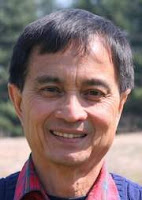 January 19, 2011
By A. Gaffar Peang-Meth
PACIFIC DAILY NEWS
"If man is not to be compelled to have recourse, as a last resort, to rebellion against tyranny and oppression," the world's nations warned as they proclaimed the Universal Declaration of Human Rights in 1948. "It is essential ... that human rights should be protected by the rule of law."
Tibetan Buddhist leader, the 14th Dalai Lama posited: "Peace can only last where human rights are respected, where people are fed, and where individuals and nations are free," and "it is the inherent right of all beings to yearn for freedom, equality and dignity, and they have an equal right to achieve that."
The concept of equal rights to freedom, equality and dignity was what drew me to study the ideals of America's republicanism when I set foot on U.S. college campus almost 50 years ago: equal rights, equal opportunity, equal treatment.
I continue to be awed by the work of Presidnet Thomas Jefferson, who wrote the self-evident truths, "that all men are created equal ... with certain unalienable rights," and who envisioned an "Empire of Liberty" for America that would uphold republicanism to counter British imperialism. I wanted nothing less for myself, and thought my countrymen should not be denied those truths.
The power of one
Robert F. Kennedy recalled how in history the work of a single person had created great movements of thought and action that swept the world.
Friday, January 14, 2011
Cambodia among 25 countries that showed significant declines in democracy last year
Global freedom 'slipped last year'
Jan 14, 2011
Today Online
Jan 14, 2011
Today Online
WASHINGTON - Thailand and Cambodia were among 25 countries that showed significant declines in democracy last year, the Washington-based Freedom House reported yesterday. It was the fifth consecutive year the Freedom House has reported a decline in political rights and civil liberties worldwide - the longest period of continuous decline in the index's nearly 40-year history, according to American magazine Foreign Policy.
"Our adversaries are not just engaging in widespread repression, they are doing so with unprecedented aggressiveness and self-confidence," said Mr David J Kramer, executive director of Freedom House.
The report surveyed 194 countries and 14 territories around the world.
Sunday, November 14, 2010
Friday, October 29, 2010
Live free or die trying

"They are simply maintaining law and order, that 's all! The ones should go to jail are: Ki media and their followers ..."
My accusers formed a jury
The judge and the defense
The charges were made known to me
But not the evidence
----------------
O Freedom Lyrics
The policemen broke my door down
Dragged me from my bed
I asked them what was happening
They just ignored the words I said
They waved their guns in my face
Kept screaming out my name
Something terrible had happened
And somehow I was to blame
O freedom, what liberties are taken in thy name
In thy name
O freedom, what liberties are taken
What liberties are taken
What liberties are taken in thy name
My accusers formed a jury
The judge and the defense
The charges were made known to me
But not the evidence
There was no guilty verdict
Yet, still I was detained
Flown to another country where
Their methods are less constrained
O freedom, what liberties are taken in thy name
In thy name
O freedom, what liberties are taken
What liberties are taken
What liberties are taken in thy name
In our determination
To defend democracy
We must not destroy the safeguards
That underpin our liberty
For who will pay the price if
Injustice such as this
Turns our protectors to oppressors
And angry men to terrorists?
O freedom, what liberties are taken in thy name
In thy name
O freedom, what liberties are taken
What liberties are taken
What liberties are taken in thy name
Wednesday, October 27, 2010
Dictatorships can be disintegrated
October 27, 2010 By A. Gaffar Peang-Meth
PACIFIC DAILY NEWS
I like the national capital's Korean War memorial that honors America's "sons and daughters who answered the call to defend a country they never knew and a people they never met." Life-size sculptures of American soldiers, with World War II helmets and winter ponchos, carry rifles and equipment of the "old" U.S. Army, their postures and faces expressive of the danger all around them, a platoon fixed in time on a plot of grass on the National Mall.
Freedom isn't free
 |
| (Photo: Dr. A. Gaffar Peang-Meth) |
With my old Pentax -- state of the art at the time -- I clicked photos of the sculptures and the adjacent pool that reflected the Stars and Stripes and visitors of different races ... until I reached a wall of lovely marble with four chiseled words: "Freedom is not free." I stopped, photographed the words, sat, looked and photographed again.
A mix of emotion rushed through me --sad and happy, anxious.
I was sad to think of the suffering and the sacrifices of men and women in the name of the nation's "call" and in the name of "freedom," which so many take for granted these days. I was happy that freedom prevailed on many lands; that dictatorships have succumbed, though they are never entirely defeated.
And I am anxious about the future of my children's children.
Long ago, while I was in college, it was that same word, "freedom," and its associates, "individual rights" and "independence," among others, that led me to the study of political science. Later, in graduate school, I made my choice and entered into political actions for the same words.
When the situation in Southeast Asia changed, I put what I learned and believed in into practice: I joined Khmer nationalists in the field from 1980-1989.
However much the explosive sounds of combat frightened me, I lived through them.
To do it again
Some say, "Talk is cheap!" You talk and I talk. We all talk. Yet talk that's influenced by high principles and beliefs and followed by action distinguishes one talker from another.
Once with the Khmer national resistance, I sought opportunities to "see a lot, hear a lot, and talk a little" -- a dictum taught to resistance cadres. At the risk of upsetting some in the power hierarchy, I traveled, at times alone, to visit different bases, some in faraway places, and stay with men in forward positions, sharing their food and experiences. As I saw a lot and heard a lot, I began to suggest and began to sense trouble: To be jealous is human!
There was no major enemy military offensive against resistance bases during which I did not find myself in the field, or in a bunker with my commander-in-chief, or in the trenches with the fighters -- a story for another day.
From time to time, I accompanied my president on official visits to some capitals of the Association of Southeast Asian Nations. I remember withdrawing myself quietly from the dining table one time, returning to musicians who performed the song by Abba, "Fernando." In the circumstances, the words were evocative, describing the sounds and anxiety of another war at another time and place.
I didn't know how much everyone at the table understood the song, but politely they listened: "I was so afraid. ... We were so young and full of life and none of us prepared to die." I stole looks at the faces around the table: "And I'm not ashamed to say the roar of guns and cannons almost made me cry." My boss glanced at me. "There was something in the air that night, the stars were bright, ... they were shining there for you and me, for liberty, ..."
"Though we never thought that we could lose, there's no regret," went the song, "If I had to do the same again I would, my friend, Fernando."
Upon returning to our rear base, the president wanted the words of the song; my wife transcribed them for him.
That was yesterday.
Fighting dictatorships
Today, I find myself fighting still. I am no longer "so young and full of life" as the song says, but my mind is sound and my pen is my weapon, my tool.
Recently, my brother-in-law gave us some old photos. One was of our first son riding a toy horse in our university apartment in Ann Arbor. On the wall was a poster of the time: "You have not converted a man because you have silenced him." It marked my spirit then, and still does. So, I advocate fighting authoritarianism, and posit that authoritarianism can be brought down by better thinking.
Emeritus political science professor Gene Sharp's writings represent such better thinking: Dictatorships can be disintegrated through nonviolent action, which is also called people power or political defiance. Sharp, who presented us with nearly 200 methods of nonviolent actions, gave us a conceptual framework to liberate from dictatorships.
"The oft quoted phrase 'Freedom is not free' is true," Sharp wrote. "No outside force is coming to give oppressed people the freedom they so much want. People will have to learn how to take that freedom themselves. Easy it cannot be."
And that's where Cambodian democrats and rights fighters must realize: Unless they become a credible internal force resisting dictators, foreign intervention on Cambodians' behalf should not be expected.
Still, as Sharp says, it is possible to disintegrate dictatorships!
A. Gaffar Peang-Meth, Ph.D., is retired from the University of Guam. Write him at peangmeth@yahoo.com.
Wednesday, October 06, 2010
How free is Freedom Park?
 |
| Cambodian workers pushing a cart loaded with bricks for 'Freedom Park' in Phnom Penh. AFP |
By Suy Se
AFP
It has been billed as Cambodia's version of Speakers' Corner in London, but rights groups fear Phnom Penh's new Democracy Square is designed to keep protesters isolated and out of sight.
Workers are putting the final touches to a 60 by 200 metre, tree-lined open space near the US embassy and the Cambodian capital's famed Wat Phnom temple, which historically marks the centre of the city.
Nicknamed Freedom Park and set to open shortly, it will serve as a designated area for people to air their grievances, not unlike Speakers' Corner in Hyde Park or its equivalent in Singapore.
But rights activists say the move is an attempt to keep protesters off the streets and away from government offices and legislative buildings, which are traditionally the focus of rallies and occasional scuffles with the police.
"Unfortunately, it is far away from the institutions where the decisions are made," said Ou Virak, president of the Cambodian Centre for Human Rights, adding that he would have preferred a site near the National Assembly.
While would-be protesters can still apply for permission to stage a demonstration in other parts of the capital, critics expect the government will use Democracy Square as an excuse not to grant such permission.
'Protesters will lose the freedom'
"When the park opens, the protesters will lose the freedom to protest in front of key institutions," Rong Chhun, president of the Cambodian Confederation of Unions, told AFP.
"They will be threatened and forced to rally at Freedom Park."
Yim Sovann, an outspoken member of parliament from the main opposition Sam Rainsy Party, echoed those concerns.
"It will not be a Freedom Park, but a park to deprive the people of freedom and rights," he said.
He added that the square, an open, un-shaded space in a city where temperatures regularly top 30°C, is too small to accommodate a sizeable crowd.
"We will not stand under the hot sun in such a small place. We will ask for a permit to march through the streets if necessary," he told AFP.
But Phnom Penh's police chief Touch Naruth warned that no more street protests would be allowed because they interrupt the flow of traffic.
'Police would crack down rallies'
He added that police would "crack down" on any unauthorised rallies outside government buildings or Prime Minister Hun Sen's home, another popular protest site.
Last month villagers from Battambang province protesting outside the premier's home about land grabbing were "quite aggressively dragged onto buses" and driven out of town, said Mathieu Pellerin of local rights group Licadho.
And in August 2009, again outside the premier's house, a number of opposition supporters were injured after clashing with police who were seen grabbing, punching and kicking protesters.
Cambodia's government has repeatedly been accused of trying to stifle free speech in the last year.
Last October, it passed a much-criticised law requiring protesters to seek official permission five days ahead of a planned rally and limiting the size of demonstrations in public spaces to 200 people.
Authorities also reserve the right to ban protests on safety grounds.
In a report released earlier this month, Licadho accused the government of continuing to "pursue repressive tactics, terrorising human rights defenders and undermining their ability to defend peacefully the rights of others".
"Now, we see that when rights defenders speak too much, they could end up in jail," the group's president Kek Galabru told AFP.
"Freedom of expression is facing challenges — it's going down," she said.
But government officials insisted the human rights situation in the country was improving and the park was a good idea, modelled on foreign examples.
"Any country has this kind of place. People can protest and say whatever they want in this place," said government spokesperson Khieu Kanharith.
Phnom Penh's Democracy Square will not be Cambodia's only version of Speakers' Corner, as the law calls for similar sites to open in provinces across the country, much to the dismay of activists.
Saturday, October 02, 2010
FREEDOM by Paul McCartney
FREEDOM
Paul McCartney
Super Bowl 2002
This is my right, a right given by God
To live a free life, to live in freedom
We talkin’ about freedomjavascript:void(0)
Talkin’ bout freedom
I will fight, for the right
To live in freedom
Anyone, who wants to take it away
Will have to answer, cause this is my right
We talkin’ about freedom
Talkin’ bout freedom
I will fight, for the right
To live in freedom, ah yeah, comon now...
(lead solo)
You talkin’ about freedom
Were talkin’ bout freedom
I will fight, for the right
To live in freedom
Everybody talkin’ bout freedom
Talkin’ bout freedom
I will fight, for the right
To live in free----------dom
Friday, February 05, 2010
The Erosion of Privacy: Big Brother Is Watching


First published in June 2007 in The Phnom Penh Post as part of the Voice of Justice columns, which I co-authored with a brilliant legal intern from U.C. Berkeley Law School, Erin Pulaski. As the government's morality squad go about cracking down on pornography, let them and us be humbly reminded of the possible dangers of overzeal, overreaching, and hypocrisy as well as the need for the balancing of interests in light of fundamental rights, e.g. freedom of expression. - thearyseng.com
----------------
Each one of us occasionally has been under the scrutiny and judging gaze of another; we feel uneasy, uncomfortable, inhibited,stifled, and drained of energy, unable to be much else but awkwardly self-conscious.
Now, imagine a society where you could be monitored and watched at every second of the day or night, every day of the week, every week of the year - possibly all the time. Imagine a society in which those with power theoretically can always listen in, watch, monitor your every move, no matter how private and intimate the occasion, and then use the exchange as evidence against you legally and publicly.
Imagine no private space, no private conversation, because everything could eventually be made known - when you talk politics with your friends; when you speak intimately with a lover; when you go to work; when you take a shower. Such intrusion and surveillance by the State has devastating effects on the self and the nation. Under the relentless chilling gaze of the State, people live in fear of being judged and even persecuted for mistakes, which would otherwise be lessons in growth and self-development. When individuals are no longer afforded the private space to try and make mistakes, and learn from their mistakes under the shade of trust and confidence and away from outside scrutiny, personal development is stunted.
Self censorship takes hold and individuals become increasingly afraid to share their opinions. They live in constant fear of slipping up; they become suffocated by the continuous pressure of maintaining this facade.
Distrust and suspicion become widespread Individuals wonder who may be helping to monitor them. Is it their neighbor? Their boss? Their best friend? Their spouse? Their child? They learn to see others only as potential enemies, not as fellow human beings. They themselves cease to be fully human. Eventually they grow so accustomed to smothering their own characteristics and opinions that their individuality is extinguished. Rather, they become mechanical, automated, slavish, unable to truly live as vibrant and free individuals. It is as if they cannot even breathe by their own will; they are only robotic extensions of the State.
A monitored life is an imprisoned, inhibited life that stifles all creativity, imagination, growth, genuineness, trust, everything that is of any worth and meaning in daily life. Unfortunately, the society described above is a reality in some places in the world, and is nearing reality here in present-day Cambodia as the right to privacy is increasingly diminished. Under the newly-adopted Criminal Procedure Code and the envisioned draft law against terrorism, broad measures of Intrusion into private lives are permitted in the pursuit of combating crimes and terrorism.
The Right to Privacy under the Khmer Rouge
The erosion of privacy in Cambodia takes on a more sinister implication in light of our current history when the Khmer Rouge completely abolished all privacy, individual rights where we lived in constant fear and distrust, and where even children eavesdropped and reported on their own parents.
The Right to Privacy Today: Danger Zone
Thirty years later, the kind of Orwellian society that Cambodians witnessed in the late 1970s threatens to return. The current government has been known to monitor and record individuals' phone conversations in order to discredit or imprison political opponents. Indeed, Prince Norodom Sirivudh was stripped of his political immunity in 1995 based on a phone conversation that was secretly recorded. Police searches of private homes without a warrant are a routine occurrence. These problems will be exacerbated under the new Criminal Procedure Code which allows for phone tapping, and the envisioned Anti-Terrorism bill, which allows for nearly limitless governmental surveillance of individuals in the name of national and international security. Even if it could be argued that privacy rights must be occasionally infringed upon in the name of security, such invasions must be infrequent, and only in the most extreme cases, and the secretly tapped exchange should not be used as evidence, but only a lead to other more substantive evidence. We must not become a society in which, as Herbert Packer put it, "all are safe but none are free".
We cannot allow Cambodia to retreat back into the time of Pol Pot, in which the threat of constant surveillance forced us to literally shut our mouths and stand by while corruption and human rights abuses abound. Tragically, the world described in the beginning of this column is all too easy to imagine because we have already lived through these circumstances once, and the residue of fear is still a reality.
Though privacy rights are currently under attack all over the world, Cambodia is particularly vulnerable. While many other nations have institutions and concrete statutory protections that can counter a government's overzealous monitoring of its population, Cambodia still lacks many such measures. For example, in Canada, a federal Privacy Commissioner exists to investigate complaints around and challenge excessive intrusions into the privacy of individuals. Japan passed the Interception Law in 1999, authorizing wiretapping in the investigation but restricting its use to prosecutors and police officers of a certain rank. Additionally, these officials are required to obtain a warrant before monitoring, and to notify those monitored after the investigation.
In countries like Canada, Japan and the United States, an extremely high threshold exists before an intrusive measure is even raised for debate. Moreover, these countries have counter-balancing power of strong institutions and sophisticated technology to test and challenge the legitimacy and genuineness of wiretapping, computer tampering etc. to prevent potential abuse. These protective measures are lacking in Cambodia.
Unfortunately, while the right to privacy is more difficult to protect in Cambodia, there is also a much greater need for it. Cambodia remains a very fragile society which is still rebuilding itself. We, Khmers, remain distrustful of each other, of foreigners; we lack confidence in our ability to control the happenings in our lives. Such distrust and lack of confidence will only be worsened by the constant pressure that comes with extensive governmental surveillance. Without the ability to feel comfortable taking risks, making mistakes, and asking questions, we Khmers will find it more difficult to develop the insight and vision required to undertake the re-building our individual selves and society.
Privacy Rights are Universal and Must Be Realized
To be human Is to be free. We are not free and it is mental imprisonment when we live under the constant, eerie gaze of the State. Hence, the right to privacy is so sacred to human existence. The intrusions strip us of our individuality, examining and prodding at our thoughts until such thoughts are "acceptable" in the eyes of those in power. Freedom of religion means little if we cannot pray in solitude or gather in private for religious worship. Freedom to marry the person of one's choice is diminished if partners cannot share intimate moments and expressions of their feelings away from prying eyes. A right to actively participate in political life does not truly exist when individuals are forced to fall silent and not debate. Privacy is not a privilege, it is a right, universally desired and recognized.
This right to privacy is the very heart of human dignity. It is the foundation upon which we build our personality and aspirations, make relationships, and think creatively and critically. Who, being watched, can give in to their emotions with abandon, can jump for joy or howl in sorrow? Who, being listened in on, can express their deepest desire or their greatest fear, can share their most intimate secret, or can challenge injustices perpetrated by the powers-that-be? Who, under the threat of constant public scrutiny, can cast convention aside and "think outside the box"?
Intrusions into our privacy force the creative, the wise, the dreamers, and the critics to fall in line out of fear. Without privacy there can be no true passion, intimacy, or uniqueness - thus without privacy there is no self.
The new Criminal Procedure Code which allows for phone tapping, and the draft Anti-Terrorism Law which permits broad intrusive measures dangerously restrict our constitutional right to personal freedom. These are insidious developments for our fragile society and people who are already traumatized by the fears instilled by the Khmer Rouge and who continue to live within a culture of fear.
We must preserve our privacy and thus preserve our ability to think, to be, to act, to breathe freely.
Erin Pulaski
Legal Intern, UC Berkeley
Theary C. SENG, a member of the New York Bar Association, former director of Center for Social Development (March 2006—July 2009), founder and Board of the Center for Justice & Reconciliation (www.cjr-cambodia.org), founding adviser of the Association of Khmer Rouge Victims (www.akrvc.org), is currently writing her second book, under a grant, amidst her speaking engagements. For additional information, please visit Theary's website at thearyseng.com.
----------------
THE EROSION OF PRIVACY:
BIG BROTHER IS WATCHING
Each one of us occasionally has been under the scrutiny and judging gaze of another; we feel uneasy, uncomfortable, inhibited,stifled, and drained of energy, unable to be much else but awkwardly self-conscious.
Now, imagine a society where you could be monitored and watched at every second of the day or night, every day of the week, every week of the year - possibly all the time. Imagine a society in which those with power theoretically can always listen in, watch, monitor your every move, no matter how private and intimate the occasion, and then use the exchange as evidence against you legally and publicly.
Imagine no private space, no private conversation, because everything could eventually be made known - when you talk politics with your friends; when you speak intimately with a lover; when you go to work; when you take a shower. Such intrusion and surveillance by the State has devastating effects on the self and the nation. Under the relentless chilling gaze of the State, people live in fear of being judged and even persecuted for mistakes, which would otherwise be lessons in growth and self-development. When individuals are no longer afforded the private space to try and make mistakes, and learn from their mistakes under the shade of trust and confidence and away from outside scrutiny, personal development is stunted.
Self censorship takes hold and individuals become increasingly afraid to share their opinions. They live in constant fear of slipping up; they become suffocated by the continuous pressure of maintaining this facade.
Distrust and suspicion become widespread Individuals wonder who may be helping to monitor them. Is it their neighbor? Their boss? Their best friend? Their spouse? Their child? They learn to see others only as potential enemies, not as fellow human beings. They themselves cease to be fully human. Eventually they grow so accustomed to smothering their own characteristics and opinions that their individuality is extinguished. Rather, they become mechanical, automated, slavish, unable to truly live as vibrant and free individuals. It is as if they cannot even breathe by their own will; they are only robotic extensions of the State.
A monitored life is an imprisoned, inhibited life that stifles all creativity, imagination, growth, genuineness, trust, everything that is of any worth and meaning in daily life. Unfortunately, the society described above is a reality in some places in the world, and is nearing reality here in present-day Cambodia as the right to privacy is increasingly diminished. Under the newly-adopted Criminal Procedure Code and the envisioned draft law against terrorism, broad measures of Intrusion into private lives are permitted in the pursuit of combating crimes and terrorism.
The Right to Privacy under the Khmer Rouge
The erosion of privacy in Cambodia takes on a more sinister implication in light of our current history when the Khmer Rouge completely abolished all privacy, individual rights where we lived in constant fear and distrust, and where even children eavesdropped and reported on their own parents.
The Right to Privacy Today: Danger Zone
Thirty years later, the kind of Orwellian society that Cambodians witnessed in the late 1970s threatens to return. The current government has been known to monitor and record individuals' phone conversations in order to discredit or imprison political opponents. Indeed, Prince Norodom Sirivudh was stripped of his political immunity in 1995 based on a phone conversation that was secretly recorded. Police searches of private homes without a warrant are a routine occurrence. These problems will be exacerbated under the new Criminal Procedure Code which allows for phone tapping, and the envisioned Anti-Terrorism bill, which allows for nearly limitless governmental surveillance of individuals in the name of national and international security. Even if it could be argued that privacy rights must be occasionally infringed upon in the name of security, such invasions must be infrequent, and only in the most extreme cases, and the secretly tapped exchange should not be used as evidence, but only a lead to other more substantive evidence. We must not become a society in which, as Herbert Packer put it, "all are safe but none are free".
We cannot allow Cambodia to retreat back into the time of Pol Pot, in which the threat of constant surveillance forced us to literally shut our mouths and stand by while corruption and human rights abuses abound. Tragically, the world described in the beginning of this column is all too easy to imagine because we have already lived through these circumstances once, and the residue of fear is still a reality.
Though privacy rights are currently under attack all over the world, Cambodia is particularly vulnerable. While many other nations have institutions and concrete statutory protections that can counter a government's overzealous monitoring of its population, Cambodia still lacks many such measures. For example, in Canada, a federal Privacy Commissioner exists to investigate complaints around and challenge excessive intrusions into the privacy of individuals. Japan passed the Interception Law in 1999, authorizing wiretapping in the investigation but restricting its use to prosecutors and police officers of a certain rank. Additionally, these officials are required to obtain a warrant before monitoring, and to notify those monitored after the investigation.
In countries like Canada, Japan and the United States, an extremely high threshold exists before an intrusive measure is even raised for debate. Moreover, these countries have counter-balancing power of strong institutions and sophisticated technology to test and challenge the legitimacy and genuineness of wiretapping, computer tampering etc. to prevent potential abuse. These protective measures are lacking in Cambodia.
Unfortunately, while the right to privacy is more difficult to protect in Cambodia, there is also a much greater need for it. Cambodia remains a very fragile society which is still rebuilding itself. We, Khmers, remain distrustful of each other, of foreigners; we lack confidence in our ability to control the happenings in our lives. Such distrust and lack of confidence will only be worsened by the constant pressure that comes with extensive governmental surveillance. Without the ability to feel comfortable taking risks, making mistakes, and asking questions, we Khmers will find it more difficult to develop the insight and vision required to undertake the re-building our individual selves and society.
Privacy Rights are Universal and Must Be Realized
To be human Is to be free. We are not free and it is mental imprisonment when we live under the constant, eerie gaze of the State. Hence, the right to privacy is so sacred to human existence. The intrusions strip us of our individuality, examining and prodding at our thoughts until such thoughts are "acceptable" in the eyes of those in power. Freedom of religion means little if we cannot pray in solitude or gather in private for religious worship. Freedom to marry the person of one's choice is diminished if partners cannot share intimate moments and expressions of their feelings away from prying eyes. A right to actively participate in political life does not truly exist when individuals are forced to fall silent and not debate. Privacy is not a privilege, it is a right, universally desired and recognized.
This right to privacy is the very heart of human dignity. It is the foundation upon which we build our personality and aspirations, make relationships, and think creatively and critically. Who, being watched, can give in to their emotions with abandon, can jump for joy or howl in sorrow? Who, being listened in on, can express their deepest desire or their greatest fear, can share their most intimate secret, or can challenge injustices perpetrated by the powers-that-be? Who, under the threat of constant public scrutiny, can cast convention aside and "think outside the box"?
Intrusions into our privacy force the creative, the wise, the dreamers, and the critics to fall in line out of fear. Without privacy there can be no true passion, intimacy, or uniqueness - thus without privacy there is no self.
The new Criminal Procedure Code which allows for phone tapping, and the draft Anti-Terrorism Law which permits broad intrusive measures dangerously restrict our constitutional right to personal freedom. These are insidious developments for our fragile society and people who are already traumatized by the fears instilled by the Khmer Rouge and who continue to live within a culture of fear.
We must preserve our privacy and thus preserve our ability to think, to be, to act, to breathe freely.
Erin Pulaski
Legal Intern, UC Berkeley
Theary C. SENG, a member of the New York Bar Association, former director of Center for Social Development (March 2006—July 2009), founder and Board of the Center for Justice & Reconciliation (www.cjr-cambodia.org), founding adviser of the Association of Khmer Rouge Victims (www.akrvc.org), is currently writing her second book, under a grant, amidst her speaking engagements. For additional information, please visit Theary's website at thearyseng.com.
Saturday, December 26, 2009
National New Year Resolution: Upholding the Four Freedoms
 First published in January 2007 (reprinted in January 2008) in The Phnom Penh Post and Khmer translation in Koh Santepheap, as part of the Voice of Justice columns. Rather than progressing, Cambodia is regressing on these four freedoms, most notably with the re-stripping of parliamentary immunity of the political opposition leader and the crackdown on democracy and human rights activists. As we pray for the safety of those unjustly arrested in Svay Rieng, let us be reminded of Gandhi's words: "An unjust law is itself a species of violence. Arrest for its breach is more so." Another, "First they ignore you, then they laugh at you, then they fight you, then you win." And also, "Freedom is never dear at any price. It is the breath of life. What would a man not pay for living?" The lessons we learned from the American civil rights movement which resulted in Barak Obama becoming president are summed up by Martin Luther King, Jr., "Freedom is never voluntarily given by the oppressor; it must be demanded by the oppressed." Now, more than ever, we need to be reminded and uphold these four freedoms here in oppressed Cambodia.
The Universal Declaration of Human Rights of the United Nations reminds us that whoever we are - rich or poor, farmers or city dwellers, white or black, male or female, Buddhist or Christian, Khmer or Vietnamese or African or American or French - whoever, it doesn't matter - each of us innately yearns for the freedom of expression, the freedom of belief, the freedom from fear and the freedom from want These four freedoms encapsulate what it means to be fundamentally human and express the highest aspirations of the common person throughout all ages. These four freedoms form the cornerstone of a democracy and are fundamental to social development, whatever level of progress of that society or nation.
We are starting a new year and at a time like this, it is instructive to reflect and re-commit ourselves to fundamentals, beginning with the upholding of these four freedoms. In the ten months that I have been at the helm of the Center for Social Development (CSD), I have witnessed that these four freedoms are not yet sufficiently present in current Cambodian society as reflected in the persistent angst of the common Cambodian.
• Freedom of Expression In 2006, we have witnessed our fundamental freedom to express our thoughts, desires, opinions and ideas curbed and suppressed, sometimes violently, sometimes through ill-constructed laws. We witnessed grass-roots human rights activists imprisoned, villagers protesting illegal land-grabbing suppressed violently, garment workers killed or wounded. We were aghast that members of the National Assembly should vote to limit their own ability to debate ideas (or as more memorably put by US Ambassador Joseph A Mussomeli, ''castrate themselves") and thus downgrade the quality of their duties and responsibilities. And as we go into 2007, our freedom to expression continues to be fundamentally inhibited by the criminalizing of defamation.
• Freedom of Belief This freedom to believe according to the dictates of one's conscience exists but is limited by the lack of other freedoms. Currently in Cambodia, it is true a Khmer is free to believe (in law and in practice) in whatever religion, whatever political party, whatever ideas. However, this freedom of belief is meaningless if this belief cannot be expressed or if this belief is inhibited by fear,
• Freedom from Fear Fear is the worst enemy of freedom. Fear robs a person of opportunities. Fear oppresses. Fear inhibits. In Cambodia, fear thickly pervades the air and consumes the hearts and minds of Khmers. It can be said a culture of fear rules Cambodia and Cambodians. To a large degree, Aung San Suu Kyi is correct in her observation that it is not power that corrupts but fear.
Courage is the only response to fear. As with any other disposition, courage is only fixed in us through practice. As Aristotle notes in the Nicomachean Ethics almost 2,400 years ago, we become brave only by doing brave acts: "By being habituated to despise things that are terrible and to stand our ground against them we become brave, and it is when we have become so that we shall be most able to stand our ground against them." Moreover, when we encounter obstacles, let us be reminded that they are only invitations to courage. Fear destroys a person's spirit whereas courage builds a person and in turn society, and encourages other freedoms. In this New Year, let us now resolve to be more courageous; let us not be stilled by fear
• Freedom from Want Poverty is living in want; poverty deprives a Cambodian of dignity, opportunities and human potential I believe one of the greatest crimes is to deprive a person of her human potential Here, I grieve the loss of human potential on a monumental scale.
Most Cambodians live in poverty, many of them in abject poverty. According to a UNDP estimate for 2006, one in three (approximately 4.7 million) Cambodians live on less than 2000 Riels (50 cents) a day.
The necessary but not sufficient first steps toward combating poverty must include quality education for Cambodians. We know that the Cambodian education system is in crisis. Corruption pervades. Teachers are woefully underpaid a non-livable wage of US$30 a month and are tasked with educating an average of 55 students per class with woefully inadequate teaching materials. What does it say about political will and generally about our society when we have a high school teacher who is surprised to learn that are different time zones, that when it is 9 a.m. in Cambodia, it is not like this all over the world? This is analogous to thinking that the world is flat; it was acceptable to do so in 1492 but not in 2007,
Hence, let us as a nation make a New Year resolution to the protection and upholding of these four freedoms: freedom of expression, freedom of belief, freedom from fear and freedom from want. They are the highest aspirations of the common Cambodian.
Theary C Seng
Wednesday, October 14, 2009
National Assembly Approves Penal Code
By Chun Sakada, VOA Khmer
Original report from Phnom Penh
12 October 2009
Original report from Phnom Penh
12 October 2009
The National Assembly on Monday passed a crucial penal code that government officials hailed as historic, but which others warn could be used to curb freedoms.
Prime Minister Hun Sen has said the passage of the penal code was a prerequisite to a much-awaiting anti-corruption law that donors have pressed for in recent years.
The penal code passed 99-3, following an eight-day debate.
Addressing the National Assembly Monday, Justice Minister Ang Vong Vathana called the day “historic” for “supporting the process of the rule of law.”
“The passage of the new penal code shows the strong commitment and will of the government in building a legally strong and detailed framework for the basis of the rule of law for our country,” he said.
Opposition lawmakers had argued the law did not uphold rights to free speech and assembly, making it easy for defamation and other attacks in the courts.
Yim Sovann, a spokesman for the Sam Rainsy Party, said its lawmakers “would like to completely support the penal code…but we still have worries about some articles relating to freedom of expression and assembly.”
Kem Sokhan, president of the Human Rights Party, whose three parliamentarians did not vote for passage of the law, called the draft a “two-faced weapon” that could condemn offenders of the law, but, improperly weilded, “could affect the rights and freedom of expression for people.”
However, Sok Eysan, lawmaker for the Cambodian People’s Party, said during Monday’s session the party hoped the law would take away problems that “used to appear,” such as defamation and incitement.
Sok Samoeun, executive director of the Cambodian Defenders Project, said a weak judiciary was still a concern with the new law.
“We await implementation of the penal code,” he said.
Sunday, September 13, 2009
Mu Sochua plans to meet US officials on human rights issues in Cambodia
 SRP MP Mu Sochua met with US Secretary of State Hillary Clinton
11 September 2009
By Moeung Tum
Radio Free Asia
Translated from Khmer by Socheata
Click here to read the article in Khmer
SRP MP Mu Sochua is to meet US Secretary of State Hillary Clinton this Friday in Washington DC. The meeting will be focused on human rights violations and violations on freedom of expression in Cambodia currently.
Mrs. Mu Sochua made this declaration 4-5 hours after she gave her testimony to the Tom Lantos Human Rights Commission on 10 September 2009, in Washington DC.
Dr. Pung Chiv Kek, President of the human rights group Licadho, and Moeun Tola, Labor Director for the Community Legal Education Center (CLEC) NGO, were also invited to provide their testimonies.
Mrs. Mu Sochua indicated that in all these meetings, she wants to push the US government, in concert with the leaders from other democratic countries, to show a clear stance on the problems of human rights violations and the violations of the freedom of expression in Cambodia currently.
Mrs. Mu Sochua said: “We already showed this situation to the US Congress this afternoon and I believe that they [US Congress] paid close attention to the difficult situation which is getting worse, in particular, regarding the resolution of human rights through the law and the rule of law.”
On Friday also, Mrs. Mu Sochua will meet with a number of US Senators to discuss these issues also in order to obtain their intervention in the resolution of these problems.
Cambodian-Americans discuss on the problem of human rights violations in Cambodia
 Left to right: Dr. Pung Chiv Kek, Mr. Tung Yap of CAHRAD and Mrs. Mu Sochua
11 September 2009
By Moeung Tum
Radio Free Asia
Translated from Khmer by Socheata
Click here to read the article in Khmer
In the evening of Thursday 10 September 2009, over 60 Cambodian-Americans met at the Harvest Moon Restaurant near Washington DC to discuss their concerns on the human rights violations and the violations of freedom of expression in Cambodia.
These Cambodian-Americans came from the states of Virginia, Maryland, Philadelphia and a number of other US states. The met each other last night with the presence of three guest speakers: Dr. Pung Chiv Kek, Licadho President, Mr. Moeun Tola, Labor Director for the Community Legal Education Center (CLEC) NGO, and Kampot SRP MP Mu Sochua.
The 3 speakers showed slides on the actual situation befalling in the Cambodian people: the hardship of poor Cambodians who are evicted by force from their homes, the use of armed violence on the Cambodian people, the melee scene from Mrs. Mu Sochua showing up at the tribunal to answer to the lawsuit brought up by Hun Xen’s defamation claim.
Dr. Pung Chiv Kek told the audience that, currently, freedom at the grass root level in Cambodia is violated and threatened. Moeun Tola said that, union activists who defend the workers’ rights are threatened, sued and fired by factory owners.
The meeting was organized by the Cambodian American for Human Rights and Democracy (CAHRAD) organization to review the latest situation on human rights violations and violations of freedom of expression in Cambodia. The goal is to provide a forum where Cambodian-Americans can help provide their input in the resolution on these issues based on their abilities and in compliance with the US law.
Subscribe to:
Posts (Atom)








