


"We all can make change, I truly believe that with the right mindset, and the right people, Cambodia will see change ... It's only a matter of time before justice comes along" - Sopheap Chak
 May 12, 2010
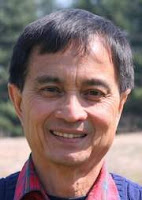
By A. Gaffar Peang-Meth
Pacific Daily News (Guam)
There's no end to learning. I cherish the words and experiences of those who have seen and accomplished things I have not.
People change; things change -- a natural inevitability. Nothing stays the same. We must anticipate what may come and be proactive to influence the change we want to see, so we won't spend our lives getting out of the rubble that could have been avoided had we done something in the first place.
The late veteran professor Henry Steele Commager said: "Change does not necessarily assure progress, but progress implacably requires change. Education is essential to change, for education creates both new wants and the ability to satisfy them."
Martin Luther King Jr. said: "The function of education is to teach one to think intensively and to think critically."
For some, formal education takes too long to produce results in this instant-gratification era of a click on the keyboard or a push of the button. But learning also has been made easier to acquire through technology.
An education leader of one of America's most successful public school systems, Jerry D. Weast, said, "The toughest job of any leader ... is to move from strategy to execution because it's people who do the work, not the plan." He asserts, "Visionary leadership will drive change, but to sustain it, you must shift leadership strategy to incorporate the work of teams."
Creative thought -- using our minds to imagine and create what we want to see -- and critical thought -- using our brains to evaluate and judge what our mind has produced -- are two interwoven determinants of action that dictate our future.
Specialists say organizations' and movements' successes are better assured when they are more inclusive, and individual members are encouraged to think creatively and critically, to innovate and take risks.
A Khmer saying goes, "Think first before you draw."
Yet, Cambodians say cases of drawing first and thinking later are plentiful in Khmer society.
A comparativist by training, I see connections in thought -- a Khmer proverb is connected to psychologist-consultant Dr. Linda V. Berens' "four temperaments" -- the theorist, the catalyst, the improviser, the stabilizer -- and to Weast's "teams" that "work within a culture."
A Khmer proverb says, "Curved wood makes wheel; straight wood makes spoke; crooked wood makes firewood." All things have a purpose.
Berens says one may be a "best-fit" in one temperament pattern, but display characteristics of other temperaments. In "Understanding Yourself and Others," she describes four temperaments. A theorist values competence, coherence and expertise, uses strategic analysis to approach situations and builds a path to achievement. A catalyst idealizes a vision of the future, advocates, builds bridges between people and helps them attain self-actualization. An improviser seizes the moment and varies actions to get things done using whatever is at hand. The stabilizer wants structure and sequence to maintain order, stability and security, and to prevent groups and institutions from falling apart.
Recall retired Johns Hopkins University professor Naranhkiri Tith's calls on Cambodians to remove their "blindness and irrational trust and belief in ... the god-king." He knows challenging the old mentality and monarchical practices may be "unthinkable" for many, but Tith asks why we fear going against old habits and conventional wisdom if doing so serves justice and human rights, a higher end?
There are Cambodians of Berens' temperaments and of Weast's teams, inside and outside the country, who seek to foment change.
I profiled some in my columns: Opposition lawmaker Mu Sochua; grassroots activist Serey Ratha Sourn, head of Cambodian Action Committee for Justice and Equity; former Radio Free Asia reporter, Piseth Lem, who now fosters the successful Free Press Magazine Online.
Last month, a Cambodian graduate student in Japan, Sopheap Chak, wrote "'Development' does not justify land grabs," which looks at Cambodia's forced evictions and land grabs through comparative lenses. Of the 18 million people evicted in 80 countries, Cambodia ranks first among Asian countries in the number of evictions. This month, Chak defends her master's thesis, "Urban Forced Eviction in Cambodia: Causes and Possible Solutions."
The youngest of three siblings from Kompong Cham, where her father was a tailor and mother a housewife, Chak finished high school in 2002, worked for a nonprofit organization, involved herself in conferences on democracy, election and poverty reduction, and pursued university studies in Phnom Penh.
With a bachelor's degree in international relations and another in economics, she ran a volunteer youth network, working with people in rural areas. She was an advocacy officer of the Cambodian Center for Human Rights before she went to study in Japan in 2008.
"We all can make change," Chak said in an interview on Global Voices Online. "I truly believe that with the right mindset, and the right people, Cambodia will see change." Her biography in her website reads, "It's only a matter of time before justice comes along."
Chak's "Reflection on Cambodian Women Value and Model" tells how her parents raised her to value education, but Khmer society pulled her to "old tradition" in a male-dominated society that considers females inferior -- a topic worth another column!
Chak, 25, plans to join a civil society organization upon her return to Cambodia this summer. She envisions earning a doctorate degree in the future.
A. Gaffar Peang-Meth, Ph.D., is retired from the University of Guam, where he taught political science for 13 years. Write him at peangmeth@yahoo.com.








