Showing posts with label Red Light documentary film. Show all posts

Friday, February 03, 2012


FCCT Presents REDLIGHT, an award winning documentary by Guy Jacobson and Adi Ezroni, Narrated by Lucy Liu

8pm, Tuesday, February 7, 2012
Members: Free; Non members: 300 THB


REDLIGHT is a powerful feature documentary about child sexploitation, an epidemic happening in every country around the world. Filmed over a four year period, REDLIGHT focuses on the personal stories of young Cambodian victims and two remarkable advocates for change: grass-roots activist Somaly Mam and politician Mu Sochua. Both were since nominated for the Nobel Peace Prize. The filmmakers won the prestigious Global Hero Award for their work in Cambodia.

Using footage smuggled out of brothels and harrowing testimonials, REDLIGHT follows the plight of several current and former child sex slaves. Some are trying to regain entry into Cambodian society to find some semblance of normality after their horrific experiences. Other stories highlight the plight of victims who are attempting to bring the perpetrators to justice. Their torturous yet ultimately heroic battles to find witnesses and take brothel owners to court are dramatically brought to life in this topical and moving feature documentary.

Mu Sochua will be on hand after the film to take questions from members and guests.
------------
Foreign Correspondents' Club of Thailand
Penthouse, Maneeya Center Building
518/5 Ploenchit Road (connected to the BTS Skytrain Chitlom station)
Patumwan, Bangkok 10330
Tel.: 02-652-0580-1
Fax: 02-652-0582
E-mail: info@fccthai.com
Web Site: http://www.fccthai.com

Monday, June 06, 2011

Screening REDLIGHT in San Jose - Sat - June 18


Dear Community,

REDLIGHT will been screening in San Jose

on Saturday, June 18, 2011 at 2 - 4pm
at Asian Americans for Community Involvement (AACI)
2400 Moorpark Ave. San Jose, CA 95128.

REDLIGHT focuses on the personal stories of young Cambodian victims and two remarkable advocates for change: grass-roots activist Somaly Mam and politician Mu Sochua. Using footage smuggled out of brothels and harrowing testimonials, REDLIGHT follows the plight of several current and former child sex slaves. Some are trying to regain entry into Cambodian society to find some semblance of normality after their horrific experiences. Other stories highlight the plight of victims who are attempting to bring the perpetrators to justice. Their torturous yet ultimately heroic battles to find witnesses and take brothel owners to court are dramaticallybrought to life in this topical and moving feature documentary.

Cambodian parliamentarian Mu Sochua, Nobel Peace Prize nominee, is a tireless advocate who is contesting a recent court decision that threatens her right to speak out in defense of equal rights, transparency and a fair judicial process. Ms. Mu will speak about ­­her work in Cambodia before the screening.

Please have a look at attached poster in English and Khmer for detail.

Thanks,
Chanthoeun To

Sunday, April 10, 2011

Redlight screening at Rollins College, Winter Park, FL on 16 April 2011


Dear Compatriots:

At long last, we have secured a nice place [those of you who have college kids, you know how it is to get them to do things for you, mine is no exception, and I shall apologize for the last minute rush] to screen the documentary "Redlight" publicizing Cambodia's human traficking/children sex exploitation issues.

MP Mu Sochua will host questions/answers session after the show. Let's take advantage of the event and the place to make it a forum for discussion. After all how often do we have the opportunity to speak to the people who is staring these ugly issues in the face on a daily basis? Furthermore let's show the young college kids at this institution that we Cambodians are trying to pull ourselves by our own bootstarps. I hate to persuade you away from your Khmer New Year celebration committment, but please spend two hours of your time brainstorming with MP Mu Sochua and see what we can achieve. My spouse will make the best eggrolls in the land for treats.

Please try your best to attend to honor the work of our women heroes ,such as MP Mu Sochua and Somaly Mom, who are campaigning for the world to help us mitigating such tragedy and shame. Forget about politics, this is about real people and real suffering, please, please, please bring you questions, ideas, suggestions, comments.

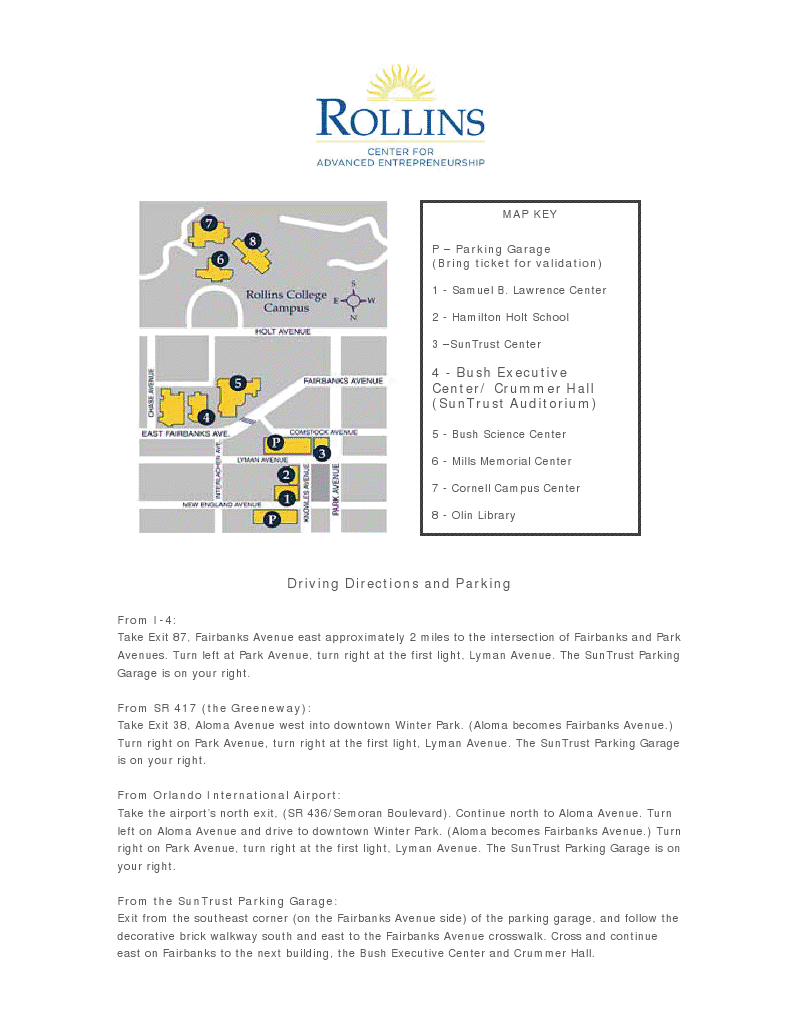
I have provide two types of map for your convenient in getting in to park and walking to the Auditorium.

Please follow the general driving direction and parking map to get to the general area of the college.

Use the color map to get to the parking garage Bldg. #68 and to cross Fairbank Ave. E. to Building # 48 where the Suntrust Auditorium is.

This location is normally very congested because it is a place "to see and be seen", (ladies: nice place for tourists and shopping too) be patient, but don't worry, once you've made it into the parking deck everything is pleasant especially for walking and sightseeing.

Please help pass on the announcement. See all of you there!

Regards,

Vanna Lanh


Monday, March 28, 2011

CMLF Invitation to MP Mu Sochua's reception

Cmlf Invitation to MP Mu Sochua reception

http://www.scribd.com/full/51666924?access_key=key-tyovq6ii1v56t4bzjkc

Wednesday, November 17, 2010

Cambodian lawmaker focuses on rights for women


Wednesday, November 17, 2010
By Bonnie Adler
Minuteman News Center (Connecticut, USA)

Nobel Prize nominee Mu Sochua, an advocate for rule of law and rights for women in Cambodia, is a remarkable study in contrasts.

At 55, she is an exotic beauty, slender, soft-spoken, graceful and charming. She is also alarmingly brave and intensely committed. As the most outspoken female leader of the opposition party in an impoverished post-Khmer Rouge Cambodia, she risks her life in calling publicly for the cessation of sex trafficking, equality for women and an end to the corruption that is endemic to all levels of Cambodian society.

Mu Sochua made numerous appearances in Westport last week, raising awareness about her work as a Cambodian lawmaker to promote greater equality and freedom for women in her country and to publicize the deeply disturbing film documentary “Redlight,” an expose about the global issue of sex trafficking of children.


Mu Sochua is featured in the film, which focuses on the personal stories of the victims of child sexploitation and the efforts made thus far to try to stop the crime, which is so prevalent in Cambodia. “Redlight” was directed by an award-winning Israeli filmmaker, Guy Jacobsen, and was shown in Westport and Ridgefield last week with personal appearances by both Mu Sochua and Guy Jacobson.

Mu Sochua also made a day-long appearance at Staples High School, speaking with students in the about the situation in her country. She also made a special presentation to the Staples High School chapter of Teen Vital Voices, where Westport teens are learning about women empowering other women.

Mu Sochua is sponsored by Vital Voices Global Partnership, an international non-profit organization that trains and empowers emerging women leaders and entrepreneurs around the world, with the goal of creating a better world for those in impoverished and underserved countries.

The Connecticut Chapter of Vital Voices brought Mu Sochua to Westport and Ridgefield, where she participated in a number of events aimed at highlighting the devastating effects of poverty and lawlessness in her country. Her demands, made in her firm but soft-spoken voice, are for laws which Americans take for granted, such as the enforcement of the laws which make illegal the practice of sex slavery by children.

In an interview with the Minuteman, Mu Sochua said, “There is a Cambodian proverb which says, ‘Men are gold, women are just a white piece of cloth.’ Gold can be worn forever. It is always solid, but a white piece of cloth can be stained forever. In Cambodia, if you are raped, you are ruined forever. If you are divorced you are ruined forever. Society will not accept you. If you are independent of your husband you are a ‘bad woman.’

“As a Cambodian Cabinet Minister, I committed myself to changing this proverb to ‘men are gold, but women are precious gems.’ Now my supporters are known throughout Cambodia as ‘precious gems.’

“We have a large problem with domestic violence. When I was minister, we did not blame the men, but gave a picture of a family where the gold and precious gems to work together in order for the family to be intact with a sense of harmony. We did not ask women to demand equal rights, but tried to make the men understand that a sense of harmony is for the family, and that men and women should share the same responsibility to raise the family.” Continued...

123See Full StoryReader Comments »View reader comments (0) » Comment on this story »
At 18, Mu Sochua’s family sent her abroad to escape the Khmer Rouge and to get an education. She received a Masters degree from the University of California at Berkeley, where she was deeply influenced by the women’s movement. Those were also the years the Khmer Rouge swept through Cambodia, killing millions in just three and a half years, including Mu Sochua’s parents.

“The scar of the Khmer Rouge is so deep, it is carved into our minds, our souls. I suffer the pain of an outsider, the loss of my parents, and of course, having to grow up outside the country and reconstruct my life from then on.”

Remarkably, she says she holds no grudges and it is with that kind of attitude that she has positioned herself as leader and lawmaker and a role model to young women in Cambodia.

When Mu Sochua returned to Cambodia 18 years after she left, she was appointed to lead the Ministry for Women’s Affairs. She took the job, which she describes as “being in charge of 52 percent of the population,” far more seriously than those who appointed her ever imagined.

“I wanted to bring in western values of feminism and equality. Slowly, I slipped the ideas through, mainstreaming them into family life and culture, but at the same time saying that education is a right, quality of life and free health care are rights and women can be in charge of their own bodies.”

According to Mu Sochua, Cambodia is 85 percent rural, with an extremely high poverty rate. Four million of the 14 million population live on less than a dollar a day, a fundamental cause of the everyday violence and the rampant sex trade.

“The government is corrupt. We have the legacy of the Khmer Rouge, with violence agains women and a culture of impunity. Our present is still haunted by the genocide of the past, which occurred thirty years ago,” said Mu Sochua.

Undaunted by the enormity of the task, she fights each day to improve the situation. “As an opposition lawmaker we know things could be better. We demand a strong rule of law, accountability and the end of violence against women and the end of social stigmatization of victims.”

Not surprisingly, this kind of public opposition was met head on by the Prime Minister of Cambodia. The two clashed in a battle of words and the Prime Minister started a public campaign against her.

“His speeches against me were broadcast on the radio across the country,” she said. “He even said he would finish my political life.” The battle went on for months, and although Mu Sochua lost the lawsuit, she gained much more public recognition and took advantage of the opportunity to defend her right to justice and a fair trial, and what she calls “the right of a woman to be seen and to be considered as a human rights defender.” Continued...

123See Full StoryReader Comments »View reader comments (0) » Comment on this story »
She was nearly imprisoned, but the government ultimately backed off when it appeared that the publicity generated by the imprisonment would be too visible and help Mu Sochua’s cause. Instead she was fined $4,000, a king’s ransom in a country where teachers make $50 a month.

“Now I am seen totally differently, even by the Prime Minister. I am a very straightforward lawmaker, although sometimes outrageous, but I do make sense to the people. I am now widely recognized and I still continue to take these causes very seriously.”

Even as she has gained a measure of renown in her own country, Mu Sochua is broadening her battle. She is seeking funding from the United States government to help the growth of democracy in Cambodia. She is hopes to obtain funds for more entrepreneurial opportunity for women in the form of microbusinesses run by women in local villages in order to decrease the level of poverty. She hopes for greater educational opportunity and access, and funding for more radio and television access. Dreams of technology are still far off, as less than one percent of the population is computer literate. Recently, Secretary of State Hillary Clinton visited Cambodia, with a message of support for the protection of human rights. “I want delivery on that promise,” she said.


123See Full StoryReader Comments »View reader comments (0) » Comment on this story »

1234See Full StoryReader Comments »View reader comments (0) » Comment on this story »
By Bonnie Adler


Nobel Prize nominee Mu Sochua, an advocate for rule of law and rights for women in Cambodia, is a remarkable study in contrasts.

At 55, she is an exotic beauty, slender, soft-spoken, graceful and charming. She is also alarmingly brave and intensely committed. As the most outspoken female leader of the opposition party in an impoverished post-Khmer Rouge Cambodia, she risks her life in calling publicly for the cessation of sex trafficking, equality for women and an end to the corruption that is endemic to all levels of Cambodian society.

Mu Sochua made numerous appearances in Westport last week, raising awareness about her work as a Cambodian lawmaker to promote greater equality and freedom for women in her country and to publicize the deeply disturbing film documentary “Redlight,” an expose about the global issue of sex trafficking of children.

Mu Sochua is featured in the film, which focuses on the personal stories of the victims of child sexploitation and the efforts made thus far to try to stop the crime, which is so prevalent in Cambodia. “Redlight” was directed by an award-winning Israeli filmmaker, Guy Jacobsen, and was shown in Westport and Ridgefield last week with personal appearances by both Mu Sochua and Guy Jacobson.

Mu Sochua also made a day-long appearance at Staples High School, speaking with students in the about the situation in her country. She also made a special presentation to the Staples High School chapter of Teen Vital Voices, where Westport teens are learning about women empowering other women.

Mu Sochua is sponsored by Vital Voices Global Partnership, an international non-profit organization that trains and empowers emerging women leaders and entrepreneurs around the world, with the goal of creating a better world for those in impoverished and underserved countries.

The Connecticut Chapter of Vital Voices brought Mu Sochua to Westport and Ridgefield, where she participated in a number of events aimed at highlighting the devastating effects of poverty and lawlessness in her country. Her demands, made in her firm but soft-spoken voice, are for laws which Americans take for granted, such as the enforcement of the laws which make illegal the practice of sex slavery by children.

In an interview with the Minuteman, Mu Sochua said, “There is a Cambodian proverb which says, ‘Men are gold, women are just a white piece of cloth.’ Gold can be worn forever. It is always solid, but a white piece of cloth can be stained forever. In Cambodia, if you are raped, you are ruined forever. If you are divorced you are ruined forever. Society will not accept you. If you are independent of your husband you are a ‘bad woman.’

“As a Cambodian Cabinet Minister, I committed myself to changing this proverb to ‘men are gold, but women are precious gems.’ Now my supporters are known throughout Cambodia as ‘precious gems.’

“We have a large problem with domestic violence. When I was minister, we did not blame the men, but gave a picture of a family where the gold and precious gems to work together in order for the family to be intact with a sense of harmony. We did not ask women to demand equal rights, but tried to make the men understand that a sense of harmony is for the family, and that men and women should share the same responsibility to raise the family.”

At 18, Mu Sochua’s family sent her abroad to escape the Khmer Rouge and to get an education. She received a Masters degree from the University of California at Berkeley, where she was deeply influenced by the women’s movement. Those were also the years the Khmer Rouge swept through Cambodia, killing millions in just three and a half years, including Mu Sochua’s parents.

“The scar of the Khmer Rouge is so deep, it is carved into our minds, our souls. I suffer the pain of an outsider, the loss of my parents, and of course, having to grow up outside the country and reconstruct my life from then on.”

Remarkably, she says she holds no grudges and it is with that kind of attitude that she has positioned herself as leader and lawmaker and a role model to young women in Cambodia.

When Mu Sochua returned to Cambodia 18 years after she left, she was appointed to lead the Ministry for Women’s Affairs. She took the job, which she describes as “being in charge of 52 percent of the population,” far more seriously than those who appointed her ever imagined.

“I wanted to bring in western values of feminism and equality. Slowly, I slipped the ideas through, mainstreaming them into family life and culture, but at the same time saying that education is a right, quality of life and free health care are rights and women can be in charge of their own bodies.”

According to Mu Sochua, Cambodia is 85 percent rural, with an extremely high poverty rate. Four million of the 14 million population live on less than a dollar a day, a fundamental cause of the everyday violence and the rampant sex trade.

“The government is corrupt. We have the legacy of the Khmer Rouge, with violence agains women and a culture of impunity. Our present is still haunted by the genocide of the past, which occurred thirty years ago,” said Mu Sochua.

Undaunted by the enormity of the task, she fights each day to improve the situation. “As an opposition lawmaker we know things could be better. We demand a strong rule of law, accountability and the end of violence against women and the end of social stigmatization of victims.”

Not surprisingly, this kind of public opposition was met head on by the Prime Minister of Cambodia. The two clashed in a battle of words and the Prime Minister started a public campaign against her.

“His speeches against me were broadcast on the radio across the country,” she said. “He even said he would finish my political life.” The battle went on for months, and although Mu Sochua lost the lawsuit, she gained much more public recognition and took advantage of the opportunity to defend her right to justice and a fair trial, and what she calls “the right of a woman to be seen and to be considered as a human rights defender.”

She was nearly imprisoned, but the government ultimately backed off when it appeared that the publicity generated by the imprisonment would be too visible and help Mu Sochua’s cause. Instead she was fined $4,000, a king’s ransom in a country where teachers make $50 a month.

“Now I am seen totally differently, even by the Prime Minister. I am a very straightforward lawmaker, although sometimes outrageous, but I do make sense to the people. I am now widely recognized and I still continue to take these causes very seriously.”

Even as she has gained a measure of renown in her own country, Mu Sochua is broadening her battle. She is seeking funding from the United States government to help the growth of democracy in Cambodia. She is hopes to obtain funds for more entrepreneurial opportunity for women in the form of microbusinesses run by women in local villages in order to decrease the level of poverty. She hopes for greater educational opportunity and access, and funding for more radio and television access. Dreams of technology are still far off, as less than one percent of the population is computer literate. Recently, Secretary of State Hillary Clinton visited Cambodia, with a message of support for the protection of human rights. “I want delivery on that promise,” she said.

Monday, November 15, 2010

Mu Sochua's interview by The Brian Lehrer Show


RedLight

Thursday, November 11, 2010
The Brian Lehrer Show
WNYC.org

Mu Sochua, human rights activist and opposition member of the Cambodian parliament, to discuss the new documentary "RedLight," which examines child prostitution and other human rights abuses in southeast Asia.

Screenings of “Redlight”

Saturday, November 13, 2010

Seabury Center 45 Church Lane, Westport, CT

Reception at 7:30 pm Screening at 8:00 pm, followed by a Q&A with Mu Sochua and Director Guy Jacobson Screening and VIP seating - $100 Screening only - $30 ($15 for students)

Sunday, November 14, 2010

Ridgefield Playhouse 80 East Ridge Road, Ridgefield, CT

Screening at 4:00 pm, followed by a Q&A with Mu Sochua and Director Guy Jacobson 2:30 pm VIP Reception Lounsbury House Screening and VIP seating - $100 Screening only - $30 ($15 for students)

For more information and to RSVP contact Roberta Cooper at robertacooper@optonline.net or 203-227-8973.

Cambodian human-rights activist brings crusade to Westport

Mu Sochua, Nobel Peace Prize nominee, spoke in Westport on Saturday, Nov. 13, 2010, at the Connecticut premiere of the documentary film, Redlight. Photo: Contributed Photo / Westport News contributed
Sunday, November 14, 2010
Karen Kovacs Dydzuhn
Westport News (Connecticut, USA)

Human-rights activist Mu Sochua, a Cambodian parliamentarian who leads the opposition party and advocates for justice and rehabilitation for victims of human trafficking, cheered yesterday's release of Aung San Suu Kyi's house arrest in Burma. "We cannot stop being vigilant," Mu Sochua told 200 people gathered at Westport's Seabury Center on Saturday night.

Sponsored by the Connecticut Council of Vital Voices, an international non-profit organization that trains and empowers women in developing countries, Mu Sochua and director Guy Jacobson were in Westport to publicly screen "Redlight," a documentary film that shares the stories of four children who were kidnapped, raped and sold into prostitution before they were 14 years old.

"Redlight" will also be shown this afternoon at the Ridgefield Playhouse at 4 p.m. Sunday.

Like Aung San Suu Kyi, Mu Sochua recently learned that a lawsuit that would have sent her to prison was dismissed. However, Mu Sochua continues to campaign for her causes as she travels throughout Cambodia's small villages, talking to people and trying to help children who are vulnerable to human traffickers. "I call it `barefoot democracy,' " Mu Sochua smiled.


As vividly depicted in "Redlight," Mu Sochua also helps children who are victims of human trafficking. The goal, she said, is to turn them into survivors. Despite legislation prohibiting such crimes, corruption has allowed perpetrators to escape punishment, she said. In fact, the film blatantly stated that, even when the criminals are identified, it's the responsibility of the young victims to round up witnesses and evidence to back up their claims.

In some cases, the children's parents are the ones who sell them to the brothels. And, one mother said on camera that if she were to receive $10 a month again, she would sell her second daughter, too, when she is older. In this situation, the older sister took her sibling to Somaly Mam, a former child prostitute who now operates safe houses and rehabilitation centers for young children.

In praise of Mu Sochua's perseverance, Jacobson told those gathered that during the filming of "Redlight" he employed 40 bodyguards carrying automatic machine guns for protection. "I was told that there were contracts out on me from the Chinese and Cambodian mafias, and this was just because I was making a movie about human trafficking," he said. "This puts into perspective the work that Mu Sochua does daily -- and she does it without any bodyguards. She is an incredible woman, doing incredible work."

Shaking off the compliments, Mu Sochua, who was in exile for 18 years after her parents put her on plane to escape the genocide sweeping through Cambodia, returned to her country committed to helping rebuild it. In 1998 she was appointed minister for women's affairs. This is where her work as a champion for children's and women's rights began. A member of Parliament since 2008, Mu Sochua has spoken out against a government that she perceives as a corrupt dictatorship.

"If you're going to be for human rights, what is important is that you stand on your principles at all times," Mu Sochua said. She feels inspired and hopeful about Secretary of State Hillary Clinton's recent visit to Cambodia and her public commitment to support Mu Sochua's opposition party. She urged the Westport community to write to legislators and implore them to also support these efforts. "This is an action you can take," she said.

All proceeds from Saturday night's event will be used to support Mu Sochua's programs in Cambodia. Although she does not seek financial support, Mu Sochua expressed appreciation to the attendees for watching the film -- disturbing, at times, for its realistic and heart-wrenching portrayal of children's plight -- and she said that it's by making people aware of the existence of human trafficking that changes may occur.

Jacobson pointed out that child prostitution doesn't only occur "over there." Danelle Ragoonanan-Storph, director of Bridgeport-based Project Rescue and Assist New America, agreed that similar activities occur in Fairfield County.

Roberta Cooper, co-president of the Connecticut chapter of Vital Voices, of Westport, said she was impressed by Mu Sochua's humanitarian efforts when they initially met four years ago at one of the organization's global summits. "We've since become friends," she noted. "The response that we've had tonight shows that this is an issue that people really care about."

Contributions can be made to Vital Voices Global Partnership. They are tax-deductible. Checks may be sent to Roberta Cooper, c/o P.O. Box 3363, Westport, CT. For more information, contact Cooper at robertacooper@optonline.net.

Thursday, November 11, 2010

Exiled for Years, Cambodian Activist Hopes for Justice

Mu Sochua (first row, center) has been an outspoken advocate for human rights for decades and has been nominated for a Nobel Peace Prize. She will be speaking in Westport on Saturday.
Mu Sochua has been an outspoken advocate for human rights for decades. She will be speaking in Westport on Saturday.
Hillary Clinton visited Mu Suchua and other members of the Sam Rainsy Party last week.
Mu Sochua lost her parents to the Khmer Rouge, but hasn't lost her will. She will tell her story after a documentary screening on Saturday at the Seabury Center.

Wednesday, November 10, 2010
By Anthony Karge
WestportPatch (Connecticut, USA)

The Cambodia of Mu Sochua's childhood was a nation of peace. The rice paddies in the north were a verdant green. The lakes were full of fish. The beaches were unspoiled. For the first time in a century, the country was independent and free.

"I look back at that childhood as a place that was heaven," she said.

But as Sochua grew older, turmoil took over. The United States backed a coup that overthrew the head of state, who was believed to be sympathetic to the Communists despite remaining neutral. The country was bombed during the Vietnam War, and a man educated in Paris began to gain power. Soon, Saloth Sar, better known as Pol Pot, became the new leader.

He instituted genocide in a country that had known peace just a decade earlier.


In 1972, Sochua had just completed high school and her wealthy parents sent her to safety in France as Pol Pot's Khmer Rouge strengthened. The parents stayed behind.

"My parents didn't want to leave. They did not think that there would be genocide," she said. "My father always said he would live in Cambodia and he would die in Cambodia."

Like so many others, her mother and father disappeared. They were never heard from again.

Sochua bears the scars of a country that has forgotten about justice. She has dedicated her life to bringing economic, social and criminal justice to a country that barely knows the meaning of the word.

"It's a scar as if you were attacked by acid and, very sadly, some of the victims will not get out because the system is not forgiving and there are no opportunities," she said.

Bringing the Fight to Westport

In a house not far from Staples High School, Sochua wrapped herself in a shawl to keep warm. She arrived from Phnom Penh, Cambodia's capital that rarely sees the temperature dip below 70 degrees, the day before. She spoke of a country with a modern airport, an infrastructure of roads and two million annual tourists.

"That is what you see on the surface from the outside," the 56-year-old said. "Underneath it, for a society to be called stable, you have to look at freedom, human rights, the justice system, the role of the media and then you have to look at the government at all levels."

In those areas, she said, Cambodia has not developed.

For example, if a woman is raped, she is expected to pay an exorbitant amount of money for the case to be heard by a judge. Evidence can disappear and witness intimidation is common. Property is unlawfully seized by corrupt officials, and men often have to leave the country to find degrading work since mostly women are employed in nearby garment factories.

Sochua was a guest in the home of Roberta Cooper, of the Connecticut branch of the nationwide nonprofit Vital Voices. The organization is dedicated to helping women in developing countries.

When Sochua was elected to parliament in 1998, she was a rising political star despite the inequality women face throughout the country. She galvanized other women in the country to run for office and even landed a spot in the cabinet, one of only two women to do so. While serving in office, she saw corruption firsthand and resigned in 2004, switching to the opposition party.

All of this corruption happens even though Cambodia calls itself a democracy.

"This type of democracy – there's no shape. There's no form. There's only a name," she said.

Several times a year, Sochua leaves Cambodia to raise awareness and funds for local charities. Westport is one of her stops as she heads to a forum in New York City, to the west coast for Thanksgiving with some family members and a visit to the European Union Parliament in Brussels with former President Bill Clinton.

Last week, she met with Hillary Clinton when the secretary of state visited Cambodia. Clinton urged human rights progress and justice for the Khmer Rouge officials standing trial for their genocidal crimes.

"Countries that are held prisoner to their past can never break those chains and build the kind of future that their children deserve," Clinton said from Cambodia. "Although I am well aware the work of the tribunal is painful, it is necessary to ensure a lasting peace."

Exile

After a year in a Paris, Sochua relocated to the United States. She was able to obtain scholarships and received a psychology degree from San Francisco State University and a master's degree in social work from Berkeley.

She looked for her parents on the list of prisoners held in the notorious S-21 prison, where thousands of Cambodians were tortured and killed by the Khmer Rouge. She also talked to any refugees she could find to see if they knew what happened to her parents. All of this was to no avail.

As a refugee, she spent 18 years in exile. She married and started a family while dreaming of returning the country she left behind.

"I had to survive on my own," she said. "Because of a good education I was able to put my life together."

Finally, after several unsuccessful attempts due to passport complications, she returned home in 1989.

"I left as an innocent young woman. Hardly a woman, yet still a young child," she said. "I came back a mother of two."

Event Info

The Connecticut Council of Vital Voices Global Partnership will be screening Redlight, a documentary exposing the global issue of human trafficking on Saturday, Nov. 13 at the Seabury Center, 45 Church Lane, in Westport. A dessert reception will be held at 7:30 p.m. Guests will have an opportunity to meet Mu Sochua and director Guy Jacobson, and purchase the work of Cambodian artisans. The film will be shown at 8 p.m., followed by a question and answer period with Sochua. Tickets for the event are $100 for VIP seating and the screening; $30 for all other seats at the screening; and $15 for students. Tickets are tax-deductible.

On Nov. 14 Redlight will be shown at 4 p.m. at the Ridgefield Playhouse, 80 East Ridge Rd., Ridgefield, followed by a question and answer period with Mu Sochua. There will be an opportunity to meet Mu Sochua and filmmaker Guy Jacobson at a VIP reception beginning at 2:30 p.m. at Lounsbury House, 316 Main Street, in Ridgefield. Tax-deductible tickets for the Ridgefield event are $100 for the VIP reception and the screening; $30 for the screening only; and $15 for students.

Socuhua's website can be found here.

Friday, October 29, 2010

Human rights activist Mu Sochua to speak in Ridgefield, Weston

Mu Sochua (AP)
10/28/2010
Staff Report
Wilton Villager (Connecticut, USA)

RIDGEFIELD -- Mu Sochua, a Cambodian Parliamentarian and human rights activist, is scheduled to speak Nov. 14 in Ridgefield in conjunction with a documentary screening.

As part of the program, Vital Voices will present "REDLIGHT," a documentary exposing the global issue of human trafficking. The film's director, Guy Jacobson, was honored with the U.S. State Department's Global Hero Award in 2008.

Narrated by actress and UNICEF Goodwill Ambassador Lucy Liu, the film focuses on the personal stories of the victims of child sexploitation and two advocates for change: Sochua and grass-roots advocate Somaly Mam. Both have since been nominated for the Nobel Peace Prize and have won other human rights awards around the world.


Using footage smuggled out of the brothels and harrowing testimonials, "REDLIGHT" follows the plight of several current and former child sex slaves.

"REDLIGHT" will be shown at 4 p.m. Nov. 14 at the Ridgefield Playhouse, 80 East Ridge Road, Ridgefield, followed by a question- and-answer period with Sochua. There will be an opportunity to meet Mu Sochua and filmmaker Guy Jacobson at a VIP reception beginning at 2:30 p.m. at Lounsbury House, 316 Main St., Ridgefield.

Tickets are $100 for the VIP reception and the screening; $30 for the screening only; and $15 for students. Tickets are tax-deductible.

"REDLIGHT" will also be shown at the Seabury Center, 45 Church Lane, Westport, Nov. 13. A dessert reception will be held at 7:30 p.m. Guests will have an opportunity to meet Sochua and Guy Jacobson, and purchase the work of Cambodian artisans. The film will be featured at 8 p.m., followed by a Q&A period with Mu Sochua.

Tickets for the Westport event are $100 for VIP seating and the screening; $30 for all other seats at the screening; and $15 for students. Tickets are tax-deductible.

Sochua is a Member of Parliament in Cambodia and has been an outspoken advocate for human rights for decades.

In 1972, at the age of 18, Sochua's parents put her on a flight out of war-torn Cambodia to protect her from the genocide sweeping the country. That was the last time Sochua saw her parents. Three years later they were exterminated by the Khmer Rouge. She completed her education in France and the United States and returned to her country in 1991 after 18 years in exile, six of them working with refugees along the Cambodian border.

In 1998, she was appointed the first female Minister for Women's Affairs, a position from which she battled against child abuse, violence against women, the exploitation of women workers and human trafficking.

A Member of Parliament since 2008, she has become a leading voice of the opposition against a government that she perceives as a corrupt dictatorship. She was recently threatened with imprisonment for bringing a lawsuit for defamation against the Prime Minister. Sochua continues to work tirelessly and fearlessly, often at grave personal risk, for equal rights, free speech, government transparency and a fair judicial process. She has been the recipient of many awards, including the Vital Voices Global Partnership 2005 Human Rights and Anti-Trafficking Award and has been nominated for the Nobel Peace Prize.

Proceeds of these events will support Mu Sochua's anti-trafficking and humanitarian work. All contributions, payable to Vital Voices Global Partnership, are tax-deductible. For more information or to order tickets, contact Roberta Cooper at (203) 227-8973 (robertacooper@optonline.net) or Giselle Mazier at (917) 816-7515 (gnamazier@mac.com). Indicate in the respones and on the check which event you will attend. Checks may be sent to Roberta Cooper c/o P.O. Box 3363 Westport, CT 06880.

Thursday, October 28, 2010

Mafia puts hits out on film crew documenting sex trafficking in Cambodia

October 27th, 2010
Examiner.com

Redlight, is the latest film released by the K11 Project in cooperation with Priority Films. Narrated by actress Lucy Liu, Redlight is a documentary about the child sex trade in Cambodia.

The film itself is a "gut-wrenching life changer" as it shares the stories of children victimized by sex trafficking in Cambodia.

THE FILM

Below is the film description from the Redlight Website.

"Filmed over a four year period, REDLIGHT focuses on the personal stories of young Cambodian victims and two remarkable advocates for change: grass-roots activist Somaly Mam (one of my personal heroes) and politician Mu Sochua. Both have since been nominated for the Noble Peace Prize. The filmmakers Guy Jacobson and Adi Ezroni won the prestigious Global Hero Award for their work in Cambodia."

"Using footage smuggled out of brothels and harrowing testimonials, REDLIGHT follows the plight of several current and former child sex slaves. Some are trying to regain entry into Cambodian society to find some semblance of normality after their horrific experiences. Other stories highlight the plight of victims who are attempting to bring the perpetrators to justice. Their torturous yet ultimately heroic battles to find witnesses and take brothel owners to court are dramatically brought to life in this topical and moving feature documentary."

MAFIA PUTS HITS OUT ON THE FILM CREW

While filming, the K11 crew put their lives in danger as they circumnavigated Cambodian and Thailand mafia's, pimps and assassins.

"When the film crew arrived to shoot the investigative probe into the massive child sex industry, the Cambodian, Chinese, and Vietnamese mafia who controlled the industry had hits put out on the crew within days. It ultimately took 40 armed body guards to secure the cameramen and participants," reported Amanda Kloer of Change.org.

K11 said the following on their website.

"Equipment is stuck at the borders as ransom - On the scheduled first week of shooting, Guy Jacobson (Producer) and Guy Moshe (Director) try to negotiate with the chinese mafia to free the equipment trucks that are held hostage across the Thai border. After millions change hands, the trucks cross the border safely and the shoot begins."

"...Meanwhile the Documentary crew risk their lives - The documentary crew gains access to the most incredible heart wrenching stories. BUT, even mentioning a connection to the narrative film would put the crew's life in danger. The two crews cannot stay at the same hotels and barely communicate via cell phones for fear they are tapped. On one occasion, the two crews sit at the same restaurant but do not exchange a single word in order not to raise suspicion."

In addition to Redlight, The K11 Project has produced the following films regarding sex trafficking.
  • Holly
  • Virgin Harvest
  • The K11 Journey
For more information: http://www.redlightthemovie.com/

Friday, September 03, 2010

Lucy Liu Shines a ‘Redlight‘ on Child Sexploitation in New Showtime Documentary


LUCY LIU SHINES A “REDLIGHT” ON CHILD SEXPLOITATION IN NEW DOCUMENTARY ON SHOWTIME


To Premiere Thursday, September 9th In Honor of
Washington D.C.‘s Human Trafficking Awareness Month

LOS ANGELES, CA – (September 1, 2010) – REDLIGHT, a powerful feature film documentary exposing the horrors of the illegal sex trade market in Southeast Asia, will make its television premiere on SHOWTIME on Thursday, September 9th at 8pm et/pt. Narrated by actress/producer/UNICEF Goodwill Ambassador Lucy Liu, the film’s September airdate honors Washington D.C.’s Human Trafficking Awareness Month.

Filmed over a four-year period, REDLIGHT focuses on the personal, real-life stories of Cambodian children who are victims of human trafficking and two courageous advocates for change: grass-roots activist Somaly Mam and politician Mu Sochua. Both have since been nominated for the Noble Peace Prize. Juxtaposing between gritty footage smuggled out of brothels and harrowing testimonials, REDLIGHT follows several current and former child sex slaves as they struggle to regain entry into Cambodian society or attempt to bring their perpetrators to justice, while others tragically return to their lives of prostitution – either willingly or by force.

REDLIGHT is produced by an award-winning team that includes Liu, Kerry Girvin, The Sibs (Colin Keith Gray & Megan Raney Aarons); Betsy Hart; Guy Jacobson and Adi Ezroni. The film is directed by RedLight Children Founder Guy Jacobson and Ezroni, both of whom won the U.S. State Department’s prestigious Global Hero Award for their work in Cambodia.

Wednesday, June 30, 2010

In ‘Red Light,’ a Portrait of the Sex Trade

Men Kimseng, VOA Khmer
New York Tuesday, 29 June 2010

“The drunk chief of police who raped my daughter came to my home.”
A sex trade documentary that was four years in the making and took the collaboration of a politician and a former sex slave turned advocate premiered in New York last week, highlighting an ongoing problem fed in part by collaboration of society, officials and police.

“Red Light” shows how parents sell daughters, government officials use secret brothels to procure sex and the extent to which the trade exposes children to abuse.

The film, which took more than four years to make, was produced in part by actress Lucy Liu and features activist Mam Somaly, who escaped the brothels as a girl, and opposition lawmaker Mu Sochua, who was once a minister for women’s affairs.

Filmmakers used hidden cameras and took risks in brothels to bring back footage from the sex trade to increase awareness of the dangers of exploitation.

“When I saw the movie, I remembered every word those children said,” Mu Sochua told VOA Khmer after the screening. “I can still smell the mud at the brothels I passed on my way to Poipet. I can never forget the tears and emotion of these girls, who described to me their hardships and their experiences, [such as] losing their virginity for the first time, after they were sold to brothels, and being forced to serve more than 10 clients a day. We, as parents and as responsible people, cannot stand for that.”

“Red Light” examines betrayal by neighbors and friends who lure children into the sex trade. A 14-year-old girl describes her rape and subsequent sale by a neighbor to a brothel. She is then sold from one brothel to another. Two girls are sold by their own parents into brothels.

Another girl, Ani, 13, was forced to sleep with high-ranking government officials in a brothel disguised as a noodle shop.

“The drunk chief of police who raped my daughter came to my home,” Ani’s father says in the film. “He told me I should let him sleep with my daughter again. “I would never sell my daughter. You would have to kill me.”

“Red Light” is also a reminder of the loopholes in Cambodia’s legal frameworks that allow perpetrators to buy their way out of trouble.

“We need to ask ourselves, mostly men, why do men have this urge to exploit a little child, whether it’s a boy or a girl,” Adi Ezroni, one of three directors, said at the screening. “And that’s really the issue that we have to speak about.”


Film production team took risks from those who benefit from the business. They had to use hidden cameras to film in the lucrative karaokay parlors and brothels. Film makers hope their film will help raise more awareness of the danger of sexual exploitation children face.

“With enough of this education and exposure we are able to change both people’s mindset, law...and to decrease demand because as far as I am concerned kids should never ever be raped and touched by anybody,” film maker Guy Jacobson told journalists. “I don’t care who the kid is and I don’t care who the adult is, there is absolutely no scenario in which it is okay for an adult to have sex with a kid; period.”

However, victims get discriminated when they try to integrate back into society.

“I would like to make a new appeal to please have a pity on those people both the children and women. It was not their choice to fall into this trap of prostitution,” said Mu Sochua. “Once the society discriminates against them, they will lose their future.”
The premiere drew a wide range of audience including celebrities and rights activists.

“I just feel that we need to take some actions and that a lot of countries need to get involved than being involved now,” Cynthia Kirchner, an actress and model, told VOA Khmer. “The girls are so strong to have gone through what they’ve gone through and to tell their story and they are just so brave and I think that everyone that has involved has done such a good job in getting their story told.”

Monday, June 28, 2010

Spectacular Sold-Out Premier of Anti-Child Trafficking Film in NYC

Daughter Malika with the human rights activist, politician and mother Mu Sochua.

June 27, 2010
Jim Luce.Thought Leaders and Global Citizens
The Huffington Post


Cambodian Parliament Member Mu Sochua received a standing ovation from the sold-out, standing room-only crowd at the red carpet world premier of REDLIGHT last week. Produced and narrated by UNICEF Goodwill Ambassador Lucy Liu, the film left many stunned and some in tears. It is that wrenching.

"I am not a victim in Cambodia, but a survivor of Cambodia!," Sochua told the guests present. "In the darkest recess of human trafficking, there is hope!" The film featured the work of both Sochua and Somaly Mam, forming a narrative of the children they have helped out of the pits of exploitation - such as Reena and Sokha.

Deftly blending horror and compassion, hope and futility, REDLIGHT is the second film in a trilogy that is changing the dynamics of child trafficking globally. Filmmaker Guy Jacobson has mastered the emotional edge of sexual slavery and manages to bring it to us in our sterile lives so that we get it - and want to stop it. The photography of the film is superb, with the breathtaking beauty of Cambodia juxtaposed with the squalid conditions of the children forced into the country's unspeakable brothels.

Rarely does a film have such in-depth access to the characters it follows. REDLIGHT weaves together the touching stories of its subjects into an inspirational journey for the audience. It is a true accomplishment in filmmaking.

The narration by Lucy Liu is familiar enough so that we are able to handle the unfamiliar. The quality and sensitivity of the film assures that its message will resound with audiences around the world as it is sure to win awards from Cannes to Sundance. If you chose to see only one documentary this year, make sure it is REDLIGHT.

More amazing than the film is the dangers Guy Jacobson overcame to film it in the shadow of the mafia, for whom human life holds no sanctity. He continues to risk his life daily fighting to expose and sabotage organized crime's most lucrative business.

Guy Jacobson, along with Lucy Liu, Mu Sochua, Somaly Mam, and child slavery expert
Kevin Bales, are leading advocates to end child trafficking.

After the film, Sochua told the many gathered, "The movie was so real I could smell the brothel and feel the T.B. in the hospital. My Cambodia is this film." Sochua is a politician and a human rights activist. "I am a member of the Cambodian parliament - a member of the Opposition - who has been stripped of my immunity," she told the hushed audience. She represents the Sam Rainsy Party.

Guy Jacobson spoke after the film with Mu Sochua, UNICEF Global Chief
of Child Protection Dr. Susan Bissell, and Israeli actress Adi Ezroni.

Sochua has refused to pay a frivolous fine imposed on her by the corrupt court there for 'defaming' the Prime Minister because she sued him for calling her a whore. "When I go back, I might be put in jail."

"My goal is to be re-elected and continue the fight for justice," she told us. "Justice! Hope!," she reminded us. "Justice is my own pursuit," Sochua said.

Guy Jacobson is a passionate filmmaker who understand child trafficking - and exposes it.

As I wrote last week, not often does a filmmaker present both an untenable social problem - and its solution. Guy Jacobson has done that. As filmmaker, former banker and lawyer, Guy's past and present reflected much of the audience comprised from the top ranks of the arts, finance and law. LexisNexis is the film's major corporate sponsor.

LexisNexis' involvement made a deep impression on many of the film viewers. "LexisNexis is to be commended for their support. It is wonderful that they have put their resources behind such an important problem," Dr. Lucie Lapovsky stated. Roberta Cooper added, "It is critical that corporations take a role in this international problem, as has LexisNexis, among others in the travel and business community. Their important work should be publicized and praised widely."

Mu Sochua is empathetic to the stories these girls, one a victim and the other her big sister.

The brilliant film REDLIGHT is shown from the perspective of two Cambodian women opposed to childhood sexual slavery. One, Sochua, and the other Somaly Mam, a woman who escaped the brothels to dedicate her life to freeing others. Child trafficking expert Kevin Bales, author of Ending Slavery and President of Free the Slaves, is also interviewed in the film. See the film's trailer on Vimeo.

Filmmaker Guy Jacobson and his team have made a gut-wrenching plea to end child trafficking.

The deeply moving film points out that staggering statistic that 2.5 million children aged 18 months to 18 years are exploited for their young bodies each year. They can be raped 20 - 30 times a day, and up to half of them will die from shock, torture, drugs, and/or AIDS. But these numbers are difficult to grasp. The film also shows you a few real children and tells their tales. That anyone can get.

I interviewed many audience members after the Premiere. Dr. Lucie Lapovsky of Lapovsky Consulting told me:
Child trafficking is a complicated issue and I certainly do not have the solution. Clearly, traffickers should be prosecuted and not granted any leniency. Certainly, the film left me with the feeling that the economic problems in Cambodia exacerbate the situation.

The brothels should be outlawed or there should at least be aggressive enforcement to make sure that there are not children involved. Parents should be educated about what can happen to their children when they sell them.

I hope we can all be helpful in eradicating this terrible problem of child sex trafficking and can help make Cambodia a truly democratic country.

A red carpet premier in NYC is a million miles away from children forced into sex - or is it?

Roberta Cooper attended the Premier and told me after:
The 'solution' lies in a multi-pronged, coordinated effort that includes the police and the judiciary and the press. There should be consequences for the patrons of the trafficked women and girls. One area that the film did not focus on is girls and women who are transported to other countries, including the United States. We need international sanctions and severe consequences for the perpetrators as well as assistance for the victims. United Nations initiatives are important as well.

I did see guy's other film Holly. I thought both films were excellent, but REDLIGHT affected me more. It had the narrative elements of Holly but was a documentary.

Particularly important is Sochua's work -- and also that of Somaly Mam -- to give the victims a place in their communities, counseling, and training in work through which they can become economically self-sufficient. It is very difficult for the rescued girls to overcome the stigmas placed on them by their own culture.
REDLIGHT is the second in Guy's trilogy, known as the K11 Project. Holly was the first in 2007, the story of a 12-year old prostitute who captures the jaded heart of a foreigner living in Cambodia who in turn goes out of his way to rescue her from the criminal element that controls her. Holly premiered at the United Nations, with honorary committee members including Susan Sarandon and Hillary Clinton.

The main theater was completely full, and another audience watched from the adjacent theater.

The REDLIGHT Children Campaign originally aimed at pressuring governments to enact or amend legislation to address this issue more effectively and allocate more resources towards enforcement of laws. This has proven to be difficult. Now, in addition to the original strategy, Guy wants to make it more difficult and costly for perpetrators to sexually abuse children. REDLIGHT Children has partnered with its sponsor LexisNexis to create both an international case law database for trafficking, and a trafficking offenders' database to assist lawmakers and prosecutors.
"REDLIGHT" director Guy Jacobson with me and John Lee at the premiere in New York City.

Following this superb film I know I cannot answer one question: Why has the United States and Somalia not signed the United Nations Convention of the Rights of Children (CRC)? As founder of Orphans International Worldwide (OIWW), I demand that our own nation takes responsibility for the lives of the children whose innocence, safety - and often lives - have been so terribly compromised. Mr. President, we owe this to these defenseless children.

For further issues, facts and the rule of law, see LexisNexis website. All photos by Arthur Eisenberg (Arthur@nycArthur.com).

Tuesday, June 22, 2010

'Enemies of the People' Garners Rights Award

Filmmaker Thet Sambat interviewing former Khmer Rouge leader Nuon Chea in his home. (Photo: Courtesy of Thet Sambath)

Men Kimseng, VOA Khmer
New York Monday, 21 June 2010

Co-producer Thet Sambath, who remained in Cambodia for the screening, said the film was “very crucial to show to people…to understand human rights violations and the leading of a country to disaster.”
A documentary that explores the leadership of the Khmer Rouge and its decision-making, “Enemies of the People,” has won another award at this year’s Human Rights Watch Film Festival.

The film, which contains rare interviews with Khmer Rouge ideologue Nuon Chea, who is currently detained for atrocity crimes at the UN-backed tribunal, was shown for three days at Walter Reade Theater in New York.

The Nestor Almendros Award was given to "Enemies of the People" for its courage and commitment, John Biaggi, director of the festival, said.

Co-producer Thet Sambath, who remained in Cambodia for the screening, said the film was “very crucial to show to people…to understand human rights violations and the leading of a country to disaster.”

The film also won prizes at the Sundance Film Festival earlier this year.

A second Cambodian documentary, “Red Light,” will have its premiere in New York this week. That film, produced with the help of opposition lawmaker Mu Sochua, examines Cambodia’s sex industry.

Sunday, June 20, 2010

Brilliant Film Premiers Monday in NYC, Offering Solution to Global Child Exploitation

June 19, 2010
Jim Luce
Huffington Post


Not often does a filmmaker present both an untenable social problem - and its solution. Not often is its filmmaker an artist as well as a banker and a lawyer. Meet Guy Jacobson through whose eyes in the film Redlight we meet two remarkable women opposed to childhood sexual slavery in Cambodia. One, the head of the opposition party there, and the other a woman who escaped the brothels to dedicate her life to freeing others. I sat down this week with Guy to hear more about the opening of his film Redlight, produced and narrated by UNICEF Goodwill Ambassador Lucy Liu.

The film "Redlight" is produced and narrated by UNICEF Goodwill Ambassador Lucy Liu.

Having built a reputation of orphan care around the world known as Orphans International Worldwide (OIWW), and being a new friend of Cambodian legend, Nobel Peace Prize nominee Mu Sochua, I am familiar with the plight of sexually abused children. But the staggering figure of 2.5 million children aged 18 months to 18 years exploited for their young bodies made my skin crawl. They can be raped 20 - 30 times a day, and up to half of them will die from shock, torture, drugs, and/or AIDS.

The film "Holly" production shot of brothel room. Photographer: Elkana Jacobson.

Two women are featured in the film, grassroots activist Somaly Mam and politician Mu Sochua. Filmed over a four year period, the incredibly moving Redlight focuses on the personal stories of the victims and two remarkable advocates for change in a nation that lived through the Killing Fields. Both women have since been nominated for the Noble Peace Prize and won other numerous human rights awards around the world. See the film's trailer on Vimeo.

This powerful, must-see film opens in New York City this Monday night, June 21, with a red carpet affair, followed by a VIP reception featuring celebrity guests. Tickets are also available to the general public.

Expected guests for the star-studded event include Ambassador Mark Lagon, Alyse Nelson, president and C.E.O. of Vital Voices, Cecilia Attias, Richard Attias, producer of the World Economic Forum in Davos, and Global C.E.O. Andrew Prozes of LexisNexis. A heavy media turnout is anticipated.

The Honorary Host Committee includes Congresswoman Congressmember Carolyn B. Maloney, Ambassador Swanee Hunt, Lauren Bush, and Abigail Disney, among others. The event is sponsored in part by LexisNexis.


This special evening will be a multi-pronged event with two screenings offered. The official World Premiere Red Carpet Screening with limited tickets open to the public opens at 6pm. VIP guests will join the VIP reception and Q&A at the CUE Art Gallery, 511 West 25th Street. All other guests are invited to a one-hour open bar after-party from 9:30pm at the Juliet Supper Club, located at 539 West 21st Street.

Producers Adi Ezroni and Guy Jacobson at "Holly" premier in 2007. Photo: Madhu Dhas.

The General Public Red Carpet Screening is scheduled for 9:00pm, with an after-party also at the Juliet Supper Club. Both screenings will be followed by a Q&A session featuring, M.P. Mu Sochua, UNICEF's Global Chief of Child Protection Dr. Susan Bissell, and filmmakers Guy Jacobson and Israeli actress Adi Ezroni, both of whom won the prestigious U.S. State Department's Global Hero Award for their work.

Ron Livingston stars as Patrick, an American card shark and dealer of stolen artifacts living in Cambodia for years, when he encounters Holly, a 12-year-old Vietnamese girl sold by her impoverished family and smuggled across the border to work as a prostitute in the feature film Holly, a captivating, touching and emotional experience, that highlights the growing international issue of human trafficking. Photo: Elkana Jacobson.

This film is the second in Guy's trilogy, known as the K11 Project. Holly was the first in 2007, the story of a 12-year old prostitute who captures the jaded heart of a foreigner living in Cambodia who in turn goes out of his way to rescue her from the criminal element that controls her. This filmed premiered at the United Nations, with honorary committee members including Susan Sarandon and Hillary Clinton. All three films benefit from Guy's undercover work in Cambodian brothels, using espionage equipment and secret cameras to research the plight of child trafficking victims.

Filmmaker, banker and lawyer Guy Jacobson, standing, with his team in Battambang, Cambodia.

To make Redlight in Cambodia, where he was challenging the underground that profit off the lives of children, Guy had to surround himself with 40 bodyguards armed with automatic weapons. As Lucy Liu states in the film, the brothels are powerful and notoriously violent. "I come from Israel originally. I know how to take care of myself," Guy shrugged with a smile. At one point, Interpol contacted Guy to warn him to flee the country because the Chinese, Vietnamese, and Cambodian mafia had hits taken out on his life.

In 2000, Guy left the intersection of investment banking and law here in NYC to spend two years travelling the world. In Phnom Penh he walked down one street where he was surrounded by a large group of girls competing to offer his sexual favors in exchange for cash. Just as my first visit to an orphanage 'warehouse' led to my epiphany, Guy's experience with these girls led to his life commitment to end the plight of red light children, leading him to found an organization to help end exploitation by the same name.


Children in Cambodia fishing villages, as children anywhere in the world, can be in danger.

Guy's cutting-edge strategy to end the sexual exploitation of children is to work with major law firms around the world s, and focus on filing civil suits on behalf of a victim against an exploiter in each city, sending a message of deterrence across oceans like a Tsunami. "This does not end exploitation on its own, but sends a chill down the spines of the exploiters." Guy told me. If it scared only 10%, it would save 250,000 children. "Governments in many countries are not strong enough to fight this scourge effectively. We need to fight for the children ourselves, in the civil courts and arena of public opinion."

The Redlight Children Campaign originally aimed at pressuring governments to enact or amend legislation to address this issue more effectively and allocate more resources towards enforcement of laws. This has proven to be difficult. Now, in addition to the original strategy, Guy wants to make it more difficult and costly for perpetrators to sexually abuse children. Redlight Children has partnered with LexisNexis to create both an international case law database for trafficking, and a trafficking offenders database to assist lawmakers and prosecutors.

According to RedLightChildren.org:
Every single day children are kidnapped or stolen and forced into the global, multi-billion dollar sex industry. Interpol estimates that this trafficking of children and young women is the third largest international criminal activity.

Its scope is shocking. According to UNICEF, over two million children are involved -- from kids around the world who are kidnapped from their families to children victimized on the internet via community sites and chatrooms.
To effectively counter the violent mobs who control child exploitation around the world, Guy turned to his artistic past and decided to incorporate film with law and finance. He began Priority Films. He understood that to solve a problem, he had to first bring people to the realization that such a problem existed. He chose to do this through film, using the law and financial pressure to provide a cutting-edge solution. His film company is a cutting edge 'micro studio' with a focus on low budget, high quality, commercial films. He has created a strong grassroots approach to film, producing the K11 Project, the most comprehensive film project about child trafficking and child prostitution to date.

At the end of the day, we must ask ourselves: are our world's children safe?

Human trafficking is a brutal and horrific reality. I hope you will support efforts in the fight against this global epidemic. Proceeds from this important event will benefit RedLight Children and Restore NYC, two not for profit organizations both working tirelessly to end slavery and child exploitation.

For further issues, facts and the rule of law, see LexisNexis website.
To buy the DVD, go to Priority Films website.