Showing posts with label US influence. Show all posts

Thursday, July 26, 2012

Ruling party [PARROT] slams ‘puppet’ leaders

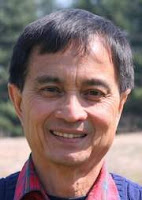
Council of Ministers Press and Quick Reaction Unit deputy president Keo Remy speaks yesterday in Phnom Penh. Photograph: Hong Menea/Phnom Penh Post

Thursday, 26 July 2012
Meas Sokchea
The Phnom Penh Post

The US cannot press Cambodia for the return of opposition party leader Sam Rainsy, Council of Ministers Press and Quick Reaction Unit deputy president Keo Remy said at a snap press conference yesterday morning.

Former Sam Rainsy Party member Remy, who is now a secretary of state in the ruling Cambodian People’s Party, criticised the attempts of the trio at the head of the new opposition party to persuade US Congressional and State Department officials to assist in Rainsy’s return for the 2013 election.

“Cambodia is an independent state, not a subordinate country of any country. I regret some leaders have a manner as a puppet,” Remy said. “I can say that there is nothing that can put pressure on Cambodia.

“Related to politicians, the [CPP] led by Samdech Techo [Hun Sen] has always compromised many times since the time of Funcinpec.

Friday, July 13, 2012

ASEAN slammed over CoC

US Secretary of State Hillary Clinton speaks at a press conference yesterday after the 19th ASEAN Regional Forum Foreign Ministers Retreat, at the Council of Ministers in Phnom Penh. Photograph: Hong Menea/Phnom Penh Post

Friday, 13 July 2012
Cheang Sokha and David Boyle
The Phnom Penh Post

‘Utterly irresponsible” and “extremely disappointing” is how Indonesia’s foreign minister described ASEAN’s failure yesterday to agree to the terms for a Code of Conduct on the hotly disputed South China Sea.

China effectively claims all of the resource rich waters, and this week’s ASEAN summit was supposed to be a chance for member countries to present the burgeoning superpower with the terms of a CoC guiding the pursuit of their various claims.

A frustrated Marty Natalegawa, Indonesia’s foreign minister, told reporters late yesterday they should ask the “obvious” countries why ASEAN had failed to speak with one voice and agree to a common statement, or final communiqué.

“You ask the participants why it is they are not able to speak with one voice, whether it is the Philippines, whether it is the chair, Cambodia, whoever it is,” he said.

Thursday, July 12, 2012

Clinton talks cash injections at ASEAN

US Secretary of State Hillary Clinton arrives in Phnom Penh yesterday. Photograph: Pha Lina/Phnom Penh Post

Thursday, 12 July 2012
Cheang Sokha and David Boyle
The Phnom Penh Post

US Secretary of State Hillary Clinton yesterday told delegates at the ASEAN Regional Forum her country would put “our money where our mouth is” with its regional development assistance, starting with a down payment she would announce in coming days.

Clinton said that under the Obama administration, Asia had become a strategic priority, but acknowledged the region wanted to see greater US engagement “across the board”.

“But you are particularly focused on areas where our presence at times has been underrated,” Clinton said, identifying economic interrogation and development as two areas she wanted to address.

“We have more investment in ASEAN than we have in China. That is a surprising fact to many people in our country,” Clinton noted.

Wednesday, July 11, 2012

ASEAN struggles over maritime dispute with China

July 11, 2012

PHNOM PENH (AFP) - China and Southeast Asian countries struggled to make progress Wednesday on a code of conduct designed to ease tension in the flashpoint South China Sea, diplomatic sources said.

The two sides were due to meet at a summit of the 10-member Association of Southeast Asian Nations (ASEAN) in Cambodia amid splits on what the code should include and how it should be implemented.

A joint statement to be issued by ASEAN foreign ministers was also held up as countries wrangled over whether to include a reference to recent spats over the resource-rich area pitting China against Vietnam and the Philippines.

"ASEAN foreign ministers are having an emergency meeting to resolve the wording on the South China Sea in the joint statement," one Asian diplomat told AFP on condition of anonymity.

Another spoke of "splits and divisions" in the organisation, principally between the Philippines and the chair of the meeting, staunch Chinese ally Cambodia.

Asean Summit: U.S. seeks stronger S.E. Asia presence

Wednesday, 11 July 2012
Mizzima News

Asean foreign ministers in Cambodia are calling for the U.S. and other countries to remove all sanctions against Burma, as a reward for its moves toward democracy.

Meeting in Cambodia this week for the annual Asean summit, Asean Secretary-General Surin Pitsuwan said Asean deserves credit for encouraging reforms in Burma, and he’s frustrated that international sanctions against Burma have not been removed altogether.

“I think the U.S. and the EU are adopting two separate strategies,” Surin told reporters. “The EU is suspending sanctions, meaning anything can go, but it can be imposed again. The U.S. is relaxing it step by step – so two strategies.”

“We appreciate that. But we hope that the pace will be quick and that evolution inside Myanmar will warrant a serious reconsideration of the measures put in place for the sanctions,” he said.

Tuesday, July 10, 2012

Clinton Visit Puts Spotlight on South China Sea

July 10, 2012
By PATRICK BARTA
The Wall Street Journal

U.S. Secretary of State Hillary Clinton's visit to Southeast Asia this week was expected to put a spotlight on territorial disputes in the South China Sea, as well as the growing significance of a relatively new actor in the region's power plays: tiny, landlocked Laos.

Mrs. Clinton was scheduled to spend Tuesday in Hanoi after stops in Tokyo and Mongolia, with plans to discuss the growing commercial and political ties between the U.S. and Vietnam. Washington and Hanoi have grown especially close over the past few years as Vietnam has grown more wary of efforts by China, its northern neighbor, to project influence across Southeast Asia, especially in the resource-rich South China Sea, parts of which are jointly claimed by China, Vietnam, the Philippines and other countries.

Mrs. Clinton is scheduled to arrive Wednesday in the Laotian capital of Vientiane, the first such trip by a U.S. Secretary of State in 57 years. Laos's political profile has risen as it has moved deeper into China's orbit. Her trip to Laos will be followed by a visit to Cambodia, where she will attend a regional forum of the Association of Southeast Asian Nations and meet with U.S. businesses.

Monday, July 09, 2012

Arab Uprisings Point Up Flaws in Global Court

Tawakkol Karman, a Yemeni Nobel laureate, sought justice in the International Criminal Court for protesters killed in an uprising.
July 7, 2012
By LYDIA POLGREEN
The New York Times
“For justice to be legitimate, it is essential that it be applied equally to all”
JOHANNESBURG — It was exactly the kind of case the International Criminal Court was created to investigate: Yemen’s autocratic leader was clinging to power, turning his security forces’ guns on unarmed protesters. Hundreds were left dead, and many more were maimed.

But when Yemen’s Nobel laureate, Tawakkol Karman, traveled to The Hague to ask prosecutors to investigate, she was told the court would first need the approval of the United Nations Security Council. That never happened, and today the former president, Ali Abdullah Saleh, is living comfortably in Yemen’s capital, still wielding influence.

Now, as the world confronts increasing evidence of atrocities on a much vaster scale in Syria as President Bashar al-Assad’s government battles a growing rebellion, there are signs that Mr. Assad is likely to evade prosecution, much as Mr. Saleh has.

The men have not been prosecuted because they have powerful allies, underlining what critics say are crucial flaws in the court’s setup. That now threatens to undermine the still-fragile international consensus that formed the basis for the court’s creation in 2002: that leaders should be held accountable for crimes against their own people.

Already, the failure to act against some leaders challenged by the Arab Spring is emboldening critics who see the court as just another manifestation of a deeply undemocratic international order. So-called justice, they say, is reserved for outcast leaders, including an assortment of African officials from weak states with few powerful patrons.

Thursday, March 29, 2012

Vietnam and the US: The Odd Couple

The US won't need this stuff back

Tuesday, 27 March 2012
Written by David Brown
Asia Sentinel
The Vietnamese regime’s posture on human rights will remain a weighty burden on the US-Vietnam relationship. There’s a new generation of politically savvy Vietnamese-Americans who not only care about such things but can swing quite a few votes. Particularly in this American election year, Hanoi’s repression of domestic dissidents can lob a spanner into the bilateral security and trade dialogues. 
Big oil companies have been put on notice that if they want a piece of the action in China, they’d better get out of Vietnam. Britain’s BP divested its Vietnam properties in 2010, and early this year the second-biggest American oil company, Conoco-Phillips, sold its US$1 billion stake in Vietnam to a French firm. Exxon-Mobil, however, says it’s intent on developing a recent strike offshore central Vietnam.
An alliance of convenience becomes a strategic relationship

Particularly in this American election year, human rights issues will test the durability of the rapprochement between Vietnam and the United States – former enemies now seemingly the best of friends.

Officials from Hanoi and Washington get together frequently these days. An eavesdropper on the bilateral contacts might conclude that the unpleasantness of two generations ago, what Vietnamese refer to as “the American war,” was just a speed bump on the road to intimacy.

Indeed, the officials have plenty to talk about. They are tending a lengthening list of shared interests that include booming two-way trade, the elaboration of a military partnership, US support for public health, education and environmental protection initiatives and a pact that could clear the way for transfers of American nuclear technology.

When the toasting begins after a day of negotiations, there are euphoric references to the ‘remarkable development’ of cooperation between Hanoi and Washington.

What’s remarkable isn’t that old enemies are now friends, but that an alliance of convenience has been dressed up and presented as a ‘strategic relationship.’

Two objectives have guided Hanoi’s re-engagement with the US:
  • The regime’s ability to deliver sustained economic growth to Vietnam’s citizenry depends importantly on easy access to the American market and investment capital, and
  • US military cooperation will cause China to think twice about pursuing expansionist ambitions in the South China Sea.

Thursday, July 21, 2011

U.S. Anxiety Over Rising China Aired in Cambodia WikiLeaks

Chinese Prime Minister Wen Jiabao, left, waves next to Cambodian Prime Minister Hun Sen after the two countries signed agreements in Phnom Penh in April 2006 (Tang Chhin Sothy / AFP / Getty Images)
Thursday, Jul. 21, 2011
By Douglas Gillison / Phnom Penh
Time Magazine (USA)
For the world's small cadre of Cambodia scholars and journalists, the WikiLeaks disclosures offered rare dish. As they had in other countries, American diplomats had privately recorded downright catty descriptions of public figures, describing the foreign minister as "sclerotic" and labeling the businessman Kith Meng, a ranking member of the Khmer oligarchy, as a "ruthless gangster," while saying Beijing's relations with King Father Norodom Sihanouk, the father Cambodian independence, were "more or less the 'property of China' and will revert to the PRC upon Sihanouk's death," just like the residence China's leaders had built for the former King in Beijing.
Like a roving picaresque novel, the WikiLeaks diplomatic cables have been released since November in chapters, focusing on specific countries and distinct themes. When the anti-secrecy organization turned its focus to Cambodia last week — dumping nearly 800 missives from the U.S. Embassy in Phnom Penh online in 24 hours — the public was at last treated to a candid record of U.S. efforts to grapple with the rising influence of China here — and by extension in Southeast Asia as a whole.

When the Obama Administration took office in 2008, it was keen not to present itself as China's direct strategic adversary. Instead, officials said they were reviving American diplomacy in Asia while maintaining an aversion to "competition and rivalry" which could thwart cooperation with Beijing thirty years after it normalized relations with the U.S. But if it isn't competition and rivalry on display in the cables disclosed last week, it is something very near to it. Though the picture offered by the WikiLeaks archive is incomplete, with the bulk of material generated since 2006, the dispatches show a growing anxiety among U.S. officials about the inroads that Beijing is making in Cambodia. (Watch a video of WikiLeaks' founder Julian Assange on China.)

Sunday, March 20, 2011

Lower Mekong countries, U.S. meet on cooperation expansion

19th March 2011
Business Ghana

Senior officials from the foreign ministries of the Lower Mekong countries--Cambodia, Laos, Thailand and Vietnam--met here on Friday with the U.S. State Department officials to draft a joint action plan for the development in four key sectors.

"The two-day meeting aims at developing a joint plan of action for the cooperation on education, environment, health and infrastructure in

the Lower Mekong countries ahead of the regional forum of the Association of Southeast Asian Nations (ASEAN) in July in Indonesia," a statement released in the meeting said.

Tuot Panha, undersecretary of state for Cambodian Ministry of Foreign Affairs and International Cooperation, said during the opening ceremony that the U.S. assistance to the Lower Mekong countries is very vital to develop the region.

Thursday, November 18, 2010

Opposition Leader See Vietnam Losing Influence [-Vietnam Go Home!]

Sam Rainsy (middle) is currently in exile, facing a prison of 12 years on forgery, disinformation and incitement charges related to public claims he has made of Vietnamese border encroachment.
Sok Khemara, VOA Khmer
Washington, DC Wednesday, 17 November 2010
“But if we have a lot of countries as friends, we can find a balance in the relationships...so we can change positions and not allow any one country to freely oppress us.”
The influences of the US and China have begun to overshadow Vietnam, in what could prove a positive development, Cambodia's leading opposition lawmaker says.

“Cambodia is in the strategic zone, so all superpower countries want to have influence over Cambodia,” Sam Rainsy told VOA Khmer.

At the same time, he said, neither country wants to see Cambodia “falling into the other's hand.”

Meanwhile, China and Vietnam have a number of competing interests, including border and sea disputes.

“China does not want Cambodia to become a province or colony of Vietnam at all,” he said. “That's why we see China coming to invest and to escalate its influence in Cambodia. As I understand it, China is a positive element for Cambodia.”


When larger powers compete for Cambodia, it has a positive impact, he said. “If they don't pay attention, they forget about Cambodia, how we are suffering.”

On the other hand, if only one power takes interest in Cambodia, such as China during the Khmer Rouge regime, Cambodia doesn't benefit. When Cambodia was under the influence of Vietnam, following the ouster of the Khmer Rouge, “Cambodia suffered too,” he said.

“But if we have a lot of countries as friends, we can find a balance in the relationships...so we can change positions and not allow any one country to freely oppress us,” he said. “Now I believe that Vietnam's influence will be curtailed, because the US has a strong influence over Vietnam itself, and China also is increasing its influence over Cambodia. So we can try to move away from an influence of Vietnam that is too strong.”

With its Soviet backing long gone, Vietnam will look to the US to resist China, he said. “And I believe that the US still maintains the stance of democracy and wants Cambodia to become a real democratic country that fairly respects human rights.”

Monday, November 15, 2010

CAMBODIA: "Knock, Knock -- Anybody Inside?"

FOR PUBLICATION
AHRC-ETC-039-2010
November 15, 2010

An article by Dr. Gaffar Peang-Meth published by the Asian Human Rights Commission

As a student of politics, I understand the usefulness of letter writing, petitioning, appealing to foreign leaders for help. I myself have used these tools. But not today, I have stood as only an observer of Khmer democrats who write, petition, appeal to outside agents to intervene as "elected" dictator Hun Sen, and his ruling Cambodian People's Party, trample the 19 year old Paris Peace Accords, the country's Constitution, democracy, human rights, the rule of law.

As one feels feeble and unable to throw off the yoke of a dictatorship on one's own, one tends to look to others for help. But, are Khmer democrats and rights activists truly weak and incapable, or do their entreaties to foreign governments and international agencies confirm what a Western writer dubbed the "Cambodian dependency syndrome"?

Lessons I learned

I left the Khmer national resistance 21 years ago this month, after nine years of struggle for rights and freedom. I spent nearly a decade working with Khmer nationalists to establish a government for the country of my birth that would serve its citizens well and respect their civil rights; rights about which I learned in high school, college, and graduate school. My belief in the inherent right of individuals to these freedoms has not waned, but I learned in the course of my activism that no outside influence can deliver to oppressed Khmers the rights and the freedom they so badly want; and that an outside force considers helping only if it sees potential in the Khmers and an ability to provide a honorable and credible alternative to the tyranny they oppose.


I left the field in November 1989. At the Khmer-Thai border, the language of transforming the battlefield into a market place, and transforming bullets into ballots, was in vogue; national reconciliation was hopefully anticipated. I had no doubt in my mind that the world was in the process of changing. Some of the old guard were nervous about their roles in the change all could sense was coming; noncommunist resistance officials were busy seeking alignment and realignment for future political position. Lord Buddha taught: "Everything changes, nothing remains without change."

Fast forward: From the island of Guam where I began a university career teaching politics, I told a reporter from Bangkok's English daily, The Nation, in an interview, to beware of a coup d'etat, and I wrote in the Far Eastern Economic Review warning that temporary "political calm" was likely the precedent to a new storm.

October 2010: A busy month

October was a busy month for Khmers who oppose Premier Hun Sen's dictatorship.

Mental health professionals might define Sen's behaviors as those of a "baby king" who wants what he wants when he wants it. Sen is a Khmer Leviathan with absolute powers. America's great founding father, James Madison, called such a man "a tyrant." Recently, Professor Joel Brinkley dubbed Sen "a living definition of the word 'impunity'."

This Leviathan has destroyed the democracy and civil rights that the Paris Peace Accords ending the long civil conflict intended for Cambodia’s citizens. Cambodians and foreign donors of aid are not ignorant of Sen's oppressive rule. As I have observed many times, the more we write and discuss about Premier Sen's government's policies that have brought suffering to increasing numbers of Khmer citizens, the homeless, landless, farmless and victimized by gross abuses of civil rights and about how the world knows what goes on in Sen's Cambodia, the more things in Cambodia remain the same.

I wrote in this space that Khmer democracy and rights activists must realize they are on their own in their fight for rights and freedom in this dog-eat-dog world.

Appeals to idealism, humanity and compassion can evoke emotion and sentiment, but dictatorships don't crumble this way. In the world of competitive national interests, no foreign power would risk its relationships with a ruling dictator in favor of fractious democracy and rights groups that cannot even agree on a common platform for the same goal.

The 19th Anniversary of the Signing of the Paris Peace Accords

The Oct. 23, 1991 Final Act of the Paris Accords to restore peace to Cambodia was adopted by 18 participating governments, including the four warring Cambodian factions, and representatives of the non-aligned movement and the United Nations Secretary General and his special representative. The Accords outlined for Cambodia "a system of liberal democracy" with an independent judiciary and described what human rights and fundamental freedoms entailed. The agreements stipulated the signatories' agreement to maintain, preserve, and defend Cambodia's sovereignty, independence, territorial integrity and inviolability, neutrality and national unity.

They would have been the best instrument and hope for Cambodia if only they had been implemented.

The necessary neutral political environment and the strict neutrality of Cambodia's administrative agencies were never implemented; the U.N. Transitional Authority was ineffective; Hun Sen, supported by Vietnam, but loser of the first U.N. organized general elections in 1993, threatened a civil war; Cambodia's last god-king, Prince Sihanouk, sacrificed his own son, Prince Ranariddh, winner of the elections, when he devised an unworkable "two-head" formula, making Sen, the loser, prime minister next to Ranarridh, dividing Cambodia. Two leaders and two cohorts running the same government was a prescription for failure.

In 1997, Sen launched a military coup against Ranariddh, as the world watched the birth of a ruthless Khmer Leviathan.

On the occasion of the 19th anniversary of the signing of the Accords, Cambodian democracy and rights activists called for the reactivation of the Accords and the abrogation of border treaties signed with Vietnam by the Hanoi-installed Sen regime. But wasn't it the regime's elected parliament and Cambodia's king who legitimized the treaties and their supplements to benefit Vietnam?

U.N. Secretary-General Ban Ki-moon's Visit

The Khmer dictator invited the U.N. Secretary General to Cambodia. He visited the country on Oct. 26-28. On the day Ban Ki-moon arrived in Cambodia, the Cambodian Center for Human Rights welcomed and encouraged Ban "to use your visit to publicly address pressing human rights in Cambodia."

Yet, right in front of a hospital Ban was visiting, 23-year-old Suong Sophorn of a housing rights group lay in blood-stained clothes, beaten unconscious by Sen's security forces in United States military helmets, an example of U.S. aid because he led about 30 Boeng Kak residents, representing those facing eviction from their homes, towards Ban's motorcade to hand him a petition.

The best defense is an offense. When Ban was meeting with Sen, the Khmer Leviathan surprised Ban: The U. N. human rights office in Phnom Penh would have to close down if its representative, Christophe Peschoux, accused of acting as a spokesman for the opposition, was not replaced. In addition, Sen said the U.N. sponsored Khmer Rouge Tribunal cannot seek more indictments beyond the four top Khmer Rouge leaders in Trial 2; no Trial 3, as it would bring a civil war!

Although only Sen's security forces and the military have guns, is Sen worried that he, himself a former Khmer Rouge regional commander, and his Khmer Rouge comrades now in the government, may be implicated in the killing fields?

The tribunal hearing charges against former Khmer Rouge leaders already is a laughing stock. Despite the time and enormous international resources devoted to the tribunal, it has found guilty only one lower level Khmer Rouge executioner, Duch, for the death of up to 2 million people.

Ban, who left Phnom Penh on Oct. 28 for Hanoi, before heading to Beijing, was given bitter pills by Sen. But, what have the Khmer activists learned?

Bludgeoned protester Suong Sophorn never made it to Ban's motorcade. But Sophorn focused the eyes of the world on the brutalities of Sen's forces. Khmer Web sites, newspapers, Khmer radio broadcasts, are excellent vehicles to educate, to awaken the conscience of Khmer officers and soldiers, and Khmer functionaries, to behave less harshly when directed to mistreat Khmer citizens by Sen and his CPP.

Sophorn is very unlike opposition leader Sam Rainsy, whom former Senator Ung Bun Ang of the Sam Rainsy Party dubbed a hero "for at least five seconds," for declaring from exile in Paris after he fled Sen's arrest in Phnom Penh, "I am willing to die so that the country can live." Sophorn lay in his blood on a failed mission. Had opposition party members come out to pick up Sophorn from the ground, what image that would have projected!

U.S. Secretary of State Hillary Clinton's Visit

U.S. Secretary of State Hillary Clinton's turn came on Oct. 30-Nov. 1. Again, the CCHR welcomed and urged her "to show leadership by encouraging Cambodia to reverse the drift towards authoritarianism."

Radio Free Asia reported that six members of two opposition parties met Clinton on Nov. 1 at the U.S. ambassador's residence. They asked Clinton to intervene with Sen to allow Sam Rainsy, sentenced to prison for a total of 12 years, to return to Cambodia without fear of imprisonment! A top diplomat, Clinton said that she would follow closely the situation in Cambodia and would look into Rainsy's case. But RFA also reported the Sen regime's response: The U.S. "has absolutely no power to interfere in Cambodia's internal affairs."

Recall, in July 2009 Secretary Clinton signed, under President Obama's executive authority, the Association of South-East Asian Nations' 1976 Bali Treaty of Amity and Cooperation, the core of which supports noninterference in member states internal affairs.

Truly intriguing was what opposition members at the meeting found to be revelatory: They reported that Secretary Clinton said that in order to "......beat the ruling party, the opposition parties should unite". Clinton allegedly said she could not understand "why both parties (the Sam Rainsy Party and the Human Rights Party) cannot unite." Nay, said one democrat, Clinton meant a political merger and that the Secretary "encouraged opposition parties to form a comprehensive political platform with which to compete against the ruling party."

Son Soubert of the Khmer People's National Liberation Front, e-mailed front cadres that Clinton encouraged the unity of Khmer democrats and urged Khmers not to focus on one particular leader but on a common political platform.

Were these new thoughts, or were the thoughts important because they came from Secretary Clinton?

At the end of her visit, Secretary Clinton told a press conference held with Sen's deputy premier Hor Namhong that she was very optimistic about Cambodia's future. "The last years have been transformative for this country. And I hope that the United States can be a good partner and a friend, as the Government and the people of Cambodia make the necessary steps to improve your democratic institutions, to improve the economy, to provide the kind of opportunities that the young people I met with earlier today deserve to have," said Clinton.

She concluded: "This visit has left me encouraged that our partnership can deepen and grow to serve both our peoples in the years to come."

As the Obama administration sees Asia as key to the future and seeks to balance China's influence in the region, on Nov 1 Secretary Clinton told students at a meeting: "You don't want to get too dependent on any country, don't rely too much on China!"

So, when Sen's deputy Namhong said that putting lower-ranking Khmer Rouge officials on trial in Trial 3, could jeopardize peace and stability, the Secretary said her priority is to raise million to prosecute Nuon Chea, Ieng Thirith, Ieng Sary, and Khieu Samphan in Khmer Rouge Tribunal's Trial 2!

America’s secretary of state has spoken. What did Cambodian democrats and right activists hear?

Full Circle

This brings me back to my conviction that Cambodian democrats and rights activists cannot depend on outside agents to win for the oppressed Cambodians their rights and their freedom. The responsibility of Cambodia’s democrats is to popularize the idea that Cambodians themselves must fight for their rights and their freedom through a disciplined and unwavering struggle, accept to endure continued repression and suffering, as housing right activist Sophorn did, in order to highlight the current brutalities. Democrats must come up with an intelligent common strategic plan for liberation. The Albert Einstein Institution, dedicated to the defense of freedom, posits, you don't have to have a charismatic leader to fight dictatorship.

You must have better thinking!
……………..
The views shared in this article do not necessarily reflect those of the AHRC, and the AHRC takes no responsibility for them.

About the Author:

Dr. Gaffar Peang-Meth is retired from the University of Guam, where he taught political science for 13 years. He currently lives in the United States. He can be contacted at peangmeth@gmail.com.
# # #
About AHRC: The Asian Human Rights Commission is a regional non-governmental organisation monitoring and lobbying human rights issues in Asia. The Hong Kong-based group was founded in 1984.

Friday, November 12, 2010

[Burmese] Junta’s Asian Friends Close Ranks, Endorse Poll

By Marwaan Macan-Markar

BANGKOK, Nov 11, 2010 (IPS) - A political fault line has emerged just days after Burma’s junta held the country’s first election in two decades, one that was held on Nov. 7 with near military precision to ensure a sweeping victory for the military regime’s allies.

This divide playing out on the international stage reflects foreign governments’ contrasting views of the poll, which is part of the junta’s seven- step roadmap to install a discipline-flourishing democracy in the South-east Asian nation.

The junta’s political proxy, the Union Solidarity and Development Party (USDP), claims to have won over 80 percent of seats in Parliament, as was predicted by critics of the regime. Also expected were the litany of charges of fraud, vote rigging and the abuse of power by pro-regime factions.

Coming to the defence of the regime in Burma, or Myanmar, are the country’s Asian neighbours, some of which had shown signs of encouragement before the poll. In this chorus is the Association of South- east Asian Nations (ASEAN), a 10-member regional bloc that includes Brunei, Cambodia, Indonesia, Laos, Malaysia, Philippines, Singapore, Thailand and Vietnam, in addition to Burma.


"ASEAN welcomes the General Election held on 7th November 2010 in Myanmar as a significant step forward in the implementation of the 7-point Roadmap for Democracy," declared Vietnam, the current chair of the regional bloc that has a history of throwing a protective cloak around Burma when it comes to international criticism.

"ASEAN encourages Myanmar to continue to accelerate the process of national reconciliation and democratisation, for stability and development in the country," added the foreign ministry of Vietnam, a country under the iron grip of its own communist party that brooks no opposition and has been hostile toward any hint of democracy within its borders.

Asia’s communist giant China has been as unequivocal about its support for Burma, where it has invested millions of dollars to exploit the country’s rich natural resources. "This is a critical step for Myanmar in implementing the seven-step road map in the transition to an elected government and is thus welcome," a foreign ministry spokesman in Beijing told the media.

But in sharp contrast against China and the majority of ASEAN members -- which have limited to non-existent democratic cultures -- are the industrialised nations in the west that have condemned the poll as a sham. "It is unacceptable to steal an election, as the regime in Burma has done again for all the world to see," said U.S. President Barack Obama in a speech to the Indian parliament, echoing the sentiments expressed in London and some European capitals.

This East-West divide reflects just how open to interpretation a contentious election is. "The governments in the region were looking at what existed before and they see the poll as paving the way for something different," said Thant Myint-U, a respected Burmese historian and author. "The western governments judged the election by the high democratic standards they are familiar with."

Yet he cautions against expecting more from what some see as the military’s loosening of some of its grip on power for this election, only the second multi-party poll to be held since the military grabbed power in a 1962 coup. "It is difficult to say, because any political opening is going to be tenuous," Thant told IPS. "One cannot say how long the political space will last."

The guarded sense of optimism about more openness under the oppressive junta has been shaped by a noticeable opening – however small – for Burmese to converse openly about democracy on the streets and in teashops following an order in August that said "democracy" is a permissible word.

Supporters of the opposition parties disillusioned by their candidates’ defeat due to the "advanced voting" mechanism, under which government employees, the military and people travelling on voting day were given the option to cast their ballots days before Nov. 7, have not gone silent since that day, says a Rangoon-based analyst. "People are frustrated, people are angry and there is a feeling of politics in the air."

But analysts familiar with Burma’s reclusive strongman, Senior Gen Than Shwe, point out that the regime has no intention of conceding even marginal ground to its political opponents.

"If the final vote in the parliament was fixed so that the USDP got 70 percent of the votes and the opposition got 30 percent, then it would have confirmed that there was a small and relevant opening for the opposition," said Win Min, a Burmese national security expert. "That 30 percent would have given the opposition enough power to at least summon the parliament for a sitting."

But the regime, which under the Constitution had been guaranteed 110 seats in the 440-seat national legislature for non-elected military offices, wanted to assert its dominance in this new political arena, revealed Win Min. "They wanted to have a symbolic yet weak opposition. It shows their true colours; they did not want to make any concessions."

The means for ensuring this dominance was advanced voting, under which an estimated two percent of the nearly 30 million registered voters were given the option to vote ahead.

The regime reportedly went "door-to-door" to get members of a pro-junta social and development association that gave rise to the USDP to vote ahead, tapping its nearly 17 million members. "This is why advance voting was the game changer," said Win Min. "Governments who are endorsing the election should take note of this rigging." (END)

Monday, November 08, 2010

US eyes bigger Asian-Pacific presence

US Secretary of Defense Robert Gates arrives in Melbourne, Australia on November 7, 2010
Sun Nov 7, 2010
PressTV

US Secretary of Defense Robert Gates says Washington plans to expand its military presence in the Asia-Pacific region, denying that the move is a challenge to China.

"We're looking at ways to strengthen and perhaps make more robust our presence in Asia," Gates said, en route to Melbourne, where he later held talks with Australian officials, AFP reported on Sunday.

On his arrival, Gates added that the US and Australia will discuss deepening military ties, including cooperation on cyber security and missile defense and "space surveillance."


The US official noted that Washington has “no plans for new US bases in Australia or elsewhere in the region.”

The Australian meeting comes amid concern over China's military buildup in the Pacific. The US has frequently expressed alarm about China's military buildup in the Pacific.

But Gates insisted that Washington's plans in the region are not aimed at antagonizing or countering Beijing. "This isn't about China at all," he said.

The United States says it is interested in strengthening military ties with Asian countries in a bid to boost counterterrorism and military cooperation.

Australia's Defense Minister Stephen Smith greeted Gates upon his arrival and the US defense chief is expected to join US Secretary of State Hillary Clinton, who arrived in Melbourne on Saturday for a string of meetings.

Clinton's visit is the final leg of her 10-day Asia-Pacific tour which took her to Vietnam, Cambodia, Malaysia, Papua New Guinea and New Zealand.

The AUSMIN meetings, which will be attended by Australian foreign and defense ministers and their US counterparts, are scheduled to be held on Monday in Melbourne.

The two countries have held the AUSMIN meetings, which are the principal forum for bilateral consultations between the US and Australia, regularly since 1985.

Sunday, November 07, 2010

Obama's visit to India

President Barack Obama watches dancers during his visit to the Holy Name High School in Mumbai, India, November 7, 2010. (Credit: Reuters/Jason Reed)
Indian media say Obama visit hitting right notes

Sun Nov 7, 2010
By Patricia Zengerle and Alister Bull

MUMBAI (Reuters) - Indian media on Sunday hailed President Barack Obama's decision to ease export controls and support India's membership of powerful nuclear groups, saying he had set the right tone on a visit aimed at winning U.S. jobs.

Obama's Democrats lost control on the House of Representatives in congressional elections last Tuesday as voters punished the party for high U.S. unemployment after a campaign marked by criticism of China and outsourcing hubs like India.

But Indian newspapers noted Obama had rejected the view that Indian outsourcers poached American jobs, and that he had satisfied Indian demands for lifting of export controls imposed after India's 1998 nuclear tests.


"Delhi feels Obama's first words in India hit the right notes," read a frontpage headline in The Hindu newspaper which said Indian officials were not perturbed at Obama not mentioning India's traditional foe Pakistan while paying tribute to those killed in the 2008 Mumbai attacks.

Pakistan-based militants killed 166 people in a 60-hour rampage through India's financial hub, gunning down their victims at luxury hotels, a train station and a Jewish center. India says elements in the Pakistan state were behind the attacks.

Other newspapers too appeared to play down Obama's making no reference to Pakistan, whose support is key to Western efforts to stabilize Afghanistan.

All Indian newspapers led with news the two countries were finalizing deals worth around $10 billion that would lead to more than 50,000 U.S. jobs.

"Jobs, trade for U.S. dominate Day 1," read the banner headline in Hindustan Times newspaper, referring to the first day of Obama's visit to India's commercial capital of Mumbai.

On Saturday, Obama announced the United States would relax export controls over sensitive technology, a demand of India's that will help deepen U.S. ties with the emerging global power and its trillion dollar economy.

The White House also announced Obama would support India's membership of four global non-proliferation organizations.

On Sunday Obama was scheduled to visit a school in Mumbai before speaking to north Indian farmers by video conference and attending a townhall meeting at a college in Mumbai.

After that he was scheduled to fly to New Delhi for a tour of a Mughal era tomb and dinner with Prime Minister Manmohan Singh.

Obama will also visit Indonesia, South Korea and Japan on an Asian tour that will see Washington push to prevent countries unilaterally devaluing currencies to protect their exports, a top theme at the Group of 20 heads of state meet in Seoul next week.

(Writing by Krittivas Mukherjee; editing by Andrew Marshall)

Thursday, November 04, 2010

The US asseveration

2010-11-03
Opinion  by LIM SUE GOAN
Translated by SOONG PHUI JEE
MySinchew.com (Malaysia)
Asseveration: An earnest affirmation or declaration of support (Source: Wiktionary)
The visit of US Secretary of State Hillary Clinton to Malaysia is an arrangement of the American strategic layout in South-East Asia, or even Asia. It shows that Malaysia is still valuable in terms of diplomacy.

After attending the East Asia Summit (EAS) in Hanoi, and paying official visits to Hainan in China, Cambodia and Malaysia, Clinton continued her journey to Papua New Guinea, Australia and New Zealand. Together with the US Secretary of Defence, she will attend the Five-Power Defence Arrangements (FPDA) meeting of Defence Ministers. It is obvious from all these that the US is trying to balance China's influence in the region.

Among South-East Asian countries, Cambodia is having a close relation with China, and Clinton had actually advised Cambodia in Phnom Penh “not to overly rely" on China. Malaysia, too, is having a good relation with China. Clinton chose to visit Malaysia, instead of Singapore which is having a military cooperation with the US, to fight for a tie with Malaysia, a moderate Islamic state, to protect the American interests in the Straits of Malacca.

In the eyes of the US, national interests are always more important than any other issues. For the sake of its national interests, the US had assisted authoritarian governments that supported the US. For example, the US used to support the Taliban that confronted the Soviet Union. After the Soviet Union retreated, Afghanistan has become a terrorist nest under the rule of Taliban. The US then sent troops to defeat the Taliban government based on the American security concerns.


The US exerts pressure on China for the appreciation of the RMB not to save the world economy but to help the American exports instead. The appreciation of the RMB will make American goods cheaper.

The US is a selfish country. To save its own economy, the US government printed a huge amount of cash notes and devalued the US dollar. As a result, it exported inflation to countries around the world. Prices of various metals, commodities and food have been surging due to overflowing hot money. The US Federal Reserve is about to start the second round of Quantity Easing Policy. It is expected to continue inflating the asset bubble and harm the world.

However, the US is also "cute", in that it upholds its concepts of democracy and human rights, which are universal values in its views, and continues exporting them to other countries.

When former US Vic-President Albert Arnold Gore attended the Kuala Lumpur Asia-Pacific Economic Cooperation forum on 22 November 1998, he critized Malaysia over the arrest of Datuk Seri Anwar Ibrahim, causing a strong counter-attack from our political leaders, and leading strained bilateral relations between the US and Malaysia.

The US is a capitalist democratic country, with its own interests being its priority and its self-appointed "international police" role, which has been played down in recent years.

In comparison, China's policy on Third World seems to prioritize friendship rather than self-interests. For example, China has a large number of investments in Africa in addition to giving aid to the region.

During the 1997 Asian financial crisis, Asian currencies fluctuated and China didn’t depreciate the RMB. In 2007, the US subprime mortgage crisis swept across global financial markets and domestic demand was expanded, thanks to China's RMB4 trillion stimulus package.

Prime Minister cum Finance Minister Datuk Seri Najib Razak is committed to implementing economic transformation. Hence, Malaysia needs to make friends with the US, China and India. However, we must know their temperaments and consideration to slot in between these great powers and protect our national interests.

Wednesday, November 03, 2010

Clinton does well in foreign policy

Tuesday, November 2, 2010
The Daily Targum (Rutgers Univ., USA)
Editorial

While most politicians in the United States have in the past few weeks almost entirely concentrated on the midterm elections, one stateswoman has actually been doing her job. U.S. Secretary of State Hillary Clinton was thousands of miles away from American shores and its issues on Election Day, somewhat prompting critics to switch their attention to international matters. We support her decision to stay away from domestic campaigns at a time when everyone else seems to have forgotten their dedication to the voters.

When Clinton could have been campaigning for her fellow Democrats, she decided to focus on her job as secretary of state. In contrast with her husband and former president, who traveled to more than 100 election events, the secretary of state has been focusing on foreign policy. According to the Telegraph, Clinton met with 50 victims of human trafficking on Saturday in Siem Reap, Cambodia. She promised American support to the women who were aged between 17 and 23. Clinton received an emotional response from one woman who had been held as a prostitute for more than two years. "You motivate me," she said.

Clinton also addressed the S-21 prison where around 16,000 prisoners were held and tortured under the Khmer Rouge regime in the 1970s.


"Countries that are held prisoner to their pasts can never break those chains and build the kind of future that their children deserve," Clinton said. "Although I am well aware the work of the tribunal is painful, it is necessary to ensure a lasting peace."

The secretary of state is simply doing her job. The majority of other U.S. politicians have so far only concentrated on the election. Securing seats in Congress has more than overshadowed the need to act as a coherent political player in the international system. President Barack Obama, for example, has made his rounds all across the nation. In the final 72 hours, his precisely calculated route included Philadelphia, Bridgeport, Conn., Chicago and Cleveland — cities part of the larger swing states.

The secretary of state's two-week tour of Asia and the Pacific Rim includes visits to Vietnam, Cambodia, China, Malaysia, Papua New Guinea, New Zealand and Australia.

The midterm elections are thankfully over, and citizens can return to viewing the real issues rather than political campaigns backed by empty promises and insults. Clinton understood this issue and stayed away from U.S. shores. She did and is doing her job while many others have simply stood by their colleagues, attempting to secure their seats for a few more years.

Recommendations to U.S. Secretary of State from Cambodia’s Parliamentary Opposition

Meeting between opposition MPs and US Secretary of State Hillary Clinton. From left to right: US Ambassador Carol Rodley, SRP MP Mu Sochua, SRP MP Son Chhay, US Secretary of State Hillary Clinton (Photo: US Embassy in Cambodia)
2 November, 2010

RECOMMENDATIONS TO U.S. SECRETARY OF STATE
FROM CAMBODIA’S PARLIAMENTARY OPPOSITION

Call for Action to Set Democracy on Track

At a meeting held on 1 November, 2010 in Phnom Penh with four Members of Parliament from the Sam Rainsy Party and two from the Human Rights Party, U.S. Secretary of State Hillary Clinton strongly reaffirmed the US administration’s support for a strong opposition, for an independent judiciary and the protection of human rights.

The opposition Members of Parliament stressed that the process of peace building or conflict resolution and democracy is built on the promotion and protection of democratic values and principles, such as pluralism, equal representation, and participation. When elected representatives of the people have lost their rights to represent their constituents and live in constant fear of prosecution, the foundation for a liberal democracy system is uprooted.

The opposition has been painted as a weak opposition force while the ruling party has been praised for their ability to maintain stability and law and order.

At the same time as the ruling party manages to weaken the political structure, it has shown little political will to allow institutions to be reformed and is showing growing intolerance of criticism and advocacy by the civil society, trade unions and local non-governmental organizations. Democratization must be inclusive as every voice is of most crucial importance in the next steps towards building a democratic society that include all parties in preventing conflicts.

The international community has been tolerant of the unmet government’s promises and unacceptable practices to which the Cambodian people fall victims.

The loss of judicial integrity and of other public institutions including the police and armed forces to spread fear among activists, detain human rights defenders and attack opposition parties are real cause for great concern. The main objective of such form of governance is to weaken opposing voices and forces but not to totally eliminate them as so the façade of democracy can be maintained.

The representatives of the opposition in Cambodia urge the United States, other signatory countries and donor institutions to take the following measures and mechanisms to ensure the provisions enshrined by the Paris Agreements.

The specific recommendations for the United States are to:

  1. Support the role and existence of a Loyal Opposition whose leader has the legal and fundamental right to defend and protect the people without fear of prosecution. It is a Loyal Opposition that is allocated a budget and sufficient technical resources and a Loyal Opposition that has access to information and the power for checks and balances. It is a Loyal Opposition that can have access to state media to communicate with the people;
  2. Support the principles of free and fair elections. A seal of recognition of elections that fall below international standards has grave consequences to democracy and can further legitimize dictatorship.
  3. Re-activate and continue its assistance to programs to raise public awareness of corruption and the strengthening of national institutions to put an end to the system of patronage so that quality of public services can be guaranteed for the benefit of the people.
  4. Ensure that Cambodian armed forces trained by the United States are not involved in cracking down on demonstrators, workers and government critics.

Secretary Clinton urged the opposition to hold further talks with the U.S. Ambassador to Cambodia, Carol Rodley for specific ways for the US government to address the needs of the opposition and civil society.

The visit of Secretary Clinton at the heels of UN Secretary-General Ban Ki-moon’s visit is a historic event and a strong signal of support for human rights and democracy in Cambodia.

Sam Rainsy Party
Cabinet