Showing posts with label Women issues. Show all posts
Thursday, August 30, 2012
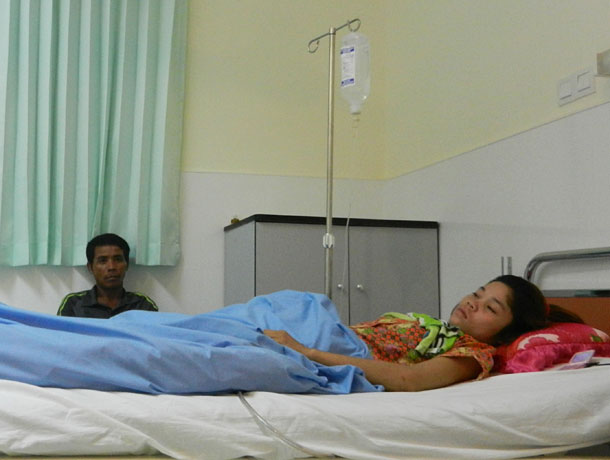
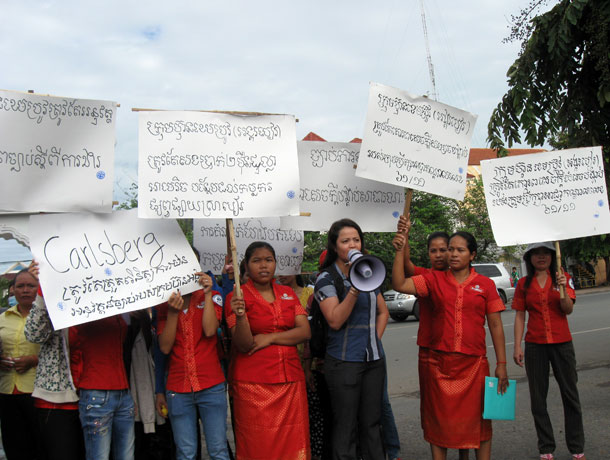
18 months and still no court resolution in the T&P labor export company
ជាង១ឆ្នាំហើយ ករណីក្រុមហ៊ុន នាំពលករចេញ T&P បង្ខាំងមនុស្ស ខុសច្បាប់ តុលាការនៅតែគ្មាន ដំណោះស្រាយ
Thursday, 30 August 2012
ដោយៈ ដើមអម្ពិល (DAP)
ភ្នំពេញៈ ១ឆ្នាំ៦ខែគត់ ដែលតុលាការ និងអាជ្ញាធរព្រមទាំងក្រសួង ពាក់ព័ន្ធនានា មិនអើពើរអ្វីជាដុំកំភួនចំពោះ ករណីពលករខ្មែរម្នាក់ ដែលលោតពីលើអគារកំពស់បីជាន់ ហើយបណ្តាលឲ្យនាងពិការជើងរហួតដល់សព្វថ្ងៃ ដោយសារ តែក្រុមហ៊ុន នាំពលករចេញទៅប្រទេសម៉ាឡេស៊ី មួយឈ្មោះ T&P បានបង្ខាំងនាងទុកអស់ជាច្រើន ខែកន្លងទៅនេះ។
អ្នកស្រីហេង ហាក់ មានអាយុ ៣១ឆ្នាំ កាលពីថ្ងៃទី៦ ខៃមិនា ឆ្នាំ២០១១កន្លងទៅនេះបានសម្រេចចិត្តចុងក្រោយ របស់អ្នក ស្រីលោតពីលើអគារកម្ពស់បីជាន់ ដោយស៊ូទ្រាំពុំបាននឹងការធ្វើទុកបុកម្នេញ និងបង្ខាំងអ្នកស្រីឲ្យនៅ ក្នុងបន្ទប់ ដោយមិនឲ្យមានការទាក់ទងជាមួយនិងសាច់ញាតិផងនោះពីសំណាក់ក្រុមហ៊ុន T&P រហូតដល់ពេល នេះពុំទាន់ទទូល បានសំណង និងយុត្តិធម៌ឡើយ បន្ទាប់ពីអ្នកស្រីបានដាក់ពាក្យបណ្តឹងទៅកាន់តុលាការ និង អាជ្ញាធរព្រមទាំងក្រសួងពាក់ ព័ន្ធផ្សេងៗ ទៀតនោះ។
ថ្លែងប្រាប់ដល់អ្នកសារព័ត៌មាន នាព្រឹកថ្ងៃទី៣០ ខែសីហា ឆ្នាំ២០១២នាការិយាល័យ របស់មន្រ្តីបក្សប្រឆាំងក្នុង វិមានរដ្ឋសភា អ្នកស្រីហេង ហាក់បានឲ្យដឹងថា ពេលនេះស្ថានភាពរបស់អ្នកស្រីបានកំពុងតែវេទនាយ៉ាងខ្លាំង ដោយមិនអាចប្រកបមុខរបរ អ្វីសម្រាប់យកមកផ្គត់ផ្គង់ជីវិតកូន និងអ្នកស្រីបានដោយសារតែភាពពិការយ៉ាងធ្ងន់ ធ្ងររបស់អ្នកស្រី។
Labels:
Abuse,
Cambodian maids,
Malaysia,
Mu Sochua,
Women issues
Tuesday, July 17, 2012
Women's rights group troubled by ADHR draft
Tuesday, 17 July 2012
David Boyle and Cheang Sokha
The Phnom Penh Post
David Boyle and Cheang Sokha
The Phnom Penh Post
“Who defines the public morality anyway? The people in power – usually it is men.”
A “public morality” clause in the draft ASEAN Declaration on Human Rights threatens the most basic rights of women and sexual minorities and should be scrapped, a coalition of women’s groups said in a statement released yesterday.
Civil society groups met with foreign ministers at the ASEAN Intergovernmental Commission on Human Rights last week to discuss the ADHR, which was drafted behind closed doors and is set to be adopted in November.
The statement from groups including the Southeast Asia Women’s Caucus and the Committee on the Elimination of Discrimination Against Women, warns “public morality” has never been defined in international human rights standards.
Labels:
ASEAN Human rights charter,
Morality,
Women issues
Tuesday, July 10, 2012
| Beefed up security in Phnom Penh during the ASEAN meeting |
The heavy presence of police and armed military police from the airport to the city and at every major intersection for the ASEAN meeting sets the tone for how open and inclusive these meetings will be.
Changing ASEAN is still hopeful if and when change is made through reforms in member country, which includes electoral reforms that will give chances for democratically elected government to be installed.
Burma has open a small window of opportunity. Cambodia's 2013 elections is another chance for change.
Free and fair elections is key and Sec. Clinton is expected to make the point in her statements.
Setting one stone at a time for democracy is not a far reaching thought.
For women to take the lead in ASEAN, much more is to be done.
Help with action below:
---
WUNRN
SIGN PETITION
ASEAN - Association of SE Asia Nations - http://www.aseansec.org/18619.htm
ASEAN HUMAN RIGHTS DECLARATION MUST MEET INTERNATIONAL RIGHTS STANDARDS/OBLIGATIONS & BE INCLUSIVE OF WOMEN'S RIGHTS
![]() |
| Women’s human rights are ASEAN women’s human rights |
In solidarity with ASEAN Women, we ask the Association of Southeast Asian Nations (ASEAN), particularly the ASEAN Intergovernmental Commission on Human Rights (AICHR) to take cognizance of its mandate in leading the drafting of the AHRD and act to ensure that the Declaration is shaped by a process founded in transparency, inclusiveness and accountability to ASEAN peoples, and results in strengthened institutional understanding and capacity of states to implement its human rights obligations
We are concerned that since the drafting process of the AHRD began in the first half of 2011, no draft has been circulated to the public for comments. Selected national consultations were the exception, rather than the norm,, even though it is apparent such consultations would be a first step towards engaging with various communities. For the AHRD to be relevant, it must go further than the processes thus far to be truly informed by the realities on the ground. But such feedback can only happen if there is a genuine interest and effective mechanisms to engage communities in meaningful dialogues
Labels:
ASEAN human rights,
Women issues
Wednesday, April 18, 2012
Women’s Equality Crucial For Asia’s Future: Report
April 18, 2012
Elaine Kurtenbach
Associated Press
Shanghai. The 2 billion women living in Asia are still paid less than men for similar work and are underrepresented in top leadership positions, according to a report issued on Wednesday.
The Asia Society survey on women’s status in health, education, economic activity and political leadership urges improvements to ensure the region benefits fully from its underused pool of human talent.
While women’s status varies widely from country to country, overall, “to continue in this direction would put in peril Asia’s many achievements,” said the report, compiled by Astrid S. Tuminez of the Lee Kuan Yew School of Public Policy in Singapore.
Labels:
Women issues
Thursday, March 29, 2012
ភាពក្លាហានរបស់ស្ត្រីដែលហ៊ានតវ៉ាប្រឆាំងនឹងការបណ្ដេញចេញពីលំនៅ
![]() |
| Boeung Kak Lake protest: a resident arrested by the cops on 21 April 2011 (Photo: RFA) |
![]() |
| Borei Keila protest: A protesting resident took off her shirt to protest against police violence on peaceful protesters on 01 February 2012 (Photo: Reuters) |
![]() |
| Borei Keila protest: Arrest of mother and her children (Photo: The Phnom Penh Post) |
Dey Krahorm Land Eviction Victim:
Down with Hun Xen
http://www.youtube.com/watch?v=3LMvoveW7Vs
ដោយ ទីន ហ្សាការីយ៉ា
2012-03-28
Radio Free Asia
ទាក់ទងនឹងបញ្ហានេះ ក្រុមអ្នកធ្វើការទាក់ទងនឹងស្ត្រី បាន ជំរុញឲ្យស្ត្រីចូលរួមនៅក្នុងការងារសង្គមឲ្យបានកាន់តែច្រើនទៀត ពិសេសស្ត្រីត្រូវកសាងទំនុកចិត្តរបស់ខ្លួន និងត្រូវមានជំនឿថា អ្វីដែលខ្លួនកំពុងធ្វើមានសារសំខាន់សម្រាប់ខ្លួនឯង និងសម្រាប់ប្រទេសជាតិសាធារណជនសង្កេតឃើញថា ក្នុងរយៈពេលចុងក្រោយនេះ ស្ត្រីមួយចំនួនហ៊ានចេញមុខតស៊ូមតិខ្លាំងក្លា ដើម្បីទាមទារសិទ្ធិសេរីភាព និងសិទ្ធិកាន់កាប់ដីធ្លីស្របច្បាប់ពីអាជ្ញាធរមូលដ្ឋាន ឬពីរដ្ឋាភិបាល ទោះបីជាប្រឈមនឹងបញ្ហាចាប់ខ្លួនក្ដី ក៏ពួកគាត់មិនរុញរាដែរ។
ការចេញមុខតវ៉ារបស់ស្ត្រីមួយចំនួនអំពីបញ្ហាជម្លោះដីធ្លីនៅកម្ពុជា នាពេលបច្ចុប្បន្នជាសក្ខីកម្មមួយបង្ហាញឲ្យឃើញពីសេចក្ដីក្លាហានរបស់ស្ត្រី ក្នុងការបញ្ចេញមតិ និងការទាមទារសិទ្ធិរបស់ខ្លួនក្នុងការស្វែងរកយុត្តិធម៌ក្នុងសង្គម។
ទាក់ទងទៅនឹងបញ្ហានេះ ក្រុមអ្នកវិភាគបានលើកហេតុផលថា ប្រទេសកម្ពុជា កំពុងស្ថិតនៅក្នុង បរិបថធ្វើឲ្យស្ត្រីទទួលរងនូវផលប៉ះពាល់ខ្លាំងជាងបុរស ដោយសារការបណ្ដេញចេញពីលំនៅឋាន ដូចជានៅសហគមន៍បឹងកក់ និងសហគមន៍បុរីកីឡា និងសហគមន៍ផ្សេងៗទៀត។
Friday, March 09, 2012
Women take to the streets
![]() |
| Volunteers and prisoners unload donations for an event to celebrate International Women’s Day at Prey Sar prison yesterday. Photo Supplied |
![]() |
| Singer Sok Pisey from the Sunday Production music company performs during a concert to mark International Women’s Day, which was held at Olympic Stadium in Phnom Penh on Wednesday night. Nina Loacker |
Bridget Di Certo with additional reporting by Phak Seangly, Cassandra Yeap, Khouth Sophak Chakrya
The Phnom Penh Post
From prisons to the pavements of Phnom Penh, women had a strong message for the Cambodian government on International Womens’ Day: Stop the violence and stop the discrimination.
Four hundred Boeung Kak lake and Borei Keila evictees marched through Phnom Penh’s Daun Penh district with placards emblazoned with images of eviction violence used against their communities by authorities.
“We, the residents of Boeung Kak and Borei Keila, request the local authority and company owners to stop evicting us and stop using violence against women,” villager representative Tep Vanny said.
However, the womens’ march against police brutality was cut short by a 100-strong force of military and national police, who ejected the villagers from the streets due to their impact on traffic congestion.
ស្ត្រីនិងការតស៊ូ - Cambodian women and their plight
2012-03-08
Radio Free Asia
មន្ត្រីជាន់ខ្ពស់រដ្ឋាភិបាលកម្ពុជា បានអះអាងថា ស្រ្តីខ្មែរបច្ចុប្បន្នទទួលបានសិទ្ធិសេរីភាពពេញលេញ និងយល់ច្បាស់អំពីសារសំខាន់ក្នុងការចូលរួមអភិវឌ្ឍសង្គមជាតិជាមួយដៃគូបុរស។ ក៏ប៉ុន្តែទាំងមន្ត្រីសង្គមស៊ីវិល និងគណបក្សប្រឆាំងមួយចំនួនអះអាងថា ស្ត្រីនិងយុវតីខ្មែរជួបបញ្ហាច្រើនពាក់ព័ន្ធនឹងការរំលោភសិទ្ធិសេរីភាព ដូចជាការជួញដូរផ្លូវភេទ អំពើហិង្សាក្នុងគ្រួសារ ភាពក្រីក្រ ការរើសអើងជាដើម។
Radio Free Asia
មន្ត្រីជាន់ខ្ពស់រដ្ឋាភិបាលកម្ពុជា បានអះអាងថា ស្រ្តីខ្មែរបច្ចុប្បន្នទទួលបានសិទ្ធិសេរីភាពពេញលេញ និងយល់ច្បាស់អំពីសារសំខាន់ក្នុងការចូលរួមអភិវឌ្ឍសង្គមជាតិជាមួយដៃគូបុរស។ ក៏ប៉ុន្តែទាំងមន្ត្រីសង្គមស៊ីវិល និងគណបក្សប្រឆាំងមួយចំនួនអះអាងថា ស្ត្រីនិងយុវតីខ្មែរជួបបញ្ហាច្រើនពាក់ព័ន្ធនឹងការរំលោភសិទ្ធិសេរីភាព ដូចជាការជួញដូរផ្លូវភេទ អំពើហិង្សាក្នុងគ្រួសារ ភាពក្រីក្រ ការរើសអើងជាដើម។
High-ranking Cambodian government officials claimed that Cambodian women currently receive full freedom rights and they understand about the importance of social participation alongside men. However, civil society and opposition officials claimed that Cambodian women and young women are embroiled in the violations of their rights, sex trafficking, domestic violence, poverty and discriminations, etc…
ស្ត្រីជាជនពិការរស់នៅតំបន់បុរីកីឡា ដែលពុំបានផ្ទះរស់នៅក្នុងអាគារសង់ដោយក្រុមហ៊ុនផានអ៊ីម៉ិច តវ៉ានៅមុខសាលាខណ្ឌ៧មករា កាលពីថ្ងៃទី១ វិច្ឆិកា ឆ្នាំ២០១១។ RFA/Ouk Savborey
Handicapped woman from Borei Keial who did not receive housing compensation by the Phanimex company, protested in front of the 07 Makara district office on 01 November 2011 (RFA/Ouk Savborey)
តំណាងរាស្ត្រគណបក្ស សម រង្ស៊ី អ្នកស្រី មូរ សុខហួរ ជួបសួរសុខទុក្ខអ្នកភូមិបុរីកីឡានៅមជ្ឈមណ្ឌលព្រៃស្ពឺ កាលពីថ្ងៃទី១៨ មករា ២០១២។ អ្នកស្រី មូរ សុខហួរ ត្រូវប្រធានមជ្ឈមណ្ឌលព្រៃស្ពឺ ប្ដឹងពីបទរំដោះអ្នកភូមិបុរីកីឡា ១៨នាក់ ដែលសមត្ថកិច្ចចាប់យកទៅឃុំ ក្នុងពេលដែលពួកគេតវ៉ាទាមទារសំណងជាថ្នូរនឹងការបណ្ដេញចេញ។ RFA/Sek Bandith
SRP MP MU Sochua meeting with Borei Keila residents detained at the Prey Speu social center on 18 January 2012. Mrs. Mu Sochua is currently being sued by the director of the Prey Speu center who accused her of helping 18 residents escape from the center. The residents were detained when they were protesting to demand compensations for their evictions.
០១-មីនា-២០១១៖ ស្ត្រីអ្នកភូមិបឹងកក់ តវ៉ានៅសួនសេរីភាពបញ្ចេញមតិ នារាជធានីភ្នំពេញ ទាមទារឲ្យក្រុមហ៊ុនចិន ដែលវិនិយោគតំបន់បឹងកក់ ដោះស្រាយសំណងជាថ្នូរនឹងការបណ្ដេញចេញពីលំនៅ។ RFA/Khe Sonorng
01 March 2011: Women from Boeung Kak Lake protest at the No-Freedom Park to demand that the Chinese company involved in the development of Boeung Kak compensate them for their evictions.
អ្នកភូមិបឹងកក់ អ្នកស្រី ទេព វន្នី (រូបកាន់មីក្រូ) ឈរតវ៉ានៅមុខទីស្នាក់ការគណៈកម្មការអភិវឌ្ឍន៍តំបន់បឹងកក់ កាលពីថ្ងៃ៤ ខែមីនា ឆ្នាំ២០១១។ អ្នកស្រី ទេព វន្នី គឺជាអ្នកតវ៉ាយ៉ាងសកម្ម ដើម្បីទាមទារសុំរក្សាសិទ្ធិកាប់កាប់ផ្ទះសម្បែង និងដីធ្លីនៅតំបន់បឹងកក់។ RFA/Ouk Savborey
Tep Vanny (holding a microphone), a Boeung Kak Lake resident, protested in front of the Boeung Kak Lake Development office on 04 March 2011. Tep Vanny is an activist who demands for on-the-spot development in Boeung Kak Lake.
ស្ត្រីអ្នកភូមិបឹងកក់ ៤នាក់ (រូបពាក់កម្រងផ្កា) ត្រូវបានតុលាការដោះលែងឲ្យមានសេរីភាពវិញ នៅថ្ងៃ២៩ វិច្ឆិកា ឆ្នាំ២០១១។ ប៉ូលិសបានចាប់ខ្លួនស្ត្រីទាំង ៤នាក់នេះ ខណៈដែលពួកគេបានតវ៉ានៅមុខសាលាក្រុង អំពីបញ្ហាទំនាស់នៅតំបន់បឹងកក់ កាលពីថ្ងៃទី២៨ វិច្ឆិកា ២០១១។ RFA/Ouk Savborey
On 28 November 2011, 4 residents of Boeung Kak Lake (with flower garland) were released by the court on 29 November 2011. The cops arrested them when they were protesting in front of the Phnom Penh city hall regarding the Boeung Kak Lake land dispute.
១-មីនា-២០១២៖ កម្មការិនី អ៊ុន ចិន្ដា រងរបួសធ្ងន់ សម្រាកព្យាបាលនៅមន្ទីរពេទ្យកាល់ម៉ែត។ កាលពីថ្ងៃទី២០ ខែកុម្ភៈ ឆ្នាំ២០១២ កម្មកររោងចក្រកាត់ដេរ កៅវ៉េ (Kaoway) នៅក្រុងបាវិត ខេត្តស្វាយរៀង រាប់ពាន់នាក់ នាំគ្នាតវ៉ាទាមទារដំឡើងប្រាប់រង្វាន់ និងប្រាក់ថ្លៃបាយ។ ក្នុងពេលកំពុងតវ៉ាមានជនមិនស្គាល់មុខបាញ់រះមកលើក្រុមកម្មករ បណ្ដាលឲ្យកម្មការិនី ៣នាក់រងរបួស។ RFA/Sochivy
01 March 2012: Buot Chenda, a worker who was shot, was resting at the Calmette Hospital. On 20 February 2012, thousands of workers at the Koaway shoe factory in Bavet city, Svay Rieng province, protested to demand for bonus and food stipend. During the protest, an unknown man (it was the city mayor: Chhouk Bandit) shot at the workers, causing 3 injured workers.
កម្មការិនីរោងចក្រកាត់ដេរ ឈរទិញអាហារថ្ងៃត្រង់នៅខាងមុខសួនឧស្សាហកម្មវឌ្ឍនៈ នារាជធានីភ្នំពេញ កាលពីថ្ងៃទី១៧ ខែធ្នូ ឆ្នាំ២០១១។ អ្នកជំនាញសុខាភិបាលអះអាងថា អាហារដែលក្រុមកម្មការិនីទទួលទានប្រចាំថ្ងៃនេះ ជាចំណីអាហារដែលពុំសូវមានអនាម័យ និងខ្វះជីវជាតិ។ RFA/Khe Sonorng
Workers wait to buy food for lunch in front of the Vattana industrial park in Phnom Penh on 17 December 2011. Health officials said that food consumed by the workers lack hygiene and is not nutritious.
ស្ត្រីផ្សព្វផ្សាយស្រាបៀរអង្គររបស់ក្រុមហ៊ុនស្រាបៀរអង្គរ ខេមប៊្រូវ (Angkor Premium beer Cambrew) ធ្វើបាតុកម្មអហិង្សានៅមុខក្រុមហ៊ុន នៅថ្ងៃ២៥ កក្កដា ឆ្នាំ២០១១ ទាមទារឲ្យថៅកែក្រុមហ៊ុន បើកប្រាក់រំលឹកថ្ងៃអាទិត្យ តាំងពីឆ្នាំ២០០៧ ដល់ឆ្នាំ២០១០ ដែលពួកគេធ្វើការគ្មានថ្ងៃសម្រាក។ RFA/Ouk Savborey
“Beer girls” protest in front of the Angkor Premium beer Cambrew factory on 25 July 2011 to demand that the owner pay them for overtime work between 2007 and 2012. These women had to work 7 days per week without any rest.
ស្ត្រី សុខឿន អាយុ ៣០ឆ្នាំ មានកូនប្រុសតូចៗ ៣នាក់ ហើយប្ដីរបស់គាត់ទៅយកភរិយាថ្មីទៀតតាំងពីកូនទី៣ នៅក្នុងពោះបាន ៤ខែម្ល៉េះ។ លោកស្រីបានចាកចេញពីស្រុកកំណើតនៅខេត្តព្រៃវែង មកប្រកបរបររើសអេតចាយ ដើម្បីចិញ្ចឹមជីវិត និងកូនៗទាំង៣នាក់។ RFA/Ouk Savborey
30-year old Sokhoeun with her 3 children, her husband left her when she was 4-month pregnant with her youngest child. She left her native Prey Veng to scavenge for her survival and that of her children.
១២-វិច្ឆិកា-២០១១៖ ស្ត្រីអ្នកភូមិបែកពាំង នៅក្នុងខេត្តកំពង់ចាម លក់អីវ៉ាន់ចាប់ហួយនៅលើផ្លូវជាតិលេខ៦ និងកូនរបស់គាត់មករស់នៅជាមួយ ដោយសារផ្ទះទឹកលិច ហើយខ្វះខាតស្បៀងអាហារ។ RFA/Tin Zakariya
12 November 2011: A woman from Bek Paing village in Kampong Cham province sells her wares along National Road No. 6. Her children are staying with her because their house was flooded and they did not have enough to eat.
ស្ត្រី ត្រឹង ធី អាយុ ២៩ឆ្នាំ ជាអ្នកប្រកបរបរលក់ត្រីអាំងនៅផ្សារអូឡាំពិក រាជធានីភ្នំពេញ។ លោកស្រីមានប្រសាសន៍ថា លោកស្រីអាចរកប្រាក់ចំណូលបានគួរសមពីមុខរបររបស់លោកស្រី។ RFA/Mom Sophon
29-year-old Treung Thy sells baked fish at Olympic market in Phnom Penh. She said that she earns decent income from her business.
៣១-សីហា-២០១១៖ ស្ត្រីអ្នកភូមិក្នុងស្រុកកណ្ដាលស្ទឹង ខេត្តកណ្ដាល ដើរច្រូតស្រូវដែលទុំហើយត្រូវទឹកជន់លិច។ ទឹកជំនន់ពីស្ទឹងព្រែកត្នោត បានជន់លិចស្រូវប្រមាណ ២០០ហិកតារ ក្នុងឃុំចំនួនបី ស្ថិតក្នុងស្រុកកណ្ដាលស្ទឹង និងខណ្ឌដង្កោ រាជធានីភ្នំពេញ កាលពីអំឡុងខែសីហា ឆ្នាំ២០១១។ RFA/Sek Bandith
A villager from Kandal Stung district, Kandal province, harvesting her flooded rice crop. Flood water destroyed 200 hectares of crops in 3 communes of Kandal Steung district and Dankor district in August 2011.
Thursday, March 08, 2012
Analysis: Employed, empowered
![]() |
| A woman engraves a copper bowl at a local business in Kandal province that produces handicrafts. More than half the adult female population of Cambodia is self-employed. Nina Loacker |
Thursday, 08 March 2012
Douglas Broderick
The Phnom Penh Post
Today is International Women’s Day, and there is no better occasion to shine a light on the valuable contributions of women and girls in Cambodian society.
According to the National Institute of Statistics, 52.4 per cent of Cambodian women in 2009 were self-employed, but just 0.3 per cent of the women in Cambodia were classified as employers.
Women are also twice as likely to face wage discrimination or find themselves in unpaid work.
The garment industry is one of the biggest employers in the country, with an estimated 350,000 employees.
According to the International Labour Organisation, 90.7 per cent of them are women, and their remittances support an estimated 1.7 million Cambodians.
Wednesday, March 07, 2012
CCHR's Press Release: CCHR calls on Cambodians to combat homophobic violence against women
Labels:
CCHR,
Violence against women,
Women issues
Wednesday, August 10, 2011
"Woven in traffic" - Poem by Peauladd Huy
Woven in traffic
By Peauladd Huy
Rule of this jungle:
as in smog-smothered
scream trapped alerting
a deadly capture the pack has turned
stoic like humans still have no one word for. Just listen.
The rip in her
cry collecting her body afterward.
Now she belongs to the broken
everything before its time. Too early, too fast
to comprehend the first time, after he pried
away the soda can. Now it is a signal she knows
nothing sweet is to last
forever in this new home. After sugar’s taken away, the cries
dammed by hands, too big for the tiny faces –
now found filling up behind hidden doors, like little angels crushed
beneath the weight of some drug, no longer know where
it really hurt. Everywhere it hurt.
All sign of damage ebbs its way to that first wound
has yet to heal up before anymore
pierces through and through. Any day, it’s no easier.
This human shape with its make-believe part of
a woman: one part is broken, all parts are broken
once more wouldn’t have made any difference. Once in any girl’s
lifetime still stretches
its heavy hands out toward some master
key and, the lock’s still knocked open at will.
Labels:
KR survivor,
Women issues
Tuesday, March 15, 2011
COMFREL : Report on Gender Policy and Women Political Empowerment in Cambodia
Dear all,
Best regards,
COMFREL
Committee for Free and Fair Elections in Cambodia
Head Office : # 138, Street 122, Sangkat Teuk La ak, Khan Tuol Kork, Phnom Penh, Cambodia.
P.O.Box 1145, CCC Box 439
Phone : (855-23) 884 150
Fax : (855-23) 883 750
E-mail : comfrel@online.com.kh
Website : www.comfrel.org
Comfrel 14 March 2011 Report on Gender Policy and Women Political Empowerment in Cambodia
Please see the attached document of a report on Gender Policy and Women Political Empowerment in Cambodia, just produced by Education & Gender Unit of COMFREL.
Best regards,
COMFREL
Committee for Free and Fair Elections in Cambodia
Head Office : # 138, Street 122, Sangkat Teuk La ak, Khan Tuol Kork, Phnom Penh, Cambodia.
P.O.Box 1145, CCC Box 439
Phone : (855-23) 884 150
Fax : (855-23) 883 750
E-mail : comfrel@online.com.kh
Website : www.comfrel.org
Comfrel 14 March 2011 Report on Gender Policy and Women Political Empowerment in Cambodia
Labels:
Comfrel,
Gender equality,
Women issues
Tuesday, March 08, 2011
A Song Dedicated for March 8
Dear KI Team,
Regards,
SOURN SEREY RATHA
President of KPPM
Khmer People Power Movement: Website: www.kppmradio.org
Political Analyzer of Cambodia Politics www.thekhmerpost.com
---
Contact Address:
3 Fountain Ave. Cranston, RI 02920, or
2579 S. Vagedes Ave. Fresno, CA 93706, or
P.O.Box: 8074 Cranston, RI 02920 U.S.A
In order to celebrate and in order to dedicate for the International Women's Day on March 8, I would like send this song through your team to Khmer people around the world.
Regards,
SOURN SEREY RATHA
President of KPPM
Khmer People Power Movement: Website: www.kppmradio.org
Political Analyzer of Cambodia Politics www.thekhmerpost.com
---
Contact Address:
3 Fountain Ave. Cranston, RI 02920, or
2579 S. Vagedes Ave. Fresno, CA 93706, or
P.O.Box: 8074 Cranston, RI 02920 U.S.A
Morality Song (Traditional Yiké music)
Monday, March 07, 2011
CCHR 2nd Newsletter: Justice for Women - An analysis of women’s fair trial rights in Cambodia
Dear all,
CCHR
Today CCHR has the great pleasure of issuing the second ' trial monitoring and the promotion of fair trials' newsletter to celebrate Women Rights Day. The theme of this months newsletter is: Justice for Women - An analysis of women’s fair trial rights in Cambodia.
A MESSAGE FROM CCHR PRESIDENT ON WOMEN RIGHTS DAY":
“It is with great pleasure that I join in the celebration of International Women’s Rights day. It is important that the world recognises the rights of all women to equality in every facet of our society.
I welcome Cambodia’s commitment to women’s rights through its ratification of the Optional Protocol to the Convention on the Elimination of All Forms of Discrimination Against Women (CEDAW) which came into force on 12 January 2011. Ratification of the CEDAW Optional Protocol means that individuals and groups who believe their rights have been violated can now submit complaints to the UN Committee dealing with women’s rights, subject to certain conditions. Individuals and groups now have an additional means of seeking redress for violations of women’s rights.
It is important to acknowledge that women, particularly young women and girls, remain discriminated against on a massive scale. This includes discrimination within the legal system. With a view to addressing discrimination and promoting equality within the Cambodian justice system, the Cambodian Center for Human Rights (CCHR), as part of its Trial Monitoring Project, has monitored a number of issues regarding women rights in trials in Cambodia. Issue Two of the Trial Monitoring & the Promotion of Fair Trials newsletter entitled: ‘Justice for women: An analysis of women’s fair trial rights in Cambodia’ looks at some of these issues.”
Ou Virak, President of the Cambodian Center for Human Rights (CCHR)
Please find attached newsletter in Khmer and English.
Thanks and kind regards,
CCHR
Labels:
CCHR,
justice in Cambodia,
Women issues
Wednesday, March 02, 2011
Stark State College to host Kim Chhay
Mar 01, 2011
CantonRep.com staff report (Canton, Ohio, USA)
In observation of Women’s History Month, Stark State College will host Kim Chhay, a survivor of the killing fields of Cambodia. The Khmer Rouge regime, fueled by leader Pol Pot, took the lives Chhay’s father, sisters, brothers and other family members in a death camp.
Chhay, now a Stark State multicultural student affairs advisor, will recount the experiences she had as a young child in Cambodia from 1975-1979, her flight to a refugee camp and eventually her relocation in the U.S.
From 11 a.m. to noon Thursday, Chhay will share her stories in the Room S204/205 at the college, the presentation “dedicated to all women in the world who sacrifice for their families and communities.”
Labels:
KR survivor,
Women issues
Thursday, January 06, 2011
First Cambodian woman promoted to deputy police chief
January 06, 2011
Xinhua
Xinhua
Un Sokunthea became Cambodia's first female deputy police chief on Thursday.
The promotion ceremony was held at the Ministry of Interior chaired by Em Sam An, secretary of state of Ministry of Interior, said Keat Chantharith, spokesman of National Police Commissariat.
Just prior to her promotion, Major Gen. Un Sokunthea served as deputy director of central justice department of Interior Ministry.
Labels:
Women issues
Friday, December 17, 2010
Midwives get mobile
Thursday, 16 December 2010
Brooke Lewis and Mom Kunthear
The Phnom Penh Post
Brooke Lewis and Mom Kunthear
The Phnom Penh Post
Kampong Thom province - Sem Phai, a 35-year-old rice farmer in Kampong Thom province’s Prasat Sambor district, has three children and says she cannot afford any more.
But living in Tang Krasao village, which lies a bumpy hour-long drive from Kampong Thom town, means that Sem Phai’s options for preventing unwanted pregnancies are limited.
She tried using a contraceptive pill but soon stopped after noticing that it was causing her to become “thinner and thinner”.
“I don’t want more children because I’m poor and I’m afraid I can’t earn enough to support them when they grow up,” she said. “I want to spend time working to support my family.”
Local healthcare workers say some women in Sem Phai’s position prefer to abort unwanted pregnancies than to seek family planning services, citing accessibility, affordability and expediency as major considerations.
Authorities have long cited a lack of healthcare services in rural and remote areas as one of the major obstacles to reducing the Kingdom’s maternal mortality rate which, based on 2008 census data, is pegged at 461 deaths per 100,000 live births and is widely cited as among the highest in the region.
Up to a quarter of these deaths are related to unwanted pregnancies, meaning that “roughly one woman dies every 10.5 hours from unsafe abortion”, according to the NGO Marie Stopes International, which has recently introduced Midwives on Motos, a new programme designed to improve access to safe family planning services in remote areas.
Along with 14 other women, Sem Phai visited her local health centre last month to receive a hormonal implant. The implant, which is inserted just beneath the skin on the woman’s upper arm, protects against pregnancy for three to five years and is not usually accessible for women in remote villages like Tang Krasao.
Sitting on a wooden bench outside the open door of the healthcare centre while waiting her turn to receive the implant, Sem Phai said her initial fears about side effects had been quashed after a consultation with Khy Sophorn, an MSI midwife visiting from Kampong Thom town.
“At first, I felt scared about this because I heard the rumour that it hurts women,” she said.
In a group discussion before beginning individual consultations, Khy Sophorn explained to the women assembled that the implant would not “walk around their bodies” or make them too weak to do physical work.
Sosy Vorn, a midwife based in Tang Krasao village who has been practicing in Kampong Thom province for more than 20 years, said such rumours were common and that there was often an initial distrust of modern contraceptives like the implant.
“Family planning methods are new to Cambodia and lots of women have heard stories of bad side effects. It will take some time to build trust in family planning methods,” she said. “Some women just want to see what happens with their neighbour’s implant; if it goes well then maybe they will do that too.”
She said that some women in remote areas still use abortion as a form of family planning and see it as preferable to medium-term contraception methods.
“Some of the women like to use abortion rather than family planning,” she said. “A surgical abortion takes only five minutes and doesn’t hurt after, but for family planning, they have to take some time to do that.”
The need for accessible family planning services was made evident in the 2005 Cambodia Demographic and Health Survey, which found that 59 percent of married women in Kampong Thom province did not want any more children, yet only 30 percent of them reported using modern contraceptive methods.
An estimated 1,700 women die during childbirth or as a result of becoming pregnant in Cambodia every year, according to a May report from the Ministry of Health, which cites transportation problems as one of the top three “critical delays [to accessing services] that can make the difference between life and death”.
The report also highlights the importance of access to family planning, noting that, “Globally, there is strong association between low MMR and high rates of family planning”.
Nationwide, the number of married women using family planning methods rose from 18.5 percent in the year 2000, to 28 percent in 2009, according to the report. The Kingdom has set a target to more than double this number to 60 percent by 2015, as part of a wider goal to reduce maternal mortality rates to less than 250 deaths per 100,000 live births by 2015.
Che Katz, MSI’s country director, said taking services to people in remote areas was one of the most immediate ways to work toward such goals.
“Midwives on Motos is about how to access women and men who are really underserved with family planning services and sexual reproductive health services,” she said.
“People in urban centres have more access to health services, or [semi-urban] centres, but when you move further out to into the rural or remote areas, it’s quite hard for them to get access to services. The cost of travel can be just prohibitive for poor women.”
Midwives on Motos began in Kampong Thom province in March following the introduction of similar programmes in Battambang, Siem Reap and Koh Kong provinces in January. MSI claims to have provided more than 660 women with family planning services through the programme.
Katz said, along with other MSI programmes, Midwives on Motos had a notable impact on reducing the number of maternal deaths.
“This year we will have averted 315 maternal deaths directly from our work.... and more than 4,000 infant deaths, and we’ll have saved the government of Cambodia and the people of Cambodia US$21 million in health services costs,” she said. “So that’s a very measurable impact that we’re having.”
Labels:
Healthcare,
Women issues
Friday, December 10, 2010
Vietnamization of Cambodia – historical continuum [Cont'd]
LOST GODDESSES: The Denial of Female Power in Cambodian History
by Dr. Trudy Jacobsen (NIAS Press, 2008)
Excerpts from Chapter Five: Hostages, Heroines and Hostilities:
[Continued from this prior KI Media posting
provided by a reader of KI-Media:
Discussions were underway between the Thai and Vietnamese for the resolution of the Cambodian problem, resulting in a compromise whereby both Ang Duong and Ang Mei would rule as co-sovereigns […]
Mei’s story is told dispassionately in the Cambodian chronicles, where she is portrayed as a puppet of Vietnamese emperors and officials; some later writers do not even mention her at all, glossing over the period of her rule as one in which Emperor Gia Long made Cambodia into a colony. This is because her reign has been perceived as synonymous with the Vietnamese ‘occupation’ of Cambodia, a period that left deep scars upon the Cambodian psyche […]
The connection between Mei and Vietnamese annexation of Cambodia partly facilitated the identification of female political power with national humiliation […] Walter F. Vella implies that the Vietnamese used a pre-existing negative association between women and political power in order to weaken Cambodian internal politics.
[…]
The reign of Ang Chan, not Ang Mei, was the beginning of Vietnamese interference in the social, political and economic life of Cambodians; they had already been in control of Cambodian territory around Prei Nokor for over fifty years. Unlike the Thai, who were content to allow Cambodia to retain its traditions (which in any case differed only slightly from their own), the Vietnamese sought to impose their own customs. Ang Chan was ordered by the Vietnamese to relocate his capital from Udong to Phnom Penh, where Vietnamese storehouses and barracks were constructed. By 1816, Gia Dich Tong Chi, a Vietnamese advisor in Cambodia, reported that Cambodia had adopted Vietnamese clothing styles, which aggravated the oknha. Thai records relate that the Vietnamese forced Cambodians to dismantle their Theravada Buddhist wats and viharas. In 1816, Ang Chan was ordered to recruit 5,000 workers to excavate a canal linking Chaudoc and Hatien, some seventy kilometers apart. The 500 supervisors were solely Vietnamese, who beat some of the workers to death for infractions. One Cambodian man was decapitated and his head placed on a stake in order to intimidate other Cambodian workers. Conditions such as these only exacerbated the resentment that many Cambodians felt towards the Vietnamese for usurping Cambodian territory and may have contributed to the rebellion against them, led by a monk, Kai, in 1820.
[p. 114-116]
Wednesday, November 17, 2010
Cambodian lawmaker focuses on rights for women
![]() |
By Bonnie Adler
Minuteman News Center (Connecticut, USA)
Nobel Prize nominee Mu Sochua, an advocate for rule of law and rights for women in Cambodia, is a remarkable study in contrasts.
At 55, she is an exotic beauty, slender, soft-spoken, graceful and charming. She is also alarmingly brave and intensely committed. As the most outspoken female leader of the opposition party in an impoverished post-Khmer Rouge Cambodia, she risks her life in calling publicly for the cessation of sex trafficking, equality for women and an end to the corruption that is endemic to all levels of Cambodian society.
Mu Sochua made numerous appearances in Westport last week, raising awareness about her work as a Cambodian lawmaker to promote greater equality and freedom for women in her country and to publicize the deeply disturbing film documentary “Redlight,” an expose about the global issue of sex trafficking of children.
Mu Sochua is featured in the film, which focuses on the personal stories of the victims of child sexploitation and the efforts made thus far to try to stop the crime, which is so prevalent in Cambodia. “Redlight” was directed by an award-winning Israeli filmmaker, Guy Jacobsen, and was shown in Westport and Ridgefield last week with personal appearances by both Mu Sochua and Guy Jacobson.
Mu Sochua also made a day-long appearance at Staples High School, speaking with students in the about the situation in her country. She also made a special presentation to the Staples High School chapter of Teen Vital Voices, where Westport teens are learning about women empowering other women.
Mu Sochua is sponsored by Vital Voices Global Partnership, an international non-profit organization that trains and empowers emerging women leaders and entrepreneurs around the world, with the goal of creating a better world for those in impoverished and underserved countries.
The Connecticut Chapter of Vital Voices brought Mu Sochua to Westport and Ridgefield, where she participated in a number of events aimed at highlighting the devastating effects of poverty and lawlessness in her country. Her demands, made in her firm but soft-spoken voice, are for laws which Americans take for granted, such as the enforcement of the laws which make illegal the practice of sex slavery by children.
In an interview with the Minuteman, Mu Sochua said, “There is a Cambodian proverb which says, ‘Men are gold, women are just a white piece of cloth.’ Gold can be worn forever. It is always solid, but a white piece of cloth can be stained forever. In Cambodia, if you are raped, you are ruined forever. If you are divorced you are ruined forever. Society will not accept you. If you are independent of your husband you are a ‘bad woman.’
“As a Cambodian Cabinet Minister, I committed myself to changing this proverb to ‘men are gold, but women are precious gems.’ Now my supporters are known throughout Cambodia as ‘precious gems.’
“We have a large problem with domestic violence. When I was minister, we did not blame the men, but gave a picture of a family where the gold and precious gems to work together in order for the family to be intact with a sense of harmony. We did not ask women to demand equal rights, but tried to make the men understand that a sense of harmony is for the family, and that men and women should share the same responsibility to raise the family.” Continued...
123See Full StoryReader Comments »View reader comments (0) » Comment on this story »
At 18, Mu Sochua’s family sent her abroad to escape the Khmer Rouge and to get an education. She received a Masters degree from the University of California at Berkeley, where she was deeply influenced by the women’s movement. Those were also the years the Khmer Rouge swept through Cambodia, killing millions in just three and a half years, including Mu Sochua’s parents.
“The scar of the Khmer Rouge is so deep, it is carved into our minds, our souls. I suffer the pain of an outsider, the loss of my parents, and of course, having to grow up outside the country and reconstruct my life from then on.”
Remarkably, she says she holds no grudges and it is with that kind of attitude that she has positioned herself as leader and lawmaker and a role model to young women in Cambodia.
When Mu Sochua returned to Cambodia 18 years after she left, she was appointed to lead the Ministry for Women’s Affairs. She took the job, which she describes as “being in charge of 52 percent of the population,” far more seriously than those who appointed her ever imagined.
“I wanted to bring in western values of feminism and equality. Slowly, I slipped the ideas through, mainstreaming them into family life and culture, but at the same time saying that education is a right, quality of life and free health care are rights and women can be in charge of their own bodies.”
According to Mu Sochua, Cambodia is 85 percent rural, with an extremely high poverty rate. Four million of the 14 million population live on less than a dollar a day, a fundamental cause of the everyday violence and the rampant sex trade.
“The government is corrupt. We have the legacy of the Khmer Rouge, with violence agains women and a culture of impunity. Our present is still haunted by the genocide of the past, which occurred thirty years ago,” said Mu Sochua.
Undaunted by the enormity of the task, she fights each day to improve the situation. “As an opposition lawmaker we know things could be better. We demand a strong rule of law, accountability and the end of violence against women and the end of social stigmatization of victims.”
Not surprisingly, this kind of public opposition was met head on by the Prime Minister of Cambodia. The two clashed in a battle of words and the Prime Minister started a public campaign against her.
“His speeches against me were broadcast on the radio across the country,” she said. “He even said he would finish my political life.” The battle went on for months, and although Mu Sochua lost the lawsuit, she gained much more public recognition and took advantage of the opportunity to defend her right to justice and a fair trial, and what she calls “the right of a woman to be seen and to be considered as a human rights defender.” Continued...
123See Full StoryReader Comments »View reader comments (0) » Comment on this story »
She was nearly imprisoned, but the government ultimately backed off when it appeared that the publicity generated by the imprisonment would be too visible and help Mu Sochua’s cause. Instead she was fined $4,000, a king’s ransom in a country where teachers make $50 a month.
“Now I am seen totally differently, even by the Prime Minister. I am a very straightforward lawmaker, although sometimes outrageous, but I do make sense to the people. I am now widely recognized and I still continue to take these causes very seriously.”
Even as she has gained a measure of renown in her own country, Mu Sochua is broadening her battle. She is seeking funding from the United States government to help the growth of democracy in Cambodia. She is hopes to obtain funds for more entrepreneurial opportunity for women in the form of microbusinesses run by women in local villages in order to decrease the level of poverty. She hopes for greater educational opportunity and access, and funding for more radio and television access. Dreams of technology are still far off, as less than one percent of the population is computer literate. Recently, Secretary of State Hillary Clinton visited Cambodia, with a message of support for the protection of human rights. “I want delivery on that promise,” she said.
123See Full StoryReader Comments »View reader comments (0) » Comment on this story »
1234See Full StoryReader Comments »View reader comments (0) » Comment on this story »
By Bonnie Adler
Nobel Prize nominee Mu Sochua, an advocate for rule of law and rights for women in Cambodia, is a remarkable study in contrasts.
At 55, she is an exotic beauty, slender, soft-spoken, graceful and charming. She is also alarmingly brave and intensely committed. As the most outspoken female leader of the opposition party in an impoverished post-Khmer Rouge Cambodia, she risks her life in calling publicly for the cessation of sex trafficking, equality for women and an end to the corruption that is endemic to all levels of Cambodian society.
Mu Sochua made numerous appearances in Westport last week, raising awareness about her work as a Cambodian lawmaker to promote greater equality and freedom for women in her country and to publicize the deeply disturbing film documentary “Redlight,” an expose about the global issue of sex trafficking of children.
Mu Sochua is featured in the film, which focuses on the personal stories of the victims of child sexploitation and the efforts made thus far to try to stop the crime, which is so prevalent in Cambodia. “Redlight” was directed by an award-winning Israeli filmmaker, Guy Jacobsen, and was shown in Westport and Ridgefield last week with personal appearances by both Mu Sochua and Guy Jacobson.
Mu Sochua also made a day-long appearance at Staples High School, speaking with students in the about the situation in her country. She also made a special presentation to the Staples High School chapter of Teen Vital Voices, where Westport teens are learning about women empowering other women.
Mu Sochua is sponsored by Vital Voices Global Partnership, an international non-profit organization that trains and empowers emerging women leaders and entrepreneurs around the world, with the goal of creating a better world for those in impoverished and underserved countries.
The Connecticut Chapter of Vital Voices brought Mu Sochua to Westport and Ridgefield, where she participated in a number of events aimed at highlighting the devastating effects of poverty and lawlessness in her country. Her demands, made in her firm but soft-spoken voice, are for laws which Americans take for granted, such as the enforcement of the laws which make illegal the practice of sex slavery by children.
In an interview with the Minuteman, Mu Sochua said, “There is a Cambodian proverb which says, ‘Men are gold, women are just a white piece of cloth.’ Gold can be worn forever. It is always solid, but a white piece of cloth can be stained forever. In Cambodia, if you are raped, you are ruined forever. If you are divorced you are ruined forever. Society will not accept you. If you are independent of your husband you are a ‘bad woman.’
“As a Cambodian Cabinet Minister, I committed myself to changing this proverb to ‘men are gold, but women are precious gems.’ Now my supporters are known throughout Cambodia as ‘precious gems.’
“We have a large problem with domestic violence. When I was minister, we did not blame the men, but gave a picture of a family where the gold and precious gems to work together in order for the family to be intact with a sense of harmony. We did not ask women to demand equal rights, but tried to make the men understand that a sense of harmony is for the family, and that men and women should share the same responsibility to raise the family.”
At 18, Mu Sochua’s family sent her abroad to escape the Khmer Rouge and to get an education. She received a Masters degree from the University of California at Berkeley, where she was deeply influenced by the women’s movement. Those were also the years the Khmer Rouge swept through Cambodia, killing millions in just three and a half years, including Mu Sochua’s parents.
“The scar of the Khmer Rouge is so deep, it is carved into our minds, our souls. I suffer the pain of an outsider, the loss of my parents, and of course, having to grow up outside the country and reconstruct my life from then on.”
Remarkably, she says she holds no grudges and it is with that kind of attitude that she has positioned herself as leader and lawmaker and a role model to young women in Cambodia.
When Mu Sochua returned to Cambodia 18 years after she left, she was appointed to lead the Ministry for Women’s Affairs. She took the job, which she describes as “being in charge of 52 percent of the population,” far more seriously than those who appointed her ever imagined.
“I wanted to bring in western values of feminism and equality. Slowly, I slipped the ideas through, mainstreaming them into family life and culture, but at the same time saying that education is a right, quality of life and free health care are rights and women can be in charge of their own bodies.”
According to Mu Sochua, Cambodia is 85 percent rural, with an extremely high poverty rate. Four million of the 14 million population live on less than a dollar a day, a fundamental cause of the everyday violence and the rampant sex trade.
“The government is corrupt. We have the legacy of the Khmer Rouge, with violence agains women and a culture of impunity. Our present is still haunted by the genocide of the past, which occurred thirty years ago,” said Mu Sochua.
Undaunted by the enormity of the task, she fights each day to improve the situation. “As an opposition lawmaker we know things could be better. We demand a strong rule of law, accountability and the end of violence against women and the end of social stigmatization of victims.”
Not surprisingly, this kind of public opposition was met head on by the Prime Minister of Cambodia. The two clashed in a battle of words and the Prime Minister started a public campaign against her.
“His speeches against me were broadcast on the radio across the country,” she said. “He even said he would finish my political life.” The battle went on for months, and although Mu Sochua lost the lawsuit, she gained much more public recognition and took advantage of the opportunity to defend her right to justice and a fair trial, and what she calls “the right of a woman to be seen and to be considered as a human rights defender.”
She was nearly imprisoned, but the government ultimately backed off when it appeared that the publicity generated by the imprisonment would be too visible and help Mu Sochua’s cause. Instead she was fined $4,000, a king’s ransom in a country where teachers make $50 a month.
“Now I am seen totally differently, even by the Prime Minister. I am a very straightforward lawmaker, although sometimes outrageous, but I do make sense to the people. I am now widely recognized and I still continue to take these causes very seriously.”
Even as she has gained a measure of renown in her own country, Mu Sochua is broadening her battle. She is seeking funding from the United States government to help the growth of democracy in Cambodia. She is hopes to obtain funds for more entrepreneurial opportunity for women in the form of microbusinesses run by women in local villages in order to decrease the level of poverty. She hopes for greater educational opportunity and access, and funding for more radio and television access. Dreams of technology are still far off, as less than one percent of the population is computer literate. Recently, Secretary of State Hillary Clinton visited Cambodia, with a message of support for the protection of human rights. “I want delivery on that promise,” she said.
Subscribe to:
Posts (Atom)