


http://www.youtube.com/watch?v=YAIXTtYq1Q0
Showing posts with label Khmer culture. Show all posts
Showing posts with label Khmer culture. Show all posts
Tuesday, August 07, 2012


Friday, April 13, 2012
ភាសាខ្មែរនៅតែមានឥទ្ធិពលនិងប្រើប្រាស់ប្រចាំថ្ងៃទូទាំងឧបទ្វីបអាស៊ីអាគ្នេយ៍
 |
| ប្រាសាទនេះមានឈ្មោះថា វត្តភូ ជាប្រាសាទខ្មែរសតវត្សរ៍ទី១១ ឥឡូវស្ថិតនៅក្នុងប្រទេសឡាវ។ ឥទ្ធិពលភាសាខ្មែរនៅឧបទ្វីបអាស៊ីអាគ្នេយ៍ជាការពិត ហើយនៅថ្ងៃមួយអាចនឹងក្លាយជាឧបករណ៍ដើម្បីសិក្សាផ្នែកដែលពុំមានសរសេរនៃ ប្រវត្តិសាស្រ្តក្នុងតំបន់នេះផងដែរ។ រូបថត សហការី |
 |
| សំណេរអក្សរខ្មែរអង្គរបុរី K600 ដែលជាសំណេរដំបូងបំផុតនៅក្នុងភាសាខ្មែរនៅឆ្នាំ៦១១ ក្រោយគ្រិស្តសករាជ។ ភាសាខ្មែរ នៅតែមានឥទ្ធិពល និងប្រើប្រាស់ប្រចាំថ្ងៃនៅទូទាំងឧបទ្វីបអាស៊ីអាគ្នេយ៍។ សហការី |
Thursday, 12 April 2012
Stuart Alan Becker
The Phnom Penh Post
ភ្នំពេញ: ទីសក្ការ ប្រាសាទបុរាណ និងសិលាចារឹកខ្មែរ មាននៅពាសពេញព្រំដែនតំបន់អាស៊ីអាគ្នេយ៍នាសម័យបច្ចុប្បន្ន ហើយសក្ខីភាពរូបវ័ន្តទាំងនេះសុទ្ធតែជាភស្តុតាងបង្ហាញពីឥទ្ធិពលរបស់អារ្យធម៌ខ្មែរទៅលើប្រទេសជិតខាង។ វាក៏មានបាតុភូតដែលគេមិនសូវដឹងឮដើម្បីគាំទ្រសក្ខីភាពជារូបវន្តទាំងនេះផងដែរ គឺភាសា។ ឥទ្ធិពលមិនគួរឲ្យជឿដែលភាសាខ្មែរមានទៅលើភាសានានានៅឧបទ្វីបអាស៊ីអាគ្នេយ៍នៅពុំទាន់ត្រូវបានសិក្សាឲ្យបានដិតដល់នៅឡើយទេ ប៉ុន្តែតាមតែយើងមើលឃើញ វាជាមធ្យោបាយមួយដើម្បីរំឭកឡើងវិញនូវប្រវត្តិសាស្ត្រនៃឧបទ្វីបនេះ។
ដូចផ្លេកបន្ទោរ
ខែមេសា ឆ្នាំ ២០០៨៖ គ្រូបង្រៀនភាសាខ្មែរនៅសាលាបឋមសិក្សាមួយនៅខេត្តសុរិន្ទប្រទេសថៃម្នាក់ បានសម្រេចចិត្តបង្រៀនអក្សរខ្មែរដល់ជនជាតិរបស់ខ្លួន។ គ្រូបង្រៀនម្នាក់នោះ គឺ លោក ជ័យ មង្គល។ លោក ថា ជនជាតិខ្មែររស់នៅថៃកំពុងតែសាបរលាប ហើយមនុស្សជំនាន់ក្រោយដែលពុំចេះភាសាខ្មែរនឹងមិនអាចផ្ទេរភាសា និងវប្បធម៌របស់ពួកគេទៅដល់អ្នកជំនាន់ក្រោយទៀតឡើយ។
Friday, December 23, 2011
Khmer Conscience
http://www.box.com/s/animpbkg5f4k0s1pskf6
Friday, December 23, 2011
Op-Ed by Davan Long
Dear Compatriots,
As most of us living in the West, I left Cambodia in the 80’s and could hardly remember the last time I wrote something in Khmer. All my schooling and professional training over the past twenty five years were in either English or French. However, during my early childhood in Cambodia and refugee camps, I had great passion for reading and I read every Khmer books I could put my hands on – after all, there was nothing else to do in refugee camps.
A few months ago, at the height of the Boeung Kak protests against forced eviction, I exchanged my view with others on Facebook. Most people posted their comments in Khmer while I wrote mine in English. Interestingly, one poster labelled me as a foreigner because of my English writing, and said that a true Khmer person should write in Khmer when exchanging view with other fellow Khmers, especially with those in Cambodia. He was right, and I was embarrassed, if not ashamed, for not being at ease with my mother tongue language. Since then, I’ve spent some precious times to relearn Khmer. As part of the learning process, I decide to write a poem which I’d like to share with you all.
Attached are fragments of my poem entitled: “Uwat Reas”. It is not complete yet, and I plan to keep writing it to reflect new realities as they happen in Cambodia. I hope you find it worth reading, and would welcome any comments you may have.
Last but not least, I would like to take this opportunity to wish you all a safe and happy holiday season.
Best wishes,
Davan Long
------------------
Chers Compatriotes,
Comme la plupart d'entre nous qui demeurent en Occident, j'ai quitté le Cambodge dans les années 80 et pouvait à peine me rappeler la dernière fois que j'ai écrit quelque chose en khmer. Toutes mes études et formation professionnelle au cours des vingt cinq dernières années ont été en anglais ou en français. Cependant, durant mon enfance au Cambodge et dans les camps de réfugiés, j'avais une grande passion pour la lecture et j'avais lu tous les livres Khmer je pourrais mettre mes mains sur - après tout, il n'y avait rien d'autre à faire dans les camps de réfugiés.
Thursday, November 17, 2011
Rare Chants, and the Fear They May Disappear
 |
| Trent Walker is an American PhD student at the University of Berkeley, who has spent years studying this and other forms. (Photo: Courtesy of trentwalker.org) |
http://www.youtube.com/watch?v=Ga1QF1kV0ZA
Wednesday, 16 November 2011
Nuch Sarita, VOA Khmer | Washington, D.C
“Smot is not only for funerals, but also other occasions, such as Pchum Ben, the birthday of the king or queen and other religious ceremonies.”
Sixty-year-old Koet Ran was born in a village in Kampong Speu province. Blinded in a farming accident in 1990, she has begun teaching students at an arts organization the tradition of “smot,” a form of Buddhist chanting.
Smot is performed at funerals, she told “Hello VOA” on Monday, “to prompt people to think about the meaning of their lives.”
“Smot is not only for funerals, but also other occasions, such as Pchum Ben, the birthday of the king or queen and other religious ceremonies,” she said.
Koet Ran teaches the chants to around 30 students at Cambodia Living Arts, an NGO established to foster Cambodian art forms.
Friday, October 14, 2011
Khmer Ayai and Surin Ayai - Similarites and Dissimilarites
The following is a scene of Ayai interpreted by comedians Suy (Neay Suy) and Mandoline (Neay Mandoline) in Cambodia in the 60s:
http://www.youtube.com/watch?v=RGJFMmcTP7Y
The following is a scene of Ayai Kang (อาไยค้าง) in Surin:
Other types of Ayai interpretation in Surin:
http://www.youtube.com/watch?v=C4uiJTNFVqc
http://www.youtube.com/watch?v=UGz_u84t9F0
Ayai Ayom - Although the main portion is in Thai, I'm amazed by the Khmer introduction portion (Kun Krou) which is perfectly preserved:
http://www.youtube.com/watch?v=NEJcTRIuLuE
Sunday, September 25, 2011
Khmer culture
Kaun Oy Ben Pchum
 |
| People offer rice during the first day of the Pchum Ben festival at a pagoda in Phnom Penh September 13, 2011. Cambodians visit temples during the 15-day Pchum Ben, or Festival of the Dead, to offer prayers to loved ones who have passed away. REUTERS/Samrang Pring |
 |
| A woman offers money to beggars standing outside a pagoda on the first day of the Pchum Ben festival in Phnom Penh September 13, 2011. Cambodians visit temples during the 15-day Pchum Ben, or Festival of the Dead, to offer prayers to loved ones who have passed away. REUTERS/Samrang Pring |
Wednesday, 21 September 2011
Post Staff
The Phnom Penh Post
A CULTURE’S clothing is symbolic of the nation. The Kingdom of Cambodia has a unique culture that dates from ancient times and continues today. Many people still wear traditional Khmer clothing to pagodas, to weddings and other ceremonies.
When there is a traditional ceremony, we often see beggars, young and old, inside the pagodas and outside the gates, asking for money. After they are given money, some of them use it to buy food – but others use it to buy drugs that can ruin their future and disrupt society.
Pchom Ben has arrived, and people are bringing food to the monks in pagodas and praying to dead family members. Some teenagers wear traditional clothing, made from silks such as Hol or Phamuong, to pagodas, but some wear sexy dresses. We discuss how that reflects on Khmer culture and whether it’s a good model for other young women.
Wednesday, August 03, 2011
Tuesday, May 24, 2011
Annual Forum at Ohio University Attracts Wider Audience
 |
| Dr. Chhany Sak-Humphry, a Cambodian language professor, talks about Khmer language teaching in Hawaii during the 3rd Annual Khmer Studies Forum at Ohio University on Friday, April 29, 2011. She is among the more than one hundred participants who have gathered for the two-day conference which has seen increased popularity. (Photo: VOA Khmer) |
Soeung Sophat, VOA Khmer
Ohio Monday, 23 May 2011
“Because there are only three Cambodians on campus, and no student association, this forum can help open the eyes of international students about Cambodia..."
After three years, Ohio University’s Khmer Studies Forum has evolved into a full-fledged conference. Last month, around 100 people gathered at the forum to discuss a variety of Cambodian topics, reflecting an increased interest compared to previous years.
Christine Su, assistant director of the Center for Southeast Asian Studies at the university, told VOA Khmer the forum had grown into a two-day event, “and not only does it include Ohio University students, but also people interested in Khmer studies from all over the country.”
This year’s conference saw participants from the cities of Boston, New York and Seattle and states as far away as California and Hawaii, she said.
Su, whose father is Cambodian, said the main purpose is to provide opportunities for anyone interested in discussing Cambodian issues, either historical or contemporary.
Tuesday, January 25, 2011

Monday, September 20, 2010
Call to Support Teaching Khmer Language and Perserving Khmer Culture in Surin Area (updated website)

 Click on the appeal to zoom in
Wednesday, May 19, 2010
What is the true Khmer spirit?
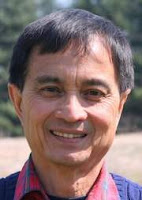
 Sopheap Chak (Photo: SopheapFocus.com)
 May 19, 2010
By A. Gaffar Peang-Meth
Pacific Daily News (Guam)
As humans, most of us are masters at repeating our past mistakes and being frustrated at the unhappy outcomes. Albert Einstein said, "Insanity is doing the same thing over and over and expecting a different result."
Pasted next to my computer is a quote from "212 degrees -- The Extra Degree" that reads: "To get what we've never had, we must do what we've never done." But it's hard to break old habits.
In my May 12 column, I wrote about a Cambodian graduate student in Japan, Sopheap Chak, who posted "Reflection on Cambodian Women Value and Model" on her website on March 7. She stated: "In Cambodia, a male-dominated society, females are more expected to conform to norm and tradition which placed women inferior to their male counterparts." She writes of the tension between "old tradition" that teaches that females should stay home, and her parents' teaching "that brought me to today's higher education."
Chak cites a Khmer saying, also cited by Cambodian lawmaker Mu Sochua, who was targeted by the current government for prosecution for promoting "feminist policies." The saying goes: "A man is gold; a woman is a white piece of cloth." Gold can be picked up from the mud and be cleaned until it shines; whereas the white cloth will never regain its purity no matter how long it is washed.
Chak said: "There are various traditional codes of conduct for women as described in proverbs, folktales and novels, especially in 'Chbab Srey' ('Women's Code of Conduct'), on how women should behave." She examined an excerpt from "Chbab Srey" and she posted its English translation by Cambodia's Partnership Against Domestic Violence.
Chak also posted Tharum Bun's "Musings from Cambodia: Cambodian Woman in the Information Age," which contains a history of codes of conduct for men and women, introduced during King Ang Duong's reign in 1848-1860, that are "still being taught by family and school in this 21st Century."
Although "old practices" still continue, "globalization and modernization have brought much change to Cambodian perception," Chak says.
Global Voice Online's "Cambodia: Riding the Wave of Change" states: "In a country where men tend to have more privileges in family and society, a new wave of change is about to begin." GVO presents Chak as "another urban woman with initiatives and ambitions."
Chak writes in her biography, "All my life I've been dedicated to social causes."
"We all can make change," Chak said in an interview published in GVO. Her biography reads, "I truly believe that with the right mindset, and the right people, Cambodia will see change. ... It's only a matter of time before justice comes along."
All this brings me back to my article, "Understanding Khmer Folktales," published in the Winter 1995 issue of Taipei's Asian-Pacific Culture Quarterly of the Asian-Pacific Parliamentarians' Union. In it, I presented two opposing currents in Cambodia's post-Angkor literature: The elitist conservative literature of the royal court of Lovek and Oudong; and the revolutionary popular literature of the average citizen.
The elitist literature, in the form of poems, advice and codes of behavior, preaches respect for customs, traditions, the establishment and authority.
"Chbab Kram," or "Codes of Civility," teach Khmer children to be docile, respectful, accepting of authority, to know how to bend and to serve to the end of one's life; "Chbab Srey," or "Codes of Conduct for Women" extols the man and teaches the women to endure, no matter how wrong her husband may be; "Chbab Koeng Kantrai" teaches that the king is the final and supreme judge.
Though the elitist literature defines the model Khmer of Theravada Buddhism as docile, quiet, complacent, patient, accepting, accommodating, passive, a believer in "karma" and reincarnation, the Khmer classic "Krung Suphmitr" (1789) reveals the Brahman era's powerful influence on Khmer thought in the form of a hero with supernatural strength capable of resisting obstacles before him.
Thus, a dichotomy of the Khmer person emerges: An accepting, accommodating and harmony-seeking Khmer Buddhist caught in a warrior tradition of Brahmanism.
Opposing this elitist perspective is the revolutionary literature in the form of folktales and legends. These broke away from the golden past and undermined the Angkor traditions, focusing on common men and women as central characters. The Khmer folktales -- "A Chey" and "Thnenh Chey," "A Lev," "Sophea Tunsay" -- spare no one, from powerful aristocrats to the divine king and Buddhist monks. They remain popular. They illustrate a common man's reaction against a society that was deeply traditional and unequal.
Today, as Khmer politicians compete to guide Cambodia's future, they call upon elements of the Khmer national character that suit their purposes.
When Pol Pot came to power in 1975, he called openly on the "Khmer warrior heritage" to motivate and energize the Khmer citizenry. Thinking that a nation which once had achieved the glory of Angkor could again return to that glory, he declared: "If the Khmers could build Angkor during the period of slavery, they can do anything."
What is the true Khmer spirit? Does it lie in the Codes of Conduct or in the bawdy and irreverent folktales, or in both?
A. Gaffar Peang-Meth, Ph.D., is retired from the University of Guam, where he taught political science for 13 years. Write him at peangmeth@yahoo.com.
Pasted next to my computer is a quote from "212 degrees -- The Extra Degree" that reads: "To get what we've never had, we must do what we've never done." But it's hard to break old habits.
In my May 12 column, I wrote about a Cambodian graduate student in Japan, Sopheap Chak, who posted "Reflection on Cambodian Women Value and Model" on her website on March 7. She stated: "In Cambodia, a male-dominated society, females are more expected to conform to norm and tradition which placed women inferior to their male counterparts." She writes of the tension between "old tradition" that teaches that females should stay home, and her parents' teaching "that brought me to today's higher education."
Chak cites a Khmer saying, also cited by Cambodian lawmaker Mu Sochua, who was targeted by the current government for prosecution for promoting "feminist policies." The saying goes: "A man is gold; a woman is a white piece of cloth." Gold can be picked up from the mud and be cleaned until it shines; whereas the white cloth will never regain its purity no matter how long it is washed.
Chak said: "There are various traditional codes of conduct for women as described in proverbs, folktales and novels, especially in 'Chbab Srey' ('Women's Code of Conduct'), on how women should behave." She examined an excerpt from "Chbab Srey" and she posted its English translation by Cambodia's Partnership Against Domestic Violence.
Chak also posted Tharum Bun's "Musings from Cambodia: Cambodian Woman in the Information Age," which contains a history of codes of conduct for men and women, introduced during King Ang Duong's reign in 1848-1860, that are "still being taught by family and school in this 21st Century."
Although "old practices" still continue, "globalization and modernization have brought much change to Cambodian perception," Chak says.
Global Voice Online's "Cambodia: Riding the Wave of Change" states: "In a country where men tend to have more privileges in family and society, a new wave of change is about to begin." GVO presents Chak as "another urban woman with initiatives and ambitions."
Chak writes in her biography, "All my life I've been dedicated to social causes."
"We all can make change," Chak said in an interview published in GVO. Her biography reads, "I truly believe that with the right mindset, and the right people, Cambodia will see change. ... It's only a matter of time before justice comes along."
All this brings me back to my article, "Understanding Khmer Folktales," published in the Winter 1995 issue of Taipei's Asian-Pacific Culture Quarterly of the Asian-Pacific Parliamentarians' Union. In it, I presented two opposing currents in Cambodia's post-Angkor literature: The elitist conservative literature of the royal court of Lovek and Oudong; and the revolutionary popular literature of the average citizen.
The elitist literature, in the form of poems, advice and codes of behavior, preaches respect for customs, traditions, the establishment and authority.
"Chbab Kram," or "Codes of Civility," teach Khmer children to be docile, respectful, accepting of authority, to know how to bend and to serve to the end of one's life; "Chbab Srey," or "Codes of Conduct for Women" extols the man and teaches the women to endure, no matter how wrong her husband may be; "Chbab Koeng Kantrai" teaches that the king is the final and supreme judge.
Though the elitist literature defines the model Khmer of Theravada Buddhism as docile, quiet, complacent, patient, accepting, accommodating, passive, a believer in "karma" and reincarnation, the Khmer classic "Krung Suphmitr" (1789) reveals the Brahman era's powerful influence on Khmer thought in the form of a hero with supernatural strength capable of resisting obstacles before him.
Thus, a dichotomy of the Khmer person emerges: An accepting, accommodating and harmony-seeking Khmer Buddhist caught in a warrior tradition of Brahmanism.
Opposing this elitist perspective is the revolutionary literature in the form of folktales and legends. These broke away from the golden past and undermined the Angkor traditions, focusing on common men and women as central characters. The Khmer folktales -- "A Chey" and "Thnenh Chey," "A Lev," "Sophea Tunsay" -- spare no one, from powerful aristocrats to the divine king and Buddhist monks. They remain popular. They illustrate a common man's reaction against a society that was deeply traditional and unequal.
Today, as Khmer politicians compete to guide Cambodia's future, they call upon elements of the Khmer national character that suit their purposes.
When Pol Pot came to power in 1975, he called openly on the "Khmer warrior heritage" to motivate and energize the Khmer citizenry. Thinking that a nation which once had achieved the glory of Angkor could again return to that glory, he declared: "If the Khmers could build Angkor during the period of slavery, they can do anything."
What is the true Khmer spirit? Does it lie in the Codes of Conduct or in the bawdy and irreverent folktales, or in both?
A. Gaffar Peang-Meth, Ph.D., is retired from the University of Guam, where he taught political science for 13 years. Write him at peangmeth@yahoo.com.
Wednesday, April 28, 2010
Art Festival To Showcase Renewed Classics
 Students make offerings to the spirits of past generations of artists in the traditional sampeah kru ceremony before the beginning of the Festival. (Photo: Courtesy of Cambodian Living Arts)
Cambodia is preparing for an expansive arts festival in August, one that will bring artists of all ages from at home and abroad to demonstrate some of Cambodia’s nearly lost traditions.
Nuch Sarita, VOA Khmer
Washington Tuesday, 27 April 2010
The Cambodian Youth Arts Festival will be held in Phnom Penh’s Chaktomuk Conference Hall from Aug. 1 to Aug. 6, and organizers expect at least 20 different organizations to take part, representing as many as 10,000 young and professional artists.
Song Seng, project coordinator of Cambodian Living Arts, told “Hello VOA” Monday the festival will provide an opportunity for artists “to share and learn a variety of traditional arts forms developed from elder traditions.”
It will also “help generate national renewal through arts and culture, and to provide opportunities for all participating groups to demonstrate mastery of what they have learned through workshops, demonstrations, and performances,” Song Seng said.
Cambodian Living Arts established a teaching program in 1999, encouraging surviving master musicians and performance artists to resume work with young apprentices.
The festival will allow some of these apprentices to showcase work they have practiced for years.
Kong Boran, a student of “chapei dang weng,” a musical oral tradition, said he learned from his father, Kong Nay, for seven years at the organization. The tradition includes melodies that are passed down from one generation to the next, though its lyrics are often newly composed or even improvised on the spot.
Lun Sophanith, student of the “khsae diew” instrument, learned from his grandfather, Sok Duch, for four years. Images of the soothing instrument, made partly from a gourd, can be found on the walls of Cambodian temples dating back to the 10th Century. It was popular with modern kings and leaders, who requested solo performances of the instrument to help them relax.
Sok Duch may be the last living master of the rare instrument, but he now teaches young apprentices. Two of them may become masters.
Much of Cambodia’s traditional culture was nearly silenced by the Khmer Rouge, which killed up to 90 percent of the country’s performers. The traditional cultures were passed down orally from teachers to students, so many skills were not recorded in writing.
“Each surviving performer is a living cultural treasure with a unique body of skills and knowledge to pass on,” Song Seng said. “A living library of Cambodia’s cultural legacy.”
Nuch Sarita, VOA Khmer
Washington Tuesday, 27 April 2010
“Each surviving performer is a living cultural treasure with a unique body of skills and knowledge to pass on. A living library of Cambodia’s cultural legacy.”Cambodia is preparing for an expansive arts festival in August, one that will bring artists of all ages from at home and abroad to demonstrate some of Cambodia’s nearly lost traditions.
The Cambodian Youth Arts Festival will be held in Phnom Penh’s Chaktomuk Conference Hall from Aug. 1 to Aug. 6, and organizers expect at least 20 different organizations to take part, representing as many as 10,000 young and professional artists.
Song Seng, project coordinator of Cambodian Living Arts, told “Hello VOA” Monday the festival will provide an opportunity for artists “to share and learn a variety of traditional arts forms developed from elder traditions.”
It will also “help generate national renewal through arts and culture, and to provide opportunities for all participating groups to demonstrate mastery of what they have learned through workshops, demonstrations, and performances,” Song Seng said.
Cambodian Living Arts established a teaching program in 1999, encouraging surviving master musicians and performance artists to resume work with young apprentices.
The festival will allow some of these apprentices to showcase work they have practiced for years.
Kong Boran, a student of “chapei dang weng,” a musical oral tradition, said he learned from his father, Kong Nay, for seven years at the organization. The tradition includes melodies that are passed down from one generation to the next, though its lyrics are often newly composed or even improvised on the spot.
Lun Sophanith, student of the “khsae diew” instrument, learned from his grandfather, Sok Duch, for four years. Images of the soothing instrument, made partly from a gourd, can be found on the walls of Cambodian temples dating back to the 10th Century. It was popular with modern kings and leaders, who requested solo performances of the instrument to help them relax.
Sok Duch may be the last living master of the rare instrument, but he now teaches young apprentices. Two of them may become masters.
Much of Cambodia’s traditional culture was nearly silenced by the Khmer Rouge, which killed up to 90 percent of the country’s performers. The traditional cultures were passed down orally from teachers to students, so many skills were not recorded in writing.
“Each surviving performer is a living cultural treasure with a unique body of skills and knowledge to pass on,” Song Seng said. “A living library of Cambodia’s cultural legacy.”
Tuesday, April 21, 2009
Cambodian feast serves up tolerance
Monday, April 20, 2009
Mickey Hennessey
Daily Targum (Rutgers University, New Jersey, USA)
Mickey Hennessey
Daily Targum (Rutgers University, New Jersey, USA)
In an effort to give students an insightful look into Cambodian (Kampuchea) and Southern Cambodian (Khmer Krom) culture, nearly 120-strong gathered in the Rutgers Student Center Multipurpose Room Thursday evening for the first-ever Cambodian Food Festival.
Sponsored by the Rutgers Khmer Kampuchea-Krom Cultural Association, the club and festival were meant to raise awareness at the University of the cultural, social and political issues related to the Khmer and Khmer Krom peoples, said Daniel Yi, a club board member and a School Of Environmental And Biological Sciences sophomore.
“Although Cambodian food is often quite spicy, several of the dishes were toned down in piquancy to accommodate for all in attendance,” said Rutgers College junior Hien Tran, the club’s social outreach chair.
As one of the school’s newest organizations, the association has put on events of a smaller scale, such as movie nights. The club’s leaders worked all semester to ensure the success of this event, meant to mark the end of the club’s first year as well as to act as the commencement for a bright future.
“I just wanted the club to make a splash in the Rutgers community,” said Club President Sambo Thach. “Cambodian culture is so vast and diverse that I felt it was important [to] afford as many people as possible the chance to experience it.”
The festival featured a smorgasbord of nearly 10 traditional Cambodian dishes, including tilapia fried in chili sauce, fruit salad, chicken lollipops, fried rice, spicy prawns, spring rolls and Cambodian crepes, as well as bean cakes for dessert.
“The fruit salad is for the particularly adventuresome palate, since it includes copious ingredients not readily found in most Western cuisine, such as jack fruit and leches,” said Thach, a School of Engineering junior.
But food was not the only thing on the menu for the night. The event included a coconut dance by Tran and a performance by a Cambodian percussion ensemble. The Philadelphia-based ensemble included six drummers, a cymbalist and a gong player. Finally, students participated in a durian eating contest.
Many individuals in attendance were experiencing Cambodian culture for the first time, and other organizations such as the Vietnamese Student Association came out to show their support.
George Kotzias, one of the students new to Khmer culture, had nothing but good things to say about the club.
“As a member of other Asian cultural clubs, I found this to be a culturally and culinary enlightening experience,” said Kotzias, a Rutgers College senior. “The food was of a sweet-tangy nature that I found thoroughly delectable.”
Sponsored by the Rutgers Khmer Kampuchea-Krom Cultural Association, the club and festival were meant to raise awareness at the University of the cultural, social and political issues related to the Khmer and Khmer Krom peoples, said Daniel Yi, a club board member and a School Of Environmental And Biological Sciences sophomore.
“Although Cambodian food is often quite spicy, several of the dishes were toned down in piquancy to accommodate for all in attendance,” said Rutgers College junior Hien Tran, the club’s social outreach chair.
As one of the school’s newest organizations, the association has put on events of a smaller scale, such as movie nights. The club’s leaders worked all semester to ensure the success of this event, meant to mark the end of the club’s first year as well as to act as the commencement for a bright future.
“I just wanted the club to make a splash in the Rutgers community,” said Club President Sambo Thach. “Cambodian culture is so vast and diverse that I felt it was important [to] afford as many people as possible the chance to experience it.”
The festival featured a smorgasbord of nearly 10 traditional Cambodian dishes, including tilapia fried in chili sauce, fruit salad, chicken lollipops, fried rice, spicy prawns, spring rolls and Cambodian crepes, as well as bean cakes for dessert.
“The fruit salad is for the particularly adventuresome palate, since it includes copious ingredients not readily found in most Western cuisine, such as jack fruit and leches,” said Thach, a School of Engineering junior.
But food was not the only thing on the menu for the night. The event included a coconut dance by Tran and a performance by a Cambodian percussion ensemble. The Philadelphia-based ensemble included six drummers, a cymbalist and a gong player. Finally, students participated in a durian eating contest.
Many individuals in attendance were experiencing Cambodian culture for the first time, and other organizations such as the Vietnamese Student Association came out to show their support.
George Kotzias, one of the students new to Khmer culture, had nothing but good things to say about the club.
“As a member of other Asian cultural clubs, I found this to be a culturally and culinary enlightening experience,” said Kotzias, a Rutgers College senior. “The food was of a sweet-tangy nature that I found thoroughly delectable.”
Wednesday, December 31, 2008
Death of Keng Vannsak: an intellectual who left a deep imprint on Cambodians
 Paris (France), 2005. Keng Vannsak (© Khing Hoc Dy)
[KI-Media note: Behind Prof. Keng Vannsak is a portrait of his first wife, Suzanne Colleville]
31-12-2008
By Stéphanie Gée
Ka-set in English
Click here to read the article in French
Click here to read the article in Khmer
Professor Keng Vannsak died after a long illness on December 18th at the age of 83, at the Montmorency hospital in Paris, France. He influenced generations of Cambodian intellectuals and leaves behind him a legacy including two drama plays, many poems and his research work. A true admirer of Khmer civilisation, he stood up all his life for these values. Strongly opposed to the Cambodian monarchy, he was also well-known for his role as a mentor for young Saloth Sar, later to be known as the sanguinary Khmer Rouge leader Pol Pot.
Keng Vannsak was born in 1925 in a village in the Kampong Chhnang province. After obtaining his baccalaureate in Philosophy in 1946 in Phnom Penh, he continued his studies in Paris with a scholarship and worked as a Khmer-language assistant at the National School of Modern Eastern Languages (Ecole Nationale des Langues Orientales). During the course of his studies, in the capital he took two years out to go to England and teach Khmer at the School of Oriental and African Studies, University of London.
He married French national Suzanne Colleville, who shared with him a passion for Eastern languages: she held diplomas in the Cambodian, Lao and Thai languages but also obtained a degree in Physical Science at the University of Caen, as revealed by Khing Hoc Dy, a former student and friend of Keng Vannsak's, in an article soon to be published. In 1952, he returned to Cambodia with his wife and a brand new B.A. Degree which he obtained at the Faculty of Literature and Human Science University of Paris in 1951. He took up the position of teacher at the prestigious Lycée Sisowath in Phnom Penh and stayed there from 1952 to 1958.
A mentor for Cambodian students in Paris
Keng Vannsak became one of the key-figures of the Cambodian student community in Paris. As reminded by historian Philip Short in his book entitled Pol Pot – Anatomy of a Nightmare[*], during the winter of 1950, more exclusive student meetings took place several times every month at Keng Vannsak's Paris flat “to discuss political issues and more precisely about the future of Cambodia, a country which, for the first time, was directly affected by the war in Vietnam”. The historian explains that these meetings “marked the beginning of [Saloth Sar's] political training”.
At that time, Philip Short details, communism was not their main worry. The historian recalls that “Keng Vannsak himself, however more aware of political reality than most of his fellow-students, involuntarily offended a young Frenchwoman of the high bourgeoisie by offering her, a year before, to go and spend the afternoon at the Fête de l'Humanité, organised by the French Communist Party. 'I had no idea it was a Communist do', he protested. 'I thought it was just a celebration for humanity, that's all'...” Keng Vannsak's studies Circle, as summarised by the historian, “stayed away from political labels”, since its members considered themselves more as part of a “progressist” trend.
Very quickly, however, the most radical of his friends began distancing themselves from him. He covered for the president of the Cambodian Students Association when the group was invited to attend “youngsters' world peace celebrations” in Berlin but was eventually asked not to go with the group just before they were due to leave. “Half a century later, Vannsak still fulminated” at the simple idea of it, Philip Short says. Keng Vannsak explained to him that the other ones wanted to get rid of him. He quotes him: “They knew that I was not the tough kind like them. I thought too much... I was not a stubborn person and did not act with fanaticism nor like an extremist. ..] Ieng Sary [a former high school classmate who later became Minister of Foreign Affairs of the Khmer Rouge government] himself told me later: 'You are too sensitive. You will never be a politician. In order to make politics, you have to be tough... You will not get there, brother. You are too sentimental'”.
A Khmer culture lover
In 1958, Keng Vannsak went to teach at the national Pedagogical Institute, and was in the meantime a member of the Secondary Education Khmer Language and Literature Programme. He then took up the position of Professor of Khmer Literature, Culture and Civilisation at the Buddhist University of Phnom Penh, where he worked until 1968 before being in charge of the Khmer inscriptions department at the University of Fine Arts from 1969 to 1970, applying himself to dedicating his work to the promotion and defence of the Khmer language and culture. In the 1960s, he campaigned for the simplification of the Khmer language, thus spurring a decisive will for reforms. The necessity for such change appeared to him in 1952 as he was developing the first typewriter keyboard with Khmer signs.
In April 1970, Keng Vannsak went back to France to prepare a PhD Thesis entitled “Recherche d'un fond culturel khmer” (Research on a Khmer cultural inventory), which he presented the following year in Paris. Like many other researchers, Khing Hoc Dy sees Keng Vannsak as a “great scholar, one of the rare intellectuals in Cambodia – if not the only one - who had a long-term, universal vision and concept of our Khmer culture and civilisation”.
A staunch anti-monarchist
In 1952, as he was in Paris, Keng Vannsak had strongly criticised Norodom Sihanouk who had just granted himself extraordinary powers and had launched a “Royal Crusade” as a response to troubles caused by Son Ngoc Than and his followers. The exiled teacher wrote a series of poems and published them in 1954 under the title “Coeur Vierge” (Virgin Heart), in which he “used Buddhist metaphors to launch encrypted attacks against the monarchy”, Philip Short observes, adding that the intellectual became, from then on, one of Norodom Sihanouk's “bêtes noires”. Under his regime, Keng Vannsak was sent twice to prison.
At the end of 1954, Kang Vannsak became a member of the Democratic Party, aiming at launching an internal reform of the Party. Being the leader of the Democratic Party and representing it in the 1955 legislative elections, “He was openly against the throne and especially and directly opposed Samdech Norodom Sihanouk, founder of the Sangkum Reastr Niyum Party”, Khing Hoc Dy details. After the the Democratic party failure in the elections, he was sent to prison by the Sangkum government from September 13th to October 10th 1955. After his release, he published poems he had written while in jail, which had a very strong influence on Khmer writers at the time.”
"Keng Vannsak never supported Communist ideas; however, he always opposed monarchical power. All the political currents which later opposed the Throne found their inspiration in Vannsak's ideas; and afterwards, each one of them reformulated them with their 'idealogical touch'. This goes for the Khmer Rouge but also the Republican anti-monarchical trend”, Nasir Abdoul-Carime writes in an article published in the AEFEK Bulletin (Association for Khmer Studies Exchanges and Training).
In 1968, after the Samlaut uprising, followed by severe reprisals, he was placed under house arrest with an interdiction to teach after being accused inciting sedition among his students. When his house was searched, Khing Hoc Dy reports, policemen found in his personal library books about Marx, Mao Tse Toung, Lenin and magazines about China... The discovery led to his arrest.
The Jayavarman VII controversy
In an interview given in early February 2007 with Radio Free Asia, Professor Keng Vannsak revisited the generally laudatory portrait of Jayavarman VII, and somehow darkened it. He is said to have declared that the great King at the origin of the building of many temples including the highly-revered Bayon temple, had Cham blood running in his veins, and that he had lent part of the Khmer territory to the Siamese... These assertions gave rise to a vigorous outcry and anger on the part of many.
Following the outcry, Keng Vannsak explained that he only aimed at re-establishing a certain historical truth, and certainly not destroying national unity by attacking one of its main symbols.
The intellectual retained a certain aura even in exile
Keng Vannsak was only rehabilitated after Lon Nol's military coup in March 1970 and took up the leadership of a Khmer-Mon Institute, founded by Lon Nol, “in order to make Khmer citizens proud of being Khmer and reunite all Khmer around this cultural inheritance serving as a weapon capable of opposing Vietnamese communist imperialism”, Khing Hoc Dy points out.
Appointed in 1971 as deputy representative of Cambodia's permanent delegation to UNESCO and chargé d'affaires of Lon Nol's Khmer Republic in France, Keng Vannsak never left Rfrance from then on. When the Khmer Rouge came to power, he instantly sensed, with amazing precision, the extent of the disaster befalling his country. In a long poem written in French, he was one of the first to denounce slaughters and purges, without however managing to break the silence on the situation of Cambodia. He tried to publish the poem in Paris, without success.
He lived on the outskirts of Paris until his death, and although he never returned to his homeland, he never forgot it.
In a last eulogy, Keng Vannsak's friend, Khing Hoc Dy described him as a person filled with kindness and always ready to answer all the questions of his Cambodian and foreign former students, colleagues and researchers about Cambodian history and civilisation [...], the memory of a welcoming man who spoke with energy and with a voice as pleasant as the sound of water running on rocks. A true linguist, he could speak for a whole day without ever stopping”.
* Philip Short, Pol Pot – Anatomy of a Nightmare, Henry Holt & Co, 2005
Keng Vannsak was born in 1925 in a village in the Kampong Chhnang province. After obtaining his baccalaureate in Philosophy in 1946 in Phnom Penh, he continued his studies in Paris with a scholarship and worked as a Khmer-language assistant at the National School of Modern Eastern Languages (Ecole Nationale des Langues Orientales). During the course of his studies, in the capital he took two years out to go to England and teach Khmer at the School of Oriental and African Studies, University of London.
He married French national Suzanne Colleville, who shared with him a passion for Eastern languages: she held diplomas in the Cambodian, Lao and Thai languages but also obtained a degree in Physical Science at the University of Caen, as revealed by Khing Hoc Dy, a former student and friend of Keng Vannsak's, in an article soon to be published. In 1952, he returned to Cambodia with his wife and a brand new B.A. Degree which he obtained at the Faculty of Literature and Human Science University of Paris in 1951. He took up the position of teacher at the prestigious Lycée Sisowath in Phnom Penh and stayed there from 1952 to 1958.
A mentor for Cambodian students in Paris
Keng Vannsak became one of the key-figures of the Cambodian student community in Paris. As reminded by historian Philip Short in his book entitled Pol Pot – Anatomy of a Nightmare[*], during the winter of 1950, more exclusive student meetings took place several times every month at Keng Vannsak's Paris flat “to discuss political issues and more precisely about the future of Cambodia, a country which, for the first time, was directly affected by the war in Vietnam”. The historian explains that these meetings “marked the beginning of [Saloth Sar's] political training”.
At that time, Philip Short details, communism was not their main worry. The historian recalls that “Keng Vannsak himself, however more aware of political reality than most of his fellow-students, involuntarily offended a young Frenchwoman of the high bourgeoisie by offering her, a year before, to go and spend the afternoon at the Fête de l'Humanité, organised by the French Communist Party. 'I had no idea it was a Communist do', he protested. 'I thought it was just a celebration for humanity, that's all'...” Keng Vannsak's studies Circle, as summarised by the historian, “stayed away from political labels”, since its members considered themselves more as part of a “progressist” trend.
Very quickly, however, the most radical of his friends began distancing themselves from him. He covered for the president of the Cambodian Students Association when the group was invited to attend “youngsters' world peace celebrations” in Berlin but was eventually asked not to go with the group just before they were due to leave. “Half a century later, Vannsak still fulminated” at the simple idea of it, Philip Short says. Keng Vannsak explained to him that the other ones wanted to get rid of him. He quotes him: “They knew that I was not the tough kind like them. I thought too much... I was not a stubborn person and did not act with fanaticism nor like an extremist. ..] Ieng Sary [a former high school classmate who later became Minister of Foreign Affairs of the Khmer Rouge government] himself told me later: 'You are too sensitive. You will never be a politician. In order to make politics, you have to be tough... You will not get there, brother. You are too sentimental'”.
A Khmer culture lover
In 1958, Keng Vannsak went to teach at the national Pedagogical Institute, and was in the meantime a member of the Secondary Education Khmer Language and Literature Programme. He then took up the position of Professor of Khmer Literature, Culture and Civilisation at the Buddhist University of Phnom Penh, where he worked until 1968 before being in charge of the Khmer inscriptions department at the University of Fine Arts from 1969 to 1970, applying himself to dedicating his work to the promotion and defence of the Khmer language and culture. In the 1960s, he campaigned for the simplification of the Khmer language, thus spurring a decisive will for reforms. The necessity for such change appeared to him in 1952 as he was developing the first typewriter keyboard with Khmer signs.
In April 1970, Keng Vannsak went back to France to prepare a PhD Thesis entitled “Recherche d'un fond culturel khmer” (Research on a Khmer cultural inventory), which he presented the following year in Paris. Like many other researchers, Khing Hoc Dy sees Keng Vannsak as a “great scholar, one of the rare intellectuals in Cambodia – if not the only one - who had a long-term, universal vision and concept of our Khmer culture and civilisation”.
A staunch anti-monarchist
In 1952, as he was in Paris, Keng Vannsak had strongly criticised Norodom Sihanouk who had just granted himself extraordinary powers and had launched a “Royal Crusade” as a response to troubles caused by Son Ngoc Than and his followers. The exiled teacher wrote a series of poems and published them in 1954 under the title “Coeur Vierge” (Virgin Heart), in which he “used Buddhist metaphors to launch encrypted attacks against the monarchy”, Philip Short observes, adding that the intellectual became, from then on, one of Norodom Sihanouk's “bêtes noires”. Under his regime, Keng Vannsak was sent twice to prison.
At the end of 1954, Kang Vannsak became a member of the Democratic Party, aiming at launching an internal reform of the Party. Being the leader of the Democratic Party and representing it in the 1955 legislative elections, “He was openly against the throne and especially and directly opposed Samdech Norodom Sihanouk, founder of the Sangkum Reastr Niyum Party”, Khing Hoc Dy details. After the the Democratic party failure in the elections, he was sent to prison by the Sangkum government from September 13th to October 10th 1955. After his release, he published poems he had written while in jail, which had a very strong influence on Khmer writers at the time.”
"Keng Vannsak never supported Communist ideas; however, he always opposed monarchical power. All the political currents which later opposed the Throne found their inspiration in Vannsak's ideas; and afterwards, each one of them reformulated them with their 'idealogical touch'. This goes for the Khmer Rouge but also the Republican anti-monarchical trend”, Nasir Abdoul-Carime writes in an article published in the AEFEK Bulletin (Association for Khmer Studies Exchanges and Training).
In 1968, after the Samlaut uprising, followed by severe reprisals, he was placed under house arrest with an interdiction to teach after being accused inciting sedition among his students. When his house was searched, Khing Hoc Dy reports, policemen found in his personal library books about Marx, Mao Tse Toung, Lenin and magazines about China... The discovery led to his arrest.
The Jayavarman VII controversy
In an interview given in early February 2007 with Radio Free Asia, Professor Keng Vannsak revisited the generally laudatory portrait of Jayavarman VII, and somehow darkened it. He is said to have declared that the great King at the origin of the building of many temples including the highly-revered Bayon temple, had Cham blood running in his veins, and that he had lent part of the Khmer territory to the Siamese... These assertions gave rise to a vigorous outcry and anger on the part of many.
Following the outcry, Keng Vannsak explained that he only aimed at re-establishing a certain historical truth, and certainly not destroying national unity by attacking one of its main symbols.
The intellectual retained a certain aura even in exile
Keng Vannsak was only rehabilitated after Lon Nol's military coup in March 1970 and took up the leadership of a Khmer-Mon Institute, founded by Lon Nol, “in order to make Khmer citizens proud of being Khmer and reunite all Khmer around this cultural inheritance serving as a weapon capable of opposing Vietnamese communist imperialism”, Khing Hoc Dy points out.
Appointed in 1971 as deputy representative of Cambodia's permanent delegation to UNESCO and chargé d'affaires of Lon Nol's Khmer Republic in France, Keng Vannsak never left Rfrance from then on. When the Khmer Rouge came to power, he instantly sensed, with amazing precision, the extent of the disaster befalling his country. In a long poem written in French, he was one of the first to denounce slaughters and purges, without however managing to break the silence on the situation of Cambodia. He tried to publish the poem in Paris, without success.
He lived on the outskirts of Paris until his death, and although he never returned to his homeland, he never forgot it.
In a last eulogy, Keng Vannsak's friend, Khing Hoc Dy described him as a person filled with kindness and always ready to answer all the questions of his Cambodian and foreign former students, colleagues and researchers about Cambodian history and civilisation [...], the memory of a welcoming man who spoke with energy and with a voice as pleasant as the sound of water running on rocks. A true linguist, he could speak for a whole day without ever stopping”.
* Philip Short, Pol Pot – Anatomy of a Nightmare, Henry Holt & Co, 2005
Emmanuelle Nhean: from Phnom Penh to Paris, the celebration of happiness through Khmer art
 Paris (France), 11/12/2008. Emmanuelle Nhean, painter (Photo: Laurent Le Gouanvic)
 "Peuple d'Angkor" (“People of Angkor”) (© Emmanuelle Nhean)
29-12-2008
By Laurent Le Gouanvic
Ka-set in English
Click here to read the article in French
Click here to read the article in Khmer
Emmanuelle Nhean's story could be the epitome of the interweaving between Cambodian and French cultures, a story of many ups and downs, but also one of many colours. Among them, she chose to retain the soft and happy ones, conveying a certain joie-de-vivre rather than sadness and pain in her paintings. “Representing beauty and the positive aspects of life keep me busy enough to have any time to reflect on hardship.” The Cambodian-born and Parisian resident used to study medicine in Phnom Penh but chose to follow the artistic path, combining abstract and typical figurative Khmer art. She has now been living on her art for several years, thus turning her passion into a full profession, something she sees as a “duty” toward Cambodia, her native country.
Medicine first...
If one took up the brushes and painted a portrait of Emmanuelle Nhean, the essence of the sketch would entirely revolve around her smile: her laughing eyes would be two elongated lines, her cheekbones, two little circles leading to a generous and embracing smile. If it was not for her long and undulating black hair, the artist's noble face, graced with two full lips, could well bear a striking resemblance with a sculpted bust having pride of place on her bookshelves, in her cosy Paris flat, above various art books and a Petit Robert French dictionary: that of King Jayavarman VII, who reigned over the Khmer Empire from the end of the 12th century till the beginning of the 13th century and had several hospitals and temples built, including the Bayon temple.
However, the life of the daughter of a Lon Nol army colonel who came to France as a refugee in the early 1980s has nothing to do with the ancient King. Not very keen on talking about her personal life, she preferred revealing the story of her artwork, elaborated with patience over the years. There would yet be a lot to say on her life, which started “ordinarily”: “I have always loved art. But at the beginning, I started out in a very classical way. My family was wealthy and my wish was to obtain a solid diploma, a good job and start a pretty family...” After high-school, the young woman set out to go and attend the school of Medicine, following the family tradition of study specialities – her brother and sister studied Literature and Law. “Art appealed to me, but I thought to myself that I should prioritise the rest and that I would paint when I retire!”
1975: art or medical school, the matter was settled with the arrival of the Khmer Rouge in Phnom Penh. She was 23 years old. On April 17th, she happened to be with her family and not at the hospital where she used to care for the injured when the city was taken, therefore escaping the fate of many students – execution. She was ordered to leave the Cambodian capital with part of her family and survived, working in the fields in the Takeo province in eastern Cambodia.
“Very quickly, we understood what we should and should not do in front of the Khmer Rouge”, she recounts. Her father, a high-ranking military official for Lon Nol, did not have enough time to hide his identity. Khmer Rouge soldiers recognised him and took him away for execution.”
Emmanuelle Nhean did not go into details over that period of time. “Just like for everyone else, at that time”, she summarised, before revealing in an almost apologetic manner: “Up until now, I have always refused to tell this story, except to my close relatives. When I introduce myself, what I want to show is above all my creations. But people tend to focus too much on the deportation. Cambodia must get out of this! We have been through this, and we overcame it. Now, we should roll our sleeves up and rebuild the country!”
Cultural immersion in Paris
“After having been though such hard times, nothing was the same any more”, she continues, recounting very briefly the four months she spent in a refugee camp in Thailand, shortly after the arrival of the Vietnamese in Cambodia and the fall of the Khmer Rouge regime. She arrived in France at the age of 27 and obtained a certificate in nursing, which allowed her to find a job, before going back to medicine studies for two years.
As a side hobby to her night job as a nurse in Paris, the young woman spent a lot of her time visiting the many art galleries and museums which the French capital had to offer. There, she had a true revelation. “Seeing all those pieces of art in Paris made me think that I, too, could do things. And what was going to make me progress was not medicine but art.”
Classicism, impressionism, cubism... She took much delight in discovering little by little the world of French painting, following her senses at first and then learning to master different painting techniques during the courses she followed. “I remember, one of the first exhibitions I attended, about Monet. I am short-sighted and when I put my glasses on, I saw the details with more precision but it did not look as beautiful to me. And conversely, when I took them off, it was all blurry but so much more moving. I understood that by changing my viewpoint and painting technique, I could discover a whole new world. I already loved art when I was in Cambodia, but it was more of an instinctive passion, limited to just one world. In Paris, I was able to open up to the whole world.”
Quick success and the building of an artistic career
Her approach was supported among others by her former husband, a teacher and painter, who helped her “get into the world of art” and led her to organise her first display. “I sold half of my paintings on the first day”, she revealed, still thrilled with joy. “I instantly knew I was in my own element and I had found my way. My work had an impact on the public.”
Word of mouth did the rest and soon, she was commissioned by a French publisher to illustrate the front cover of a book gathering literary excerpts from Asia. The wife of a manager in charge of an important European group bought several of her paintings and chose one to illustrate the company's official greeting card... Invited to attend many art fairs and proudly representing her native country, she started taking up the art of stained-glass window-making and won the third prize in a competition. On the side of all this, her tapestry works also started drawing the attention of many. “Every time I took up a new activity, it was magical!”, she said, her eyes squinched up in delight.
If we believe her word, her success is the sole result of accidental encounters and the happy fortunes of life. But she also and truly owes her success to perseverance and infectious enthusiasm. “I do work a lot, it is true. I never stop drawing. Like a cowboy in a western who shoots at every single moving object, I draw all the things I see!”, she said, laughing and obviously delighted to live among her colourful paintings, all stored in her small flat located in the 16th arrondissement of Paris.
Giving Khmer culture its place in the world of contemporary art
Emmanuelle Nhean has given shape to a world of her own in the Parisian cosy place where she lives: typically French and yet decorated with Cambodian hints here and there. In her living-room and even in the corridor she shares with her neighbours, she did not hesitate putting together her huge “Sixtych”, a composition of six paintings constituting a single and same work of art and conveying abundance, a profusion of colours and motifs and symbols inspired by traditional Khmer arts, contemporary Cambodia and European pictorial representations. She made the piece for the Salon des Artistes français where she represented Cambodia as a special guest. The composition owed her the Salon's bronze medal and the “Univers des Arts” magazine award.
The “Sixtych”, just like the other paintings hung on the walls, reflects the artist's steps in the quest she chose to follow: “Managing to represent Khmer art in contemporary art”. “For a long time, whenever I entered the world of Khmer art, I had the feeling I was only copying”, Emmanuelle Nhean explains. “I came to wonder how I could get out of that and avoid doing what we always see and therefore follow my own path and create contemporary Khmer art. This took me several years of work”.
Today, via Khmer art, she still creates abstract paintings and reveals she is “having some fun making figurative paintings to please those who like abstraction and abstract paintings for those who prefer figurative art.” However, her ardent desire to make Khmer culture mingle with contemporary art is more than just a game: “I entered abstraction openly but I feel this call from Khmer culture. It is like a duty I must fulfil”.
Painting happiness rather than the tormenting past
Abstract, figurative, European or Khmer, each of her pieces “has its own little story”, Emmanuelle Nhean stresses, remembering a comment once made by a woman of Cambodian descent, after having visited one of her exhibitions: “Your art pieces bring luck”. The comment moved the artist, to whom “expressing what is beautiful” and “bringing something that is above everyday life, something related to dreams” is dear. One may wonder whether the foreground of the painting entitled “Freedom” represents a woman , inspired by the sculpted galleries of Angkor, bearing the burden of a freed people gathered behind her. The artist deliberately chose to represent liberation rather than subjection and glory rather than destitution. “We must build the 21st century. And Cambodia, like other countries, must take part in that process, with the country's potential”, the energetic painter now in her fifties, insisted.
Hopes for the future
The evils undermining Cambodia – poverty, prostitution, corruption... - she knows them too well, having made regular trips to the country since 1989. These successive trips, however, also strengthened her hopes: “I am happy to have seen Cambodia evolve, even if there are good and bad things. I mainly noticed that there are still people there who, despite what they have been through, have kept within them the will to act for their country. We must work on that together. A Cambodian saying goes: One can break a single stick, but cannot break a bunch of sticks altogether.”
For her next trip to Cambodia, which she probably plans for 2009, Emmanuelle Nhean seriously thinks about having her work displayed in Phnom Penh for the first time. She also hopes she will be able to create bonds with contemporary Cambodian artists, “discover” and “share” with them “a touch of life, and the beautiful and positive things it brings”, by adding her own personal touch to what is truly coming to be the new Khmer art.
-------------
Emmanuelle Nhean's website : www.nhean-khmerart.com
Medicine first...
If one took up the brushes and painted a portrait of Emmanuelle Nhean, the essence of the sketch would entirely revolve around her smile: her laughing eyes would be two elongated lines, her cheekbones, two little circles leading to a generous and embracing smile. If it was not for her long and undulating black hair, the artist's noble face, graced with two full lips, could well bear a striking resemblance with a sculpted bust having pride of place on her bookshelves, in her cosy Paris flat, above various art books and a Petit Robert French dictionary: that of King Jayavarman VII, who reigned over the Khmer Empire from the end of the 12th century till the beginning of the 13th century and had several hospitals and temples built, including the Bayon temple.
However, the life of the daughter of a Lon Nol army colonel who came to France as a refugee in the early 1980s has nothing to do with the ancient King. Not very keen on talking about her personal life, she preferred revealing the story of her artwork, elaborated with patience over the years. There would yet be a lot to say on her life, which started “ordinarily”: “I have always loved art. But at the beginning, I started out in a very classical way. My family was wealthy and my wish was to obtain a solid diploma, a good job and start a pretty family...” After high-school, the young woman set out to go and attend the school of Medicine, following the family tradition of study specialities – her brother and sister studied Literature and Law. “Art appealed to me, but I thought to myself that I should prioritise the rest and that I would paint when I retire!”
1975: art or medical school, the matter was settled with the arrival of the Khmer Rouge in Phnom Penh. She was 23 years old. On April 17th, she happened to be with her family and not at the hospital where she used to care for the injured when the city was taken, therefore escaping the fate of many students – execution. She was ordered to leave the Cambodian capital with part of her family and survived, working in the fields in the Takeo province in eastern Cambodia.
“Very quickly, we understood what we should and should not do in front of the Khmer Rouge”, she recounts. Her father, a high-ranking military official for Lon Nol, did not have enough time to hide his identity. Khmer Rouge soldiers recognised him and took him away for execution.”
Emmanuelle Nhean did not go into details over that period of time. “Just like for everyone else, at that time”, she summarised, before revealing in an almost apologetic manner: “Up until now, I have always refused to tell this story, except to my close relatives. When I introduce myself, what I want to show is above all my creations. But people tend to focus too much on the deportation. Cambodia must get out of this! We have been through this, and we overcame it. Now, we should roll our sleeves up and rebuild the country!”
Cultural immersion in Paris
“After having been though such hard times, nothing was the same any more”, she continues, recounting very briefly the four months she spent in a refugee camp in Thailand, shortly after the arrival of the Vietnamese in Cambodia and the fall of the Khmer Rouge regime. She arrived in France at the age of 27 and obtained a certificate in nursing, which allowed her to find a job, before going back to medicine studies for two years.
As a side hobby to her night job as a nurse in Paris, the young woman spent a lot of her time visiting the many art galleries and museums which the French capital had to offer. There, she had a true revelation. “Seeing all those pieces of art in Paris made me think that I, too, could do things. And what was going to make me progress was not medicine but art.”
Classicism, impressionism, cubism... She took much delight in discovering little by little the world of French painting, following her senses at first and then learning to master different painting techniques during the courses she followed. “I remember, one of the first exhibitions I attended, about Monet. I am short-sighted and when I put my glasses on, I saw the details with more precision but it did not look as beautiful to me. And conversely, when I took them off, it was all blurry but so much more moving. I understood that by changing my viewpoint and painting technique, I could discover a whole new world. I already loved art when I was in Cambodia, but it was more of an instinctive passion, limited to just one world. In Paris, I was able to open up to the whole world.”
Quick success and the building of an artistic career
Her approach was supported among others by her former husband, a teacher and painter, who helped her “get into the world of art” and led her to organise her first display. “I sold half of my paintings on the first day”, she revealed, still thrilled with joy. “I instantly knew I was in my own element and I had found my way. My work had an impact on the public.”
Word of mouth did the rest and soon, she was commissioned by a French publisher to illustrate the front cover of a book gathering literary excerpts from Asia. The wife of a manager in charge of an important European group bought several of her paintings and chose one to illustrate the company's official greeting card... Invited to attend many art fairs and proudly representing her native country, she started taking up the art of stained-glass window-making and won the third prize in a competition. On the side of all this, her tapestry works also started drawing the attention of many. “Every time I took up a new activity, it was magical!”, she said, her eyes squinched up in delight.
If we believe her word, her success is the sole result of accidental encounters and the happy fortunes of life. But she also and truly owes her success to perseverance and infectious enthusiasm. “I do work a lot, it is true. I never stop drawing. Like a cowboy in a western who shoots at every single moving object, I draw all the things I see!”, she said, laughing and obviously delighted to live among her colourful paintings, all stored in her small flat located in the 16th arrondissement of Paris.
Giving Khmer culture its place in the world of contemporary art
Emmanuelle Nhean has given shape to a world of her own in the Parisian cosy place where she lives: typically French and yet decorated with Cambodian hints here and there. In her living-room and even in the corridor she shares with her neighbours, she did not hesitate putting together her huge “Sixtych”, a composition of six paintings constituting a single and same work of art and conveying abundance, a profusion of colours and motifs and symbols inspired by traditional Khmer arts, contemporary Cambodia and European pictorial representations. She made the piece for the Salon des Artistes français where she represented Cambodia as a special guest. The composition owed her the Salon's bronze medal and the “Univers des Arts” magazine award.
The “Sixtych”, just like the other paintings hung on the walls, reflects the artist's steps in the quest she chose to follow: “Managing to represent Khmer art in contemporary art”. “For a long time, whenever I entered the world of Khmer art, I had the feeling I was only copying”, Emmanuelle Nhean explains. “I came to wonder how I could get out of that and avoid doing what we always see and therefore follow my own path and create contemporary Khmer art. This took me several years of work”.
Today, via Khmer art, she still creates abstract paintings and reveals she is “having some fun making figurative paintings to please those who like abstraction and abstract paintings for those who prefer figurative art.” However, her ardent desire to make Khmer culture mingle with contemporary art is more than just a game: “I entered abstraction openly but I feel this call from Khmer culture. It is like a duty I must fulfil”.
Painting happiness rather than the tormenting past
Abstract, figurative, European or Khmer, each of her pieces “has its own little story”, Emmanuelle Nhean stresses, remembering a comment once made by a woman of Cambodian descent, after having visited one of her exhibitions: “Your art pieces bring luck”. The comment moved the artist, to whom “expressing what is beautiful” and “bringing something that is above everyday life, something related to dreams” is dear. One may wonder whether the foreground of the painting entitled “Freedom” represents a woman , inspired by the sculpted galleries of Angkor, bearing the burden of a freed people gathered behind her. The artist deliberately chose to represent liberation rather than subjection and glory rather than destitution. “We must build the 21st century. And Cambodia, like other countries, must take part in that process, with the country's potential”, the energetic painter now in her fifties, insisted.
Hopes for the future
The evils undermining Cambodia – poverty, prostitution, corruption... - she knows them too well, having made regular trips to the country since 1989. These successive trips, however, also strengthened her hopes: “I am happy to have seen Cambodia evolve, even if there are good and bad things. I mainly noticed that there are still people there who, despite what they have been through, have kept within them the will to act for their country. We must work on that together. A Cambodian saying goes: One can break a single stick, but cannot break a bunch of sticks altogether.”
For her next trip to Cambodia, which she probably plans for 2009, Emmanuelle Nhean seriously thinks about having her work displayed in Phnom Penh for the first time. She also hopes she will be able to create bonds with contemporary Cambodian artists, “discover” and “share” with them “a touch of life, and the beautiful and positive things it brings”, by adding her own personal touch to what is truly coming to be the new Khmer art.
-------------
Emmanuelle Nhean's website : www.nhean-khmerart.com
Wednesday, November 12, 2008
‘Elephants’ Composer Sought Culture Push
 Him Sophy, composer of “Where Elephants Weep”
By Nuch Sarita, VOA Khmer
Original report from Washington
11 November 2008
Cambodian-born and Russian-educated, Him Sophy is the composer behind “Where Elephants Weep,” a modern rock opera that has its roots in both Cambodia and the West and is coming soon to Phnom Penh.
The story is a modern version of the “Tum Teav” fable, where a man named Sam returns to post-holocaust Cambodia and becomes a monk before falling into a tragic love affair.
Him Sophy, a professor of music at Phnom Penh’s Royal University of Fine Arts and the Royal Academy of Cambodia, said he wanted to incorporate rock-and-roll both conceptually and artistically. He typically has not written for rock or traditional Cambodian music, but the show, which debuts in Phnom Penh later this month, incorporates both.
“We played together with the rock band, sometimes separately,” he said Monday, as a guest on “Hello VOA.” “Sometimes the solo is only rock, sometimes only Cambodian traditional, and then they come together and have another sound that you never heard before.”
The hope was to blend the styles and push contemporary Cambodian culture forward, Him Sophy said.
“Where Elephants Weep” showed in the US last year.
“It was a journey of both tragedy and hope, and one that involved cross-cultural collaboration among many people behind the scenes,” Samkhan Khoeun, co-chairman for Rock Opera Khmer, in Lowell, Mass., who was also a guest on “Hello VOA” Monday.
The rock opera, which was started six years ago, is the latest undertaking of Cambodian Living Arts, a project of World Education, he said.
Cambodian Living Arts was founded in 1998 by John Burt, the show’s executive producer, with Arn Chorn-Pond, a Cambodian refugee who was adopted by Americans and lived for a time in Lowell.
The goal of the organization is to revive and support Cambodian arts, which were nearly eradicated under the regime of the Khmer Rouge.
The story is a modern version of the “Tum Teav” fable, where a man named Sam returns to post-holocaust Cambodia and becomes a monk before falling into a tragic love affair.
Him Sophy, a professor of music at Phnom Penh’s Royal University of Fine Arts and the Royal Academy of Cambodia, said he wanted to incorporate rock-and-roll both conceptually and artistically. He typically has not written for rock or traditional Cambodian music, but the show, which debuts in Phnom Penh later this month, incorporates both.
“We played together with the rock band, sometimes separately,” he said Monday, as a guest on “Hello VOA.” “Sometimes the solo is only rock, sometimes only Cambodian traditional, and then they come together and have another sound that you never heard before.”
The hope was to blend the styles and push contemporary Cambodian culture forward, Him Sophy said.
“Where Elephants Weep” showed in the US last year.
“It was a journey of both tragedy and hope, and one that involved cross-cultural collaboration among many people behind the scenes,” Samkhan Khoeun, co-chairman for Rock Opera Khmer, in Lowell, Mass., who was also a guest on “Hello VOA” Monday.
The rock opera, which was started six years ago, is the latest undertaking of Cambodian Living Arts, a project of World Education, he said.
Cambodian Living Arts was founded in 1998 by John Burt, the show’s executive producer, with Arn Chorn-Pond, a Cambodian refugee who was adopted by Americans and lived for a time in Lowell.
The goal of the organization is to revive and support Cambodian arts, which were nearly eradicated under the regime of the Khmer Rouge.
Subscribe to:
Comments (Atom)








